
Resources
Explore a wide range of valuable resources on GCED to deepen your understanding and enhance your research, advocacy, teaching, and learning.
8,354 Results found
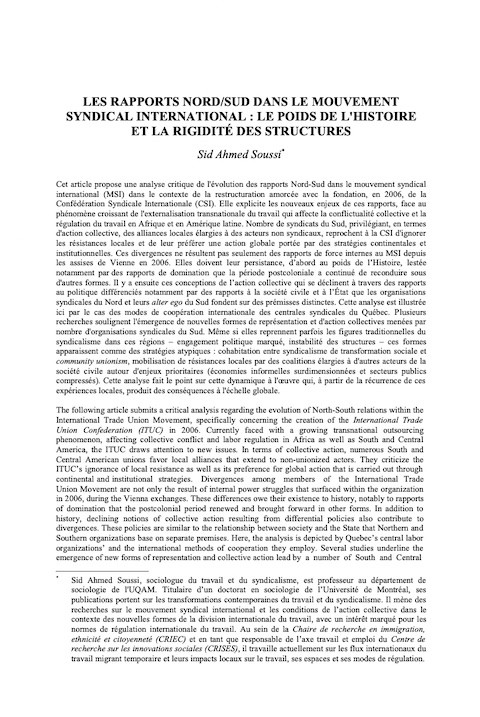 North/South Relationships in the International Trade Union Movement: The Weight of History and the Rigidity of Structures (Quebec Journal of International Law; Special Issue, Nov.) Year of publication: 2012 Author: Sid Ahmed Soussi Corporate author: Société québécoise de droit international (SQDI) The following article submits a critical analysis regarding the evolution of North-South relations within the International Trade Union Movement, specifically concerning the creation of the International Trade Union Confederation (ITUC) in 2006. Currently faced with a growing transnational outsourcing phenomenon, affecting collective conflict and labor regulation in Africa as well as South and Central America, the ITUC draws attention to new issues. In terms of collective action, numerous South and Central American unions favor local alliances that extend to non-unionized actors. They criticize the ITUC’s ignorance of local resistance as well as its preference for global action that is carried out through continental and institutional strategies. Divergences among members of the International Trade Union Movement are not only the result of internal power struggles that surfaced within the organization in 2006, during the Vienna exchanges. These differences owe their existence to history, notably to rapports of domination that the postcolonial period renewed and brought forward in other forms. In addition to history, declining notions of collective action resulting from differential policies also contribute to divergences. These policies are similar to the relationship between society and the State that Northern and Southern organizations base on separate premises. Here, the analysis is depicted by Quebec’s central labor organizations’ and the international methods of cooperation they employ. Several studies underline the emergence of new forms of representation and collective action lead by a number of South and Central American labor organizations. Even though, in some cases, these new types of representation take on traditional forms of unionism such as marked political involvement and organizational instability, they surface within atypical strategies. These unusual approaches include the coexistence of socially-generated unionism and community unionism, as well as the mobilization of local resistance movements through coalitions that extend to other community actors with prioritized issues (oversized informal economies and a compressed public sector). The analysis explores the underlying dynamic that, based on recurring local experiences, produces consequences on a global scale.
 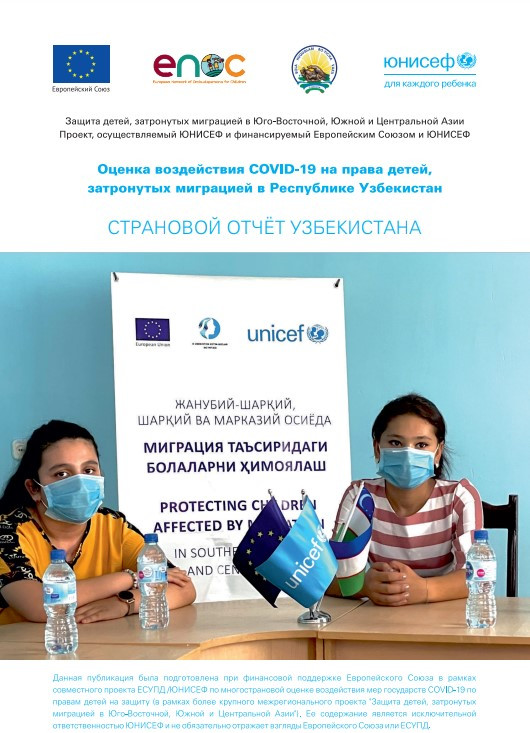 Child Rights Impact Assessment of COVID-19 on Children Affected by Migration in Uzbekistan Year of publication: 2021 Corporate author: UNICEF Uzbekistan UNICEF and the Commissioner of Uzbekistan for Children’s Rights (Ombudsperson) conducted a study within the EU-funded cross-regional project “Protecting children affected by migration in Southeast, South and Central Asia”, by adapting the Common Framework of Reference on Child Rights Impact Assessment (CFR) developed by the European Network of Ombudspersons for Children (ENOC). The summary report unveils findings of how the lockdown caused by the COVID-19 pandemic affected children left behind. The report summarizes the situational analysis and proposed recommendations for the government and partners for adopting policies to avoid or mitigate potential negative impacts on children if similar situations arise in the future.
 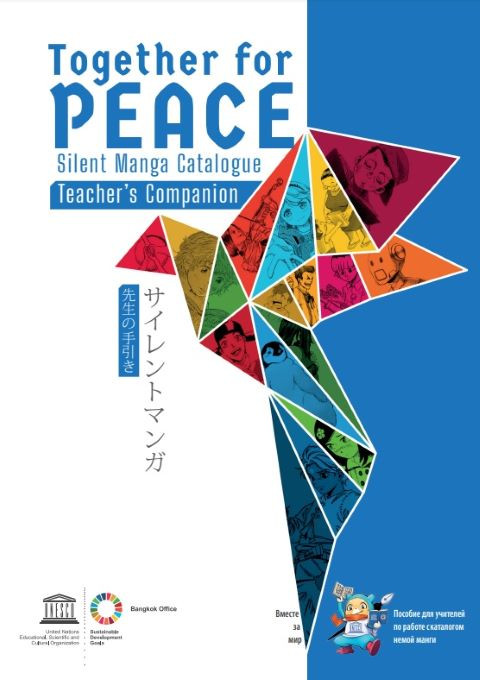 Together for Peace Silent Manga Catalogue: Teacher's Companion Year of publication: 2022 Corporate author: UNESCO Bangkok Silent Manga refers to manga stories told entirely through illustrations without the use of dialogue. This Silent Manga Catalogue Teacher's Companion is intended for use by teachers (or parents) together with Silent Manga Catalogue, a compilation of Silent Manga entries selected from SILENT MANGA AUDITION® Round 13, which was based on the theme ‘Together for Peace’. The manga stories showcase different aspects of peace as envisioned by artists around the world, and based on various related topics such as out-of-school children, lifelong learning, anti-bullying, conflict, youth, learning to live together, refugees and shared histories. Through the power of Silent Manga, teachers can use such manga stories to spark a thought-provoking discussion among younger generations that represent the chief architects of world peace not only in our own times, but in the years to come.
 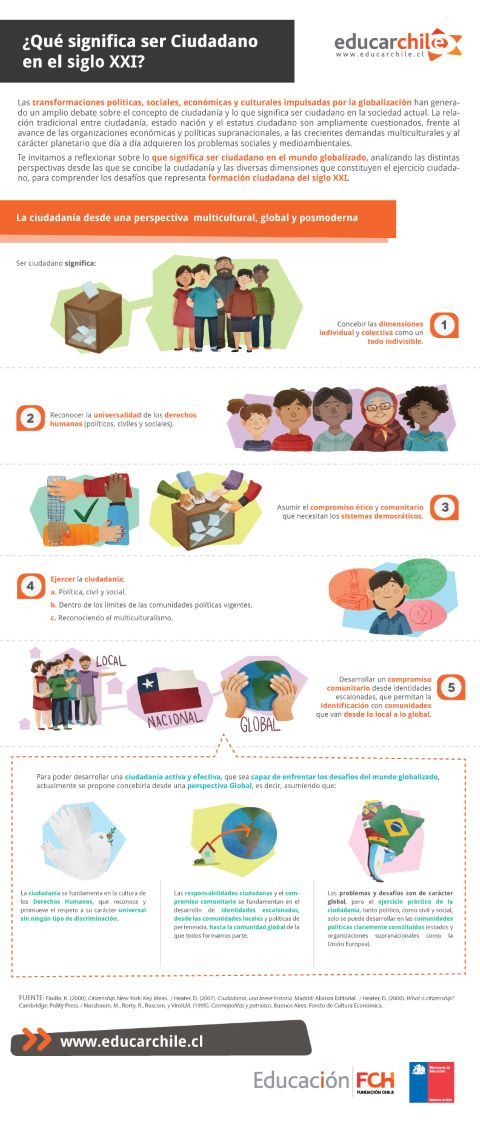 What Does it Mean to Be a Citizen in the 21st Century? (Part3) Corporate author: Educar Chile | Chile Foundation It explores citizenship from a multicultural, global and postmodern perspective, inviting reflection on the meaning of being a citizen in the 21st century, in order to understand the challenges from the various dimensions.
 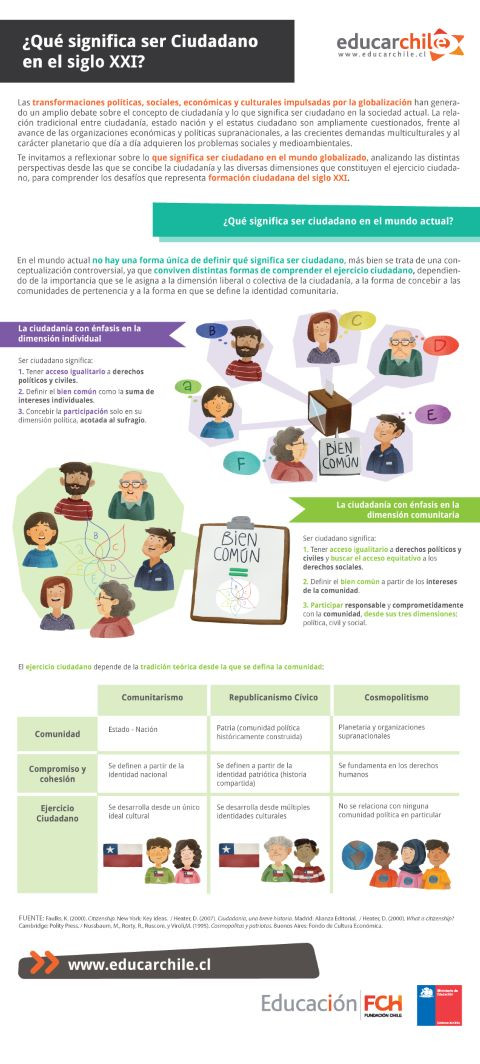 What Does it Mean to Be a Citizen in the 21st Century? (Part2) Corporate author: Educar Chile | Chile Foundation It is invited to reflect on what it means to be a citizen in the globalized world, analyzing the different perspectives from which citizenship is conceived and the various dimensions that constitute the exercise of citizenship, in order to understand the challenges that citizen training represents in the 21st century.
 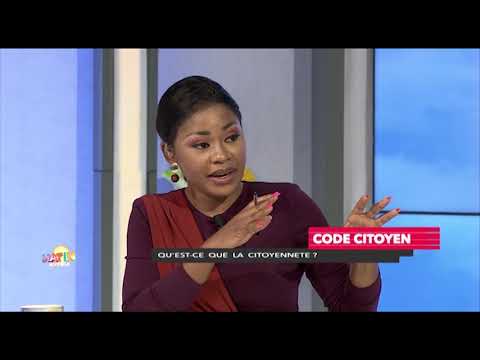 Citizen Code: What Is Citizenship? Year of publication: 2020 Corporate author: Radiodiffusion télévision ivoirienne (RTI) This is a video on citizenship in Ivory Coast. The discussion was focused on the values, actions, and ideas related to active citizenship.
 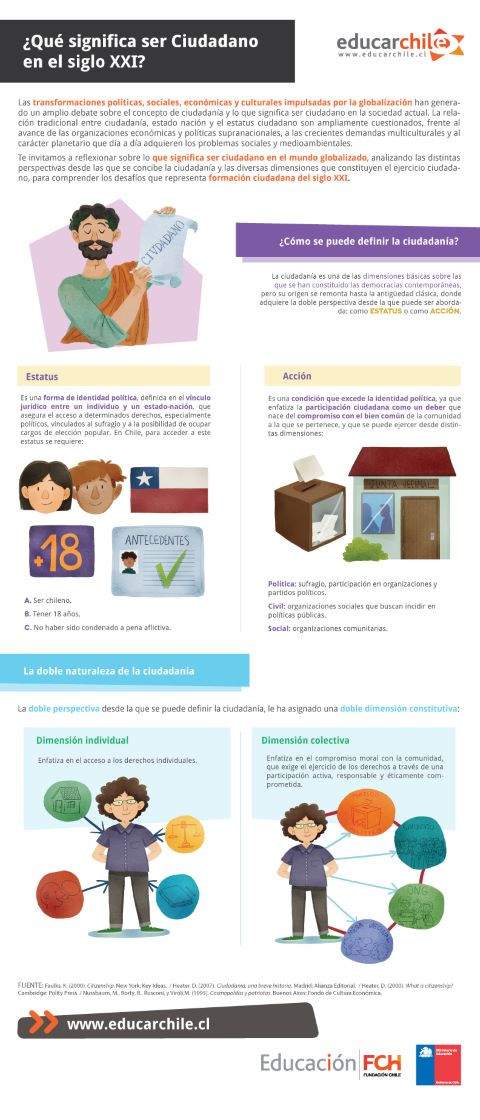 What Does it Mean to Be a Citizen in the 21st Century? (Part1) Corporate author: Educar Chile | Chile Foundation The political, social, economic and cultural transformations driven by globalization have generated a wide debate on the concept of citizenship and what it means to be a citizen in today's society. The traditional relationship between citizenship, nation state and citizen status are widely questioned, in the face of the advance of supranational economic and political organizations, the growing multicultural demands and the planetary character that social and environmental problems acquire day by day.
 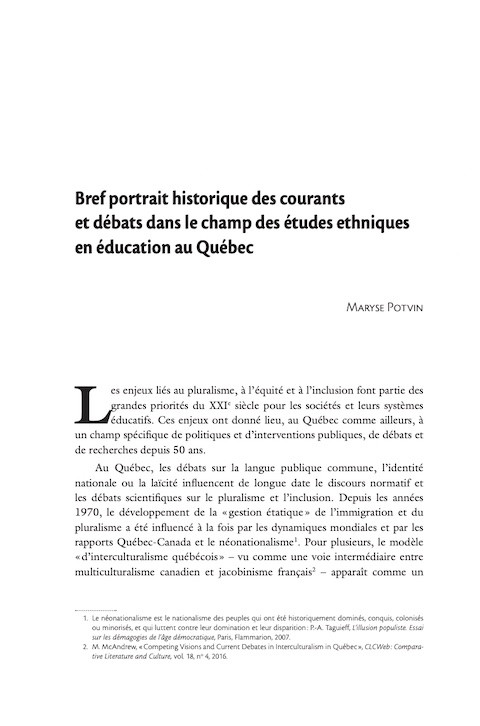 A Brief History of Currents and Debates in the Field of Ethnic Studies in Education in the Quebec Society (Cahiers de recherche sociologique; no. 64) Year of publication: 2018 Author: Maryse Potvin Corporate author: Athéna éditions The issues of pluralism, equity and inclusion are among the top priorities of the 21st century for education systems. These issues have given rise, in Quebec as elsewhere, to a specific field of public policies and interventions, debates and research for 50 years. This article traces the relatively "successive" appearance of currents - multicultural or intercultural, anti-racist, civic and rights-based, inclusive, still present in the sociology of education today - and shows how they marked (and predominated in) the normative discourses and the field of ethnic studies in education in Quebec during three different periods : the years 1970-1980, 1990-2000, 2010 to the present day. This article outlines the main "currents of ideas" and debates in this field of education during these three periods, and situates these debates in their links, both with the main social issues or significant events in the Quebec context and with the evolution of public policies in this field.
 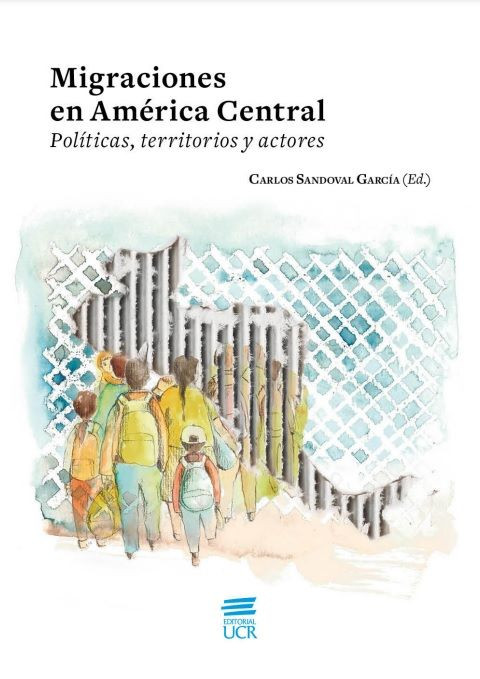 Migrations in Central America: Policies, Territories and Actors. Year of publication: 2016 Author: Carlos Sandival García Corporate author: Editorial Universidad de Costa Rica Migrations in Central America. Policies, Territories, and Actors seeks to offer an approach to the various dimensions of the migratory experience in Central America. Four starting points characterize this book: the public nature of the call, the collective dimension of the work, the regional perspective that is nourished by the contrast and comparison of cases and, fourthly, the call that gives rise to this book. This has allowed us to have a concrete task to shape the expectations of public, collective and regional work.
 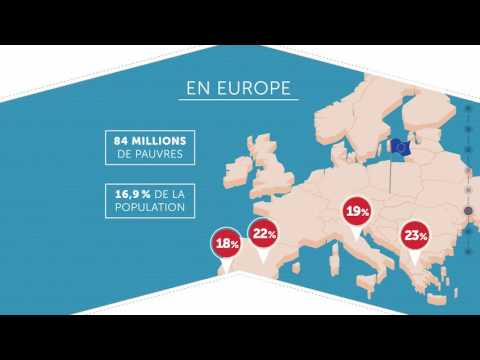 World Poverty Year of publication: 2016 Corporate author: Lumni This is a video that discusses diverse dimensions of poverty as well as what can be done to address the causes of poverty. While poverty in the world has fallen in recent years, it has increased in developed countries... But who are the poor?