
Resources
Explore a wide range of valuable resources on GCED to deepen your understanding and enhance your research, advocacy, teaching, and learning.
8,354 Results found
 Promoting Global Citizenship Education in Arab Universities: Proposals for Action Year of publication: 2022 Author: Ellen Middaugh Corporate author: UNESCO Beirut Higher education can play an important role in promoting Global Citizenship Education (GCED). It provides incentive, opportunity and support for young adults to learn about global issues, engage across diverse cultures, and practice the skills of GCED at a time of intensive personal, social, political and career exploration. Furthermore, universities can encourage students to take these skills and values into their adult lives to share with others and continue the lifelong process. Arab universities are very committed to GCED. However, the way GCED in concretely implemented needs improvement. While greater attention is paid to the cognitive domain of learning, the socio-emotional and behavioral domains of learning – which best lead to effective transformative engagement – tend to be left behind. Based on existing practices, this document provides universities, academia and students with concrete proposals on how to better mainstream GCED and its values, through higher education, in the Arab region.
 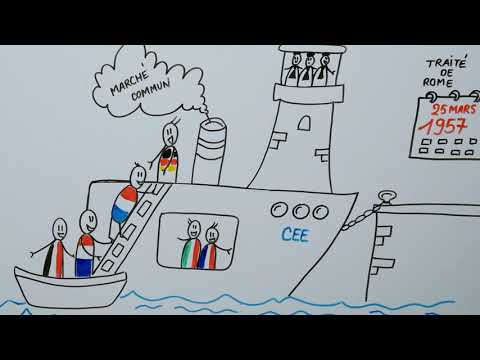 European Citizenship Year of publication: 2020 Corporate author: Laboratoire d'innovation pédagogique sur l'Europe (LIPE) The participation of the peoples in European construction has always been questioned since the 1970s, when the Member States wanted to relaunch the process of political unification. The election of the European Parliament by universal suffrage is a first step. Citizens' Europe, initiated in 1975 and relaunched in 1985, should make it possible to bring the peoples of the Community closer together, but remains symbolic and without much practical significance. The States are waiting for the Maastricht Treaty to establish true European citizenship within the framework of political Union. Secondary citizenship limited to a few rights, its scope remains limited and its political effectiveness questionable.
  Anti-racist, Inclusive and Rights Education in the Development of Professional Competencies for School Staff and Student Abilities (Éthique en éducation et en formation; no. 3) Year of publication: 2017 Author: Maryse Potvin Corporate author: Université du Québec à Montréal (UQAM) This article examines the differences and convergences that emerge from the major theoretical trends in the area of education for ethnocultural (inter/multicultural, anti-racist/critical, civic, inclusive) diversity regarding the professional skills school personnel must acquire to achieve the major objectives of equity, effectiveness of rights, harmonious living and the development of students’ capabilities. The article is based on a review of the national and international literature, which aimed to identify the skills (knowledge, expertise, soft skills) that are essential for knowing how to act in the context of diversity and that, according to theoreticians, should be developed in all teacher training programs. These issues are discussed from a crosscutting perspective rather than from a disciplinary angle related to the Quebec curriculum (ethics and religious culture, history and education for citizenship). The article begins by providing some background on these trends in order to identify their common objectives and convergence toward an integrated and inclusive global approach. It then examines two objectives supported by all theoreticians in terms of the core professional skills needed by school personnel for developing students’ capabilities: 1) taking into account the realities, needs and rights of students, particularly those in minority or vulnerable groups, and 2) preparing students to live together in a pluralistic and democratic society. As well, it identifies the key challenges involved in the consideration and implementation of these two goals.
  Paulo Freire's Contributions to Intercultural Education: A Case Study in Compulsory Secondary Education (Ibero-American Journal of Education; vol.76) Year of publication: 2018 Author: Maria Verdeja Muniz | Xose Anton Gonzalez Riano The general purpose of this research is to synthesize the contributions of Paulo Freire's pedagogy to intercultural education and study the possibilities of application to the educational system. The research is raised from a qualitative perspective and completed with a case study. At first, an analysis of a selected part of Freire's written work was carried out and the basic lines of what his intercultural sensitivity would be established. In another level of analysis, a study of the subjects of the ESO curriculum in Asturias in its intercultural dimension is carried out. The case study in the educational center shows that, in order to carry out true intercultural education proposals, it would be necessary for there to be some previous conditions that are described in the article.
 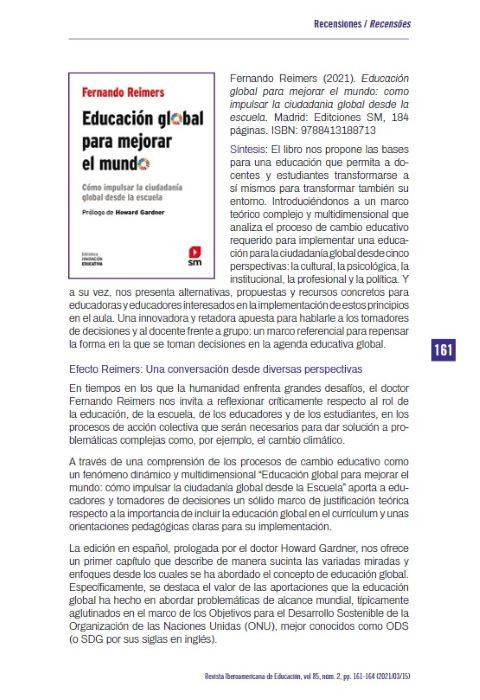 [Book Review] Global Education for a Better World (Ibero-American Journal of Education; vol. 85, no.2) Year of publication: 2021 Author: Patricia Vasquez | Gustavo Rojas Review of the book "Global education to improve the world: how to promote global citizenship from the School" in which Dr. Fernando Reimers proposes the bases for an education that allows teachers and students to transform themselves to also transform their environment. In this work, a complex and multidimensional theoretical framework is presented that analyzes the process of educational change required to implement an education for global citizenship from five perspectives: cultural, psychological, institutional, professional and political.
  The Global Citizen and Tax Evasion (Politique et Sociétés; vol. 39, no. 1) Year of publication: 2020 Author: Philippe Liger-Belair Corporate author: Société québécoise de science politique Citizenship implies rights and duties. Among others, a citizen is due to pay taxes in order to contribute financially to the social contract. However, many of them avoid taxes, and globalization has worsened this phenomenon. For long, the states could criticize and fight against such practices on the basis of the concept of citizenship. However, the development of a so-called “world citizenship” (a concept that needs to be explored) has rendered that task more difficult for the states. This article is based on an analysis of the concept of citizenship as well as a sociological survey among thirty-five individuals of the economic elite.
 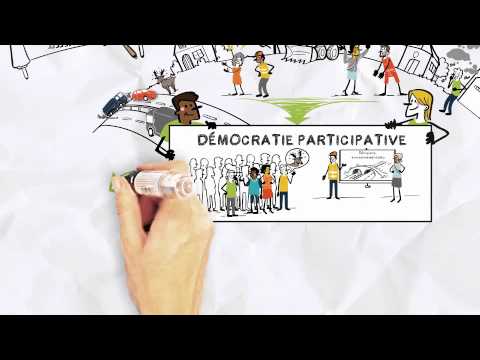 Why and How to Move Towards Participatory Democracy Year of publication: 2015 Corporate author: Fondation pour la Nature et l'Homme Co-constructing tomorrow's solutions is the major challenge of participatory democracy. However, the participation of citizens in decisions is not always obvious and today many projects are contested in the territory. Solutions exist to involve citizens more directly in environmental decisions, discover these issues and solutions in 3 minutes!
  Making Lifelong Learning a Reality: A Handbook Year of publication: 2023 Corporate author: UNESCO Institute for Lifelong Learning (UIL) This handbook provides education stakeholders with practical guidance on lifelong learning. With an overview of key concepts, policy issues, technical knowledge and practical approaches, it demonstrates how lifelong learning can be strengthened in policy-making and implemented at national, regional, local and institutional levels. The handbook supports those experts and professionals in the field of education who wish to develop their understanding of lifelong learning, and offers tips, information and examples targeted at learners, facilitators, institutional leaders, policy-makers and legislators. More broadly, it illustrates how lifelong learning can address complex political, social, economic and environmental issues affecting people around the world.
  Citizenship Education and Youth Politicization in Quebec: Teacher Perspectives (vol. 46, no. 3) Year of publication: 2020 Author: Alexandre Fortier-Chouinard Corporate author: Université de Montréal. Faculté des sciences de l’éducation Civic education classes generally have a positive impact on political knowledge and citizen involvement. In Quebec, the mandatory History and citizenship education class, almost unstudied thus far, was recently replaced by a History of Quebec and Canada class in secondary 3 and 4. 14 interviewed History and citizenship education teachers in secondary 4 believe that these courses improve some indicators of students’ politicization but not necessarily future turnout, and that civic education takes too little space in the curriculum. An open classroom climate, which literature has found to have a positive impact on voting, seems to be absent from their teaching.
 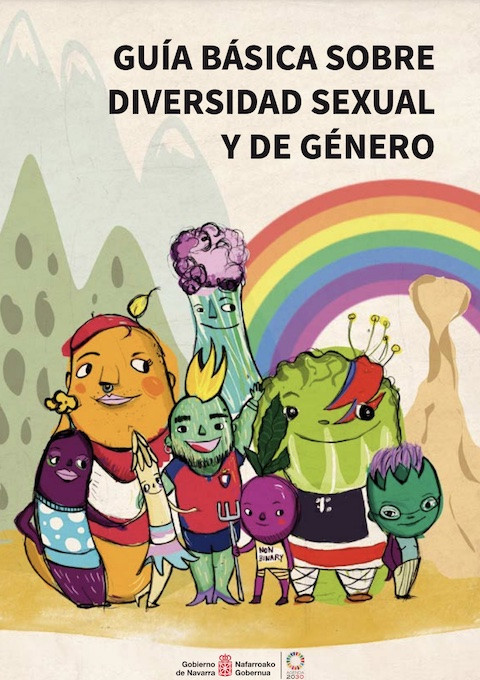 Basic Guide on Sexual and Gender Diversity Year of publication: 2020 Author: Miriam Solá García Corporate author: Navarra Institute for Equality This guide is a tool to learn about affective, sexual and gender diversity and reflect on why all of us have a key role in social change to achieve equality and recognition of LGTBI+ people. Respect for affective, sexual and gender diversity is an element of value and social wealth in whose promotion and experience all citizens are involved.