
Resources
Explore a wide range of valuable resources on GCED to deepen your understanding and enhance your research, advocacy, teaching, and learning.
8,354 Results found
 Amnesty International Report 2021/22: The State of the World’s Human Rights Year of publication: 2022 Corporate author: Amnesty International The Amnesty International Report 2021/22 highlights the human rights situation in 154 countries in 2021. It presents Amnesty International’s documented concerns and recommendations for governments and others. From a human rights perspective, 2021 was largely a story of betrayal and hypocrisy in the corridors of power. But hopes for a better post-pandemic world were kept alive by courageous individuals, social movements and civil society organizations. Their efforts and limited hard-won victories should prompt governments to live up to their promises.
  SDG Good Practices: A Compilation of Success Stories and Lessons Learned in SDG Implementation (2nd Edition) Year of publication: 2022 Corporate author: UN. Department of Economic and Social Affairs (UN. DESA) In 2021, building on the success of the first open call in 2018-2019, the United Nations Department of Economic and Social Affairs (UNDESA) launched a second open call for SDG Good Practices, Success Stories and Lessons Learned by governments, the UN system entities and other stakeholders. More than 700 submissions were received and reviewed by an inter-agency team of UN experts and over 460 have been made publicly available in a dedicated online platform.This publication has been curated to highlight a sample of selected initiatives during the second open call. The 21 SDG Good Practices contained in the publication shared their lessons learned and identify how the practices can be scaled and replicated worldwide. Bringing this global expertise to scale will be critical to support recovery efforts from the COVID-19 pandemic and to accelerate progress towards the Decade of Action to deliver the SDGs. Through this publications, global readers from all sectors could find out how different stakeholders are building partnerships to find innovative solutions to achieve a better and more sustainable future for all.
  Non-state Actors in Tertiary Education: A Shared Vision for Quality and Affordability? (Policy Paper 47) Year of publication: 2022 Corporate author: UNESCO Non-state provision accounts for more than one third of tertiary education students worldwide, a considerably higher share than in primary or secondary education. Providers are diverse, respond to a variety of needs, and often blur the line between the state and non-state sectors. Non-state actors are also important players in the financing of tertiary education through households, market mechanisms and public–private partnerships. As a result, these actors play a significant role in influencing regulations and policymaking, and in shaping the tertiary system as a whole. Governments must ensure quality and equity, the key dimensions of Sustainable Development Goal target 4.3, regardless of how state and non-state actors share responsibilities.
 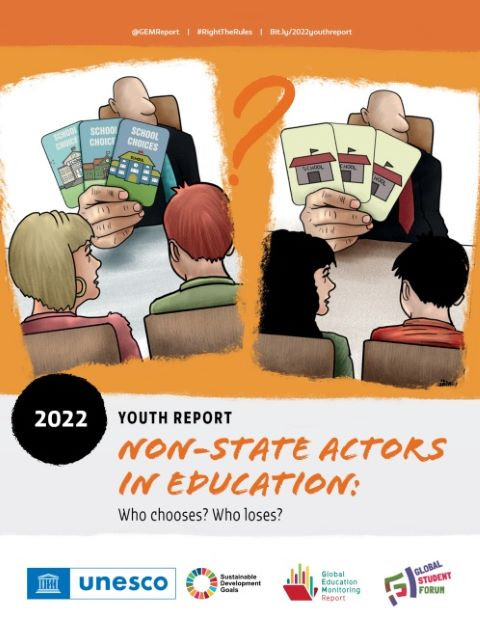 Youth Report 2022: Non-state Actors in Education; Who Chooses? Who Loses? Year of publication: 2022 Corporate author: UNESCO This report is written in partnership with the Global Student Forum to help you learn about the youth perspective on the different roles and impact of non-state actors in education. For many, a discussion on the role of non-state actors in education quickly boils down to a debate about whether private schools support or undermine good-quality education.But the role of non-state actors impacts many more corners of the education sector, from the textbooks you use, the food in your canteens, any additional tutorial support you get, the skills you might learn at work and much more.The report invites youth to join a call for governments to #RightTheRules which will ensure that non-state actor involvement does not compromise the promise of providing 1 year of pre-primary and 12 years of primary and secondary education free for all.
 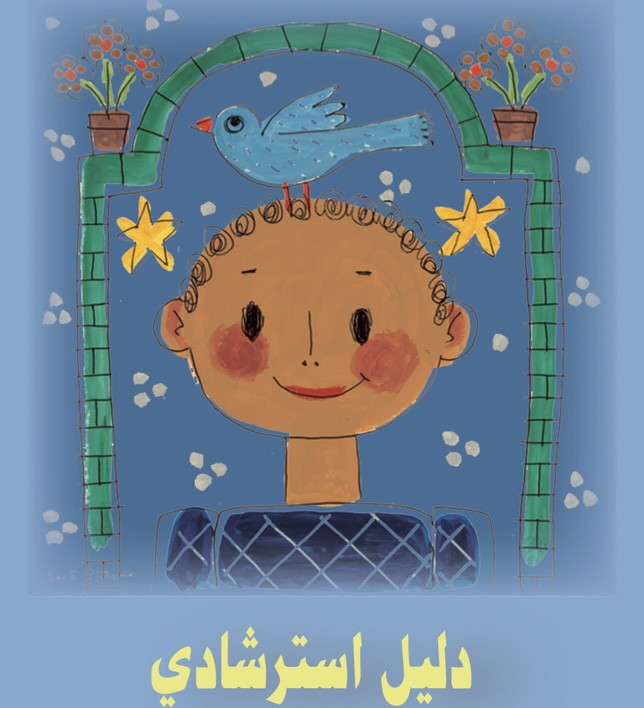 A Guideline for Formulating Child Rights Protection Policies in the Arab Region according to the Human Rights Approach Year of publication: 2015 Author: Adel Azar | Ahmed Abd al manaem | Abdul Latif Mahmoud | Ibtisam Al-Jafarawi | Mahmoud Bastami Corporate author: Arab Council for Childhood and Development (ACCD) This work aims to build an indicative guide for children protection policies in the context of promoting the transition from the approach of the fragmented model that deals with the needs of the child within the framework of the existing conditions and even its reproduction. It also considers the services that the child needs, to move from this approach, to the approach of the scientific model that aspires to comprehensive change. This guide is concerned with providing a comprehensive and integrated vision of children's rights policies, formulating standards and implications for these rights and programming them to ensure their enforcement, and building effective policies that guarantee the rights and well-being of children in the Arab region.
 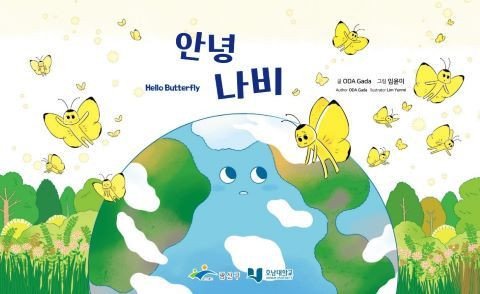 Hello Butterfly Year of publication: 2022 Author: ODA Gada Corporate author: ODA Gada | 광진구 | 호남대학교 <Hello Butterfly> is the fifth illustrated book in the ‘Youth Global Citizenship Education Project’ jointly published by Gwangsan-gu Office of Gwangju and Honam University. The theme is to respond to climate change. The book helps with climate change and environmental policies such as the harmful effects of 'fast fashion' (clothes manufactured and distributed by reflecting the latest trends), desirable clothing consumption methods, zero waste (removal of garbage), and green washing (disguised environmentalism). It contains specific information. The book takes the form of an accordion book that depicts the story through the butterfly's eyes, with the southern yellow butterfly, one of the climate change biomarker species, as the main character.
 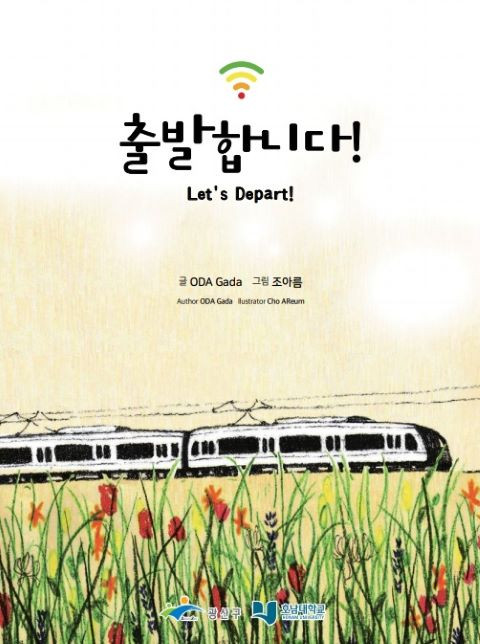 Let's Depart! Year of publication: 2021 Corporate author: ODA Gada | 광진구 | 호남대학교 <Let's Go!> is the fourth illustrated book in the ‘Youth Global Citizenship Education Project’ jointly published by Gwangsan-gu Office of Gwangju and Honam University. With the theme of mental health, the main character 'Yuri' shares various emotions in 'Emotional Train', It's the process of confronting her candid feelings of her own while seeing people who receive her empathy and comfort. By using 'Wi-Fi' and 'flowers' as devices to express emotions, anyone can easily immerse themselves in the story.
 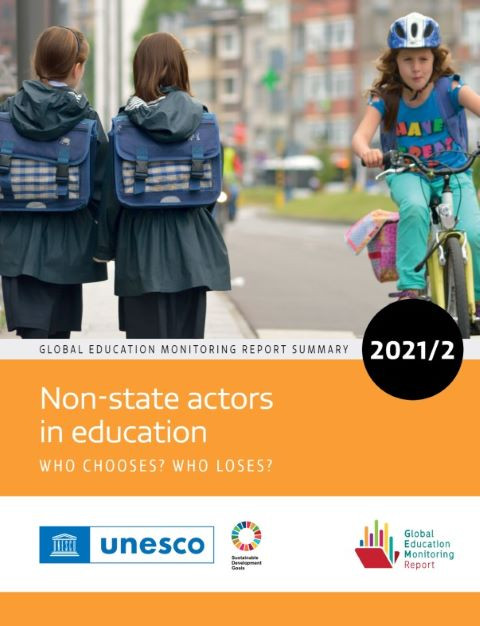 [Summary] Global Education Monitoring Report 2021/2: Non-state Actors in Education: Who Chooses? Who Loses? Year of publication: 2022 Corporate author: UNESCO Non-state actors’ role extends beyond provision of schooling to interventions at various education levels and influence spheres. Alongside its review of progress towards SDG 4, including emerging evidence on the COVID-19 pandemic’s impact, the 2021/2 Global Education Monitoring Report urges governments to see all institutions, students and teachers as part of a single system. Standards, information, incentives and accountability should help governments protect, respect and fulfill the right to education of all, without turning their eyes away from privilege or exploitation. Publicly funded education does not have to be publicly provided but disparity in education processes, student outcomes and teacher working conditions must be addressed. Efficiency and innovation, rather than being commercial secrets, should be diffused and practiced by all. To that end, transparency and integrity in the public education policy process need to be maintained to block vested interests. The report’s rallying call – Who chooses? Who loses? – invites policymakers to question relationships with non-state actors in terms of fundamental choices: between equity and freedom of choice; between encouraging initiative and setting standards; between groups of varying means and needs; between immediate commitments under SDG 4 and those to be progressively realized (e.g. post-secondary education); and between education and other social sectors.
 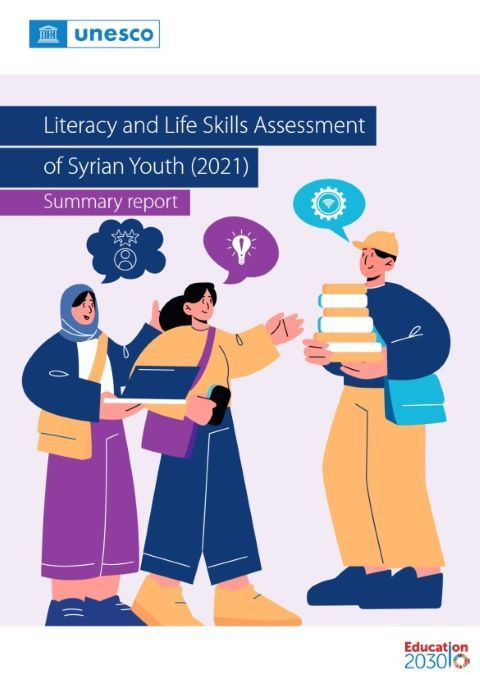 Literacy and Life Skills Assessment of Syrian Youth (2021): Summary Report Year of publication: 2022 Corporate author: UNESCO Beirut The Syrian crisis has caused disruptions to children’s and youth’s education for over a decade. The COVID-19 pandemic, with the related school closures, has added an additional burden to the existing situation, impacting learning outcomes worldwide. Assessing the status of Syrian youth’s competencies in literacy, numeracy and life skills, is essential in order to plan and implement better programmes to help them catch up on their learning losses. The ultimate goal is to support them to be able to go back into the main education streams or provide them with basic skills to cope with daily needs in their personal and professional environments.The ‘Literacy and Life Skills Assessment of Syrian Youth’ (LLASY) study measures current literacy and numeracy levels, as well as life skills of the youth of Syria of the 15 to 24 age group currently living inside the country. The sample includes youth, female and male, who are enrolled in educational or training institutions, as well as those who are out of them.
 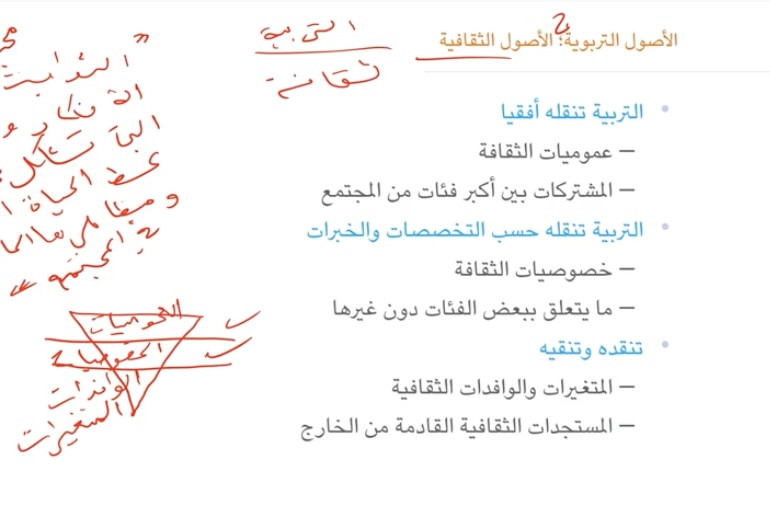 The Relationship of Culture to Education Year of publication: 2018 Author: Lutfi Hajlawi The video is one of the lessons in an Introduction to Education course at King Khalid University. The doctor discusses the concepts of education and culture and the relationship between them. This course is part of the Teachers Preparation Program at King Khalid University.