
相关资源
探索丰富的全球公民教育资源,深化理解,促进研究、倡导、教学与学习。
共找到8,354条结果
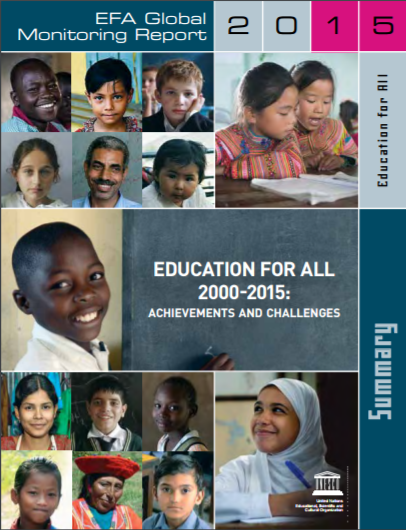 2000-2015年 全民教育: 成就与挑战; 全民教育 全球监测报告, 2015; 摘 要 出版年份: 2015 机构作者: 联合国教科文组织 (UNESCO) At the World Education Forum in Dakar, Senegal, in 2000, governments from 164 countries, together with representatives of regional groups, international organizations, donor agencies, non-government organizations (NGOs) and civil society, adopted a Framework for Action to deliver Education for All (EFA) commitments. The Dakar Framework comprised 6 goals and their associated targets to be achieved by 2015, and 12 strategies to which all stakeholders would contribute. The EFA Global Monitoring Report (GMR) has monitored progress on an almost annual basis towards the EFA goals and the two education-related Millennium Development Goals (MDGs). The 2015 GMR provides a complete assessment of progress since 2000 towards the target date for reaching the Dakar Framework’s goals. It takes stock of whether the world achieved the EFA goals and stakeholders upheld their commitments. It explains possible determinants of the pace of progress. Finally, it identifies key lessons for shaping the post-2015 global education agenda.
 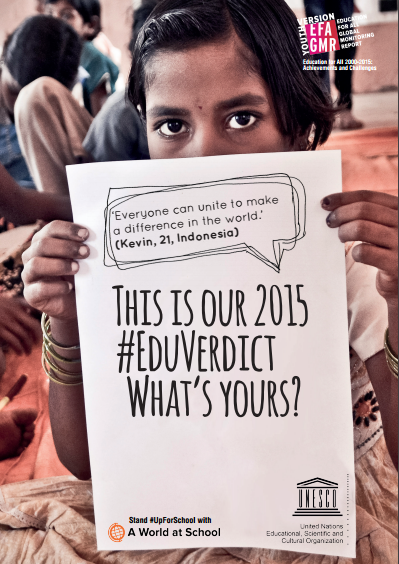 这是我们的2015 教育回望#EduVerdict 你的呢? 出版年份: 2015 机构作者: 联合国教科文组织 (UNESCO) This report highlights the progress and challenges that countries have faced over 15 years, brining together the voices of young people to show how Education for All (EFA) has affected their lives.
 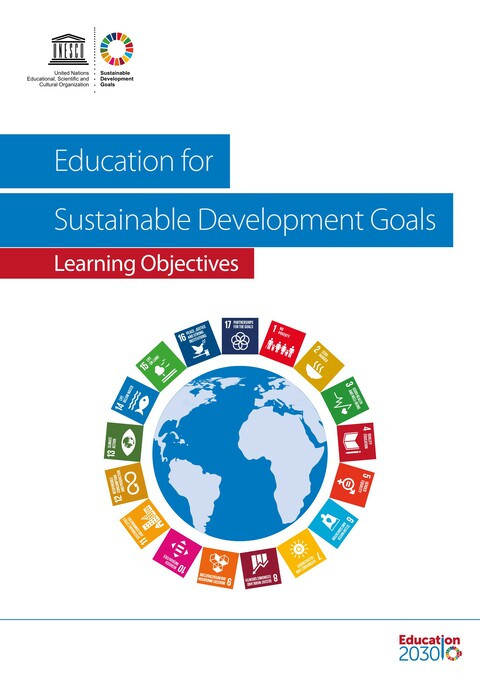 教育促进实现可持续发展目标: 学习目标 出版年份: 2017 机构作者: 联合国教科文组织 (UNESCO) 自1992年起,教科文组织一直致力于促进可持续发展教育(ESD)。教科文组织引领了联合国可持续发展教育十年(2005‒2014年),目前本组织正大力倡导其后续工作“全球可持续发展教育行动计划”(GAP)。 可持续发展教育的势头从未如此强劲。气候变化等全球问题迫切要求我们转变生活、思维和行动的方式。要实现这种改变,我们需要新的技术、价值观和态度,增加社会的可持续性。 面对这种迫切的需求,教育系统必须厘清相关的学习目标和学习内容,引进能增强学习者能力的教学法,敦促各教育机构在其管理结构中纳入可持续性原则。 新的《2030年可持续发展议程》清楚体现对适当教育重要性的认识。教育被单独作为一个明确的目标——可持续发展目标4。其他可持续发展目标(SDG)中也涵盖了多个与教育有关的具体目标和指标。 教育不仅本身是我们孜孜以求的目标,还是实现所有其他可持续发展目标的手段。它既是可持续发展的内在组成部分,也是推动实现可持续发展的关键因素。因此,教育是实现可持续发展目标的一项关键战略。 本出版物旨在为教育专家们提供一部指南,以便他们在学习过程中利用可持续发展教育促进实现可持续发展目标,从而为实现可持续发展目标作出贡献。对于每项可持续发展目标,这部指南都标明了指示性学习目标,并提出了拟议的专题和学习活动。指南中还介绍了从课程设计到国家战略等不同层级的实施方法。 这部指南不是为了作出任何硬性规定,而是要提供指导和建议,以便教育者根据具体的学习环境作出选择和调整。
  2030年教育:仁川宣言和行动框架实现可持续发展目标4——确保包容和公平的优质教育,让全民终身享有学习机会 出版年份: 2016 机构作者: 联合国教科文组织 (UNESCO) 《仁川宣言》阐明了国际社会在全球教育方面的集体愿景和承诺。“2030年行动框架”为可持续发展目标4的实施提供了指导。
  第 2178(2014)号决议 2014 年 9月 24 日安全理事会第 7272 次 出版年份: 2014 机构作者: United Nations Security Council This resolution expanded the counter-terrorism framework by imposing obligations on member states to respond to the threat of foreign terrorist fighters. Through the resolution, the Council condemned violent extremism and decided that Member States shall, consistent with international law, prevent the "recruiting, organizing, transporting or equipping of individuals who travel to a State other than their States of residence or nationality for the purpose of the preperation, planning of, of participation in terrorist acts." Expressing concern over the establishment of international terrorist networks, the Council underscored the "particular and urgent need" to prevent the travel and support for foreign terrorist fighters associated with the Islamic State and the Levant (ISIL), Al-Nusra Front (ANL) and other affiliates or splinter groups of Al-Qaida. In that context, the Council, through the resolution, decided that all States shall ensure that their legal systems provide for the prosecution, as serious criminal offences, of travel for terrorism or related training, as well as the financing or facilitation of such activities. Member States, it also decided, shall prevent entry or transit through their territories of any individual about whom that state had credible information of their terrorist-related intentions, without prejudice to transit necessary for the furtherance of judicial processes. It called on States to require airlines to provide passenger lists for that purpose. Outlining further measures for international cooperation to counter international terrorism and prevent the growth of violent extremism, it expressed readiness to designate additional individuals for sanctions listings, and directed the United Nations counter-terrorism subsidiary bodies to devote special focus to foreign terrorist fighters, assessing the threat they posed and reporting on principal gaps in Member States' abilities to suppress their travel. 反思教育:向“全球共同利益”的理念转变? 出版年份: 2015 机构作者: 联合国教科文组织 (UNESCO) The changes in the world today are characterized by new levels of complexity and contradiction. These changes generate tensions for which education is expected to prepare individuals and communities by giving them the capability to adapt and to respond. This publication contributes to rethinking education and learning in this context. It builds on one of UNESCO’s main tasks as a global observatory of social transformation with the objective of stimulating public policy debate.It is a call for dialogue among all stakeholders. It is inspired by a humanistic vision of education and development, based on respect for life and human dignity, equal rights, social justice, cultural diversity, international solidarity, and shared responsibility for a sustainable future. These are the fundamentals of our common humanity. This book enhances the vision provided by the two landmark UNESCO publications: Learning to Be: The world of education today and tomorrow (1972), the ‘Faure Report’, and Learning: The treasure within (1996), the ‘Delors Report’.
 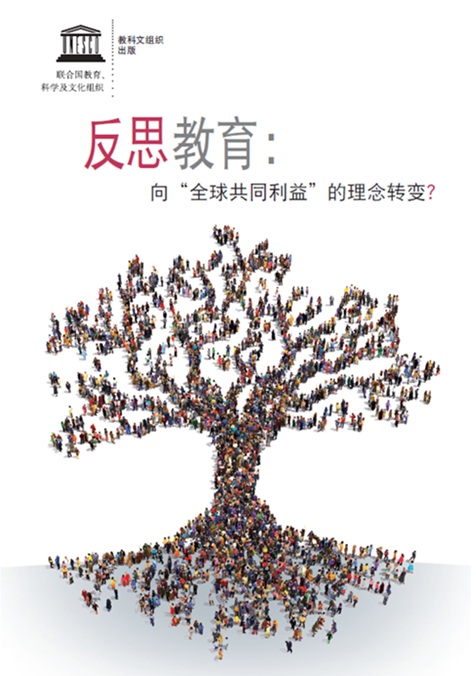 反思教育:向 “全球共同利益” 的理念转变? 出版年份: 2015 机构作者: 联合国教科文组织 (UNESCO) 当今世界的错综复杂和矛盾冲突,达到了前所未有的程度。这些变化引发了紧张不安,人们寄希望于教育能够培养个人和社会掌握适应变化并做出反应的能力。本出版物有助于在这一背景下反思教育与学习。本书立足于教科文组织作为全球社会变革观测站的主要任务,目的是促进公共政策辩论。本书呼吁所有利益攸关方开展对话。这是一部在人文主义教育观和发展观的启迪下完成的作品,以尊重生命和人类尊严、权利平等、社会正义、文化多样性、国际团结和为创造可持续的未来承担共同责任为基础,而这些正是人性的基本共同点。本书彰显了教科文组织具有里程碑意义的两部出版物提出的愿景——《学会生存:教育世界的今天和明天》(《富尔报告》,1972年)和《学习:内在的财富》(《德洛尔报告》,1996年)。 2014 课程标准 品格与公民教育 小学 出版年份: 2014 机构作者: Singapore. Ministry of Education. Student Development Curriculum Division Character and Citizenship Education (CCE) has always been at the heart of Singapore's education system. In CCE, students learn to be responsible to family and community; and understand their roles in shaping the future of nation. The emerging trends and global developments that impact the society, such as social changes, globalisation and technological advancements are taken into consideration in the development of the CCE curriculum.The goal of CCE is to inculcate values and build competencies in students to develop them to be good individuals and useful citizens. Since 1959, various key programmes have been introduced to inculcate values, habits, competencies and skills in students. Some of these programmes include Civics and Moral Education (CME, 1992), National Education (NE, 1997), Social and Emotional Learning (SEL, 2005), and learning experiences such as Co-Curricular Activities (CCA). The new CCE curriculum shifts focus from programmes to a common purpose. The desired outcomes of CCE are aligned to the Key Stage Outcomes (KSOs) and Desired Outcomes of Education (DOE). CCE is central to the Framework for 21st Century Competencies and Student Outcomes. It emphasizes the interconnectedness of the core values, social and emotional competencies and civic literacy, global awareness and cross-cultural skills that are critical for character and citizenship development of students. 生活与社会课程指引(中一至中三) 出版年份: 2010 机构作者: Curriculum Development Council (Hong Kong) The 21st century is a rapidly-developing era in which students face social, economic and political changes, which also bring diverse and complicated values. These have created opportunities and challenges on students’ personal development, learning and future careers. Schools have to provide an appropriate curriculum to cater for the needs of students on their personal growth and future development so Life and Society (S1-3) has been drawn up for this very purpose.With the advent of the first decade of the Millennium, Hong Kong has been experiencing rapid changes on the economic, social and political fronts. Facts such as greater economic integration with the mainland (particularly with the Pan-Pearl River Delta Region), opportunities and challenges brought about by rapid economic growth on the mainland, increasing global economic interdependence, greater social diversity and Hong Kong’s move towards universal suffrage for the selection of the Chief Executive and the Legislative Council will bring the next generation face to face with new social, economic and political landscapes as well as new ideologies. In a curriculum document prepared by the Curriculum Development Council the following statements were written: “…contemporary society has undergone significant changes and rapid development…” and “students…need to have an in-depth understanding of themselves, the local community, the nation and the world if they are to become confident, informed and responsible persons.”1 With the second decade just around the corner, schools must ensure that students become knowledgeable with these trends so that they can participate fully in the development of the society in the future.The introduction of Liberal Studies as a core subject in the senior secondary curriculum requires junior secondary students to acquire solid foundation knowledge on Personal Development and Interpersonal Relationships, Hong Kong Today, Modern China and Globalization, etc. The current S1-3 EPA and Social Studies were developed during the last century to meet educational needs at that time but they do not provide the essential learning experiences students need for tomorrow. Life and Society (S1-3) integrates and updates the curriculum for these two subjects and provides a broader perspective on life and society. It effectively supports progress in Liberal Studies and other PSHE subjects at senior secondary level.The open and flexible curriculum framework of the Personal, Social and Humanities Education Key Learning Area (hereafter “PSHE KLA”) enables schools to adopt different modes of curriculum organization to achieve the learning targets stated in Personal, Social and Humanities Education Key Learning Area Curriculum Guide (hereafter “PSHE KLA Guide”) (pp. 23-24). This curriculum framework has been implemented in schools for almost decade. In order to facilitate further development of the PSHE curriculum framework, a set of essential learning elements has been developed in Life and Society (S1-3) to serve as a frame of reference, against which schools can analyse and assess their own school-based curricula. This set of essential learning elements is a guide of schools to plan and make decisions on their curricula. 基础教育课程指引——各尽所能 发挥所长 (小一至中三) 出版年份: 2002 机构作者: Curriculum Development Council (Hong Kong) The Basic Education Curriculum Guide – Building on Strengths is prepared by the Curriculum Development Council (CDC) to advise school supervisors, school heads/principals, teachers, parents and those concerned on how to realise both the aims of education (EC, 2000) and the recommendations made in the report on Learning to Learn – The Way Forward in Curriculum Development (CDC, 2001) for life-long learning and the whole-persons development of students. This Guide replaces the Guide to the Primary 1 to 6 Curriculum (CDC, 1993) and the part on junior secondary level of the Guide to the Secondary 1 to 5 Curriculum (CDC, 1993). It aims to provide:• Recommendations of a central curriculum for schools and time allocation which all schools to adopt at primary and junior secondary levels• Suggestions for actions in school curriculum planning, learning and teaching and assessment to improve the quality of education, and for school-based adaptations to build on the strengths of Hong Kong schools as well as to meet the needs of students• Illustrative examples in authentic school contexts• Opportunities for reflection by school heads/principals, teachers and related parties