
News
Follow the newest trends and news in GCED.
1,678 Results found
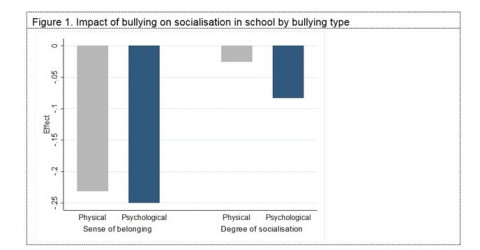 The impact of bullying on learning and socialisation in school in Latin America 23 November 2017 A recently published article (link is external) using the Third Regional Comparative and Explanatory Study (TERCE) learning survey of 2013 provides new evidence on the impact of bullying on learning for 15 Latin American countries. The analysis focuses on sixth grade students and two types of bullying: physical and psychological. Because bullying does not only affect cognitive achievements but also non-cognitive outcomes, the study also looked at whether being bullied translates into lower degree of socialisation and lower sense of belonging within schools. For the whole region, bullying is associated with lower achievement of around 10 fewer points in math and reading tests, although this negative effect varies across countries. The study also found that not only the standard measure of school violence (i.e., physical bullying) is harmful to learning, but also psychological bullying can be equally damaging. The analysis highlights that psychological bullying has more harmful consequences on learning than physical bullying. For instance, physical bullying leads to 15 points less in the math test in Argentina while psychological bullying is associated with negative effects of around 20 points in the same test. A similar trend is seen in Chile where physical bullying and psychological bullying lead to 5 points and 10 points less respectively in the math test scores. Another prominent finding from the study is that students who were victims of psychological bullying are negatively affected in their chances of reaching acceptable degrees of socialisation or acceptance within schools (see Figure 1). The analysis suggests that policies related to the reduction of effects of bullying should be an important part of improving educational quality in Latin American countries. As the world moves forward on the implementation of the Education 2030 Agenda, UNESCO is committed to monitoring the progress towards the achievement of Target 4.a.2 focusing on School based Violence and Bullying. UNESCO has published its School Violence and Bullying Global Status Report as the reference for prognosis and response framework. This article was prepared based on the contribution made by Marcos Delprato, Kwame Akyeampong and Máiréad Dunne (Centre from the Centre for International Education (CIE), University of Sussex, UK), at the request of UNESCO to make available data evidence on the SDG Target 4.a.2. The views and opinions expressed in this article are those of the authors and should not be attributed to UNESCO.
 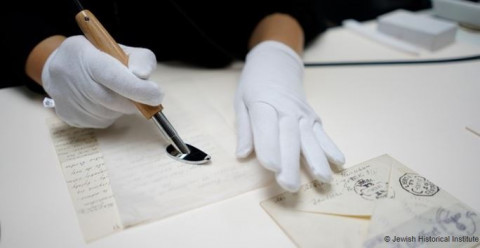 Memory of the World Register – UNESCO represented at the official opening of the Jewish Historical Institute of Warsaw Permanent Exhibition 22 November 2017 WARSAW - A new permanent exhibition “What We Were Unable to Shout Out to the World” has opened at the Jewish Historical Institute in Warsaw, Poland. The collection presents important documents from the Emanuel Ringelblum Archives, also known as the Warsaw Ghetto Archives, which have been included in UNESCO’s Memory of the World Register since 1999. This notable permanent exhibition, which was opened by the President of the Republic of Poland, Andrzej Duda, contains evidence of ghetto resistance, testimonies of life in the ghetto, literature, works of art and private correspondence collected by the clandestine group Oneg Shabbat lead by historian Emanuel Ringelblum. The exhibition is significant in that it presents to the public original documents originating in the largest ghetto in Nazi-occupied Europe, and documenting the fate of Poland’s Jewish community of 3.500,000 people. It forms one of the most important testimonies about the destruction of Polish Jews; both due to its diversity and the documentary value of its collected materials, but also as a record of the horrors of the Holocaust as seen by the victims themselves. UNESCO was represented at the opening with a speech from Karel Fracapane of the Education Sector. More information about the permanent exhibition (link is external) More information about UNESCO’s Memory of the World Programme
 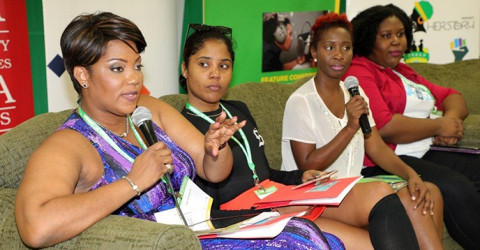 When Media and Information Literacy becomes critical 22 November 2017 It is evident that the necessity of media and information literacy (MIL) is bellowed in more and more gathering relating to information, media, technology, education and development in general. This is promising, noted a UNESCO representative.However, we still have a long road ahead. MIL is still not firmly planted on the international development agenda. Unlike Global MIL Week that has grown each year, the diffusion of MIL at the national level has been riding the highs and lows of different waves connected to social challenges.Presently, MIL is buoyed by public concerns about fake news, hate speech and violent extremism. However, do we need crises to justify the necessity of MIL as an integral part of literacy and education in general? The annual Global MIL Week is designed to entrench MIL as a permanent action on the international development agenda. This year’s celebration took place from 25 October to 1 November 2017, under the theme “Media and Information Literacy in Critical Times: Re-imagining Ways of Learning and Information Environments”. The theme could not have been more poignant. Its Feature Conference, the Seventh Media and Information Literacy and Intercultural Dialogue (MILID) Conference was organized in Kingston, Jamaica from 24 to 27 October 2017. The University of the West Indies, Mona was the host. Close to 100 celebration events around the globe As a major occasion for stakeholders worldwide to celebrate and advance the achievements and progress towards “MIL for all”, UNESCO encouraged its partners to plan and organize local events online and offline.This year, the message of Global MIL Week was transmitted across borders, mountains and communities with 97 celebration events around the globe from 40 countries, covering all the regions of the world. This made it the biggest Global MIL Week ever since its first edition in 2012. Despite lack of resources, stakeholders in Africa and the Caribbean have strived to organize over 15 local events. Many of them have expressed their strong willingness to be part of stimulating MIL awareness notwithstanding the difficult financial situations they were facing.In Trinidad and Tobago, an online news organization mobilized their staff members to run around the town of Chaguanas in T-shirts that marked “MIL” in order to sensitize the citizens on MIL. See all the global events on the event map: https://en.unesco.org/datasets/event/27607/map. Creating knowledge together on MIL In parallel with the satellites events, the Global MIL Week Feature Conference assembled close to 200 participants from over 40 countries in Jamaica. They explored how they interpreted ways of educating citizens about MIL in all types of environments. They shared their experience, good practices, knowledge and recommendations for future actions.It also served as an important platform to strengthen international multi-stakeholder cooperation and partnerships on MIL. The participants were representatives of governments, media, libraries, broadcasting unions, universities, international organizations, and NGOs etc. Many stakeholders are willing to sacrifice to realize the vision of MIL society. One young woman spoke of how she quit her job to follow her vision by starting an NGO. That vision is to empower youth through information. The demands for the services of the NGO have grown rapidly through the years.Collaborative knowledge to ensure the great impact of MIL on peoples’ lives cannot happen without diverse stakeholders’ inputs. The Feature Conference demonstrated the vision for a marriage between actions on the side of information, libraries, media, and technology, to ensure that a holistic approach to MIL is taking root. For the first time, organizations like the International Federation of Library Associations and Institutions, the International Association of School Librarianship, the Association of Caribbean University, Research and Institutional Libraries, the Jamaica Library Service contributed to Global MIL Week and committed to put their hands to the sledgehammer needed to dismantle the mountain blocking MIL for all. Youth as leaders As was the case of the previous edition, the Global MIL Week 2017 Feature Conference kicked off with the Global MIL Week Youth Agenda Forum, an event designed by youth and dedicated to youth.The Youth Agenda provided an opportunity for young people, youth organizations and leaders, especially youth from the Caribbean region, to get involved in Global MIL Week; it put an emphasis on the role of youth leaders to promote critical civic engagement via MIL. The Youth Agenda gathered close to 250 local and international youth leaders from over 10 countries. These include social media influencers, young entrepreneurs, leaders of youth organizations, local young journalists and students, shared their life experience related to MIL, as well as their understanding on MIL. Among many memorable life stories told by the young speakers, Adama Lee-Bah, a young woman from Gambia passionately shared her story of how she became a MIL activist in a radio station in her teenage years, and encouraged young boys and girls in Gambia to learn MIL to change their lives. She started her study in New York and has been steadily pursuing her dream while shouldering the responsibility of being the Chair of the Youth Committee of the Global Alliance for Partnerships on Media and Information Literacy (GAPMIL). One key outcome of the Youth Agenda is the MIL CLICKS Pact, which is a self-commitment to engage in critical thinking and influencing their peers in this regard online and offline. It was crafted in dialogue with the Youth Committee of GAPMIL. Download the MIL CLICKS Pact in multiple languages: English, French, Spanish, ArabicPeople who embrace the MIL CLICKS Pact are invited to fill in this simple form and commit to be a MIL CLICKer. See more on the outcome of the Youth Agenda here. Information about the GAPMIL Global MIL Award 2017 is available here. Follow UNESCO website for a report that will outline the key recommendations that came out of the Global MIL Week Feature Conference.
  Making Waves: Local radio transforming perceptions of gender-based violence in Africa 21 November 2017 Local radio is raising awareness for gender violence across many hard-to-reach regions in Africa through dedicated gender-sensitive programming. Training in gender-sensitivity is assisting radio staff in the identification and removal of harmful biases and stereotypes from broadcasts and encouraging positive change in the communal perception of gender equality. UNESCO’s “Empowering Local Radio with ICTs” project is helping radio stations to inspire intolerance for gender-based violence and hold perpetrators and duty-bearers responsible. In one reported case from Tanzania, a woman attempting to press an identified suspect with allegations of rape faced only indifference among municipal authorities. When local leaders demanded a bribe in exchange for the arrest of the suspect, Dodoma FM, one of the stations involved in UNESCO’s project, took up the story. They publicized the woman’s ongoing struggle until the district commissioner was stirred into action. Dodoma’s coverage of the scandal resulted in the arrest of the perpetrator of the crime, as well as punitive measures taken against the three local leaders accused of blackmail. Gender-sensitive training helps radio staff identify and cover relevant stories, but the interest to remove harmful stereotypes in pursuing these issues is coming from local reporters. “I’m interested in gender-sensitive reporting because gender equality levels are low and more knowledge is needed. Training helped me to report on stories dealing with gender violence and child marriages in ways that can improve the situation in the community,” said Ayo Rebecca, a reporter from Radio Apac FM in Uganda, during a workshop organised by UNESCO. Even in hard-to-reach areas, local radio stations are creating awareness and broadcasts are sounding out favourable responses in the community. At the gateway to Virunga National Park, Dorika FM in the Democratic Republic of the Congo is receiving strong local support for its programs dedicated to positive action that can contribute to greater social independence and empowerment among women. The broadcasts have been so well-received as to result in the creation of a listener’s club and NGO that in turn supports and promotes the topics of the program. Social perceptions and tolerance for gender-based violence, especially that occurring domestically, are significant obstacles faced in tackling this problem. Gender issues and their solutions require action that targets both men and women in order to change the social landscape that facilitates such behaviour. “Targeted radio programs have the capacity to challenge masculinity norms and the unfortunate tolerance for gender violence, as shown by Radio Ijwi ry’Umukenyezi (RIU) in Burundi,” said Mirta Lourenço, UNESCO’s Chief for Media Development. RIU created a dedicated gender unit in their station to monitor the content of broadcasts and host awareness programs. They advocate positive behaviour amongst men and women that promotes intolerance for gender violence and disrepute for perpetrators. The program has been popular enough in the community that listeners’ groups have been formed and grateful residents have even begun to support the station by supplying RIU with water free of charge. Aside from evoking support from the community, local radio stations are targeting duty-bearers and holding them accountable to the responsibilities of their office. Tumbatu FM in Zanzibar, Tanzania is bringing gender-based violence and the role of authorities to the forefront of social discussion through their programs. Broadcasts stressed the importance of intolerance and the necessity for reporting incidents to the local authorities rather than resolving the issue within the household. As a direct result of the awareness spread, the police have established gender desks at local stations where residents can receive information and report gender-based crimes. To confront the issue of gender violence further, national policy can contribute in several ways through the creation and development of media regulatory bodies, as well as the promotion of media literacy amongst boys and girls to understand gender equality challenges and stereotypes. UNESCO’s “Empowering Local Radio with ICTs” project (https://en.unesco.org/radioict/), supported by Sweden, is one such international initiative that is giving priority to gender in media, improving media access and control and supplying the tools to radio staff to make positive change in their communities. The importance of gender equality and the empowerment of women have increased to become leading priorities in both developed and developing countries as nations strive to remove the social and economic disparities between men and women. To combat the cycle caused by gender misrepresentation in media, UNESCO has also created Gender-Sensitive Indicators for Media (GSIM) to promote gender parity and women empowerment in all forms of media, as in line with the UN’s SDG 5. By addressing the significance of this issue, countries can help advocate for autonomy and the fair treatment of women, such as reducing the social tolerance for gender-based violence. Read more about UNESCO’s work on Gender-Sensitive Indicators for Media here.
 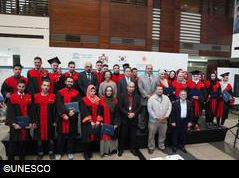 UNESCO Amman Office and the Republic of Korea celebrate over 200 graduates 21 November 2017 20 November 2017 - The UNESCO Amman office, in collaboration with Al Quds College, honored the achievements of 201 Jordanian and Syrian youth, graduating from training under a project funded by the Government of the Republic of Korea. The UNESCO-led scholarship project offered vulnerable youth a chance to pursue post-basic education opportunities, through training programs held at Al Quds College. The project supports the Government of Jordan’s efforts to provide technical and vocational education and training opportunities for Jordanian and Syrian refugee youth affected by the Syria Crisis and is aligned with the 2016-2018 Jordan Response Plan. In total, 250 Jordanian and Syrian youth enrolled in the BTEC Level 3 Diploma program, a one-year internationally accredited diploma program focusing on seven different specialties. A total of 201 youth collected their diplomas and fifty-six percent of the graduates were women. Students also benefitted from additional courses in English language, life skills, computer literacy and study skills. His Excellency Mr. Lee Bom-yon, Ambassador of the Embassy of the Republic of Korea to Jordan delivered an address at the event, wishing the graduates good luck with their upcoming careers and thanking UNESCO and Al Quds College for their strong collaboration. His Excellency also announced ongoing support to UNESCO in 2018, geared towards the funding of a technical and vocational education training project in 2018. Ms. Costanza Farina, UNESCO Representative to Jordan, congratulated the hardworking students, “Your achievement has required a strong commitment from each of you and this is, fundamentally, what we celebrate today; your commitment, our shared commitment to building a stronger, more inclusive, just and peaceful society, starting with educated young men and women”. Ms. Farina highlighted the importance of the 2030 Agenda for Sustainable Development in Jordan and around the world. “As we see evident here today, education transforms lives. It is at the heart of UNESCO’s mission to build peace, eradicate poverty and drive sustainable development”. Dr. Ayman Maqableh, Dean of Al Quds College, honored the graduates, wishing them success in their future endeavors. “I would like to give thanks to UNESCO, the Government of the Republic of Korea and the Ministry of Higher Education and Scientific Research for their ongoing support”. Mr. Mohammad Al Kharabsheh, representing His Excellency the Minister of Higher Education and Scientific Research, also delivered remarks and commended the youth’s hard work. The event was well attended by the Embassy of the Republic of Korea to Jordan, United Nations agencies and Jordanian and Syrian graduating youth. A few of the graduates shared their stories with the crowd, conveying their satisfaction with their studies and touching on their hopes for the future. For more information on this project, please visit:http://www.unesco.org/new/en/amman/projects /education/technical-and-vocational-eduaction-and-taining-for-syrian-and-joradanian-youth-in-jordan/
 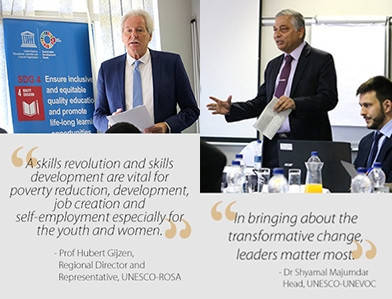 UNEVOC TVET Leadership Programme for Southern and Eastern Africa 21 November 2017 For potential change leaders in the TVET sector in Eastern and Southern Africa to better understand the regional and global development agendas, and use these opportunities to effect change in their institutions, the first ever UNEVOC Regional TVET Leadership Programme was conducted. This programme was held in Harare, Zimbabwe from the 23rd- 27th October 2017. Linked to UNESCO-UNEVOC’s flagship UNEVOC TVET Leadership Programme, this programme focused on building the leadership potential of the change agents in three areas; Strategic Knowledge, Thematic Knowledge, and Leadership and Management Skills. The TVET sector has gained eminence in Africa, especially since the 2030 Agenda for Sustainable Development and the Sustainable Development Goals came to the fore. Given the transversal and critical role of education in realizing many of the targets of the Sustainable Development Agenda, various initiatives have been taken by regional entities around Africa. TVET Strategy and regional framework for cooperation developed by the Southern African Development Community (SADC), development of the Plateforme d'Expertise en Formation Professionnelle(PEFOP) platform for West Africa, and the Better Education for Africa’s Rise (BEAR) project in Southern, Eastern and Central Africa, are some of the notable regional initiatives. To fully use the opportunities offered by these initiatives, there is a need of leaders, who have the vision, knowledge and skills to seize the opportunities and bring about the changes. In this context, the UNESCO- UNEVOC International Centre for Technical and Vocational Education and Training (TVET) and the UNESCO Regional Office for Southern Africa (ROSA) organized the UNEVOC TVET Leadership Programme for 24 TVET leaders from 9 Eastern and Southern African countries. These included Namibia, Zambia, Mozambique, Zimbabwe, Madagascar, Malawi, Botswana, Kenya, and Swaziland. The participants composed of senior level TVET staff in governments, TVET colleges and TVET authorities. UNESCO-UNEVOC was represented by Dr. Shyamal Majumdar, Head of UNESCO-UNEVOC and Mr. Jean Hautier, Regional Focal Point for UNEVOC Network in Africa. UNESCO ROSA was represented by Prof. Hubert Gizjen, Director of UNESCO - ROSA and Ms. Carolyn Medel-Anonuevo, Senior Education Specialist and Head of the Education Unit at the UNESCO Regional Office for Southern Africa. Modules and lectures at the Programme The programme was aimed at enabling these participants to align local TVET imperatives with the regional and global agendas. The training modules were structured as follows: By the end of the programme, each participant had prepared a “change project” to be implemented within their country upon their return that reflects learnings from the programme. These included: Improving access in TVET through a Career Guidance system, presented by Mozambique; Increasing TVET graduates’ employability by strengthening industrial linkages, presented by Namibia, Enhancing the attractiveness of a TVET by making a Green Campus, presented by Kenya; and Implementing new strategies to bring girls in Engineering fields presented by Zimbabwe. UNESCO ROSA and UNESCO-UNEVOC committed to provide support to the countries in implementing this agenda of re-branding TVET in these countries and improving quality assurance through knowledge sharing and policy support.The UNEVOC Centres from the region that participated in this TVET Leadership Programme are as follows: Human Resources Development Council (HRDC) - Botswana Higher Institute of Technology Antsiranana - Madagascar Soche Technical College – Malawi University of Malawi – Malawi National Directorate for Technical Education – Mozambique Namibia Training Authority – Namibia Rundu Vocational Training Centre – Namibia Ministry of Education and Training Swaziland - Ministry of Higher and Teritary Education, Science and Technology Development – Zimbabwe Please click the following to learn more about: 1. UNEVOC TVET Leadership Programme 2. UNESCO Regional Office for Southern Africa (ROSA) 3. PEFOP (Plateforme d'Expertise en Formation Professionnelle) 4. Better Education for Africa’s Rise (BEAR) Project – UNESCO
 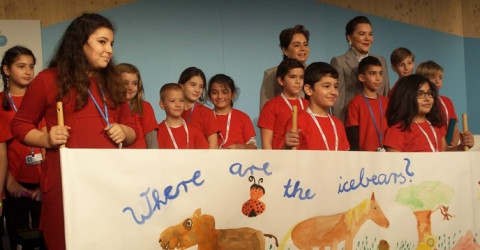 Partner power speeds climate change education, UN summit in Bonn hears 20 November 2017 The critical importance of education in international responses to climate change was the key message of “Education Day”, held at the UN climate conference (link is external) (COP23) in Bonn, Germany on 17 November 2017. UNESCO, together with national, international and UN partners, held a series of side-events and discussion rounds all day, comprising a high-level panel discussion “Uniting for Climate Education – Further, Faster, Together through Partnerships”, co-organized with the United Nations Framework Convention on Climate Change (UNFCCC) and the COP Presidency, Fiji. High-level governmental representatives and international organizations discussed how education and global partnerships can accelerate the implementation of the Paris Agreement on Climate and the Sustainable Development Goals (SDGs), and engage a critical mass of children, youth, professionals, decision-makers and wider society in climate action. Need for education and strong partnerships to enable societal transformation Speaking at the event, Mr Shyamal Majumdar, Head of the UNESCO-UNEVOC International Centre for Technical and Vocational Education and Training said: “Climate action needs more implementation, implementation needs education and skills.” Ms Patricia Espinosa, Executive Secretary of UNFCCC, said: “I believe we stand at the edge of an incredible transformation - one with enormous economic opportunities. But transformations don’t happen in isolation. Education is key. And good education requires good partnerships.” Her Royal Highness Princess Lalla Hasnaa of Morocco, President of Mohammed VI Foundation for Environmental Protection, said: “There is no need to dwell on the crucial role of education in order to rise to the climate challenge. However, what is of the utmost importance is to regularly pool and compare our approaches in order to enrich them.” Mereseini Vuniwaqa, Minister for Women, Children and Poverty Alleviation, Fiji, called for long-term solutions: “We need to restore a respectful relationship with nature, and for this we need education. We need to get children out of the classrooms and see, understand and judge for themselves for needs to be done.” Changing minds not the climate Another side-event, co-organized with nine other UN Agencies, also explored how partnerships at all levels and in all sectors are key to boosting the contribution learning and skills make to climate change adaptation and mitigation It presented new types of partnerships that can help more actors, with examples coming from different sectors from all parts of the world. One of the examples presented was the UNESCO Associated Schools Network (ASPnet) which mobilizes more than 11,000 schools around the world. The schools use UNESCO’s guidelines for “Getting climate-ready”, and develop partnerships with their communities. Jan Hendrik, a 14 year-old student of a German ASPnet school, said that international school exchanges were enablers for changing minds towards climate action: “I can now contribute to changing my school towards sustainable learning.” Good practices show how education leads to climate action During a press conference entitled “Good Practice in Action for Climate Empowerment”, organized by the Centre for Environmental Education (CEE), India, UNESCO and UNFCCC a compilation of case studies on climate change education for mitigation and adaptation in all parts of the world was launched. Representing UNESCO, Ms Julia Heiss, Team Leader on Education for Sustainable Development, said: “The case studies are an important proof and example of how education efforts lead to action which involves people in adapting and contributing to climate change mitigation. I hope they will inspire many more people and associations to follow a similar path.” Throughout the day, short discussion rounds and presentations were held at the UNESCO Pavilion on a variety of subjects, including schools’ climate readiness, teacher education for climate change, youth leadership and greening technical and vocational education and training. These discussions were led by UNESCO, ASPnet schools, partners, experts, practitioners and youth representatives from around the world. COP23 participants also visited UNESCO’s thematic booth on SDG 4 on quality education, co-organized with UNEP and UNITAR, to learn about the UN’s joint work in climate change education. This year’s COP, which is taking place from 6 to 18 November, focuses on vulnerable nations and aims to develop a full set of guidelines to help government and non-government actors meet the goals of the Paris Agreement, to be finalized in 2018. The role of education and training in climate change was strongly emphasized at the Paris Climate Conference COP21 and again at COP22 in Marrakesh. UNESCO promotes climate change through its Education for Sustainable Development (ESD) programme, and through the UNESCO Global Action Programme (GAP) on ESD, the follow-up to the UN Decade for ESD (2005-2014). UNESCO and partners seek to support countries to mainstream climate change into their education and training systems. Harnessing partnerships is one of the key strategies for the implementation of the GAP on ESD.
  Ministries, FAO and UNESCO launch an education curriculum and programming framework for pastoralists 20 November 2017 16 November, 2017 - The Food and Agriculture Organization of the United Nations (FAO) and the United Nations Educational, Scientific and Cultural Organization (UNESCO), in partnership with Ministry of General Education and Instruction (MoGEI), Ministry of Livestock and Fisheries (MLF) and Ministry of Agriculture and Food Security (MAFS), today launched the adapted Pastoralist Livelihoods and Education Field Schools (PLEFS) curriculum and the Pastoralist Education Programme Strategy Framework. “It is our long-term vision to see to it that pastoralist communities receive adequate services and infrastructure to improve their livelihoods,” says James Janka Duku, Minister of Livestock and Fisheries. The curriculum and programme strategy framework is the first of its kind in South Sudan as it integrates literacy and numeracy training and livelihood support, tailored specifically to the nomadic lifestyle of the pastoralists. As a result, it provides pastoralists with sustainable and high-quality learning opportunities as they move. “The project has seized the opportunity to create a quality curriculum within the framework for lifelong learning for all for marginalized pastoralist communities, and has empowered the communities to access literacy and livelihood opportunities” stated by Sardar Umar Alam, UNESCO Representative South Sudan. “Today’s event is devoted not only to acknowledge the efforts of all partners in developing the curriculum, but also reassuring their commitment to implement the pastoralist education programme to promote literacy to build more inclusive and peaceful communities”. This curriculum is based on an approach used by FAO all over the world: the ‘Pastoral Field School’, which strengthens individuals’ knowledge and practices whilst reinforcing collaborative learning at grass-root level. It provides an excellent entry point to engage pastoralists as they learn by doing, versus the traditional top down dissemination of information and skills. “The partnership between the three line ministries, FAO and UNESCO is unique and has realized a way for marginalized communities to access vital services in challenging conditions,” says Serge Tissot, FAO Representative. “FAO is committed to strengthening livelihoods, and integrating basic literacy and numeracy skills into the field school approach really improves pastoralists’ way of life.” The PLEFS curriculum provides an active, constructivist approach to learning as it is tailored to the needs and interests of South Sudanese pastoralists. It is designed to target adults, youth and children. The adult’s content has been adapted to lean more on imparting skills that can immediately be applied to improve their livelihoods; for example, integrating literacy and numeracy training and skills building in milk handling and processing. For youth, the curriculum follows the Accelerated Learning Programme approach but now lays emphasis on livelihood diversification to take up business opportunities and appropriate technology to open up the world beyond the cattle camp. The child component follows the formal school curriculum but also integrates aspects of livestock management and agriculture. Overall, it also addresses cross-cutting issues such as gender-based violence, climate change, disaster risk reduction, HIV/AIDS and peace building. The PLEFS curriculum has been developed with European Union funding under the project "Enhanced Knowledge for Resilient Pastoralist Livelihoods and Education in South Sudan," implemented by FAO and UNESCO in Western Lakes and Eastern Lakes States. Currently there are 11 learning centres, catering to approximately 1 600 learners. As the curriculum and framework have been finalized, it is hoped that it can now be scaled-up, and brought to other pastoral communities across the country in the near future. For more information please contact:Mr Jasper Okodi, UNESCO Education Specialist, 0928004904, j.okodi(at)unesco.org Ms Lieke Visser, FAO Communication Officer, 0922001661, lieke.visser@fao.org
 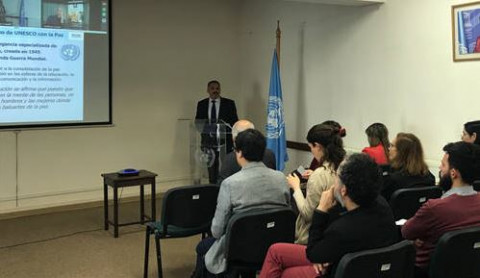 Poor performance by youth from Latin American countries in an international study plants challenges in civic and citizenship education 17 November 2017 Chile, Colombia, Mexico, Peru and Dominican Republic took part in the study, along with 19 other education systems. Although they did not shine in the world-wide context, young Mexicans and Colombians showed an increase in civic knowledge compared to the last assessment. Half the students from Chile, Colombia, Mexico, Peru and the Dominican Republic display no specific knowledge or understanding about civic and citizen institutions, systems and concepts. These are the conclusions at the regional level of the IEA International Civic and Citizenship Education Study (ICCS 2016). The five countries had the lowest scores among the 24 education systems analysed. The data and the challenges that it represents for the region were addressed during the on-line transmission of a regional event to discuss the study, held on 8 November 2017 by the International Association for the Evaluation of Educational Achievement (IEA) in collaboration with the Regional Bureau for Education in Latin America and the Caribbean (OREALC/UNESCO Santiago). ICSS 2016 applied to lower secondary school pupils during 2015, and highlighted changes in each country since 2009. Twenty-four education systems from Asia, America and Europe took part in the study; this is the only large-scale survey to investigate civic skills and attitudes among young people. Five countries, different performance levels Taking the average scores of the 24 education systems in the sample as a whole, two thirds of the pupils were ranked in the two highest performance bands (A and B); in the five participating countries from the Region, however, the average was around 40%. The performance of the five countries was uneven. Peru and Dominican Republic presented a much higher percentage of pupils in the lowest performance bands (C, D and below D), with more than 60% of pupils in these bands; this contrasted with results from Chile, Colombia and Mexico where the corresponding percentage was 49%. This means that approximately half the pupils from the participating countries in the region display no specific knowledge or understanding about civic and citizen institutions, systems and concepts. Variation against the previous study, ICCS 2009 These results from the 2016 assessment do not indicate a significant reduction in scores compared to the 2009 assessment (in which Peru did not take part). Colombia achieved an improvement of 20 points in the average score, the 7th largest increase in average score in the whole sample. Mexico also presented a significant increase of 15 points in its average. Dominican Republic (+1) and Chile (-1) presented no significant variation. Colombia (+10%) and Mexico (+9%) are among the 6 countries in the sample with the greatest increase in the percentage of their pupils ranked in bands A or B. Dominican Republic is in the lower half of the table with an increase of 4%, while Chile's increase of 2% is not significant. Colombia is an especially interesting case among Latin American countries, since the improvement recorded means that over half of its pupils scored in the top two performance bands (52.8%), almost catching up with Chile (53.1%), which is the highest-ranked Latin American country in this category. In regards to the regional results, Cristián Cox, director of the Comparative Education Policies Centre of Diego Portales University and a member of the assessment committee of the ICCS 2016 Project, commented that this edition of the study is interesting because it raises the question of what happened in school systems in Mexico and Colombia between 2009 and 2015 to cause their remarkable rise in the percentage of pupils ranked in the top performance bands; he added that it would be worth getting experts to explore this question. Other contextual variations Gender: While on average the results of the participating countries favoured girls (25 points higher than the average score for boys), in the Latin American countries, Colombia and Peru presented smaller gaps of 9 and 6 points respectively. These results are the more noteworthy considering that 16 of the 24 participating countries presented gaps of at least 20 points. Chile (24), Mexico (21) and Dominican Republic (29) were within the mean range for the international sample. Immigrants: The average gap in scores between non-immigrant and immigrant populations was 44 points in the sample as a whole. Three of the five Latin American countries presented a larger gap: Mexico (52), Peru (83) and Colombia (116) – this latter had a gap almost 3 times the average for participating countries. Chile (26) and Dominic Republic (23) presented smaller than average gaps. However, the percentage of immigrant pupils is considerably lower in Latin American countries (never more than 3%) as compared with the general average for participating countries (around 7%). Socio-economic context: Throughout the whole sample, the variable which produced the greatest differences in score was the number of books in the home, average 56 points, while the parents' occupation produced an average gap of 35 points between the two groups. In Latin American countries, the parents' education produced the greatest difference between the two study groups in Chile (58), Dominican Republic (46) and Mexico (45). In Peru the gap was 49 points, but the gap for the number of books in the home was wider. Only Colombia breaks the trend among Latin American countries with a difference of only 19 points when the pupils are separated by parents' education. As in Peru, the variable which generated the widest gap was the number of books in the home. Other findings The study showed that in Chile and Peru, young people have very high levels of distrust in the government and the legislative and judicial powers. Wolfram Schulz, research director of ACER's International Surveys Research Program, indicated that this phenomenon can be seen in the context of an increase of civic knowledge in the participating countries in the region, but that there is a negative correlation between greater civic knowledge and active political participation. On this subject, Elisa Salinas of the Chilean Education Quality Agency remarked in her presentation that this lack of confidence can be explained by the greater perception of corruption in these countries, meaning that civic and citizenship education “is a great challenge for our education system.” These results, among others, show the need to give priority to contents of this kind in the national curricula of countries around the region. “We need education for our citizens, and the teachers are key agents for forming citizens in a plural, interdependent, interconnected world,” stressed Atilio Pizarro of the Regional Bureau for Education in Latin America and the Caribbean (OREALC/UNESCO Santiago). Pizarro also noted that this approach requires revision of curricula, teaching and learning contents, teaching methods, materials and classroom practices, as well as assessment methodologies and objects, teacher training, career development, leadership and management. At the same time, he said that “we hope to strengthen and extend strategic alliances to generate comprehensive assessment mechanisms. In the work of the Latin American Laboratory for the Evaluation of Educational Quality (LLECE, coordinated by OREALC/UNESCO Santiago) and the IEA we can recognise ambits for mutual enrichment in order to broaden the contents, cover and impact of these two areas of work, contributing to the common objective of progress in the Education 2030 Agenda.” *** This international event was an opportunity to learn about and discuss the challenges set by Sustainable Development Goal No. 4 (Education) which establishes the Education Agenda for 2030, in particular target 4.7 relating to education for global and local citizenship. The participants included Dirk Hastedt, Executive director of IEA; Atilio Pizarro, head of the Planning, Management, Monitoring and Assessment Section of OREALC/UNESCO Santiago; Wolfram Schulz, research director of ICCS-ACER; and the researcher Cristián Cox, director of the Comparative Education Policies Centre of Diego Portales University and a member of the assessment committee of the ICCS 2016 Project. The national research coordinators of ICCS 2016: Elisa Salinas, Chile; Julio Valeirón, Dominican Republic; and María Teresa Estefanía Sánchez, Peru, offered their local perspectives. Presentations: Welcome: ICCS 2016 Launch Dirk Hastedt, Director ejecutivo de la IEA ICCS 2016: Los resultados latinoamericanos en una perspectiva internacional Wolfram Schulz, ACER Relevancia de ICCS en la región y su vinculación con los Objetivos de Desarrollo Sostenible ODS4/E2030 (in Spanish) Atilio Pizarro, Regional Bureau for Education in Latin America and the Caribbean (OREALC/UNESCO Santiago) Estudio Internacional Educación Cívica y Formación Ciudadana ICSS 2016. Aportes para la región latinoamericana (in Spanish) Elisa Salinas, Chile's Education Quality Assurance Agency Estudio Internacional de Cívica y Ciudadanía – ICCS 2016. La participación de Perú (in Spanish) Maria Teresa Estefania Sanchez, Peru Closing remarks Outlook on ICCS 2022 Ralph Carstens, director de proyectos de la IEA Further information: Global press release: ICCS 2016 reveals increase in students’ civic knowledge, with persisting gaps across and within countries Reports and infographics ICCS Publications Chile's Education Quality Assurance Agency Tweets related to the regional launching: @UNESCOSantiago, hashtag #ICSS2016 URL:http://www.unesco.org/new/en/santiago/press-room/single-new/news/bajo_desempeno_de_jovenes_de_paises_latinoamericanos_en_e/
 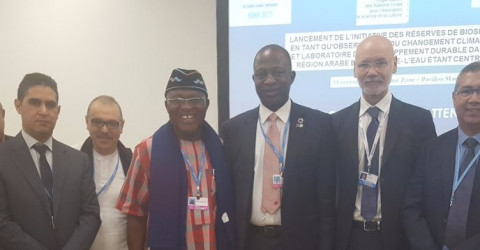 Launch of the initiative for biosphere reserves as a climate change observatory and sustainable development laboratory in the Arab and African region 16 November 2017 The main purpose of the initiative "Biosphere reserves as a climate change observatory and sustainable development laboratory in the Arab and African region" (AABRI) is to ensure that the biosphere reserves of the Arab and African region present a Climate Change Observatory while grouping models of sustainable development, to constitute a framework of sharing and animation for the stakeholders in sustainable development and observing the impacts of climate change in biosphere reserves. It will allow the sharing of data from different biosphere reserves or other related sources in order to share relevant information and communicate good practices. It will contribute to the achievement of the Sustainable Development Goals (Agenda 2030) in biosphere reserves and elsewhere, through the global diffusion of sustainability models developed in these sustainable territories. It was officially launched at the United Nations Climate Change Conference COP23, during a special event at the Morocan pavilion. This launch marks the beginning of an operationalization process of the AABRI initiative. It was also an opportunity for Morocco to reafirm its commitment to be the host country of the the initiative and to provide the secretariat alongside UNESCO and ISESCO. This initiative brings together the efforts of two major UNESCO programmes: the Man and the Biosphere Programme (MAB) and the International Hydrological Programme (IHP), as the water sector is at the heart of the initiative. It was first discussed during the first joint Arab-African meeting IHP- MAB: "First Joint Arab / African IHP and MAB Meeting: Towards COP 22 and SDGs", in Tangier-Morocco from 18 to 20 October 2016 and the "call of Tangier " launched at the COP22 in Marrakech in November 2016.