
News
Follow the newest trends and news in GCED.
1,678 Results found
 UNESCO’s flagship publication on Global Citizenship Education now available in 8 languages 6 April 2017 Two years after its first release, the Global Citizenship Education (GCED) Topics and Learning Objectives are now available in eight languages.As part of its efforts to promote Global Citizenship Education (GCED), UNESCO supports Member States, teachers, and policy makers to foster citizenship and human rights education and empower learners to assume active roles to face and resolve global challenges and to become proactive contributors to a more peaceful, tolerant, inclusive and secure world.Global citizenship education programs can be challenging to design and implement, due to the complexity and richness of the concept, as well as the variety of contexts in which they are developed.UNESCO has produced the Global Citizenship Education: Topics and Learning Objectives following the global dialogue between decision-makers, leading experts and innovative practitioners to offer pedagogical guidance on the implementation of GCED.The guide is also a result of an extensive research and consultation process with experts from different parts of the world and was field tested by education stakeholders in selected countries in all regions to ensure its relevance in different geographical and socio-cultural contexts.This flagship publication has been developed to reach as many individuals and organizations around the globe striving to embed GCED into their education programmes and systems. The Topics and Learning Objectives are now freely available online in UNESDOC in Arabic, English, French, Korean, Portuguese, Russian, Spanish, and now in Danish.The latest edition in Danish has been produced through a co-publishing agreement with the Danish National Commission for UNESCO.
 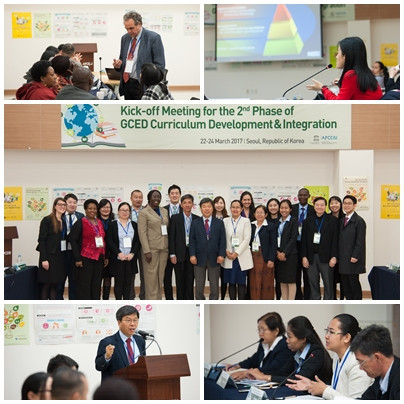 Kick-off Meeting for the 2nd Phase of GCED Curriculum Development & Integration 4 April 2017 The 2nd Phase of GCED Curriculum Development & Integration has officially kicked off with the International Bureau of Education(IBE-UNESCO) as well as the four partner countries(Cambodia, Colombia, Mongolia and Uganda)from 22-24th March at APCEIU GCE Hall. Delegates from Cambodia, Colombia, Mongolia and Uganda shared the progress made during the 1stphase in setting up the GCED Curriculum Development & Integration Committee and carrying out a needs assessment and situational analysis of its curriculum. The four countries proposed their 2nd phase action plan, which elaborated specific details and relevant information to fulfil the following goals: First, to integrate global citizenship into the curriculum and/or produce GCED materials according to their needs, and second, to conduct a pilot test of the output. The kick-off meeting was successful with the enthusiastic participation of partner countries and IBE-UNESCO. This meeting will provide assistance in setting out a clear path for the year ahead. Also, it will aid further cementing every stakeholder’s resolve in implementing the course of action they came to adopt. In addition, APCEIU had the opportunity to present its Policy Guide on Global Citizenship Education to gain feedback from the participants. The draft guide, which is due to be published later this year, is expected to serve as a frame of reference for policy makers. The main contents of the draft guide aim to integrate and strengthen GCED in educational policies, strategies and plans. URL:Kick-off Meeting for the 2nd Phase of GCED Curriculum Development & Integration > APCEIU News - APCEIU (unescoapceiu.org)
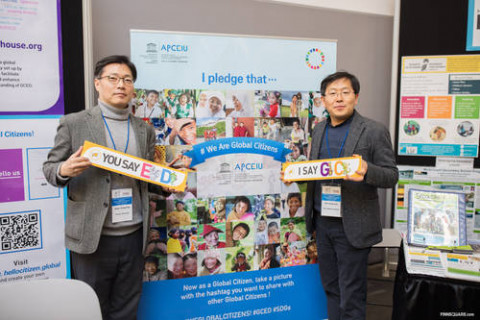
 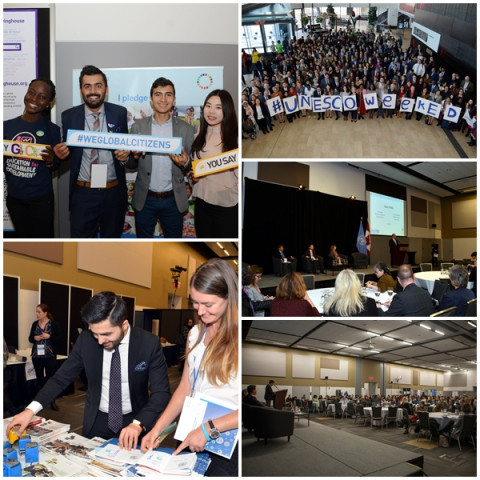 Examining practices for educators to empower learners to become global citizens: UNESCO Week for Peace and Sustainable Development 22 March 2017 More than 500 experts, practitioners and policymakers from across the world gathered in Ottawa, Canada and explored pedagogical approaches and teaching practices to achieve the Sustainable Development Goals (SDGs) through Education for Sustainable Development (ESD) and Global Citizenship Education (GCED). The UNESCO Week for Peace and Sustainable Development: the Role of Education (6-10 March 2017) brought together the Global Review Forum for the Global Action Programme on ESD (GAP) and the Third UNESCO Forum on GCED representing UNESCO's two major educational approaches. Participants examined good policies and practices for educators and teacher trainers to empower learners to become global citizens. On 8 March, UNESCO Director-General Irina Bokova officially opened the 5 - day event and an exhibition of 42 booths showcasing a wide variety of practices and approaches to ESD and GCED. “We need the education that promotes understanding between cultures, that strengthens the resilience of societies. And we need teachers equipped with the skills and confidence to foster these competences.” She highlighted the importance of teachers’ role to cultivate global citizenship. APCEIU participated in the exhibition under the name of ‘Global Citizen Campus’ which consists of hands-on activities related to GCED as well as SGDs, Global Citizen Passport, online materials such as GCED Clearing House, APCEIU’s publications including GCED best practices, etc. The APCEIU’s booth drew the attention of many participants, providing a platform for sharing practices, ideas, and insights on GCED. The Third UNESCO Forum on GCED, which opened on 8 March, drew together GCED experts, educational practitioners, civil society organizations, young people, research institutions and universities, UN agencies and other partners from the public, non-governmental and private sector from all regions. “Teachers are on the frontlines of bringing GCED into learning environments. Without confident, qualified and well-prepared teachers, we cannot advance GCED,” said UNESCO Assistant Director-General for Education, Qian Tang, at the official opening of the Forum. Utak Chung, Director of APCEIU, in remarks at the opening of the Forum, pledged that APCEIU will continue to support promoting GCED with UNESCO and other partners. He also renewed the APCEIU’s endeavours towards the global advancement of GCED and reaffirmed that fostering global citizenship is not just the UN or UNESCO’s agenda, but ultimately a global agenda for all. During the Forum, APCEIU co-organised and supported two concurrent sessions. In collaboration with the UNESCO Bangkok Office, APCEIU organised a session titled “Preparing teachers for global citizenship education in Asia: what works?” on 9 March. Inviting two experts from the region, Francis Daehoon Lee (Sungkonghoe University) and Toh Swee-Hin (University of Alberta), the session explored themes and pedagogical methods through which GCED can be approached. On 10 March, APCEIU supported a session titled “Teaching with young people: What do learners expect from GCED?”, led by the GCED Youth Network. The GCED Youth Network was established by a group of youth advocates for GCED who participated in APCEIU’s annual programme for youth. Anna Susarenco from Moldova and Lorena Gamarra from Peru introduced advocacy techniques which teachers and educators can use to engage young people in GCED. The third UNESCO Forum on GCED focused on teachers’ crucial role for pioneering frontline to bring GCED into classrooms and for achieving SDGs. Throughout the Forum, participants exchanged ideas and information on GCED and strengthened networks to ensure that practical change is brought into learning environment. URL:Examining practices for educators to empower learners to become global citizens: UNESCO Week for Peace and Sustainable Development > APCEIU News - APCEIU (unescoapceiu.org)
 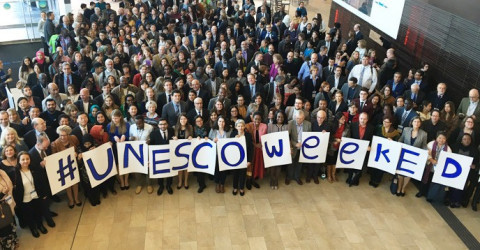 Education connects peace and development in sustainable ways says Director-General at UNESCO Week opening 17 March 2017 UNESCO Director-General Irina Bokova officially opened the UNESCO Week for Peace and Sustainable Development: The Role of Education in Ottawa, Canada on 8 March together with Catherine McKenna, Minister of Environment and Climate Change, Government of Canada, and Mitzie Hunter, Minister of Education, Government of Ontario.The 5-day event is gathering more than 400 experts, practitioners and policymakers from across the world to examine pedagogical approaches and teaching practices to achieve the Sustainable Development Goals (SDGs) through Education for Sustainable Development (ESD) and Global Citizenship Education (GCED). Teachers of UNESCO’s Associated Schools Network (ASPnet) are also attending the event, along with 50 young delegates from all around the world.“We need new forms of education that promotes understanding between cultures, that strengthens the resilience of societies and provides the relevant skills to navigate the future,” said Ms Bokova, emphasizing the need to promote human rights, dignity, diversity and inclusion. “We now have to reinforce efforts, translate results into educational practices, into teacher training and into concrete transformations of curricula. To succeed, we need teachers equipped with the skills and confidence to foster these competences. We must share, analyse and innovate – this is the aim of this Week.”The Week brings together the Global Review Forum for the Global Action Programme on ESD (GAP) and the Third UNESCO Forum on GCED. ESD and GCED represent UNESCO's two major educational approaches that strive to provide everyone with the opportunity to acquire the knowledge, skills, attitudes and values needed to shape a just, peaceful and sustainable future.All speakers of the opening acknowledged the important role of women and indigenous knowledge in achieving a sustainable future. “I know the transformative power of education and what it does for my people”, said Maliseet Elder Mac Saulis, who offered a welcome to the traditional territory.Minister McKenna affirmed that “No change will be more monumental than that of climate change. It won’t be easy to overcome this challenge but it should not be passed on to the generations that follow us.”Ambassador Dessima Williams, Special Adviser for Implementation of the SDGs, also spoke at the opening on behalf of the President of the Seventy-First Session of the United Nations General Assembly. “There can be no sustained peace without sustainable development”, she said. “The work of UNESCO and its partners are both commendable and encouraging. We cannot do such a job of transforming the world alone, but together, we are able to achieve much.”Focusing on those who are on the frontlines in the classroom, Fred van Leeuwen, Secretary-General of Education International said: “Teachers create bonds within groups and build bridges across groups and communities. It is clear that efforts to improve teaching and learning will not succeed unless we trust, value and support teachers. We see this Conference as a clear token of UNESCO to support the teaching profession worldwide". ”Minister Hunter, together with Ms Bokova, inaugurated an exhibition of 42 booths showcasing a wide variety of practices and approaches to ESD and GCED, stating that “for students to achieve excellence, they must be in an environment that enables them to do so.”The opening was followed by “Talking Across Generations,” an event gathering youth from all regions, policymakers and academics, including several UNESCO Chairs, organized by the UNESCO Mahatma Gandhi Institute for Education for Peace and Sustainable Development (MGIEP). A rich diversity of voices shared views on the 21st century classroom, how to empower teachers to promote peace and global citizenship, use technology and drive transformative change. The Director-General emphasized the importance of support to teachers, through training, professional development, decent salaries and respect for their status in society.“World Rescue”, an SDG-inspired video game, was launched by MGIEP at the event. It allows players to take the role of young heroes to help solve global problems such as displacement, disease, deforestation and pollution in their communities. UNESCO also presented a new publication “Education for Sustainable Development Goals: Learning Objectives”, which highlights recommendations for classroom activities to address each of the SDGs as well as guidance on how to integrate ESD into policies and teaching.In support of the Week, the UNESCO Global Education Monitoring (GEM) Report has launched a youth photo contest on ESD and GCED.The Week will run until 10 March when the GCED Forum examines good policies and practices for educators and teacher trainers to empower learners to become global citizens. Follow the conversation on Twitter under #UNESCOweekEDThe UNESCO Week is organized jointly by UNESCO and the Canadian Commission for UNESCO with financial support from UNESCO, the Canadian Commission for UNESCO, the Canada Council for the Arts and the Ministry of Education, Culture, Sports, Science and Technology of Japan through the UNESCO Japanese Funds-in-Trust for ESD. Additional support for the Week is provided by the Council of Ministers of Education, Canada, the Global Centre for Pluralism and the Canadian Museum of History.
  UNESCO Forum on Global Citizenship Education provides a platform for innovative teaching 17 March 2017 The Third UNESCO Forum on GCED, which opened on 8 March 2017 in Ottawa, Canada, brought together leading experts, practitioners and policymakers from around the world to examine pedagogical approaches and teaching practices, and to ensure that practical change is brought into classrooms.“Teachers are on the frontlines of bringing GCED into learning environments. Without confident, qualified and well-prepared teachers, we cannot advance GCED,” said UNESCO Assistant Director-General for Education, Qian Tang, at the official opening of the Forum. Ambassador Elaine Ayotte, Permanent Delegate of Canada to UNESCO, underlined the essential contribution of educators in building competencies that foster awareness of today’s realities that affect all peoples from all cultures.Ambassador Choong-hee Hahn, Deputy Permanent Representative of the Republic of Korea to the United Nations, described the momentum building among policy makers at the global level, and Member States’ commitment to equip the next generation with the tools of tolerance and cultural literacy.Utak Chung, Director of the Asia-Pacific Centre of Education for International Understanding, renewed the Centre’s support towards global advancement of GCED and reaffirmed that fostering global citizenship is not just the UN or UNESCO’s agenda, but ultimately a global agenda. Teachers’ crucial role for achieving Target 4.7With teachers as the central theme of the third UNESCO GCED Forum, the focus has been to draw attention to educators’ fundamental role in improving learning about, and for, global citizenship. In a context where learners are increasingly learning through a diversity of channels, the role of teachers is bound to evolve. Teachers are not only the transmitters of knowledge. They have a role to play in developing learners’ knowledge, skills and attitudes that promote peace and sustainable development. Teachers are the agents of change who can ensure countries achieve of Target 4.7 of the SGD on Education. The event also included the active participation of teachers from UNESCO’s Associated Schools Network (ASPnet) along with 50 youth delegates selected by the Mahatma Gandhi Institute for Peace and Sustainable Development (MGIEP).The UNESCO Week for Peace and Sustainable Development: the Role of Education (6-10 March 2017) also included the GAP Review Forum, as well as a joint day where the official opening took place. The UNESCO Week is organized jointly by UNESCO and the Canadian Commission for UNESCO with financial support from UNESCO, the Canadian Commission for UNESCO, the Canada Council for the Arts and the Ministry of Education, Culture, Sports, Science and Technology of Japan through the UNESCO Japanese Funds-in-Trust for ESD. Additional support for the Week is provided by the Council of Ministers of Education, Canada, the Global Centre for Pluralism and the Canadian Museum of History. Follow the GCED Forum on Twitter using #UNESCOweekED.Links: UNESCO Week for Peace and Sustainable Development website Global Citizenship Education Learning to live together sustainably (SDG4.7): Trends and Progress UNESCO Associated Schools URL:http://www.unesco.org/new/en/education/resources/online-materials/single-view/news/unesco_forum_on_global_citizenship_education_provides_a_plat/
 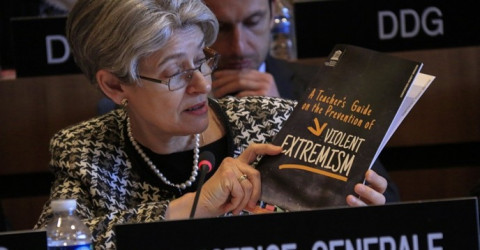 UNESCO Launches Teacher’s Guide on the Prevention of Violent Extremism 17 March 2017 UNESCO’s Teacher Guide on the Prevention of Violent Extremism just released, provides practical tips to educators seeking guidance on how to discuss the subject in classrooms.The Guide was developed within the framework of UNESCO’s work on Global Citizenship Education and in response to the request of UNESCO’s Member States for assistance in strengthening their education sector responses to violent extremism. It seeks to help teachers to create a classroom climate that is inclusive, and conducive to respectful dialogue, open discussion and critical thinking. The publication also recommends resources to develop a deeper understanding of the phenomenon of violent extremism and responds to frequently asked questions.Whether discussions on violent extremism are pre-planned or not, a well-managed conversation on the subject should seek to reinforce skills that enable learners to participate more generally in civic life as informed global citizens. This implies ensuring that the information exchanged during the discussion, as well as the way the debate is handled, develop skills, attitudes and behaviours that foster mutual respect, critical thinking and a sense of belonging to a common humanity.The Guide will be complemented by a second guidance document, to be released in September 2016, targeting policy-makers within ministries of education. This tool will provide a set of resources that can help reinforce national capacities to address the drivers of violent extremism through holistic and pragmatic education sector-wide responses.The publication was peer reviewed by a host of international experts in the field of education, as well as Associated Schools Project Network (ASPnet) schools and students of the Teachers College of Columbia University.The Guide will be translated initially into French and then other languages. It will also be used as a basis for capacity building workshops on the prevention of violent extremism through education.This Guide constitutes UNESCO’s first contribution to the implementation of the UN Secretary-General’s Plan of Action to Prevent Violent Extremism, announced in January 2016.Links A Teacher's Guide on the Prevention of Violent Extremism United Nations Plan of Action to Prevent Violent Extremism Global Citizenship Education UNESCO’s role in promoting education as a tool to prevent violent extremism (197 Executive Board/Decision 46)
  Experts and practitioners discuss way forward for Education for Sustainable Development at global forum in Canada 9 March 2017 More than 250 practitioners, policymakers, experts and stakeholders of Education for Sustainable Development (ESD) from more than 90 countries are gathering in Ottawa, Canada, from 6 to 8 March for the Review Forum for the UNESCO Global Action Programme (GAP) on ESD: Implementation and Innovation. The event is part of the UNESCO Week for Peace and Sustainable Development: the Role of Education (6-10 March 2017).The GAP was launched in 2014 as the official follow-up to the United Nations Decade of ESD (2005-2014) with the aim to scaling ESD approaches. The Review Forum provides the opportunity to take stock of progress achieved since its launch and examine the way forward with a focus on pedagogical approach. Soo-Hyang Choi, Director of UNESCO’s Division for Inclusion, Peace and Sustainable Development, said: “The preparation of the post-GAP period has already started. We have launched a consultation process, which will continue at this meeting.”Algonquin Elder Claudette Commanda opened the meeting by offering a welcome to the traditional territory. She and Christina Cameron, President of the Canadian Commission for UNESCO, highlighted the role of indigenous knowledge in understanding how to protect our planet and how to live together in peace. “Education is the most efficient tool to achieve the 17 Sustainable Development Goals,” Cameron said. “This gathering is an opportunity to collectively roll up our sleeves and find innovation.”A new publication, “Education for Sustainable Development Goals: Learning Objectives”, was also launched at the Forum. It was developed by UNESCO to support policy-makers, curriculum developers and educators to promote learning for the SDGs. The publication contains learning objectives and suggestions for classroom activities to address each of the SDGs as well as guidance on how to integrate ESD into policies and teaching. Anantha Kumar Duraiappah, Director of the UNESCO Mahatma Gandhi Institute for Peace and Sustainable Development (MGIEP): said: “Knowledge itself is not sufficient. We have to trigger empathy and compassion in people.”Isao Kiso, former Ambassador and Permanent Delegate of Japan to UNESCO, emphasized the role of the UNESCO Associated Schools Network (ASPnet) to multiply and scale up ESD approaches. “ASPnet is used in Japan very strategically as the focal tool to promote ESD at the local level,” he said. “The number of Japanese Associated Schools has increased since 2005 from 20 schools to over 1,000.” Worldwide, there are more than 10,000 Associated Schools worldwidein more than 180 countries that serve as multipliers of transformative education and whole-school approaches.In a panel discussion entitled “What makes a good ESD teacher”, several ASPnet teachers presented pedagogical approaches to ESD in their countries and schools. Josephine Udonsi from Nigeria said: “I apply the three ‘Is’: Integrate, initiate, innovate’ to teach my students about sustainable development.” Jean-Marc Septsault from France said that schools should “be more open to dialogue with all local actors” to enrich teaching and learning about sustainable development.The 3-day Forum is mainly organized along interactive concurrent sessions and town hall debates on different topics such as “Effective teaching and learning for transformation”, “Preparing educators for ESD” and “Emerging global issues for ESD”. Participant and workshop facilitator Bianca Bilgram from the German National Commission for UNESCO said: “The content and format are giving us many new ideas and inspiration for our work.”The GAP Review Forum will be followed by the Third UNESCO Forum on Global Citizenship Education (GCED) with a joint day and official opening of the UNESCO Week on 8 March. This is the first time that UNESCO is bringing together under one banner these two of its main educational programmes, ESD and GCED.The UNESCO Week is organized jointly by UNESCO and the Canadian Commission for UNESCO, with additional financial support from the Canada Council for the Arts and the Ministry of Education, Culture, Sports, Science and Technology of Japan through the UNESCO Japanese Funds-in-Trust for ESD. Additional support for the Week is provided by the Council of Ministers of Education, Canada, the Global Centre for Pluralism and the Canadian Museum of History.Follow the event on Twitter under #UNESCOweekED.
 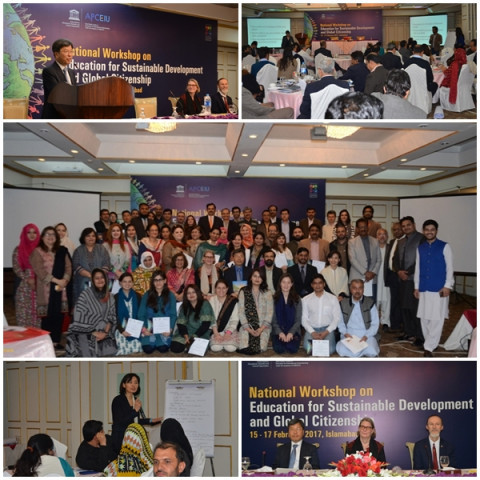 National Workshop on “Education for Sustainable Development and Global Citizenship” in Islamabad, Pakistan 8 March 2017 Co-organized by APCEIU, UNESCO Islamabad and UNESCO Headquarters, a National Workshop on “Education for Sustainable Development and Global Citizenship Education” was held on 15 - 17 February in Islamabad, Pakistan. This three-day national workshop was especially for the education stakeholders in Pakistan to raise their awareness and understanding on the concept of Education for Sustainable Development and Global Citizenship focusing on the Sustainable Development Goals target 4.7. Aimed to ensure that all leaners are provided with the knowledge, attitudes and skills to promote sustainable development and global citizenship, this workshop was a forum of discussing issues around SDG 4.7 by participants from Ministry of Federal Education and Professional Training, provincial/area education department offices, civil society organizations, research institutes, academia and youth organizations. This national workshop was facilitated in the participatory format through presentations, group works and activities to help participants deepening their understanding on ESD and GCED as well as internalize its concepts to develop action plans respective to their own educational contexts. As one of the sessions, Prevention of Violent Extremism through Education (PVE-E) was focused by reflecting current situation of incidents by extremists especially in Pakistan. During the workshop, participants worked in groups to share their best practices and at the end of workshop, established key recommendations and detailed action plans in three areas of Education Policies, Curriculum and Teacher Education. At the closing of the workshop, Director Utak Chung expressed his gratitude to the workshop participants and UNESCO Islamabad, and promised continuous support from APCEIU for future cooperation as follow-up on this opportunity. He mentioned that “as a partner of SDG 4.7, we look forward to working together with educators in Pakistan to enhance GCED and ESD through diverse opportunities and APCEIU programmes.” URL:National Workshop on “Education for Sustainable Development and Global Citizenship” in Islamabad, Pakistan > APCEIU News - APCEIU (unescoapceiu.org)
 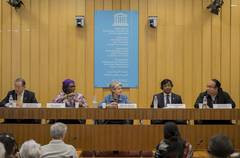 International Mother Language Day celebrates the power of multilingualism 7 March 2017 Multilingualism was celebrated as the theme of International Mother Language Day held at UNESCO Headquarters, Paris on February 21, 2017.UNESCO joined the International Organisation of La Francophonie (OIF) to mark the yearly celebration under the theme “Towards Sustainable Futures through Multilingual Education”.This year’s focus was on fostering sustainable development by ensuring learners have access to education in their mother tongue and in other languages.Multilingual education based on mother tongue contributes to achieving all SDGs by linking the local knowledge with the global knowledge, addressing common challenges and acting together to find solutions. It is through mastery of the first or mother language that the basic skills of reading, writing and numeracy are acquired.In addition local languages - especially minority and indigenous languages - transmit cultures, values and traditional knowledge, thus playing an important role in promoting sustainable futures.Confidence and self-esteemDuring the opening ceremony, UNESCO Director-General Irina Bokova, said: “Education and information in the mother language is absolutely essential to improving learning and developing confidence and self-esteem, which are among the most powerful engines of development.”Ms Youma Fall, Director of French Language, Culture and Diversity from OIF stressed the importance of national languages for the promotion of cultural diversity and as the basis for all creativity.H.E. Mr M. Shahidul Islam, Ambassador of Bangladesh to France and Permanent Delegate to UNESCO stated that the people of Bangladesh have a special attachment to the International Mother Language Day, because this day is an important milestone in their national history.He underlined that Bangladesh continues to play an active role in supporting UNESCO’s efforts to promote linguistic and cultural diversity. In 2016, the Government of Bangladesh established the International Mother Language Institute to act as a regional hub to conduct research to promote and protect all mother languages including those on the verge of extinction or already extinct. H.E. Mr. Sergio Cáceres García, Ambassador and Permanent Delegate of Bolivia to UNESCO, shared the experience, richness and challenges from integrating 36 indigenous languages across the country. He said Bolivia was committed to intercultural and multilingual education and the use of mother tongues in learning and in all aspects of life as it contributes to development.The International Mother Language Day celebration explored the use of quality multilingual education to achieve sustainable futures, facilitating participation and action in society, giving access to new knowledge and cultural expressions, and thus contributing to building global citizenship.
 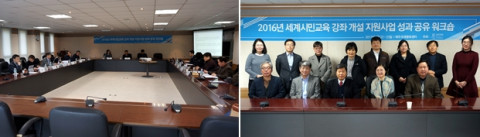 Workshop for sharing the outcomes of 2016 ‘Support for GCED Course Development 6 March 2017 An academic workshop to share the outcomes of 2016 ‘Support for GCED Course Development’ was held at the Jeju International Peace Center on 22-23 February this year. The workshop was attended by the professors who had designed and implemented GCED courses at 9 different universities in the Republic of Korea during the 2016 Autumn semester (July to December) under the support of APCEIU. It was an opportunity to share and discuss among professors the outcomes, operational strategies and teaching methods with regard to the implemented GCED courses. Throughout this workshop, the participants could share and learn about newly developed GCED curricular implemented in each university/department. In addition, in-depth discussions on shaping the future of GCED course development and implementation was continued, such as finding ways to link the existing GCED courses to students’ career paths and out-of-school education programmes as well as on the importance of developing a necessity for development of common GCED reference materials and GCED courses assessment mechanism. URL: Workshop for sharing the outcomes of 2016 ‘Support for GCED Course Development’ > APCEIU News - APCEIU (unescoapceiu.org)