
News
Follow the newest trends and news in GCED.
1,676 Results found
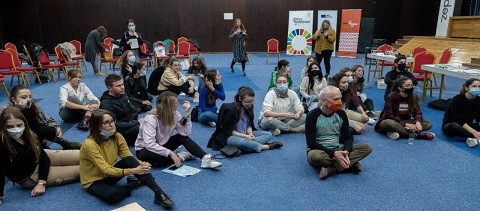 Serbia and Bosnia and Herzegovina: Intercultural dialogue for the future 15 March 2021 “Intercultural dialogue – dialogue for the future” is a project implemented by Group 484, a non-governmental organisation in Serbia, in partnership with Vaša prava BiH Association, a non-profit organisation in Bosnia and Herzegovina. This is a joint effort to strengthen the capacity of young people, promote cultural diversity and intercultural understanding, improve the education system in order to achieve social cohesion, but also to improve dialogue and action for the common good in Bosnia and Herzegovina, and Serbia. The project aims to offer young people, university students, high school students and representatives of educational institutions, an understanding of the presence of different cultures in the two project countries, as a potential for social and cultural development, and not a threat to their own identity. 30 students of social sciences, humanities and arts strengthened their own intercultural competencies as participants of the School on Interculturalism held in October 2020; they acquired first-hand experience in implementing a model of intercultural learning with high school students through scholar seminars. “We and the Others”, is a series of seminars that engaged young people in addressing different cultural communities and intercultural heritage. Intercultural dialogue is at the centre of bridging different cultural groups and initiating conversations in local communities. A great number of young students participated in the four seminars resulting in identification and understanding of multiculturalism, particularly in their local communities. In promoting intercultural dialogue, the students boldly stepped out in public spaces through various promotional activities based on socially engaged artistic do-it-yourself initiatives. Although the ongoing COVID-19 pandemic restricted the majority of the activities to be in-person, it did not prevent the high school students from participating in the activities online. However, in February, one of the seminars took place in-person in the city of Vranje, Serbia. University and high school students in this seminar were motivated and particularly worked with a group of artists in creating an artistic street performance. The idea of exploring and discussing intercultural heritage through artistic street performance is an ingenious way of promoting intercultural dialogue and involving the larger community. It was very creative of the young students to make use of the material they acquired during the research on intercultural heritage of their community, in preparation for the artistic street performance. The street action “Good News Drummers” was conducted on the second and third day of the seminar; the students shouted “news” on positive examples of solidarity, intercultural exchange, and cooperation while playing drums in the streets of Vranje. The distinct playing of drums and costumes worn by the young people was guaranteed to attract the attention of people in various public places in which they performed, and contributed to raising awareness to the significance of intercultural dialogue between diverse cultural groups in their society. Good News Drummers”, dressed in costumes, encouraged their fellow citizens by reading the good news about “little heroes and heroines” in their performance. The reading would begin with the slogan, “We are fixing bad things, we are good news drummers!”, and the positive reaction from their fellow citizens inspired this group to repeat their announcement several times during the day in various places. “I participated in this workshop because I wanted to meet new people and get familiar with the new type of artistic performance such as 'Good News Drummers'. Through my previous learning experience and with Group 484, I knew beforehand that this would be innovative and unique, something I would remember for my whole life”, said Andrej Stojanović, student of Technical High school in Vranje. The project is realized within the joint UN Regional Programme "Dialogue for the Future: Promoting Dialogue and Social Cohesion in and Between Bosnia and Herzegovina, Montenegro and the Republic of Serbia" implemented by UNESCO, UNDP and UNICEF, with the support of the UN Peacebuilding Fund. Links Good News Drummers in Bujanovac and Vranje And Comic Strip Trip in Loznica Group 484 Vaša prava ProjectMulti-country Dialogue for the Future - Fostering Dialogue and Social Cohesion in, and between, Bosnia and Herzegovina, Montenegro, Serbia URL:https://en.unesco.org/news/serbia-and-bosnia-and-herzegovina-intercultural-dialogue-future-0
 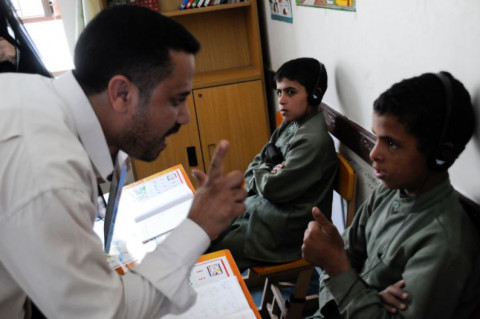 Sign language in education is oft forgotten 15 March 2021 About 34 million children worldwide have disabling hearing loss. Nearly 95% of deaf children are born to hearing parents, for whom sign language knowledge is crucial. Sign language introduces deaf children to basic expression and communication skills. Since most deaf children in low-resource settings start primary school with little or no language, the role of sign languages is essential for opening the pathway for progression in formal education, as it fosters access to the curriculum. In 2018, however, just 41 countries worldwide recognize sign language as an official language, 21 of which are in the European Union. Moreover, there are hundreds of national sign languages, each with its morphology, phonology and syntax. For instance, Dutch Sign Language has seven dialects. The task is not straightforward. Laws and policies count There are several conventions and rules on the use of sign language in educating deaf children, including the United Nations Standard Rules on the Equalization of Opportunities for Persons with Disabilities, the UN Convention on the Rights of Persons with Disabilities and Article 16 of the legally binding 2018 Protocol to the African Charter on Human and Peoples’ Rights on the Rights of Persons with Disabilities in Africa. Our review of laws and policies on inclusion, documented in the PEER country profiles, showed that a number of countries recognize sign language for instruction, including Ethiopia in its 2016 education law or Latvia, the Republic of Moldova and Slovenia. In the United States, 45 of the 50 states do. Last month, Jamaica introduced sign language into its national curriculum. South Africa’s adult literacy programme, Kha Ri Gude, offers classes in all 11 official local languages, including sign language, and has recruited 60 sign language teachers to implement the programme. In Georgia, sign language standards have been elaborated to assist inclusion of learners with hearing impairment, and standards for learners with visual impairment are in preparation. In Uzbekistan the Ministry of Preschool Education has developed a cycle of television programs and online classes, master classes and experiences for 3- to 7-year-old nomadic children, all of which are accompanied by sign language interpretation. Test procedure accommodations are common. In Australia, as part of the Higher Education Participation and Partnerships Program, the Higher Education Disability Support Program covers costs for sign language interpreters, note taking and examination assistance. Students with severe oral communication difficulties can take written instead of oral examinations in Croatia, Georgia, Mongolia, North Macedonia, the Republic of Moldova and the Russian Federation. NGOs were, of course, the first to provide services for deaf learners in much of the world and continue to do so in many contexts. For instance, the Association of Deaf Uruguayans established an institute of Uruguayan Sign Language and helped establish the Association for Parents and Friends of Deaf Uruguayans, which supports schools for the deaf to help children participate independently in social and economic life. As a result of such efforts, many governments recognize NGOs as equal partners in achieving inclusive education objectives In Kenya, eKitabu’s Studio KSLproject integrates Kenyan Sign Language videos into digital children’s storybooks featuring locally relevant stories and characters, packaged in the open standard EPUBformat for wide access. The storybooks contain sign language glossaries and questions for teachers and children to use together. ICT based approaches are also opening doors for the deaf. Microphone and receiver systems linked to students’ hearing aids have been used in universities in Scotland (United Kingdom) and Tunisia. At Bauman Moscow State Technical University, the Principal Educational, Research and Methodological Center for the deaf and hearing impaired offers bachelor’s and master’s degree programmes in computer science and engineering using ICT. Whatever the method for adapting and accommodating education systems to those with hearing or oral difficulties, early and concrete interventions are necessary. If sign language is unrecognised, it results in linguistic deprivation, which makes learners vulnerable to abuse and can lead to cognitive delays and more. However, even recognition does not imply implementation. In Zimbabwe, the government recognized sign-language as an official language in the 2013 Constitution, but its role in instruction is unclear. Most deaf children lack an appropriate environment to learn it at home. They learn it among themselves, with each school developing a separate system. Teachers in mainstream rural primary schools lack dictionaries, and large class sizes affect their ability to pay attention to deaf learners’ needs. Some teachers believe the sign language is a deficient communication system that deaf students can learn informally and independently. Some fear it interferes with learning the spoken language and are uncomfortable with the role of teaching assistants. Learners often lack support. In India, as elsewhere, some students pay out of pocket for sign language interpreters. The arrival of COVID-19 has made that task more complicated. Many of the learning materials issued during school closures did not take their needs into account. On top of this, the sudden requirement to wear a mask in the classroom has left those hard of hearing struggling to understand what the teacher is saying. Some met the challenge head on. In Uzbekistan, Armenia and Kazakhstan, the live video lessons run on national TV had sign language interpretation. Posted on 11 March 2021 by GEM Report URL:https://gemreportunesco.wordpress.com/2021/03/11/sign-language-in-education-is-oft-forgotten/
 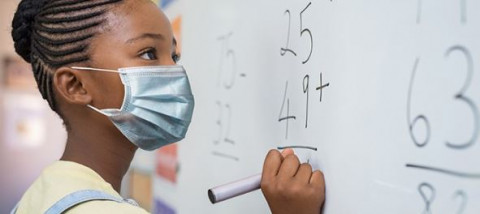 Mathematics for a Better World, UNESCO marks International Day of Mathematics, 14 March 15 March 2021 14 March, proclaimed by UNESCO as International Day of Mathematics (IDM), will be held under the theme “Mathematics for a Better World". Celebrating the beauty and relevance of mathematics, the Day highlights the essential role played by this discipline in reaching the United Nations Sustainable Development Goals. Organized by the International Mathematics Union, IDM will feature a mixture of virtual and face-to-face celebrations, notably in classrooms. Celebrations are scheduled in more than 70 countries with over 410 individual events. Mathematics, with its many technical applications, now underpins all areas of our lives. Together with algorithms, mathematics plays a key role in artificial intelligence and technological disruptions – and, as we address global issues such as the COVID-19 pandemic and climate change, we are reminded of the importance of mathematics in responding to the challenges of our time. -- Audrey Azoulay, UNESCO Director-General The new feature of IDM 2021 is the Poster Challenge to which more than 2,100 schools and organizations responded, producing their own IDM poster to illustrate one facet of the theme of “Mathematics for a Better World”. The posters will be made available to all under an open licence. IDM 2021 is celebrated on all continents. From Madagascar to Gambia, from Panama to Chile, from Albania to Malaysia, from Bangladesh to Australia, people all over the world are organizing festivities. An international live celebration in English, French and Spanish will take place on 14 March, 2 to 6pm, UTC. Also, 48 hours of live coverage on the IDM website will start at 00:00 New Zealand time and end at 24:00 Pacific time. The international celebration is complemented by national and local competitions, conferences, exhibitions, and talks, organized by mathematical societies, research institutes, museums, schools, universities, etc. In Algeria, many events will take place all over the country to show how mathematics helps improve our world. They consist in the organization of webinars, national mathematics competitions, recreational mathematics, and classroom activities. A special event involving blind pupils shows that mathematics is a universal language. Celebrations are in partnership with the public television El Maarifa channel (TV7) which will report on the different events to promote them to the wider population. -- Djamel Eddine Cheriet, Vice-President of the Algerian Mathematical Society In a joint project with the Simons Foundation, the mathematical societies of Algeria, Senegal, and the Republic of Congo will organize online and on site activities on mathematics and artificial intelligence, as well as mathematical games, for a large audience in French, Arabic, and English. They will also offer special training programmes for teachers and educators in Africa and the Arab region. The IDM is an opportunity to share the knowledge that men and women have developed throughout history. It is also a space to create, share, motivate and inspire future generations with mathematics. It is a day to remember that mathematics empowers us, sets us free, and makes us better citizens. -- Laura Vanessa Gomez Bermeo (Colombia) Through the gloom of the pandemic, IDM is an opportunity for exciting and challenging activities in schools. Students can explore how mathematics helps to understand the spread of an epidemic and how the theory of fair division allows for more equitable policies. -- Christiane Rousseau, University of Montreal, initiator for the IMU of the IDM project The date of 14 March is already known as Pi Day and celebrated in many countries. It is named after the important number π, the ratio between the circumference and diameter of a circle, approximately equal to 3.14. The IDM celebration expands Pi Day to include the whole spectrum of mathematics. In view of the pandemic, the 2021 theme of “Mathematics for a Better World” reminds us that athematics and statistics are essential tools for decision-makers in that they enable us to predict the evolution of the disease and optimizemitigation strategies with limited resources. But the role of mathematics in building a better world goes well beyond the pandemic response, and schools are invited to explore the mathematics of fair division, which has so many applications in designing economic and social policies. The IDM website is the main hub for the International Day of Mathematics. It hosts information material to be used by press and organizers (including logos and flyers in different languages) as well as proposals for activities related to the theme for everyone interested in hosting an event. All the official material provided through the website is under an open license, which means it can be freely shared, translated, and adapted. Partners: The United Nations Educational, Scientific, and Cultural Organization (UNESCO), is headquartered in Paris. As the United Nations’ “House of Peace,” UNESCO serves to develop mutual understanding and the strengthening of bonds among nations through international cooperation in education, the sciences, culture and communication. More information At the 40th session of its General Conference, UNESCO proclaimed 14 March of every year International Day of Mathematics. More information The International Mathematical Union (IMU) is an international non-governmental and non-profit scientific organization, with the purpose of promoting international cooperation in mathematics. IDM is communicated and supported by the IDM website, which is hosted by IMAGINARY, a non-profit organization dedicated to communication about modern mathematics. Sponsors: The Klaus Tschira Foundation (which supports natural sciences, mathematics, and computer science in Germany) sponsor of the IDM website and communication. The Simons Foundation sponsor of the special IDM celebrations in Africa. The Canadian Commission for UNESCO sponsor of the 2021 IDM Poster Challenge. Contacts for further information: Helge Holden, Secretary General of the International Mathematical Union, secretary@mathunion.org Christiane Rousseau, Chair of the IDM Governing Board, idm@mathunion.org, +1 514 9156081 Andreas Matt, Managing Director of IMAGINARY and of the IDM website, andreas.matt@imaginary.org, +49 151 51836352 The International Mathematical Union, Hausvogteiplatz 11A, D-10117 Berlin, Germany, imu.info@mathunion.org Pictures: The logo and all pictures below can be used freely for articles about the International Day of Mathematics. Please find high-resolution versions via the “Download Link”. The pictures are from locally organized events (exhibitions, workshops, festivals) celebrating mathematics. Logo of the International Day of Mathematics Press Kit page with images and press releases URL:https://en.unesco.org/news/mathematics-better-world-unesco-marks-international-day-mathematics-14-march
  Imagine 4.7 Global Event: Call for Network Member Session Proposals 14 March 2021 Bridge 47 Network members are invited to co-organise and run sessions at Bridge 47’s four-day IMAGINE 4.7 Global event in May. Our Global event will share some of our learnings and celebrate the journey we’ve embarked on together with the Bridge 47 Network. By reconnecting for four days on 25-28 May, we hope to challenge the “old ways of doing things” and to dream of brighter futures. We look forward to new inspiration and input from passionate people who wish to learn and exchange together with us. Let's celebrate the diverse ways we can work on SDG Target 4.7 at IMAGINE 4.7! Visit the IMAGINE 4.7 event page to learn more about the event. Submit a Session Bridge 47 would like to take this opportunity to invite Network members to help us co-organise our virtual Global event. A session can be anything: a workshop, a performance, a policy debate, a seminar, a comedy sketch, or something else. Sessions will be 1-2 hours long, and all sessions will take place virtually. Selections will be made based on the relevance of the proposal for the Bridge 47 Network, inclusive and transformative methodology and diversity in terms of topics, profiles and backgrounds. If there are similar proposals, we may couple interesting proposals together, as there are limited time slots available. To apply, fill out this online application form. Deadline for submissions is 4 April 2021. If you have any questions, please forward them to Alen Maletic at alen.maletic@bridge47.org. URL:https://www.bridge47.org/news/03/2021/imagine-47-global-event-call-network-member-session-proposals
 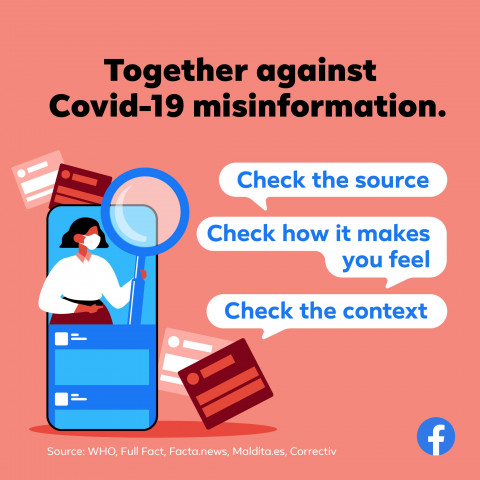 Together Against Covid-19 Misinformation: A New Campaign in Partnership with the WHO 13 March 2021 Throughout the Covid-19 pandemic we have been working to connect people to accurate information and reduce misinformation on our platforms. Last month we announced the biggest worldwide campaign to promote authoritative information about Covid-19 vaccines. We are removing false vaccine claims, reducing distribution of inaccurate health information, and informing people about effective vaccine delivery. Today we’re launching a new campaign in partnership with the WHO and some of our European fact-checking partners called ‘Together Against Covid-19 Misinformation’. The campaign will roll out to people across the EU, UK, Norway and Iceland, as well as countries across the Middle East, Africa and Turkey, and will show up on Facebook through a series of graphics with tips on how to spot false news: Check The Source: Scrutinise content, even if it appears science based Check How It Makes You Feel: False news can manipulate feelings for clicks Check The Context: Look to public health authorities to confirm content We’re also launching a dedicated website in English, French, Italian, German, Spanish, Polish and Turkish, which will include information on how we’re tackling misinformation on our platforms. It will give people more transparency around our Remove, Reduce and Inform strategy, outline our community standards, and share the steps we’re taking to combat false news around global events such as Covid-19, elections and climate change. During the COVID-19 pandemic and beyond, we’ll continue working with industry experts and people on our platforms to ensure we’re aggressively tackling misinformation, and give people additional resources to scrutinize content they see online, helping them decide what to read, trust and share. By Aïda Ndiaye, Public Policy Manager URL:https://www.facebook.com/formedia/blog/together-against-covid-19-misinformation-a-new-campaign-in-partnership-with-the-who
 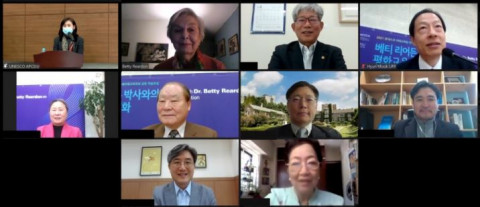 평화교육 분야의 세계적 석학, 베티 리어든(Betty Reardon) 박사와의 평화교육 학술포럼 개최 12 March 2021 APCEIU, in partnership with the Korean Society of Education for International Understanding (KOSEIU), hosted the Dialogue with Dr. Betty Reardon on Peace Education in a virtual format on February 26, 2021. Since the global pandemic, the demand for peace education has been increasing due to intensified discrimination, hatred, and extremism, however, the complex and multi-layered nature of peace presents practical difficulties in realizing peace education in the classroom. In this context, the forum was held on the occasion of the publication of the Korean version of Dr. Betty Reardon’s book, Comprehensive Peace Education, translated by Prof. Soon-Won Kang from Hanshin University (Chairperson of the Governing Board of APCEIU). Almost 100 participants, including peace educators, teachers, researchers, and students, attended this virtual forum. Prof. Soon-Young Pak from Yonsei University, President of KOSEIU, delivered his opening remarks by stressing the difficulty of practicing peace education due to diverse aspects of peace, and he hoped to resolve these difficulties through Dr. Reardon’s valuable insights on peace education. In his congratulatory remarks, Mr. Hyun Mook Lim, Director of APCEIU, appreciated Dr. Reardon’s life-long contribution to the theoretical development and practice of peace education, and underscored the need to better deliver peace education as well as global citizenship education in the post COVID-19 era by practicing the comprehensive peace education emphasized by Dr. Reardon. Dr. Samuel Lee, the first director of APCEIU (President of Korea Dialogue Academy), attended the forum as a designated panel and asked Dr. Reardon’s opinion on the impact of the COVID-19 pandemic and climate change on peace education. Dr. Reardon replied that the COVID-19 pandemic reaffirms the importance of embracing the ecological perspective of peace education, and emphasized that, in order to resolve the global crisis including the COVID, we must acknowledge how fear is manufactured by political purposes and spread by media. She concluded her answer by stressing the importance of teaching critical media skills as a part of global citizenship education. Prof. Soon-Won Kang, another designated panel, asked Dr. Reardon’s opinion on the subtitle for the Korean version of Comprehensive Peace Education, Peace Education Is Global Citizenship Education. She began answering by congratulating the publication of the Korean version, and responded that the Korean subtitle is more appropriate for this particular time than the original subtitle, Educating for Global Responsibility, since it provides an opportunity for readers to think about the interconnectedness across borders and the importance of global responsibility. During the following Q&A session, Mr. Sung-geun Kim, Deputy Superintendent of Chungcheongbuk-do Office of Education, asked about the ways to deliver peace education to students of different ages. Dr. Reardon answered that peace education for the youngest learners should start by teaching the value of self and –respect for others, emphasizing that all education, especially peace education, should teach all learners the possibility to do something to make a better society. Mr. Jae Young Lee, Director of Korea Peacebuilding Institute, asked about the new opportunities for peace education in the post COVID-19 era. Dr. Reardon pointed out that the current pandemic has revealed the disparities and injustices existing in our society. She concluded her response by suggesting that peace educators pay more attention to more clearly disclosing the existing structural injustices and inhumane social structure and more fully integrating it into educational practices. APCEIU will continue to make efforts to stimulate discussions for comprehensive peace education and global citizenship education. The video clip of this forum will be uploaded on APCEIU’s YouTube channel. (www.youtube.com/watch?v=hqsRjmvdl6Q) URL:http://www.unescoapceiu.org/post/4139
  Media and Information Literacy in Function of Development of Critical Thinking and Public Advocacy of the Youth 12 March 2021 A team of experts from the Faculty of Political Sciences of the University of Belgrade, tailor-made an online workshop titled, “Media and Information Literacy in Function of Development of Critical Thinking and Public Advocacy of the Youth”, for 43 students from the Universities of Novi Sad, Nis and Belgrade. The event aimed to empower and enhance peacebuilding capacities of students in public advocacy campaigning. The workshop was structured around specific UNESCO methodologies (Media and Information Literacy MIL, World Heritage in Young Hands Kit, Learning to Live Together, Prevention of Violent Extremism PVE), developed through video lectures and supported with different online tools. Its objectives were multiple, from enhancing the skills of participants in partaking constructively in dialogue and decision-making processes to improving skills of fighting stereotypes and nourishing acceptance of diversity, increasing expertise of public advocacy, critical thinking and participation in constructive public projects and dialogue in future and, gaining knowledge on how to use media for active contribution to positive transformation in their communities. The students were inspired to influence positive change in their local communities, as a result of the training activities of the workshop. Grouping the students into small teams stirred up their creativity and created a platform for brainstorming different ideas. With the support and encouragement of skilled mentors, the students came up with unprecedented small-scale advocacy campaign ideas to implement effective positive change in their local communities. Thus, involving young people not only through engagement but participation, is one of the essential building blocks in changing their local communities. November 2020 marked the launch of two public advocacy campaigns: “Donate, get degree” encouraging students to donate clothes for people in need, by students from the Faculty of Political Science, University of Belgrade; “Equal access” advocating for improving access of disabled persons to public facilities, by students from the Faculty of Philosophy, University of Nis. Impressive was the level of enthusiasm that students have shown for gaining knowledge about public advocacy and the creativity of the follow-up public campaigns that have developed. “This makes me believe that young people are willing to collaborate, engage and actively participate in bringing positive changes in our communities, but they need to be motivated more by us”, underlined Project Manager and Assistant Professor Ana Milojevic, Faculty of Political Science, University of Belgrade. “The campaigns were ambitious and demonstrated that young people are ready to get involved with decision makers." The project is realized within the joint UN Regional Programme "Dialogue for the Future: Promoting Dialogue and Social Cohesion in and Between Bosnia and Herzegovina, Montenegro and the Republic of Serbia" implemented by UNESCO, UNDP and UNICEF, with the support of the UN Peacebuilding Fund. Links Faculty of Political Science, University of Belgrade Competition for training and competition of students in creating the best advocacy campaign! Online workshops within the programme "Dialogue for the Future" completed Are you participating in the social network advocacy campaigns? ProjectMulti-country Dialogue for the Future - Fostering Dialogue and Social Cohesion in, and between, Bosnia and Herzegovina, Montenegro, Serbia URL:https://en.unesco.org/news/media-and-information-literacy-function-development-critical-thinking-and-public-advocacy-youth
  Media and information literacy: A prerequisite for stimulating climate change engagement 12 March 2021 While the world combats the COVID-19 disinfodemic, another wave of climate-related disinformation that has existed for a long time should not be forgotten. Understanding the basic science of climate, one’s influence on the climate and climate’s influence on the society at large requires information, media and technological competencies. This is especially so in the digital age. Policy making, awareness raising and other levels of intervention against climate change cannot be done outside of the information and media spheres. Media and information literacy (MIL) is an antecedent of science literacy. When MIL is combined with science literacy, they can empower ordinary citizens to contribute to the fight against climate change. UNESCO has created a set of graphics providing knowledge and practical tips on fighting climate change in daily life trough MIL. The materials are centered around different topics, such as greenwashing, carbon footprint of the internet, and eco-messaging. View and download these resources here. An individual’s online behaviours might seem trivial vis-à-vis global warming, whereas one same action undertaken by a million people can make a significant impact on the climate. According to ITU, at the end of 2019, over half of the world population was using the Internet. One could observe that the minuscule carbon footprint of one single email or internet search is no longer negligible when multiplied by billions. Unsubscribing from unwanted newsletters or stopping mobile applications from playing multimedia content automatically are simple gestures to prevent unnecessary greenhouse gas emissions. This may however not be evident to an average person. The set of competencies to understand how climate change happens, its impacts, and relevant mitigation approaches are part of science literacy, often referred to as “climate literacy”. They are acquired and frequently applied by means of information, media and digital technology, and are thus intertwined with MIL competencies. Citizens who lack MIL competencies are prone to climate-related disinformation and unverified claims disseminated through various forms of online and offline media. This leads to a low level of acceptance of climate change science, and ignorance of the actions that we can all take individually and collectively. The uninformed rejection of climate change science, nowadays quite common in public discourse, is a major obstacle and can be tackled with MIL. Media and technology companies play a central role in educating and informing citizens on climate change. Media outlets and information flow on digital communications platforms amplify the urgency of the crisis, communicate key facts about climate, and debunk climate change denial and other conspiracy theories. It is hence crucial for citizens to know how these news and online content are produced, for what purposes, and based on what sources. MIL is also vital for journalists to ensure factual and evidence-based reporting on climate. Media and information literate citizens and decision-makers are able to access reliable information to make informed decisions as regards consumption and carbon footprint. They are able to adapt or change their attitudes and behaviours accordingly to avoid actions or policies that can exacerbate the crisis, based on accurate information and evidence. They are equipped to proactively counter climate change and contribute to strengthening public trust of climate change science. Under the leadership of the European Youth Information and Counselling Agency, UNESCO supported the development of the Green Media and Information Literacy concept, which calls for: Raising awareness of the importance of checking facts related to environmental sustainability and paying attention to information sources; Providing people with the tools and resources needed to learn how to check sources of information, spot disinformation and spread information on the climate emergency in a responsible way; Encouraging people to get informed on the latest news, facts and research about the climate emergency and what can be done at different levels. UNESCO has also developed the resource Media and Information Literacy in Journalism: A Handbook for Journalists and Journalism Educators. This tool offers guidelines for the development of internal MIL policies and strategies aimed at the systematic promotion of MIL by media, related training institutions, and digital communications platforms. To learn more about UNESCO’s thematic area of Media and Information Literacy, visit: https://en.unesco.org/themes/media-and-information-literacy. URL:https://en.unesco.org/news/media-and-information-literacy-prerequisite-stimulating-climate-change-engagement
 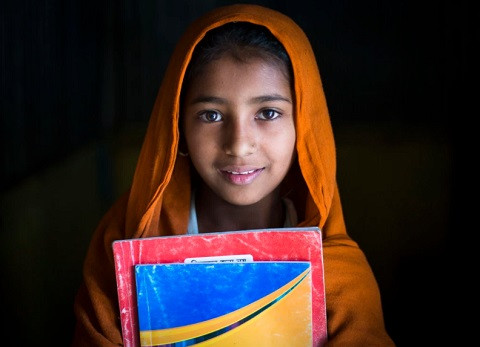 Countries are still falling short of developing textbooks free of gender stereotypes 11 March 2021 By Nicole Bella, GEM Report and Matthias Eck, UNESCO Textbooks are powerful factors in the construction of gender identities. They transmit knowledge and present social and gender norms, shaping the world vision of children and young people. In some contexts, textbooks are the first and sometimes the only books that a young person may read and can have a lasting impact on their perceptions. And yet they still often perpetuate discriminatory social norms and values. This must be challenged. Under its strategic objective B.4, the Beijing Declaration and Platform for Action, a blueprint for women’s rights signed by 189 countries in 1995 called upon countries to develop curricula, textbooks and teaching aids free of gender-based stereotypes for all levels of education, including teacher training. Twenty-five years after the adoption of this objective, girls and women are still under-represented in textbooks or, when included, depicted in traditional roles in many countries, a truth found in in teaching and learnings materials from all corners of the globe as new analysis in the recently released 2020 GEM Gender Report shows. A review of 95 primary and secondary compulsory education textbooks in the Islamic Republic of Iran, for example, showed that women accounted for only 37% of images. There were no images of women in about 60% of textbooks for Farsi and foreign language, 63% for science and 74% for social science. In the United States, a study of introductory economics textbooks found that 18% of characters mentioned were female, mostly portrayed in relation to food, fashion or entertainment. A report on the way that women’s history was reflected in pre-primary, primary and secondary social studies found that 53% of mentions of women referred to domestic and family roles and 2% to entry into the workforce. An analysis of preschool textbooks in Morocco found that only 10% of images depicting women showed them doing paid work. In Uganda, secondary school physics textbooks generally did not mention the gender of objects and subjects. However, use of gendered nouns (e.g. boy) and pronouns (e.g. his) gave the text gender connotations, while illustrations referred to men. Countries have been using different strategies to remedy this situation. Three case studies featured in the 2020 GEM Gender Report illustrate the successes and challenges to address the issue. In the Comoros, all teaching and learning materials were imported from France until 2015, when textbooks started to be produced in-country. The Ministry of Education prioritized the quantity of textbooks produced per pupil over their content. While it aimed to promote gender equality through education, there was no explicit guidance on how to operationalize this in curricula and textbooks. Slight improvements in gender-responsiveness of textbooks production after 2015 are largely the result of individual commitment. Staff of the entities involved in textbook development pushed for integrating a gender dimension into the material. The Francophone Initiative for Teacher Distance Training distributed teacher-training manuals with a gender dimension and financed the training of education officials aiming to increase the participation of girls in STEM. But the lack of greater progress can be attributed to the difficulties that those working on textbook development faced in detaching themselves from familial, social and religious influences. There was also lack of opportunities for textbook developers to be sensitized or trained on how to eliminate gender stereotypes as content was written. The government of Ethiopia has demonstrated clear commitment to gender equality in education, developing and revising textbooks and providing gender responsive professional development for teachers, while mainstreaming gender-responsive pedagogy in teacher education. Different institutions, including the Forum for African Women Educationalists (FAWE), Plan International, UNESCO with its International Institute for Capacity Building in Africa, and USAID, financed gender-related interventions in the country, for instance in research, community training, in-service gender-responsive professional development, and advice to policy makers. Despite this political will, gender stereotypes in Ethiopian textbooks remain. Textbooks still regularly portray men as powerful, assertive and intelligent leaders, doctors, engineers and politicians. Women are portrayed as weak, passive and submissive and mostly depicted in domestic, caregiving and supportive roles. A study on social studies textbooks in grades 5-8 found only 12% of names were female. Stories of African kings, male freedom fighters and leaders dominate, whereas females actively involved in the independence struggle were forgotten. Understanding why political will has not translated into better improvements means looking at depth at the process of textbook development. In Ethiopia, such analysis uncovers that women did not participate in textbook development and review processes, that training on processes was lacking and that there was limited commitment among authorities to challenge discriminatory social and gender norms. In addition, most textbook revision processes made at different times since 1995 were not based on strong evidence from gender studies and research. Nepal, which appointed a gender expert to review gender responsiveness in textbooks in 1999 and introduced a house style for the drafting of gender responsive teaching and learning materials in grades 9 and 10. The style mandates that textbooks should represent both men and women in a similar way. Gender-biased words such as headmaster, chairman, manpower would be replaced with words such as principal, chairperson and sales person. The guidelines have been accompanied by two gender audits as well as the appointment of a gender link officer. A new policy was introduced in 2007 calling for all materials to be reviewed every 5 years and reformed every 10. As a result of these reforms, textbooks are much more gender-sensitive even though a holistic overhaul of all gender stereotypes has not yet happened. In current textbooks, pictures of women are extensively used to represent all professions, for instance. Yet, in many instances, terms like ‘clever’ and ‘responsible’ are still used only for males, while females are shown to be passive and submissive. Two possible considerations missed were that, even in 2017, most textbook writers were male, while a gender audit has been done only twice since 1999. Several lessons can be drawn from these case studies. The core being that addressing gender-stereotypes in textbooks will not happen overnight. Developing gender-responsive teaching and learning material needs strong national leadership and has to be embedded in general policies on gender equality in education. Gender audits of teaching and learning materials should be conducted regularly. A textbook revision process needs to be inclusive, ensuring that women participate equally and that their views are heard. It also has to be based on research with those participating receiving training on the development of gender-responsive materials. The gender dimension has to be explicitly inscribed in tenders, terms of reference and contracts related to the drafting of teaching and learning materials, including gender specific indicators. Finally, yet importantly, teachers need to be trained in the use of gender-responsive teaching materials. URL:https://gemreportunesco.wordpress.com/2021/03/10/countries-are-still-falling-short-of-developing-textbooks-free-of-gender-stereotypes/
 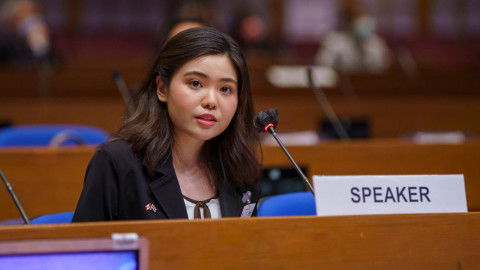 Why we must empower women leaders in the post-COVID-19 era 10 March 2021 Since the beginning of the COVID-19 crisis, women in the Asia-Pacific region have shown decisive leadership in steering their countries and communities with effective responses to the pandemic, whether it is managing their businesses and households or standing at the frontlines as health care workers. Yet, in the highest echelons of decision-making and the public sector, we see that many women's voices are still not being heard. Only a small percentage of political leaders in our region are women, far lower than the world's average. This is a detriment not only to women but to the region at large. For the response and recovery to the pandemic to be truly effective and consider everyone's needs — it is urgent that we fast-track progress towards women’s empowerment in decision-making in public life. Today, as we celebrate International Women's Day, we honour the often-overlooked contributions of women in the Asia-Pacific region, reflect on progress made towards gender equality, and renew our commitment to ensuring that women and girls are valued and empowered. We also celebrate the women who have played and continue to play a vital role in the fight against COVID-19 in our region. Thailand's efficient response to COVID-19 is in part thanks to the more than one million women healthcare volunteers who have worked tirelessly to inform, advice, and care for people in their communities. They have also been trained to prevent, detect, and report cases of suspected communicable and non-communicable diseases and have thus provided exceptional assistance to the Government of Thailand to limit the impact of the pandemic. In India, the “Asha” workers, who formed the backbone of the community level healthcare response, were nearly all women. Their significant role in the response has been acknowledged by WHO’s Independent Panel for Pandemic Preparedness and Response published recently. There are many more such cases of demonstrated leadership by women, even beyond the community level, given equal opportunity. Over the past three decades, more women have emerged as senior leaders in government and in the private sector. Many young women are thriving as entrepreneurs across our region, innovating and creating further opportunities for digital and financial inclusion for all. Women’s representation in national parliaments, local governance bodies and management positions has improved, albeit slowly. However, uneven progress, both within countries and across the region, indicates that achieving gender equality in decision-making is a significant challenge in Asia and the Pacific. For example, there are currently only three female heads of state or government in the Asia-Pacific region. All countries have less than 30 per cent women holding ministerial positions, except for New Zealand at 30.8 per cent. The latest research by ESCAP and UN Women show that women's representation in our region's national parliaments, while up from almost 13 per cent in 2000 to approximately 20 per cent in 2020, remains lower than the global average of nearly 25 per cent. Women occupy less than 25 per cent of managerial positions in the region, while the global average is almost 30 per cent. It is however worth noting that countries in Asia and the Pacific have exceeded global gains since 2000, seeing an average progress rate of 3.4 per cent, compared with a world average of 2.6 per cent. Despite these stark disparities, it is heartening to see some of the positive steps leaders in our region are taking to advance gender equality. Most notably, countries in this region have committed to the Asia-Pacific Declaration on Gender Equality and Empower of Women at the 25-year review of the Beijing Platform for Action: a vital document that recognizes the importance of harnessing the transformative power brought about by leveraging women's leadership to drive change. The Declaration calls for actions that “remove barriers and provide all women with economic empowerment opportunities to achieve full, equal, substantive and effective participation and access to leadership and senior-level positions at all levels and in all spheres”. Without the active participation of women and the incorporation of women's perspectives at all decision-making levels, we will not achieve true equality, development or peace. Countries in the Asia-Pacific region must disrupt the discriminatory gender-based social norms that constrain women in public life. Legal frameworks and policies that reduce women's organizations' abilities to advocate or receive funding must be reformed, while laws that criminalize violence and harassment against women in politics must be enacted. To move the goalposts, we must enhance partnerships and collaboration, especially with women's organizations, to inform, develop, implement and monitor gender-responsive policies and programmes that promote women's participation in public and political life. We must bolster these programmes through human and financial resources that further the mainstreaming of gender equality and women's empowerment across all government institutions, including through the establishment of sustainable gender-responsive budgeting mechanisms. We must also strengthen quantitative and qualitative data collection on women's participation in political life, including data on all levels of political, civic and economic life. The barriers that potential woman leaders in the region face are largely structural. While measures like more funding, better data reporting, and quotas can help, progress will only be possible if it is supported by change in social norms. Overturning these social norms is the responsibility of everyone, and we all have our part to play. On International Women's Day 2021, we are full of hope that the COVID-19 pandemic will soon subside. With this optimism, we celebrate women's leadership, dynamism and resilience in all our societies. As we recover better together in the post-COVID-19 world, we stand ready with the UN family and our committed partners — to support governments in our region, building more gender-equal economies and societies where no woman or girl is left behind. Armida Salsiah Alisjahbana is the United Nations Under-Secretary-General and ESCAP Executive Secretary.Anita Bhatia is the United Nations Assistant-Secretary-General and UN Women Deputy Executive Director. URL:https://www.unescap.org/op-ed/why-we-must-empower-women-leaders-post-covid-19-era#