
News
Follow the newest trends and news in GCED.
1,676 Results found
 UIL highlights the need for digital inclusion and global solidarity in Korea EdTech Forum 2020 8 October 2020 On 8 September 2020, the UNESCO Institute of Lifelong Learning (UIL), together with the UNESCO Asia and Pacific Regional Bureau for Education and the Korea Education and Research Information Service (KERIS), co-organized a virtual policy forum during the EdTech Korea Fair 2020. Hosted by the Republic of Korea’s Ministry of Education, the forum convened 28 high-level officials from education ministries in 22 countries. Under the overall theme ‘EdTtech, Education Digital Transformation’, the forum facilitated dialogue, the exchange of ideas, and promising practices on the future of innovative schooling, the instrumental role of information and communication technology (ICT) in education, and on promoting inclusive lifelong learning pathways. Referring to the COVID-19 education crisis, UIL Director David Atchoarena, in his welcoming remarks, urged educators to ‘seize this forced opportunity and turn this crisis into a deep transformation in education’. He set the premise of the forum by drawing attention to three factors which are key for educational transformation: digital accessibility for all, community and family support for lifelong learners, and strong global solidarity. During the following sessions, Mr Fengchun Miao, Head of the ICT in Education team at UNESCO introduced UNESCO’s guiding frameworks for effective distance learning and technology-enabled open school systems This was followed by a panel discussion on digital inclusion and equity to support marginalized learners, moderated by UIL’s Team Leader for Policy and Capacity Development, Ms Rakhat Zholdoshalieva. The session brought together diverse experiences from around the world, including an analysis of 30 case studies wherein ICT is used to support the learning of refugees, migrants and internally displaced persons (Ms Jonghwi Park, UIL); basic skills development for adults and challenges and measures taken during the COVID-19 pandemic at the German Adult Education Association (Ms Celia Sokolowsky, DVV); and local government efforts to ensure equal ICT access for marginalized students during pandemic-imposed homeschooling (Ms Un Jo Lee, Seoul Metropolitan Office of Education). The presentations successfully provided a venue to collectively deliberate on digital inclusion and share ideas and resources to support the most vulnerable populations. Throughout the four-day forum, more than 3,500 registered participants from across the globe attended the various sessions. More information on the agenda and the key speakers Recordings from the event URL:https://uil.unesco.org/literacy/mobile-technologies/uil-highlights-need-digital-inclusion-and-global-solidarity-korea
  UIL launches a global survey on the role of universities in promoting lifelong learning 8 October 2020 Universities constitute a major institution for knowledge production and innovation, as such they are critical to the promotion of lifelong learning (LLL) opportunities for all. Yet, the extent of universities’ and other higher education institutions’ (HEIs) involvement in lifelong learning remains poorly documented. To address this gap, the UNESCO Institute for Lifelong Learning (UIL) in collaboration with the Shanghai Open University (SOU), the International Association of Universities (IAU), the UNESCO International Institute for Educational Planning (UNESCO–IIEP), and the UNESCO International Institute for Higher Education in Latin America and the Caribbean (UNESCO–IESALC) will today launch a global survey on how and to what extent HEIs contribute to the implementation of LLL, promote the establishment of flexible learning pathways, engage with the community, and advance the development of LLL as a research field. The results of the survey will be published in a comprehensive research report, including an assessment of HEIs’ current levels of engagement in LLL, identification of the areas in which further interventions are needed, and recommendations for HEIs’ contribution to LLL. The results will also feed into the UNESCO World Conference on Higher Education in 2021, and will be widely disseminated to UNESCO Member States, in particular to ministries of education, and the university sector to inform policies and strategies for promoting HEIs’ engagement in LLL. The survey forms part of a broader and a comprehensive research project on the contribution of higher education institutions to lifelong learning, conducted by UIL and SOU from 2020–2021. The survey is open to universities and other HEIs around the world and will be open until 15 November 2020. The questionnaire is available in Arabic, Chinese, English, French and Spanish. URL:https://uil.unesco.org/lifelong-learning/uil-launches-global-survey-role-universities-promoting-lifelong-learning
 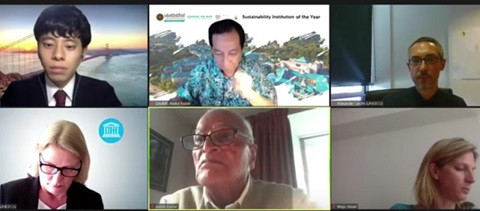 The power of education towards sustainable societies in the world post-COVID-19 8 October 2020 The COVID-19 pandemic has challenged our structures and has had a tragic impact all around the world. But this crisis is also an occasion to question our ways of living and to redesign our societies in a more sustainable way. What world do we want to live in? What is necessary to rebuild in a more sustainable and equitable way? How can education contribute to the transformation needed? These are some of the questions which framed the discussions of the first online workshop of the series “The transformative power of Education for Sustainable Development for the world beyond COVID-19”, which took place on 9 September 2020. The event gathered hundreds of participants from all over the world, who shared their visions and perspectives on what Education in the post-crisis should look like. The workshop was opened by Vibeke Jensen, the Director of the Division for Peace and Sustainable Development of UNESCO’s Education Sector, who spoke about the new global framework ‘ESD for 2030’, which seeks to further strengthen the contribution of Education for Sustainable Development to all 17 SDGs: “ESD for 2030 will place particular emphasis on the importance of individual and societal transformation for sustainability and the contribution of education to the survival and prosperity of humanity”. In her words of welcome, Maria Böhmer, the President of the German Commission for UNESCO, stated that the transformative power of Education for Sustainable Development ”lies in creating empathic learners with critical thinking skills” and emphasized that young people should be empowered to take action: “We need to give them the opportunity to actively contribute to rebuilding more resilient systems.” Satish Kumar, Editor Emeritus of the Resurgence & Ecologist magazine, highlighted the need for education to build a new worldview of the relationship between humans and nature. From his perspective, education systems should not teach about nature as a mere resource for the economy anymore, but as a “source of life itself”, with its own rights: “For me COVID-19 is a cry from the Earth. (…) The new post-COVID 19 worldview education system should be that human and nature are one. We are connected, we are interdependent. There is no separation, there is no disconnection”. Dzulkifli Abdul Razak, Rector of International Islamic University Malaysia, spoke about lifestyles and emphasized the need to integrate values into our education systems: “Let’s bring back the values. The values that we can live together with nature symbiotically, benefitting from one another.” Katsutoshi Hori, student and member of Climate Youth Japan, compared the COVID-19 crisis with the climate crisis, both caused by the excess of human activities. Katsutoshi Hori spoke of the need of ethics and responsibility for the future, while Maja Göpel, Secretary General, German Advisory Council on Global Change, recalled the importance of building resilience. The speakers concluded that the role of education in the post-crisis goes beyond the simple ‘provision of knowledge’. If we want our societies to change, education needs to go beyond the ‘brain’ to encompass the whole body. Learning should not only mean ‘learning to ‘know’ and ‘learning to do’, but also ‘learning to be’. As Satish Kumar says, education needs to teach “not only the heads, but also the hands and especially the hearts”. At the workshop, many key questions on the role of ESD have been collected from the audience across the world, which will feed into the following monthly online workshops on specific thematic areas. This online workshop is part of the online workshop series organized by UNESCO, in cooperation with the Federal Ministry of Education and Research of Germany and the German Commission for UNESCO in preparation of the UNESCO World Conference on ESD. More information on the series of workshops URL:https://en.unesco.org/news/power-education-towards-sustainable-societies-world-post-covid-19
 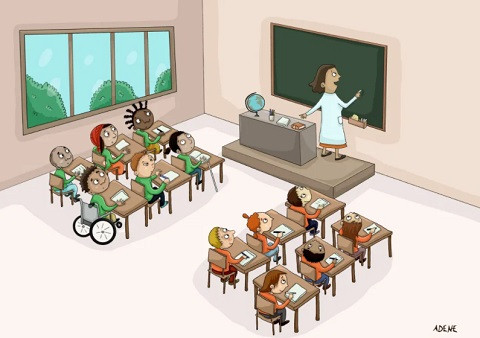 Teachers need training on inclusion 7 October 2020 By Anna Cristina D’Addio and Daniel April, GEM Report team Many factors go into the design of a truly inclusive education system. Some determine the way in which education systems are put in place, such as laws and policies, or governance and funding mechanisms. Others operate within the walls of the school. Teachers play a central role in welcoming and teaching all students, regardless of their background, ability and identity. They need specific skills to adapt teaching to learners’ diverse needs – a skill that is acutely needed during school shutdowns – but they need support and training to know how. This World Teachers’ Day, a new policy paper by the GEM Report and the International Task Force on Teachers for Education 2030 (TTF), “Inclusive teaching: Preparing all teachers to teach all students” looks at teacher training programmes, touching upon issues of planning, implementation, monitoring and evaluation, and the support mechanisms in place to help teachers foster inclusion. The examples are mainly extracted from the GEM Report’s new Profiles Enhancing Education Reviews (PEER) website, which contains comparable country profiles of laws and policies on key issues to facilitate peer dialogue within and between countries and regions. Only about 4 in 10 countries cover teacher training for inclusion in their laws and policies, with the highest coverage found in Latin America and the Caribbean. Analysis of PEER also shows that among the 10% of countries with general or inclusive education laws that define inclusion as a process that refers to all learners, just one-third mention teacher training, while none mentions its content. The analysis also shows that three-quarters of 134 education plans reviewed promote or envisage inclusion. Of these, about half explicitly indicate an aim to provide teacher training on inclusion, either general or targeted at a specific group. Still, whether in policies or plans, many intentions only materialize slowly. Teacher training for inclusion should not be a specialist subject The paper shows that the ideal of teacher training of inclusion is rarely realized. Teachers are often taught inclusion on the side, rather than as a central principle of all the training they receive. Many countries tend to focus on specific groups. For instance, a review of teacher education in Argentina, Ethiopia, Ghana, the Lao People’s Democratic Republic and Zanzibar (United Republic of Tanzania) found that training for inclusion was focused primarily on students with disabilities despite efforts underway to build inclusive school communities and cultures. Some countries cover certain groups in all training. Austria, Singapore, South Africa and the New Brunswick province in Canada, for instance, embed training on disability-inclusive education in a wider system of teacher education. The latter for example, which has pioneered the promotion of inclusive in education for more than three decades now, introduced training opportunities for teachers to support students with autism spectrum disorders in a comprehensive inclusive education policy. Other countries cover gender and gender identities in all teacher training. In Chile, the Ministry of Education has established training on gender, discrimination, inclusive schools, sexuality and sexual diversity in the classroom for teachers nationwide and has developed practical teacher guidance and training recommendations for inclusion of LGBTI communities. In Colombia, Mauritius, Nepal, and Uganda, gender perspective and gender identities is a cross cutting component in policy guidelines for teacher education. Language and multilingual education also factors into teacher training in several countries including in Botswana’s inclusive education policy and Peru’s National Bilingual Intercultural Education Plan. But it is extremely rare for countries to mainstream teacher training on inclusion and to cover all learners at risk of exclusion, not just one or other particular group. Doing so would mark a shift away from categorizations, which often result in stigma, marginalization, and exclusion. It is markedly lacking given the importance placed on leaving no one behind since 2015. Collaboration and professional peer exchanges between teachers foster inclusion There are multiple examples of countries that have seen the benefit in supporting different forms of teacher collaboration for inclusion. New Brunswick, Canada and Namibia promote learning communities, while team teaching is used in Ireland. Such approaches can help teachers perform better and manage change more effectively, a critical skill for today’s tempestuous times. They also enable the development of new leaders. Cooperation among teachers within schools and between schools is also important to support them in addressing the challenges of diversity. Many countries encourage cooperation between mainstream and special schools, which can help when transitioning from segregation to inclusion, as in Ethiopia, Kazakhstan, Kenya, and Viet Nam. Resource centres, which distribute centralised resources including specialised teachers to different schools are used in China, Maldives and Nigeria Teaching assistants, head teachers and district or thematic education coordinators play a crucial role supporting teachers and their professional development. For example, in Kiribati, thirteen education coordinators support teachers and head teachers, who have received advanced training on the principles of inclusive education. In Namibia, occupational therapists, speech and language therapists, social workers and audiologists are deployed to advise teachers in rural and remote schools. To ensure that inclusion is at the heart of teacher training: Education laws and policies need to communicate a clear vision of teacher training for inclusion. Pre-service and in-service training systems should be reviewed and revised to ensure inclusive education principles are fully mainstreamed. Inclusion for all should be a core element of general pre-service training imparting inclusive values and not an optional specialist course helping some teachers prepare to teach some target groups. Teacher training systems need to deliver a more effective balance of theory-based learning and hands-on practice. Peer training and professional exchanges, for instance through learning communities, resource centres, connections between mainstream and special school, mentoring and team teaching need to be prioritized. Teaching assistants, head teachers and district or thematic education coordinators need to be equally well prepared to help teachers fulfil their mission towards inclusive teaching. Governments need to engage teachers, parents and community organizations to improve teacher standards, competencies and education programmes. A culture of monitoring and evaluation needs to be embedded in teacher education programmes. URL:https://gemreportunesco.wordpress.com/2020/10/05/teachers-need-training-on-inclusion/
  What do families in the UK think about sexuality education? 7 October 2020 Young people and their parents told UNESCO what their experience of sexuality education was like as part of the Foundation of Life and Love campaign, which highlights intergenerational stories from families across the world to show why it is so important for young people to learn about health, relationships, gender, sex and sexuality. This comes as sex and relationships education becomes compulsory for all young people in England, reflecting the increasing acknowledgement by countries that young people need knowledge and skills to make responsible choices in their lives. Too many young people grow up hearing inaccurate, incomplete or judgement-laden information about sexuality. This can foster feelings of fear and insecurity among young people as they grow up, said UNESCO Senior Programme Specialist for Health and Education, Joanna Herat. “Comprehensive sexuality education, and support from trusted adults such as parents and teachers, is central in the preparation of young people for a safe, productive, healthy life, in a world where sexually transmitted infections, unintended pregnancies, gender-based violence and gender inequality still pose serious risks to their well-being,” Ms Herat said. The families from the UK interviewed for the Foundation of Life and Love campaign said it was critical that all young people received sexuality education, but also that it was comprehensive and tailored to their needs. “It needs to be inclusive, honest and fun,” said student Elise Collis, “because otherwise people are just going to be living in fear, and it’s not good to live in fear”. Hear what families from the UK have to say about sexuality education HERE (LINK) See more from families in Ghana, Thailand, and China. Join the conversation at #CSEandMe. URL:https://en.unesco.org/news/what-do-families-uk-think-about-sexuality-education
 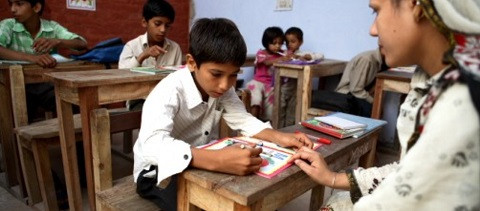 World Teachers Day: celebration of educators’ commitment and leadership 7 October 2020 UNESCO New Delhi and Education International are jointly celebrating World Teachers’ Day with a 24-hour long global broadcast today for the Asia Pacific Region. Celebrated globally every year on 5 October, World Teachers’ Day is celebrated by UNESCO, in partnership with UNICEF, the International Labour Organization and Education International, to bring attention to the importance of teachers at the global level. The regional celebration began with a virtual broadcast where Eric Falt, UNESCO New Delhi Director, delivered the opening remarks. Every year, the World Teachers’ Day serves as a reminder to pay tribute to all the teachers who have made valuable contributions in building generations of youth over the past decades. The World Teachers’ Day is an occasion to mark progress and reflect on ways to counter the existing challenges for the promotion of the teaching profession.-- Eric Falt, UNESCO New Delhi Director The opening remarks were followed by a panel discussion on Teaching through the Pandemic in South Asia keeping in line with the theme for this year, Teachers: Leading in crisis, reimagining the future. Target 4.c of the Sustainable Development Goal 4 highlights teachers as key to the achievement of the Education 2030 agenda and in our collective goal of providing equitable quality education for all. To join the global broadcast click here. Read more about the critical role of teachers shaping the future of education systems in a joint opinion education piece published in The Print by Eric Falt, Director, UNESCO New Delhi and Prof Hrushikesh Senapaty, Director of National Council of Educational Research and Training (NCERT), New Delhi. Related contentCovid shut schools, but teachers making sure learning is not stopped in India URL:https://en.unesco.org/news/world-teachers-day-celebration-educators-commitment-and-leadership
  لمديرة العامة لليونسكو تضم صوتها إلى قادة العالم في دعوتهم لتوطيد الالتزام السياسي لتحقيق المساواة بين الجنسين 7 October 2020 UNESCO Director-General Audrey Azoulay has cautioned that much remained to be done for gender equality as world leaders gathered at a High-Level Meeting during the UN General Assembly to mark the 25th anniversary of the visionary Beijing Declaration and Platform for Action (1995) that set a global agenda for the empowerment of women and girls and called for the recognition of women’s rights as human rights, "Much has been achieved since the 4th World Conference on Women took place in 1995, and yet the struggles to achieve full Gender Equality remain dire in all societies [...] I call upon women worldwide to be inspired by the extraordinary achievements of the Beijing Declaration and to take control and full leadership in every aspect of life and domain of society to build back a better future for all." --- UNESCO's Director-General, Audrey Azoulay Evidence suggests that women and girls are hit hardest by economic down-turns, violence, conflict and climate change, and the COVID-19 crisis has proved no different. The pandemic and its associated school closures and lockdowns have had a disproportionate impact on the life and wellbeing of millions of women, putting many of the Beijing Declaration’s objectives at risk. The exacerbated burden of unpaid care has further limited the time women and girls are able to dedicate to learning; more than 767 million girls were out of school due to the COVID-19 lockdowns, 11 million of whom are unlikely to return to school. According to UN-Women, the pandemic will push 47 million more women and girls below the poverty line. Gender-based violence increased dramatically during lock downs around the world. Women scientists, journalists, artists and creators found and continue to find themselves at increased risks of different forms of harassment, censorship and abuse, both online and offline. We also learned how wide the gender digital divide really was with only 54% of women connected to mobile internet. This limits the access of millions of women to information and to a diversity of information sources that is necessary to sift out disinformation. 767 million girls were out of school due to the COVID-19 lockdowns 11 million of these girls might never go back to school 47 million more women will be pushed below the poverty line Only 54% of women are connected to mobile internet Recognizing the vision of the women who made history in Beijing in 1995, UNESCO’s Director-General declared that “The Beijing Declaration and Platform for Action are the most powerful examples of how the global agenda can be written for women and by women. Twenty-five years after their launch we still owe a lot to those visionary women leaders, and we remain accountable to the new generations in ensuring that the multilateral system amplifies their voices and strives towards full equality in all societies.” With signs of an impending recession likely to have a devastating impact on the poorest and as social spending appears likely to shrink, decision makers worldwide have a collective responsibility to prioritize work on gender equality. Ambitious legislation, measures and policies to ensure gender equality are needed to avoid detrimental economic, social, cultural, political and environmental consequences that will jeopardize the achievement of the internationally agreed 2030 Agenda for Sustainable Development. UNESCO is determined to work with its partners to make gender equality, the empowerment of women and girls a central driving force in optimizing recovery from the socio-economic and cultural impact of COVID-19. Now is the time to defend and advance women and girl’s human rights. Now is the time for the Beijing Declaration and its legacy to be fully delivered. Now is the time to work toward a new Generation Equality. URL:https://en.unesco.org/news/unesco-director-general-joins-world-leaders-call-highest-political-commitment-achieve-gender
  Martin Luther King III and experts call for action in the aftermath of #BlackLivesMatter 3 October 2020 Martin Luther King III, a global human rights activist, and a distinguished panel of experts gathered for the second edition of the UNESCO Regional Expert Consultation Series held on 29 September 2020, focusing on the North American region. Together, they deconstructed the impact of racism and discussed ways forward. In the context of the COVID-19 pandemic, the vulnerabilities of disadvantaged populations, including minority communities, have been further exacerbated. “The #BlackLivesMatter movement was the result of the systematic racism that permeates the US society. If the movement allowed people to talk about systemic racism against black communities, now it is important to move forward and develop a plan of action,” Mr King said. Professor Jane Landers, Member of the International Scientific Committee of UNESCO’s Slave Route Project, underlined the need to go beyond the ethnocentric narrative in education and teach history in a different way from what has been done so far. According to her, “UNESCO should work on the democratization of knowledge” through the development of innovative online resources using modern and more visual materials which would allow isolated and disadvantaged communities to access knowledge. Raising the importance of the intersectionality of discriminations, the Founder of the Black Canadian Studies Association, Professor Naa Afua Dadesen Cooper observed that “racism against black communities is still widespread in specific regions”, and as in the United States, black communities in Canada are most affected by the pandemic. This is due to the fact that Black Canadians, especially women, are employed in high-risk sectors such as healthcare, and have already increased rates of pre-existing illnesses. While urging societies to oppose racial capitalism, Professor Cooper stressed the importance of “reallocating resources for the development of black communities.” Alice Miquet, President of Montreal’s Youth City Council, shared the ways on how meaningful youth participation can be achieved in counteracting racism and discriminations. The Council recommended the following policy responses to the City of Montreal: take actions to increase the representation of racialized communities in decision-making positions, provide information on elections (both on how to vote and run for election) in all the languages spoken by at least 2% of the population, and devote a percentage of the city budget to organize cultural activities led by racialized communities. Webster, hip-hop artist and author of several books on slavery, who collaborates with UNESCO in the Master Class Series against Racism and Discriminations, urged to “change the pyramid” in accessing the different narratives of knowledge. He indicated that “One of the main problems of racism is that people do not listen enough to those who are victims of discriminations based on race and ethnicity. People need to listen more to racialized communities and to understand them.” As part of his recommendations to UNESCO, Mr King encouraged the development and implementation of diversity and sensitivity trainings targeting students, from primary to tertiary levels, which will “create a different world at the end of the day”. Organized by UNESCO, this Series aims to unpack the societal challenges of the COVID-19 pandemic related to racism and discriminations and seeks to facilitate the necessary deep reflection on what direction the international community should take amid a renewed emergence of racist agendas. This edition was moderated by George Papagiannis, Chief of Media Services at UNESCO. The first edition, focusing on the African region, was held on 18 September 2020. The next regional consultations are scheduled throughout the month of October. Watch the VOD of the webinar More information on UNESCO’s work on Fostering Rights, Inclusion and Non-Discrimination URL:https://en.unesco.org/news/martin-luther-king-iii-and-experts-call-action-aftermath-blacklivesmatter
  جائحة كوفيد-19: حثّ البلدان على اتخاذ إجراءات أكثر قوة لوقف انتشار المعلومات الضارة 2 October 2020 The World Health Organization (WHO) together with the UN, specialised agencies and partners today called on countries to develop and implement action plans to promote the timely dissemination of science-based information and prevent the spread of false information while respecting freedom of expression. WHO, the UN, UNICEF, UNAIDS, the UN Development Programme (UNDP), UNESCO, the International Telecommunication Union (ITU), the UN Global Pulse initiative and the International Federation of the Red Cross and Red Crescent Societies (IFRC), together with the governments of Indonesia, Thailand and Uruguay held a webinar on the margins of the 75th UN General Assembly to draw attention to the harm being done by the spread of misinformation and disinformation, the latter being deliberate misinformation to advance an agenda. “As soon as the virus spread across the globe, inaccurate and even dangerous messages proliferated wildly over social media, leaving people confused, misled and ill-advised”, said UN Secretary-General António Guterres. ”Our initiative, called “Verified”, is fighting misinformation with truth. We work with media partners, individuals, influencers and social media platforms to spread content that promotes science, offers solutions and inspires solidarity. This will be especially critical as we work to build public confidence in the safety and efficacy of future COVID-19 vaccines. We need a ‘people’s vaccine’ that is affordable and available to all.” “Misinformation and disinformation put health and lives at risk, and undermine trust in science, in institutions and in health systems,” said WHO Director-General Dr Tedros Adhanom Ghebreyesus. “To fight the pandemic we need trust and solidarity and when there is mistrust, there is much less solidarity. False information is hindering the response to the pandemic so we must join forces to fight it and to promote science-based public health advice. The same principles that apply to responding to COVID-19 apply to managing the infodemic. We need to prevent, detect and respond to it, together and in solidarity.” “On top of the immediate impact on pandemic responses, disinformation is undermining public trust in democratic processes and institutions and exacerbating social divides”, said UNDP Administrator Achim Steiner. “It’s one of the most concerning governance challenges of our time. UNDP is actively collaborating with Member States, fellow UN agencies, and other partners to find holistic responses which respect human rights.” “Misinformation is one of the fastest growing challenges facing children today,” said Henrietta Fore, UNICEF Executive Director. “It takes advantage of the cracks in trust in societies and institutions and deepens them further, undermines confidence in science and medicine, and divides communities. In its most pernicious forms, such as when it convinces parents not to vaccinate their children, it can even be fatal. Because misinformation is more a symptom than a sickness, countering it requires more than just providing truth. It also requires trust between leaders, communities and individuals.” “We can beat COVID-19 only with facts, science and community solidarity,” said Executive Director, Winnie Byanyima. “Misinformation is perpetuating stigma and discrimination and must not come in the way of ensuring that human rights are protected and people at risk and those marginalized have access to health and social protection services.” “Since the start of the pandemic, UNESCO has mobilised its international networks of media partners, journalists, fact-checkers, community radio stations, and experts, to give citizens the means to fight against false information and rumours — phenomena that have been exacerbated by the pandemic,” said Audrey Azoulay, the UNESCO Director-General. ”Collective mobilisation to promote quality and reliable information, while strictly ensuring respect for freedom of expression, is essential. A free, independent and pluralistic press is more necessary than ever.” “Trust is a cornerstone of our digital world,” said Houlin Zhao, Secretary-General of the International Telecommunication Union. “Building on the long-standing WHO-ITU BeHe@lthy BeMobile initiative, ITU has been working with national ministries of telecommunications and health and mobile network operators since the beginning of this crisis to text people who may not have access to the internet, providing them with science- and evidence-based COVID-19 health advice directly on their mobile phones.” WHO and partners urged countries to engage and listen to their communities as they develop their national action plans, and to empower communities to build trust and resilience against false information. “Engaging communities on how they perceive the disease and response is critical to building trust and ending outbreaks,” said Jagan Chapagain, IFRC Secretary General. “If our response does not reflect the communities’ concerns and perceptions, we will not be seen as relevant or trusted by affected populations, and the epidemic response risks failure. More than ever, local responders are at the forefront of this crisis. We need to recognize the incredible role they play in understanding and acting on local knowledge and community feedback.” The co-hosts also called on the media, social media platforms, civil society leaders and influencers to strengthen their actions to disseminate accurate information and prevent the spread of misinformation and disinformation. Access to accurate information and the free exchange of ideas online and offline are key to enabling effective and credible public health responses. "UN Global Pulse was set up a decade ago inside the UN System to pioneer the use of real-time and predictive insights to protect vulnerable communities in times of crisis”, said Robert Kirkpatrick, Director of UN Global Pulse, the United Nations Secretary-General’s initiative on big data and artificial intelligence (AI). “During this pandemic we have seen a tremendous increase in requests for advanced analytics from across the UN System and Member States. We will continue to work with WHO and other partners to help identify and combat mis- and disinformation.” Note to Editors WHO defines an infodemic as an overabundance of information, both online and offline. It includes accurate information as well as mis- and disinformation. In May 2020, WHO Member States passed Resolution WHA73.1 on the COVID-19 response at the World Health Assembly. The Resolution recognises that managing the infodemic is a critical part of controlling the COVID-19 pandemic: it calls on Member States to provide reliable COVID-19 content, take measures to counter mis- and disinformation and leverage digital technologies across the response. The Resolution also called on international organisations to address mis- and disinformation in the digital sphere, work to prevent harmful cyber activities undermining the health response and support the provision of science-based data to the public. URL:https://www.who.int/news-room/detail/23-09-2020-covid-19-pandemic-countries-urged-to-take-stronger-action-to-stop-spread-of-harmful-information
  Media and Information Literacy against racial discrimination: Young Experts from Canada and Morocco 1 October 2020 Following UNESCO’s launch of the interview series, Media and Information Literacy (MIL) Experts Speak against racial discrimination, a Youth Advisor and a young Liaison Officer from the International Federation of Medical Students Association (IFMSA), share their personal narratives. They talk about how, by becoming media and information literate, people can resist all forms of stereotypes that lead to discrimination and hate. Global MIL Week 2020 is organized under the theme, Resisting Disinfodemic: Media and Information Literacy for Everyone and by Everyone. Several InFocus Sessions will address issues of inclusion and discrimination. This “Everyone” suggests a need to shift from the “Us” and “Them,” which often stir discrimination. When we are able to access and critically assess truthful information about other peoples and cultures, this helps us to be less prone to fall into the trap of hate and racial discrimination. Young people are a significant part of the “Everyone”. They are catalyst in promoting informed unity while tackling the uninformed racial discrimination connected to the COVID-19 pandemic, and in general. Join us for an exciting webinar on 30 September at 3 p.m. Paris time where dynamic young men and women will share their views on these issues, addressing the topic, Media and Information Literate Youth: A cornerstone to implementing Access to Information policies. Follow the links to connect and get involved in both events! Continue to read and to share in the heart wrenching experiences and the thinking of the two young interviewees below. Bushra Ebadi (Canada) Youth Advisor and Executive Committee Member at the Canadian Commission for UNESCO and a Youth Ambassador of the UNESCO MIL Alliance (GAPMIL) UNESCO: You are a MIL expert/practitioner. How do you think MIL is relevant to tackle racial discrimination? Bushra Ebadi: My name is Bushra Ebadi and I am a social innovator, researcher and global strategist with expertise and experience in youth engagement, gender equity, human rights, sustainable development, technology ethics, peacebuilding and inclusive governance. As a Youth Ambassador, North America and Europe, for the UNESCO MIL Alliance (GAPMIL) initiative and as Chair of the Canadian Commission for UNESCO’s Youth Advisory Group, I mobilize communities, knowledge and resources to advance peace, justice, sustainable development, and the agency of marginalized individuals and communities globally. Media and Information Literacy is a critical tool to tackle racial discrimination. Racism is a systemic issue; from the way institutions have been set up, to the development of laws and policies, and the language we use to communicate about world. Racism, bigotry and discrimination thrive off ignorance and rely on the spread of misinformation and disinformation in order to persist. Racist ideas, policies, and practices are not rooted in evidence. In order for us to collectively address racism, we must address the problematic narratives and inequitable power dynamics and systems that exist at the local, national, regional and global levels. Furthermore, by supporting the development of media and information literacy skills, we can equip people with the skills to effectively assess and identify credible information and distinguish it from propaganda, misinformation and disinformation that work to further entrench racism. UNESCO: Have you had a personal experience of racial discrimination? Bushra Ebadi: As a first-generation Afghan Canadian Muslim woman, I have experienced racial discrimination. My experiences of racism intersect with my experiences of misogyny, xenophobia and Islamophobia. I can recall experiences of othering from a young age; whether it was from peers who thought the food I was eating or the language I spoke were ‘weird’ or educators who exoticized and tokenized my identity. These experiences were amplified after the 9/11 terrorist attacks. UNESCO: How did you respond to the experience? Bushra Ebadi: I think many of us have been socialized to ignore experiences of racism. I don’t think that young people, even when they are experiencing racism, are well equipped to articulate these experiences and fully understand what is taking place. It is thus crucial for education on media and information literacy to tackle issues of systemic racism, including propaganda, scapegoating, cultural cleansing and genocide, freedom of expression, freedom from oppression, and accessibility. As I learned more about racism through my work with marginalized and equity-seeking communities, my education in political science, philosophy, and global affairs, as well as my own lived experiences, I committed to supporting, advancing and co-developing solutions that tackle the systemic and structural nature of racism, injustice and inequity. I often find that my experiences of racism and those of other marginalized individuals and communities are dismissed as micro-aggressions or rare occurrences. These dismissive attitudes reflect the lack of understanding many people have of the systemic nature of racism and discrimination. Furthermore, I think we need to be cognizant when we ask people to share their experiences of racism that we are not simply doing so in performative ways that contribute to the re-traumatization of individuals. No one is owed our stories and experiences as a way to ‘educate’ or spread ‘awareness’ of racism. We know racism exists; we have countless studies, stories and experiences to draw from. UNESCO: How would you characterize incidents of racial discrimination? Bushra Ebadi: Racial discrimination is a global challenge. Racism is systemic; it is supported, entrenched and centred in economic, political, legal and social systems. Despite the existence of clear evidence of systemic racism, many people are still debating whether racism is a ‘real’ challenge. Education on the historical and contemporary experiences and systems of racism is generally absent, lacking or insufficient; the enslavement of black people, genocide of indigenous peoples and xenophobia towards certain groups of immigrants are rarely acknowledged in curriculum. Systemic racism excludes marginalized individuals and communities from decision-making and governance spaces. These inequities also manifest themselves in the media industry, where black, Indigenous and other racialized journalists are under- or un-paid, excluded, marginalized or forced to leave their jobs because of systemic racism. UNESCO: Do you know about how MIL is being applied to address these challenges? Bushra Ebadi: Various civil society and community organizations and leaders are using MIL in Canada to hold governments, organizations and individuals accountable for their racist practices and policies. The Canadian Race Relations Foundation released a study on Racist Discourse in Canada’s English Print Media. Members of the Coalition of Inclusive Municipalities are working to “improve policies against racism, discrimination, exclusion and intolerance.” Canadian Journalists of Colour has released Canadian Media Diversity: Calls to Action. Future Ancestors Services is advancing “climate justice and equity, with a lens of anti-racism and ancestral accountability.” Black Lives Matter Canada, the Canadian chapter of the international #BlackLivesMatter organization, is fighting against anti-Black racism through education, community mobilization and activism. MIL plays a vital role in helping us to think critically about information and all forms of content, thus ensuring that we recognize, value and support the leadership and valuable contributions marginalized individuals and communities are making to realizing more just, equitable, peaceful and sustainable societies. Globally, we are seeing communities mobilize to tackle racism, discrimination and inequity. COVID-19 has amplified and further entrenched existing inequities and injustices. COVID-19 is disproportionately impacting systematically marginalized communities who lack access to healthcare, resources and information. Misinformation and disinformation surrounding COVID-19 have contributed to increased acts of racism and violence towards Asian people. In order to address some of these challenges, Beatrice Bonami (GAPMIL Youth Ambassador for Latin America and the Caribbean) and I co-founded the Health Information Literacy Access (HILA) Alliance with the support of our fellow Youth Ambassadors of the UNESCO MIL Alliance (GAPMIL), volunteers and partnering institutions from around the world. The HILA Alliance works to make credible information on COVID-19 information accessible to marginalized individuals and communities and address issues of discrimination, racism, disinformation and misinformation by developing media and information literacy capacities in collaboration with diverse communities. As part of our activities, we have developed information guides on COVID-19, partnered with local organizations and communities to make information accessible to Indigenous peoples, and hosted webinars on issues such as accessibility, self-care, empathy, racism and discrimination, mental health and youth engagement. Saad Uakkas (Morocco) Liaison Officer to Student Organizations working with the International Federation of Medical Students Association UNESCO: You are a MIL expert/practitioner. How do you think MIL is relevant to tackle racial discrimination? Saad Uakkas: The spreading of media content and information is a main factor that shapes the public opinion, people's attitudes and behaviours either for the good or the bad. Media itself can be a fertile ground to spread racial discrimination. Given the importance of accurate information, MIL, which includes education about information sources and providers, is necessary. Racial discrimination can originate from feelings of hate and superiority coupled with lack of knowledge or misinformation about the victims' situation. MIL is a major way to correct this misinformation, raise people's awareness about the situation of minority’s, struggles and vulnerabilities. It has the power to spread positive feelings such as empathy and solidarity. UNESCO: Have you had a personal experience of racial discrimination? Saad Uakkas: In my work in emergency rooms of hospitals in Morocco, I tend to see migrant patients from sub-Saharan Africa getting check-up for different diseases. Multiple times, I have seen lack of empathy with them by hospital personnel or other patients themselves who tend to want to go before them and demonstrate other negative behaviours. I recall one patient who was pregnant. After, her baby died in womb because of an accident. She came to the emergency room bleeding and was put in a bed for resting. Immediately after I checked her, I ordered staff to take her urgently to the Gynecology Department so they can stop the bleeding and take care of her. The thing is that this wasn't done immediately. I later learnt that she was left there for almost an hour. UNESCO: How did you respond to the experience? Saad Uakkas: Once I ordered the staff to take her, I had to keep doing my check-up work with other patients being the only doctor in the emergency room at the moment. Multiple times I kept calling the security guards and staff asking them to transport her without any concrete outcomes. Finally, I decided to stop working and stayed there sitting beside her until the patient was transported. Transport agents appeared out of nowhere and the wheelchair that was "non-existent," as they kept saying, appeared as well. The patient finally got transported. UNESCO: How would you characterize incidents of racial discrimination? Saad Uakkas: The thing about racial discrimination is that many times people don't realize they are practicing it. Simple behaviours or attitudes that people think are acceptable often tend to be discriminatory towards people. Awareness and education are needed for people to realize what is and is not discrimination and how to avoid it. Another challenge that I kept seeing is discrimination in healthcare settings by staff and healthcare professionals. The same happens in many other professional settings including administrations. Racial diversity, acceptance, and friendly behaviour and communication must be taught, and MIL has a major role in achieving that. UNESCO: Do you know about how MIL is being applied to address these challenges? Saad Uakkas: From my personal experience, in Morocco I got to see a couple of initiatives fighting racial discrimination by NGOs and institutions. This included online campaigns using testimonies, sharing emotional stories and spreading messages about humanity - support of others in need and highlighting the negative effects of discrimination. I believe more can be done by focusing on special targets and promoters, educating them and engaging them to help spread the right message. Those include decision-makers, media agents, influencers, NGOs and education system actors. DisclaimerThe ideas and opinions expressed in these interviews are those of the interviewee and do not necessarily reflect the views of UNESCO. The designations used in this publication and the presentation of the data contained therein do not imply the expression of any opinion on the part of UNESCO concerning the legal status of countries, territories, cities or areas or their authorities, or concerning the layout of their borders or boundaries.The interviews were conducted by Alton Grizzle, UNESCO Programme Specialist in Media and Information Literacy. URL:https://en.unesco.org/news/media-and-information-literacy-against-racial-discrimination-young-experts-canada-and-morocco