
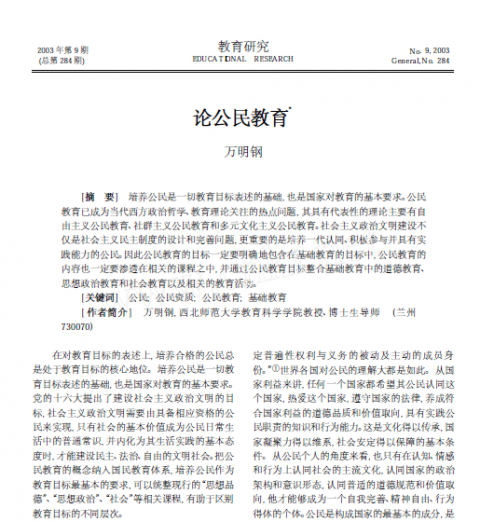
On Citizenship Education
- Author
- Wan Minggang
- Collation
- 7 p.
- Resource Language
- Chinese
- Year of publication
- 2003
- Keyword
- CitizenshipCitizenship education
- Topic
- Civic / Citizenship / DemocracyDiversity / Cultural literacy / InclusivenessHuman rightsGlobalisation and social justice / International understanding
- Resource Type
- Research papers / journal articles
- Level of education
- Early childhood care and educationPrimary educationSecondary education
- Region
- Asia and the PacificGlobal
- Place of publication
- Beijing
Cultivation of citizens is the basis of all educational objectives and the State's basic requirement for eductaion. Citizenship education has become a hot issue at tracting the solicitude of modern Western political philosophy and educational theories. The citizenship education is characterized by its representative theories of liberalist citizenship education, corporatist citizenship education and muticulturalist citizenship eduction. The construction of socialist politics and civilization not only involves the designing and optimization of socialist democratic system, but also concerns the cultivation of citizens with strong sense of participation and practical ability. Therefore, the aim of citizenship eduction must be clearly included in the objectives of basic education and the content of citizenship education must be reflected in relevant courses. The objectives of citizenship education should be used to integrate moral education, ideological and political education, social education and relevant educational activities in basic education.
Related Resources
-
 Study on the Historical Impact of the 1974 Recommendation concerning Education for International Understanding, Cooperation and Peace and Education relating to Human Rights and Fundamental Freedoms
 -
 IIEP-UNESCO 12th Medium-Term Strategy: 2026–2029
 -
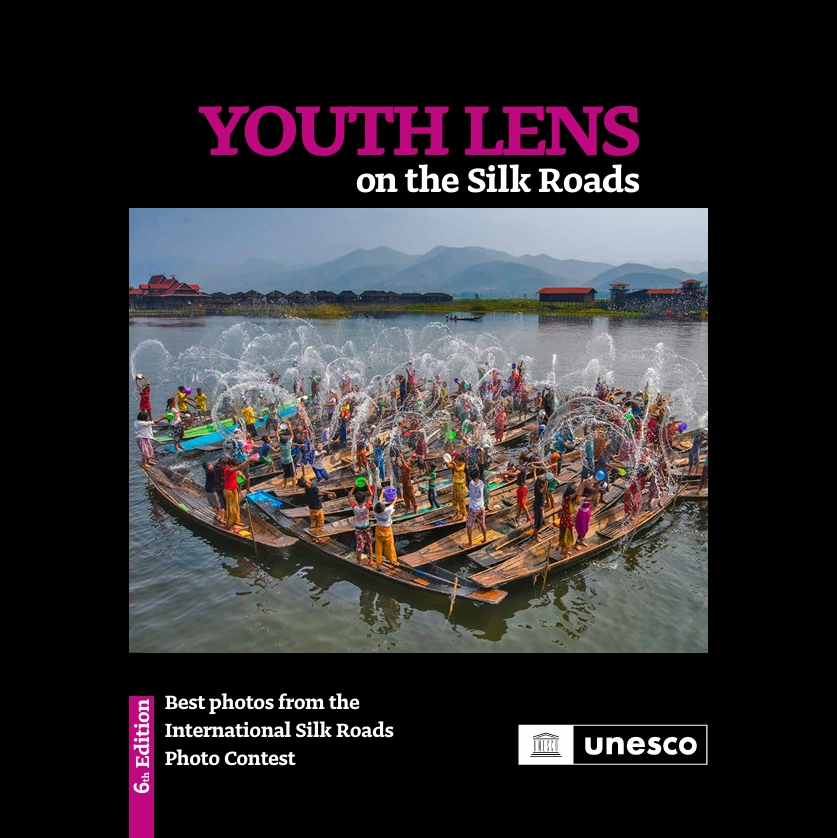 Youth Lens on the Silk Roads: Best Photos from the International Silk Roads Photo Contest; 6th Edition
 -
 More than Welcome: Intercultural Integration of Migrants in and Through Higher Education