
Resources
Explore a wide range of valuable resources on GCED to deepen your understanding and enhance your research, advocacy, teaching, and learning.
8,363 Results found
 Global Education and Climate Change: Looking at Climate Change Education Through the Lens of Global Education Year of publication: 2020 Author: Douglas Bourn | Knut Hjelleset Corporate author: Global Education Network Europe (GENE) This briefing aims to address how Global Education can contribute to the discourses and practices around education for climate change. It will also look at the benefits of seeing Climate Change Education through the lens of Global Education. There will be a recognition that within Global Education, themes of social justice, importance of a pedagogy of hope, participatory learning approaches and the skills of critical thinking can enrich the traditional approaches to learning about climate change. Finally, the briefing notes the impact of the various movements by young people on the climate emergency, and what can be learnt from these activities for Global Education policies and practices.
 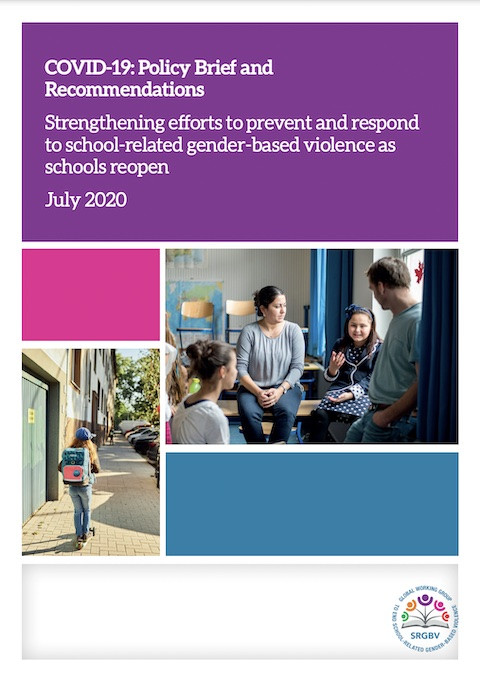 COVID-19: Policy Brief and Recommendations; Strengthening Efforts to Prevent and Respond to School-Related Gender-Based Violence as Schools Reopen Year of publication: 2020 Corporate author: United Nations Girls' Education Initiative (UNGEI) This policy brief is targeted at policymakers and practitioners working in gender, education and child protection fields. It draws from emerging evidence on the gendered implications of COVID-19 on violence as well as research from previous health emergencies regarding the impacts of school closures on gender-based violence. Working on the principle of ‘Build Back Better’, this brief may be used to advocate for improved attention to school- related gender-based violence (SRGBV).
  Caring for Women Subjected to Violence: A Who Curriculum For Training Health-Care Providers Year of publication: 2019 Corporate author: World Health Organization (WHO) This curriculum draws on the work of many people around the world dedicated to preventing and responding to all forms of violence against women and girls. WHO would like to thank all of those who contributed and who shared their training exercises and experiences, many of which have been incorporated into this manual.
 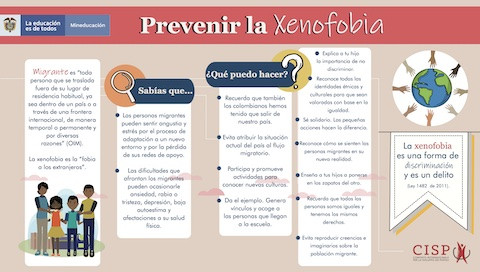 Preventing Xenophobia Corporate author: Ministry of National Education of Colombia With the massive reception of migrants in many Latin American countries, it is important to understand what xenophobia means and what can be done about it. This infographic proposes several ways to prevent it.
  Manual for Reporting Violent Extremism and Terrorism Year of publication: 2021 Corporate author: Albanian Media Institute Contemporary journalists and media are responsible for informing the public, but this is made challenging in the age of disinformation and when citizens are victims of “false” information, sometimes as a result of propaganda produced by extremist or terrorist groups.This new circumstance requires a new ethical and professional awareness. In this context, Albanian Media Institute convened a group of experts that created a set of guidelines that media can follow when covering violent extremism and terrorism. These are based in part on international texts, the UNESCO handbook for journalists Terrorism and the media and other professional guidelines, as well as on the experience of the Albanian media coverage of violent extremism. The guidelines review current legal regulation that affects media coverage; the basic principles of editorial work and reporting; particular nuances and features to consider when covering terrorism; the role of social media; and the challenge of hate speech that might incite violent extremism and terrorism. Ethical journalists are rightly wary of being told how to do their job so we recognize that the reality of reporting terrorism cannot be limited by a strict instruction manual. These suggestions are therefore offered as potential guidance, providing reporters and editors who cover these issues with thoughts and ideas that may help them deal with professional challenges they face in their everyday work.
 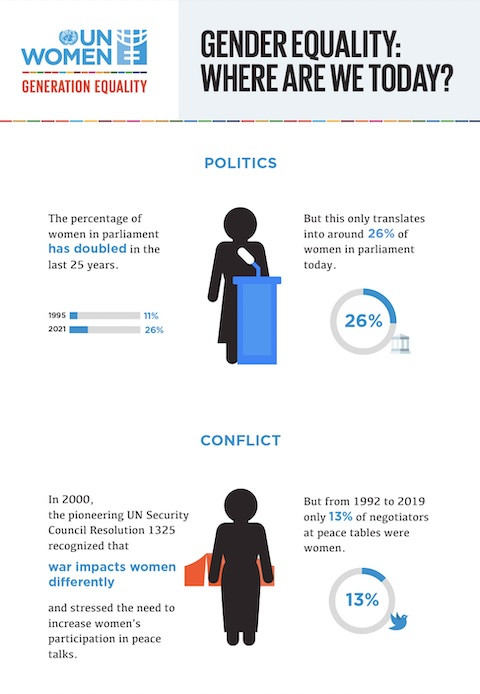 Gender Equality: Where Are We Today? Year of publication: 2021 Corporate author: United Nations Entity for Gender Equality and the Empowerment of Women (UN Women) This infographic highlights progress and remaining challenges for women in a range of areas, from politics, to literacy, to wages and media representation.
 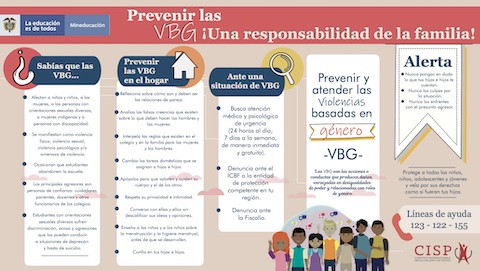 Preventing GBV: A Family Responsibility! Corporate author: Ministry of National Education of Colombia This infographic explains about what happens with gender-based violence, define it and explain what to do when it occurs. This infographic is intended to make the family aware of their role within this phenomenon and what the role they play in it.
 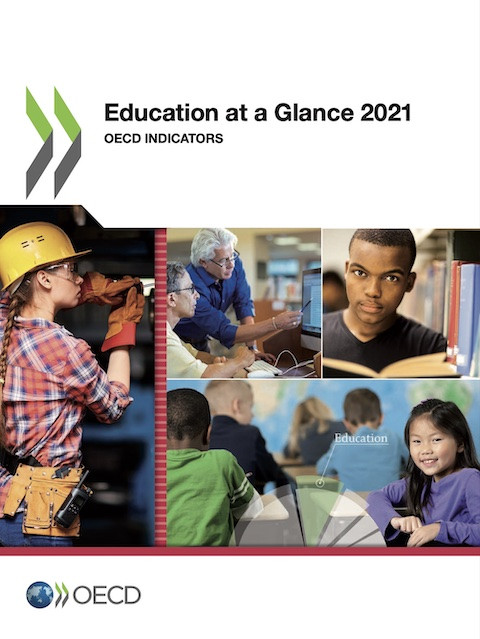 Education at a Glance 2021: OECD Indicator Year of publication: 2021 Corporate author: Organisation for Economic Co-operation and Development (OECD) Education at a Glance is the authoritative source for information on the state of education around the world. It provides data on the structure, finances and performance of education systems across OECD countries and a number of partner economies. More than 100 charts and tables in this publication – as well as links to much more available on the educational database – provide key information on the output of educational institutions; the impact of learning across countries; access, participation and progression in education; the financial resources invested in education; and teachers, the learning environment and the organisation of schools.The 2021 edition includes a focus on equity, investigating how progress through education and the associated learning and labour market outcomes are impacted by dimensions such as gender, socio‐economic status, country of birth and regional location. A specific chapter is dedicated to Target 4.5 of the Sustainable Development Goal 4 on equity in education, providing an assessment of where OECD and partner countries stand in providing equal access to quality education at all levels. Two new indicators on the mechanisms and formulas used to allocate public funding to schools and on teacher attrition rate complement this year’s edition.
 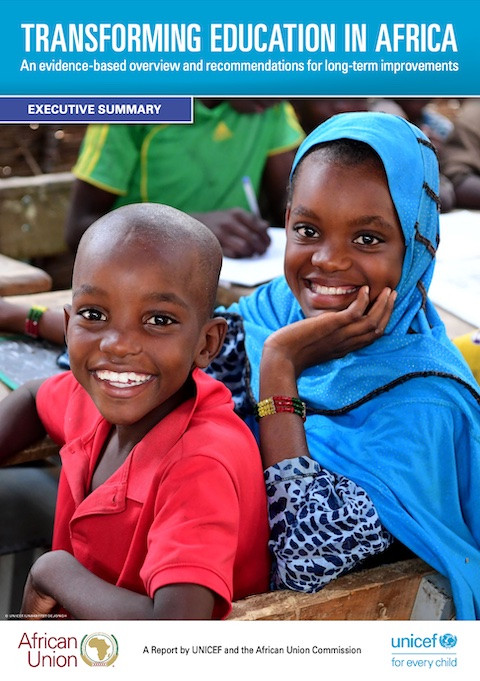 [Summary] Transforming Education in Africa: An Evidence-Based Overview and Recommendations for Long-Term Improvements Year of publication: 2021 Author: Nicolas Reuge | Lukman Olawale Jaji | Nicholas Ouma | Adoumtar Noubatour | Hambani Masheleni | Noguebzanga Jean Luc Yameogo | Achila Imchen | Alassane Ouedraogo | Beifith Kouak Tiyab | Yacouba Djibo Abdou | Erin Euiryeong Jeong Corporate author: United Nations Children's Fund (UNICEF) | African Union Commission This report is the result of a successful collaboration between UNICEF and the African Union Commission. The report intends to contribute to the facilitation of high-level policy discussions between national education authorities, regional and continental bodies on possible strategic shifts and interventions to boost access to education and improve the quality of teaching and learning in Africa. The report provides evidence-based analysis of the situation of education in Africa while putting into perspective the Sustainable Development Goals and the objectives of the Continental Education Strategy for Africa (CESA 16–25) in line with the African Union Agenda 2063. It highlights the progress made in the continent’s education sector over the past decade (2010–2020) while pointing out the challenges that remain, particularly in the area of equity.
  Case Studies From Schools Involved in Inclusive Education in Macedonia Training-of-Trainers Programme (2012–2014) Year of publication: 2014 Corporate author: United Nations Children's Fund (UNICEF) This short booklet offers some of the case studies that the teachers/ trainers developed in their schools, following the training-of-trainers. Some of the examples focus on telling a whole-school story, while others focus on individual children who have been supported to attend and participate in learning. All of the case studies offer ideas and inspiration to other practitioners – within and beyond the former Yugoslav Republic of Macedonia – who are working hard to make education more inclusive for all children.