
Resources
Explore a wide range of valuable resources on GCED to deepen your understanding and enhance your research, advocacy, teaching, and learning.
8,363 Results found
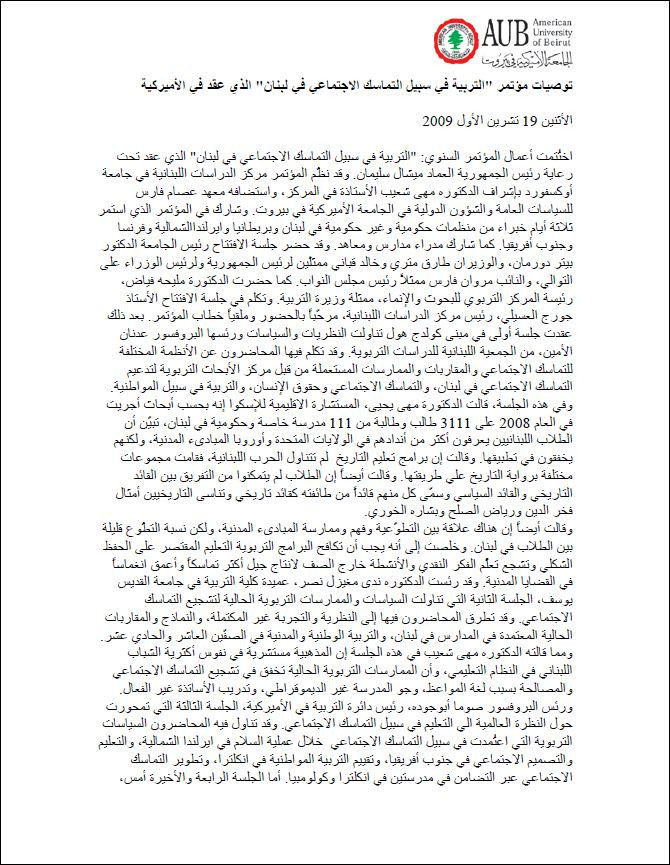 Recommendations of the Conference on "Education for Social Cohesion in Lebanon" Year of publication: 2009 Corporate author: American University of Beirut The file is a summary of the recommendations that came out of the "Education and Social Cohesion in Lebanon" conference, which was held at the American University in Beirut. The recommendations deal with the challenges of social cohesion in Lebanon with its different sects and ethnic components. This conference lasted for three days and was attended by a group of participants from Lebanon and abroad.
  Positioning ICT in Education to Achieve the Education 2030 Agenda in Asia and the Pacific: Recommendations for a Regional Strategy Year of publication: 2018 Author: Hyojeong So | Kyungsim Yeon | Kyungsim Yeon | Jian Xi Teng Corporate author: UNESCO Bangkok This regional study is an important document for Asia-Pacific Member States as it consolidates data related to the effective use of ICT in education. One highlight of this study is the five priority areas for the use of ICT towards achieving SDG4 and Education 2030 that were identified based on a synthesis of the data:ICT for transforming and expanding TVET and higher education ICT for improving teacher qualityICT for improving access to and quality of secondary education ICT for enabling inclusive and equitable learningICT for monitoring and evaluation
  Media and Information Literacy in the Digital Age: How to Teach the Teachers Year of publication: 2021 Corporate author: UNESCO Institute for Information Technologies in Education (IITE) This publication includes articles reflecting some trends in the development of the digital media environment, approaches to the formation of media and information literacy (MIL), practices describing the experience of implementing MIL training for teachers and students of various levels and forms of education. The publication also contains recommendations aimed to integrate MIL into teacher education and professional development.
 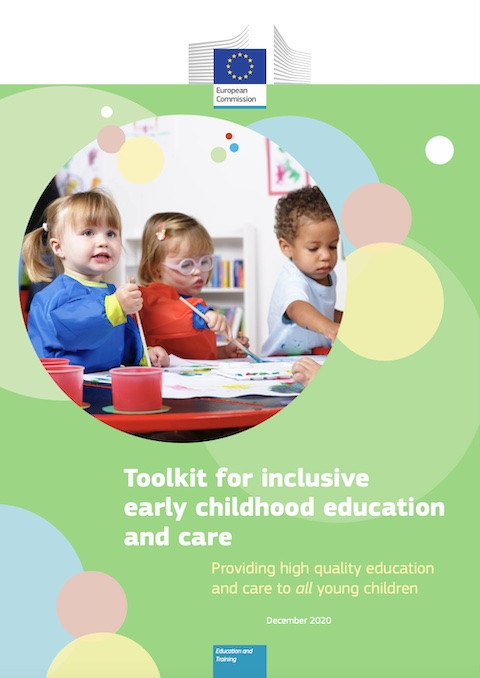 Toolkit for Inclusive Early Childhood Education and Care (ECEC): Providing High Quality Education and Care to All Young Children Year of publication: 2021 Corporate author: European Commission | European Union (EU) Early childhood education and care (ECEC) is the first step on the lifelong learning ladder. It provides young children with professional support to grow, learn and flourish. While it benefits all children, it is even more crucial to children who may face additional needs or difficulties due to individual or family circumstances, e.g. children living in poverty or precarious conditions, children with disabilities or special learning needs, or children from a migrant background or from a minority ethnic community. All children must therefore be able to benefit from high quality ECEC, independently from their individual or family circumstances. It helps them develop to the best of their abilities and supports their well-being. The European Union 2019 Council Recommendation for High-Quality Early Childhood Education and Care Systems offers a Quality framework for ECEC to support Member States to work towards achieving higher quality and more inclusive ECEC systems. The 2020 Communication from the European Commission on achieving the European Education Area by 2025 announced the release of a European toolkit for inclusion in ECEC, drawing on exchange of best practice and the input of experts and stakeholders. The Toolkit for inclusion in ECEC recalls political commitments made e.g. in the European Pillar of Social Rights, policy recommendations which have been adopted by EU Member States as well as research findings. They all converge towards the need and will to develop more inclusive ECEC systems and settings. To ensure equity for all children in accessing and benefitting from ECEC, the toolkit includes a set of practical solutions and measures to inspire ECEC policy makers at the national, regional or local level, as well as ECEC practitioners. It includes examples of good practice in ECEC settings and identifies useful ideas and resources to inspire leaders and staff across Europe to progress towards practice that is more inclusive. The toolkit aims to inspire decision-makers to use the examples of good practice to create appropriate conditions that can benefit all children and families.
 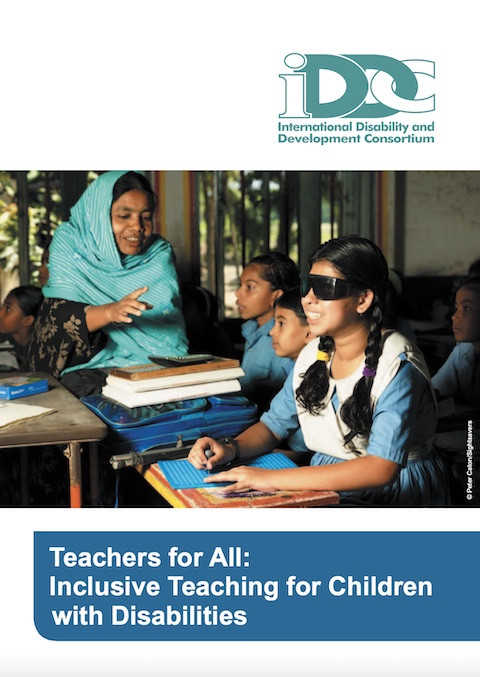 Teachers for All: Inclusive Teaching for Children With Disabilities Year of publication: 2013 Author: Ingrid Lewis | Sunit Bagree Corporate author: International Disability and Development Consortium (IDDC) Globally we need more well-trained and motivated teachers.Good teachers can help ensure that every child learns to their full potential from an early age and enters adult life well-equipped to be active citizens and support the development of their community and country. Many countries do not have enough teachers, let alone enough teachers who have received sufficiently high quality pre- and in-service training and access to continuing professional development. This paper first provides detail about the context and scale of the challenge. It then outlines five broad issues that need addressing if we are to prepare, recruit and support enough teachers, with appropriate skills, to educate every child – including those with disabilities.
 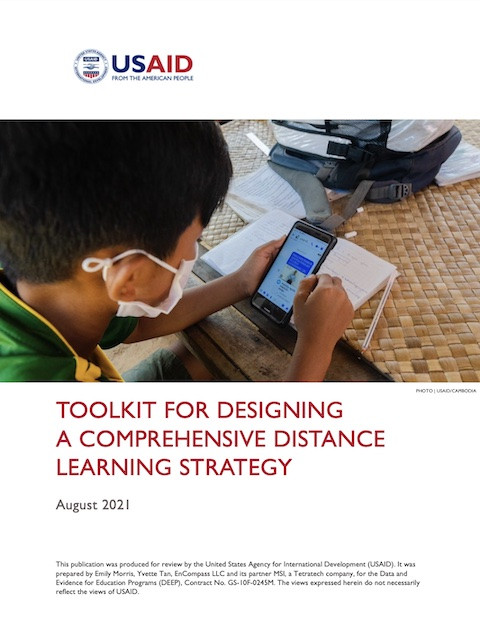 Toolkit for Designing a Comprehensive Distance Learning Strategy Year of publication: 2021 Author: Emily Morris | Yvette Tan Corporate author: United States Agency for International Development (USAID) The purpose of this toolkit is to provide practical guidance (tools, examples, and resources) for designing a comprehensive distance learning strategy that covers an entire education sector or system.
 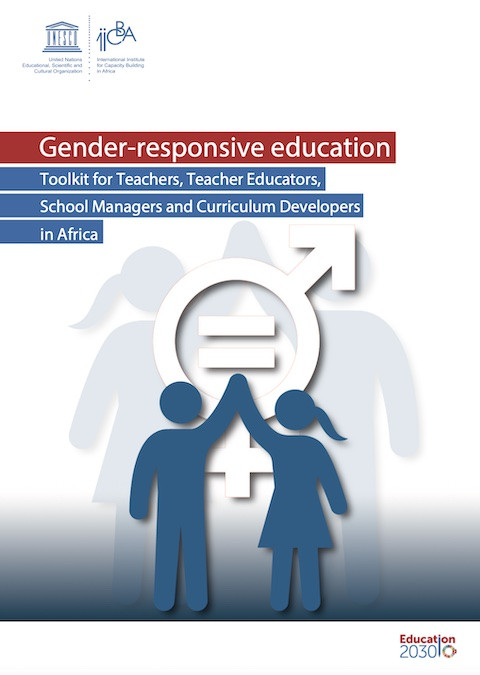 Gender-Responsive Education: Toolkit for Teachers, Teacher Educators, School Managers and Curriculum Developers in Africa Year of publication: 2020 Author: Dawit Mekonnen | Haregewoin Cherine Corporate author: UNESCO International Institute for Capacity-Building in Africa (IICBA) This GRE Toolkit is intended to address gender equality in education through intervention across the whole education sector. More specifically, the toolkit contributes to the enhancement of institutional capacities to develop gender responsive curricula, evaluate teaching-learning materials, organize/create gender responsive classroom interaction, eliminate stereotypes in teaching and learning materials, support improvement of the teaching methods and learning assessment techniques in schools and Teacher Training Institutes.The Toolkit is a guide for educators who plan to facilitate gender-responsive education. As such it consists of activities, tools and notes to the facilitators in addition to presenting conceptual discussions and relevant data.
 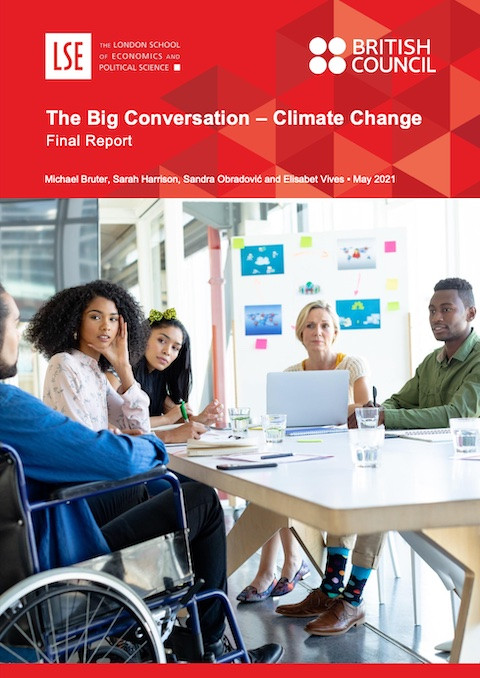 The Big Conversation: Climate Change; Final Report Year of publication: 2021 Author: Michael Bruter | Sarah Harrison | Sandra Obradović | Elisabet Vives Corporate author: British Council | London School of Economics and Political Science This research draws on experience from the field of international cultural relations as well as the latest academic research on values, behaviours and norms to understand more about how we can create the conditions for co-operation on shared global challenges.It delivers new insight on values and attitudes towards climate change among the populations of China, India, Japan and Mexico – selected to represent a diverse range of major world economies who are also important players in the global climate change debate.The research also draws on the experience of international cultural relations experts to provide new insight on how to strengthen international cooperation on climate change and the important role that cultural relations can play in supporting that.
 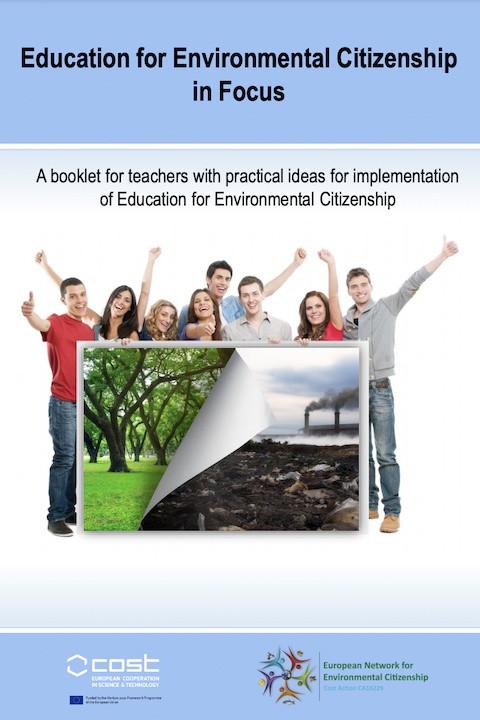 Education for Environmental Citizenship in Focus: A Booklet for Teachers With Practical Ideas for Implementation of Education for Environmental Citizenship Year of publication: 2019 Corporate author: European Network for Environmental Citizenship (ENEC) The European Network for Environmental Citizenship (ENEC) – funded as a COST Action (CA16229-Horizon 2020) – brings together more than 130 experts from 38 countries with the objective to improve the understanding, the practice and the assessment of Environmental Citizenship in Europe and the participating countries. Environmental Citizenship has been an influential concept in many different arenas such as economy, policy, philosophy, organizational and corporation management and marketing and could be better exploited and established furthermore in the field of education as well. The contemporary environmental crisis with climate change, biodiversity loss, air pollution and all other local and global environmental problems demand an education that is capable of empowering environmental citizens. Education plays a key role in shaping future environmental citizens. The Education for Environmental Citizenship pedagogical approach is a proposal that points in this direction. The approach recommends specific elements as stages and steps, but it is not mandatory to follow all of them, or to apply them in a particular linear order. Depending on the environmental problem under study, the level of education (e.g., primary or secondary) and the educational settings (e.g. formal or non-formal), the necessary differentiations and amendments can be made.
  The SDGs PlayBook Year of publication: 2021 Corporate author: Nigeria Youth SDGs Network Nigeria Youth SDGs Network is a coalition of youth lead and youth serving civil society organizations localizing the United Nations SDGs in Nigeria. Their mission is to amplify the voices of young Nigerians and enhance their participation in the developmental agenda of their country. NGYouthSDGs focuses on civic participation, livelihoods and employments, capacity development and education.The Youth SDGs Playbook provides the know-how for young to act towards ensuring the sustainable development of their community through their own personal and collective efforts.