
Resources
Explore a wide range of valuable resources on GCED to deepen your understanding and enhance your research, advocacy, teaching, and learning.
8,363 Results found
 AI in Education: Change at the Speed of Learning Year of publication: 2020 Author: Steven Duggan Corporate author: UNESCO Institute for Information Technologies in Education (IITE) The policy brief “AI in Education: Change at the Speed of Learning” published by the UNESCO Institute for Information Technologies in Education (UNESCO IITE) opens a new series of publications “Digital Transformation of Education”. The new publication describes the advancements in technology, including data, analytics and personalized learning, Artificial Intelligence (AI), cloud computing and machine learning, and explores the promises of AI for students, teachers, school leaders, parents and education administrators. The publication also highlights the ethical aspects of AI implementation and challenges that it might bring.
 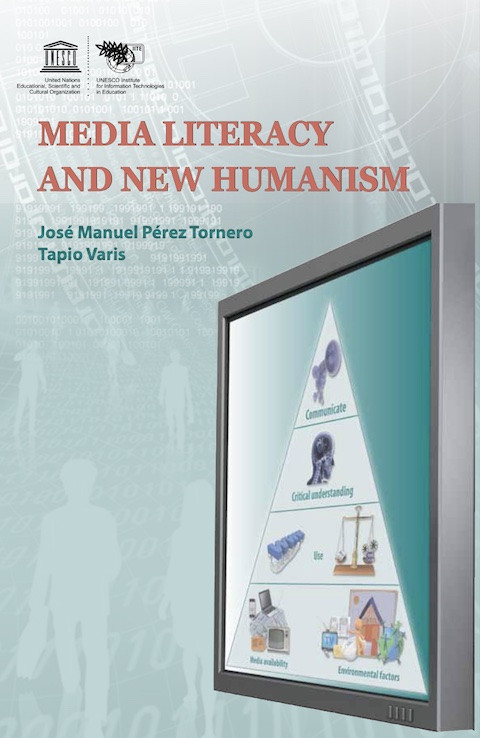 Media Literacy and New Humanism Year of publication: 2010 Author: José Manuel Pérez Tornero | Tapio Varis Corporate author: UNESCO Institute for Information Technologies in Education (IITE) The authors consider the opportunities that media literacy opens in the world of global education and communication in the context of new humanism.Being applied to education, the concept of new humanism, a new UNESCO credo, suggests the creation of a more inclusive society in which all humans have a chance to access knowledge and quality education and every word being heard in the universal dialogue. In the authors’ opinion, the new humanism in the global society must prioritize a new sense of respect for multiplicity and cultural diversity and must support media development with the goal of consolidating the new culture of peace.The book is aimed at educators, researchers, policy-makers, the media and civil society.
  Build Forward Better: How the Global Community Must Act Now to Secure Children’s Learning in Crises Year of publication: 2021 Author: Emma Wagner Corporate author: Save the Children ‘Build back better’ has long been a rallying cry of crisis responses – and is being used frequently today. However, given the scale of the global learning crisis even before the Covid-19 pandemic – with one child in six denied their right to education – it’s vital we don’t limit our ambition to building ‘back’ to how things were. Now it’s imperative we build forward better – and differently.There’s no denying the scale of the challenge. But there’s also cause for hope. The global reach of the Covid-19 crisis has generated a shared understanding of the impact of crisis on children’s right to education. This understanding can be used to build forward better – and radically transform children’s chances.Build Forward Better presents new analysis on which countries’ school systems are most vulnerable to existing risks and future crises. And it sets out what the global community needs to do to support ministries of education in those countries to prepare now. So that, even during emergencies, education systems can provide all children with good-quality, safe and inclusive opportunities to learn.
  The Chilling: Global Trends in Online Violence Against Women Journalists; Research Discussion Paper Year of publication: 2021 Author: Julie Posetti | Nabeelah Shabbir | Diana Maynard | Kalina Bontcheva | Nermine Aboulez Corporate author: UNESCO This report demonstrates that online violence against women journalists is a global phenomenon, albeit one with uneven impacts that are heightened at various intersectional points, including racism, religious bigotry, sectarianism, homophobia and disinformation. There is a climate of impunity surrounding online attacks on women journalists which must be more urgently and effectively addressed because impunity emboldens the perpetrators, demoralises the victim, erodes the foundations of journalism, and undermines freedom of expression. For too long, the emphasis has been on making women journalists responsible for their own defence and protection, rather than making the perpetrators and instigators, the platform enablers, and law enforcement and media employers accountable.These methods of attack are growing more sophisticated, and they are evolving with technology. They are also increasingly networked and fuelled by political actors. This points to the need for responses to online violence to grow equally in technological sophistication and collaborative coordination. Another point highlighted by this research: most women journalists do not report or make public the online attacks they experience, in line with low levels of reporting when it comes to violence against women more broadly. Many media employers still appear reluctant to take online violence seriously. This aligns with the evident failure of the internet communications companies - whose social networks, messaging and search services facilitate much of the harassment, intimidation, abuse and threats targeting women journalists - to take effective action to address this freedom of expression and gender equality crisis.
  Learn, Protect, Respect, Empower: The Status of Comprehensive Sexuality Education in Asia and the Pacific; A Summary Review 2020 Year of publication: 2021 Corporate author: United Nations Population Fund (UNFPA) | UNESCO | International Planned Parenthood Federation (IPPF) More than half of the world’s 1.8 billion young people aged 10–24 live in the Asia and Pacific region1 and a majority of them live in low and middle-income countries. In spite of their diverse socio-economic contexts, young people across this vast region commonly face limited access to sexual and reproductive health and rights (SRHR) information and services, including age-appropriate comprehensive sexuality education. Of the 13 million adolescent girls globally with an unmet need for contraception, approximately half live in Asia-Pacific, leading to an estimated 3.7 million births to adolescent girls in the region annually. In addition, around 82,000 young people are infected with HIV each year in the region. As adolescents transition through to adulthood, it is crucial that they are equipped with the necessary knowledge, attitudes and skills to support their health and wellbeing, regardless of age, sex, marital status, socioeconomic status, ethnicity, sexual orientation or gender identity. School-based and age-appropriate comprehensive sexuality education (CSE) is an effective means of reaching a large population of children and young people, particularly where rates of school participation are high. This overview of the status of in-school CSE in Asia and the Pacific provides a strong evidence base on the reach and impact of this across the region. Importantly, post COVID-19 we need to build back CSE programmes that are better and stronger to meet the social and emotional needs of our young people.
  Water and Climate Change: Coursebook Year of publication: 2020 Corporate author: UNESCO World Water Assessment Programme (WWAP) The United Nations World Water Development Report (WWDR) is UN-Water’s flagship report on water and sanitation issues, focusing on a different theme each year. The report is published by UNESCO, on behalf of UN-Water and its production is coordinated by the UNESCO World Water Assessment Programme. The report gives insight on main trends concerning the state, use and management of freshwater and sanitation, based on work done by the Members and Partners of UN-Water. Launched in conjunction with World Water Day, the report provides decision-makers with knowledge and tools to formulate and implement sustainable water policies. It also offers best practices and in-depth analyses to stimulate ideas and actions for better stewardship in the water sector and beyond.The 2020 edition of the WWDR, titled ‘Water and Climate Change’ illustrates the critical linkages between water and climate change in the context of the broader sustainable development agenda. Supported by examples from across the world, it describes both the challenges and opportunities created by climate change, and provides potential responses – in terms of adaptation, mitigation and improved resilience – that can be undertaken by enhancing water resources management, attenuating water-related risks, and improving access to water supply and sanitation services for all in a sustainable manner. It addresses the interrelations between water, people, environment and economics in a changing climate, demonstrating how climate change can be a positive catalyst for improved water management, governance and financing to achieve a sustainable and prosperous world for all.The report provides a fact-based, water-focused contribution to the knowledge base on climate change. It is complementary to existing scientific assessments and designed to support international political frameworks, with the goals of helping the water community tackle the challenges of climate change, and informing the climate change community about the opportunities that improved water management offers in terms of adaptation and mitigation.
  A Study on Education Indicator Development and Statistical Capacity Building focused on New Southern and Northern Policy (V) Year of publication: 2020 Author: Changhwan Kim | Kijun Lee | Geunyoung Park | Sungho Park | Hoonam Lim | Hyojung Han | Nayoung Kim | Yewon Seo | Joo Heo | Hanseung Lee | Yoseop Oh | Jihye Son | Sangtae Noh | Hyojung Kim Corporate author: Korean Educational Development Institute (KEDI) This study has a purpose to be carried out to develop education statistics capacity of developing countries through establishment a comprehensive consulting plan according to determine current status of education statistics of three Asian countries and conduct a demand survey and statistics survey.
  Youth Activist Toolkit: A Digital Guide Year of publication: 2021 Corporate author: Scotdec | European Union (EU) This toolkit is designed to empower young people to campaign for positive change around local and global issues and to use the learning to form social media actions for change.
  Introduction to Anti-Racist Curriculum Development: A Guide for Teachers in Scotland Year of publication: 2021 Corporate author: Coalition for Racial Equality and Rights (CRER) This guide outlines why anti-racist approaches are important in curriculum development, and explores the barriers that have hampered race equality in education. It then goes on to explore three key components for developing anti-racist approaches to curriculum development: Decolonising the curriculum Building intercultural competence Reducing racism, prejudice and discrimination
  Young People’s Participation and Civic Engagement Year of publication: 2020 Corporate author: Generation Unlimited | Global Initiative on Decent Jobs for Youth The aim of this guide is to support the Generation Unlimited strategic priority to “Equip young people as problem-solvers and engaged members of society, helping to create a better world”, through providing evidence and guidance that has the potential to improve young people’s participation and civic engagement. This guide will identify successful strategies that can increase young people’s civic participation and boost the knowledge, skills, attitudes and values crucial for future civic engagement. It will identify structures that are likely to amplify young people’s voices in decision-making and benefit local communities.