
Resources
Explore a wide range of valuable resources on GCED to deepen your understanding and enhance your research, advocacy, teaching, and learning.
8,363 Results found
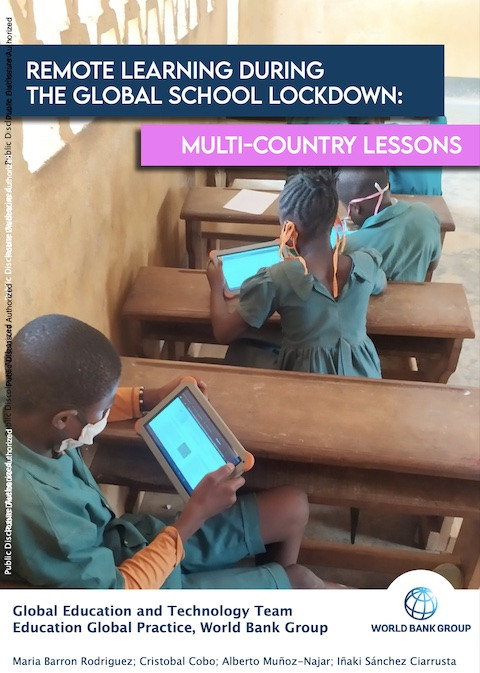 Remote Learning During the Global School Lockdown: Multi-Country Lessons Year of publication: 2020 Author: Maria Barron Rodriguez | Cristobal Cobo | Alberto Muñoz-Najar | Iñaki Sánchez Ciarrusta Corporate author: World Bank This study includes three main sections that have been organized in a chronological order within this report: the first one, “What can we learn from education emergency responses in low- and middle-income countries?” analyzes the emergency education responses to the COVID-19 pandemic of over 120 governments from April until May, 2020. The second section, “Is remote learning perceived as effective? An in-depth analysis across five countries” discusses the main national education responses deployed by Brazil, Kenya, Nigeria, Sierra Leone, and Peru, as well as the perceived effectiveness of these strategies conducted from May until August, 2020. The third section, “What works with remote and remedial strategies? an analysis across 13 countries” builds on key lessons learned during the analysis of the five multi-country experiences and presents global trends of remote learning implemented during school closures and the actions governments adopted to get ready for remedial learning, conducted from August until December 2020. The countries prioritized for the third section are IDA borrowing countries of which six are low-income countries: Afghanistan, Haiti, Malawi, Mozambique, Niger, and Rwanda; and five are lower-middle-income countries: Cambodia, Cameroon, Kenya, Nepal, and Pakistan. Additionally, two high-income countries, Estonia and Uruguay, have been included in the report. The main trends across this report are discussed below and have been grouped in five themes: (1) Adopt delivery systems with an inclusive approach; (2) Adjust the curriculum to ensure effectiveness; (3) Secure sustained teacher training and in-service support; (4) Leverage institutional capacities while ensuring sustained monitoring and evaluation; and (5) Consolidate national strategies to remediate learning losses.
  Putting Gender at the Forefront of the COVID-19 Education Response: Common Messaging Framework Year of publication: 2020 Corporate author: United Nations Girls' Education Initiative (UNGEI) Nationwide school closures as part of measures to prevent the spread of COVID-19 have disrupted the education of an entire generation of children and youth. Previous health emergencies demonstrate that girls are disproportionately affected, with the effects of gender inequality and unequal power structures exacerbated in times of crisis. This Common Messaging Framework, developed with UNGEI partner and ally organisations, can be used as an advocacy tool to leverage the power of collective action to position gender at the forefront of the COVID-19 response and enhance coherence in advocacy and communications efforts.
  Ending Violence in Schools : An Investment Case Year of publication: 2021 Author: Quentin Wodon | Chloë Fèvre | Chata Malé | Ada Nayihouba | Hoa Nguyen Corporate author: World Bank Preventing violence in and through school is a prerequisite for girls and boys getting the education they need and deserve, and acquiring the skills, knowledge and values that provide the foundations for strong and inclusive societies. This report demonstrates that violence in and around schools negatively impacts educational outcomes, and society pays a heavy price as a result (with an estimate of $11 trillion in lost lifetime earnings). Cost-benefit analyses suggest that implementing interventions to prevent violence in and through schools from early childhood to secondary education is a smart economic investment. Rigorously evaluated programs and policies aimed at preventing violence at different levels of the education system show that action is feasible. The benefits of investing in preventing violence in and through schools is likely to far outweigh the costs.
  Gender and Climate Change: Training Handbook Year of publication: 2018 Author: Višnja Baćanović | Jasmina Murić Corporate author: United Nations Entity for Gender Equality and the Empowerment of Women (UN Women) | Government of Serbia | United Nations Development Programme (UNDP) This handbook aims to improve the understanding of gender aspects in climate change. It is intended for experts and interested public, and is organized as a training program for male and female representatives of institutions and state administration, so that it may can be used as a source for practical training, as well as a guide for the introduction of gender perspective in programs and projects.The manual is organized according to thematic units of training and includes basic concepts, gender roles and stereotypes; key gender aspects of climate change; legal and strategic frameworks; and the introduction of gender perspectives in policies and programs in the field of climate change.
 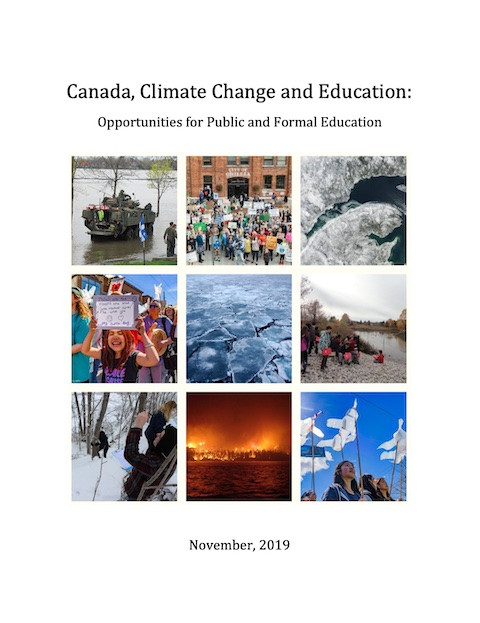 Canada, Climate Change and Education: Opportunities for Public and Formal Education Year of publication: 2019 Author: Ellen Field | Pamela Schwartzberg | Paul Berger Corporate author: Lakehead University | Learning for a Sustainable Future (LSF) The nationwide study of 3,196 Canadians entitled, Canada, Climate Change and Education: Opportunities for Public and Formal Education, establishes benchmarks of Canadians’ knowledge and understanding of climate change, their perspectives on the importance of climate change and its risks, and views on the role of schools and climate change education. It also provides the first comprehensive snapshot of climate change educational practice in Canada. The results are presented both nationally and from provincial/regional jurisdictions.
  School-Related Gender-Based Violence Measurement Toolkit Year of publication: 2020 Author: Dexis Consulting Group Corporate author: United States Agency for International Development (USAID) This toolkit delivers practical guidance and resources for measuring the prevalence and extent of students’ experiences of school-related gender-based violence (SRGBV), and provides methods for assessing key risk factors and drivers of SRGBV. This toolkit contains a conceptual framework for measuring SRGBV, a school- based survey for measuring experiences of SRGBV, risk factors, and drivers, as well as practical guidance for implementing the survey.
 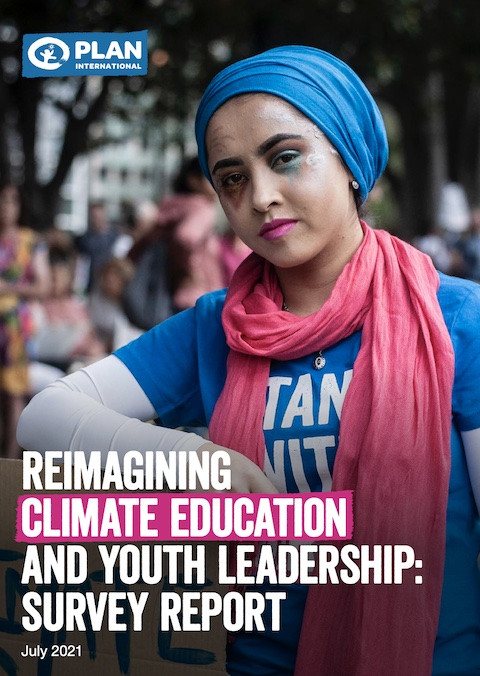 Reimagining Climate Education and Youth Leadership: Survey Report Year of publication: 2021 Author: Lucia Rost | Jessica Cooke | Isobel Fergus Corporate author: Plan International Climate change is a social, intergenerational, gender, and racial injustice. Plan International aims to support children and youth to meaningfully and safely engage in climate policy processes and to reduce the barriers preventing them from engaging in and influencing climate policy and advocacy.With this in mind, Plan International conducted a global online survey to capture the opinions and experiences of young people on climate change education and their participation in climate policy processes. The survey was available in seven languages and was open to 15 to 24-year- olds in all 77 countries where Plan International operates. Over 1,800 adolescents and youth, between the ages of 15 to 24, from 37 countries, participated: more than half (54 per cent) were 15 to 18 years old and 72 per cent were girls.
 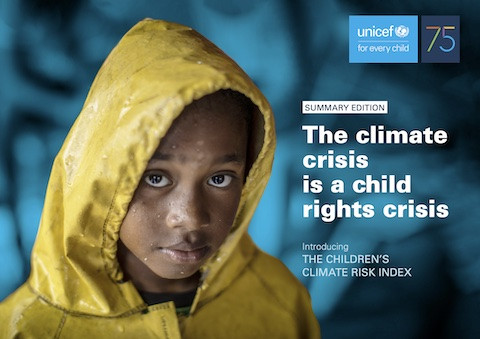 [Summary] The Climate Crisis Is a Child Rights Crisis: Introducing the Children’s Climate Risk Index Year of publication: 2021 Author: Nicholas Rees | Margaretha Barkhof | Jan Burdziej | Sophie Lee | Harriet Riley Corporate author: United Nations Children's Fund (UNICEF) The climate crisis is a child rights crisis. Recent record heat waves, wildfires and flooding in many countries portend a challenging ‘new normal’. The impacts of climate change are clear. So are the solutions. It is unconscionable that today’s children and young people face an uncertain future.Around the world, through protests, social media activity and community and civic engagement, children and young people are loud and clearin demanding change. The old ways of doing things are not good enough.This report provides the first comprehensive view of children’s exposure and vulnerability to the impacts of climate change through the Children’s Climate Risk Index (CCRI).
 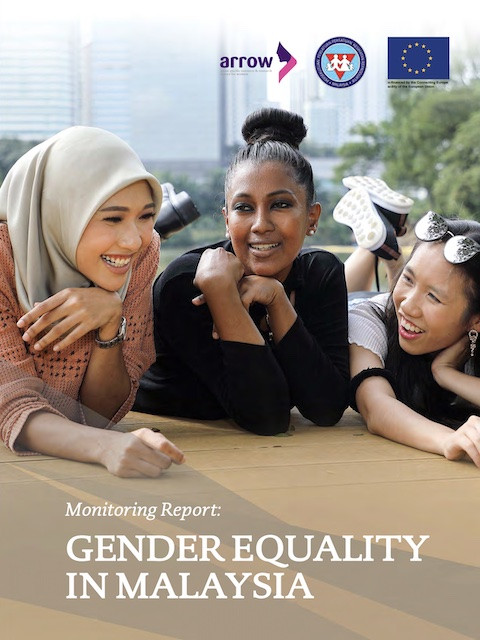 Monitoring Report: Gender Equality in Malaysia Year of publication: 2020 Author: Tan Beng Hui Corporate author: Asian-Pacific Resource & Research Centre for Women (ARROW) | Federation of Reproductive Health Associations, Malaysia (FRHAM) The Asian-Pacific Resource and Research Centre for Women (ARROW), together with the Federation of Reproductive Health Associations Malaysia (FRHAM) and Justice For Sisters (JFS) organised the Gender Equality Initiative, a project aimed to monitor and support the Malaysian government to implement their commitment towards the Convention on the Elimination of All Forms of Discrimination Against Women (CEDAW) and the Universal Periodic Review (UPR). This two-year project is funded by the European Union, dedicated to working with stakeholders, in particular governmental bodies, civil society organisations, media, women and young girls in Perak, Terengganu and at the national level.In the third UPR Cycle, Malaysia has received several recommendations on gender equality, sexual and reproductive health, access to comprehensive sexuality education and protection of women and girls from violence. Malaysia is urged to accede to relevant Optional Protocols and withdraw reservations to the Convention which hinder the rights of women and girls in Malaysia. As a result, FRHAM was commissioned to conduct a research on the Baseline Monitoring Report containing four thematic areas, namely, a) ending all forms of discrimination against women and girls; (b) eliminating violence against women and girls; (c) eliminating harmful practices against women and girls; and (d) ensuring universal access to SRHR.
 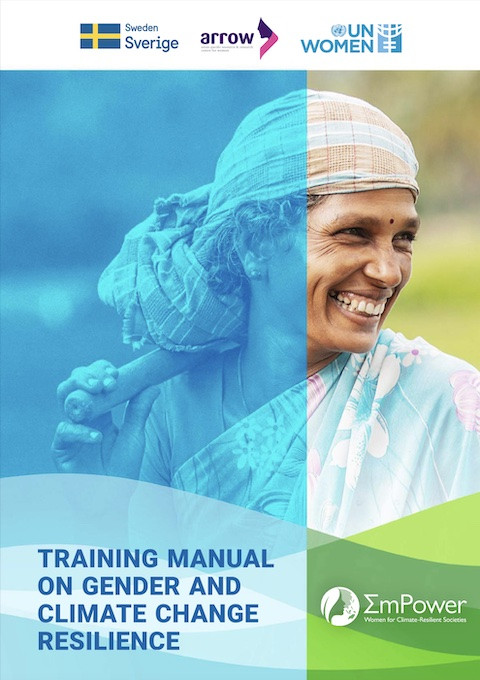 Training Manual on Gender and Climate Change Resilience Year of publication: 2021 Author: Dharmistha Chauhan Corporate author: Asian-Pacific Resource & Research Centre for Women (ARROW) | United Nations Entity for Gender Equality and the Empowerment of Women (UN Women) This Training Manual on Gender and Climate Change Resilience is designed for use by Civil Society Organizations (CSOs) in Asia working with communities on gender, climate change resilience and disaster risk reduction. The manual aims to strengthen the capacities of CSOs to mainstream gender in their practices and to actively advocate for gender mainstreaming in policies, programmes, projects and legislation. The long-term objective is to promote climate resilience action on the ground with a gender equality perspective in the forefront.