
Resources
Explore a wide range of valuable resources on GCED to deepen your understanding and enhance your research, advocacy, teaching, and learning.
8,363 Results found
 Features of Countering Violent Extremism and Terrorism in Kazakhstan Year of publication: 2019 Author: Anna Gusarova Corporate author: Central Asian Bureau for Analytical Reporting (CABAR) | Institute for War and Peace Reporting (IWPR) «In Kazakhstan there is no term as “violent extremism” in the conceptual construct, and as a result at the legislative level. Too vague definition of the terms extremism and terrorism significantly complicates the work on prevention and counteraction», – said Anna Gusarova, an expert in international security, director of the Central Asian Institute for Strategic Studies, in her article written specifically for CABAR.asia.
  Can Tolerance Policy Be an Effective Tool for Conflict Prevention in Tajikistan? Year of publication: 2020 Author: Aziz Timurov Corporate author: Central Asian Bureau for Analytical Reporting (CABAR) | Institute for War and Peace Reporting (IWPR) There are no visible conflicts on the basis of ethnic-religious hostility in Tajikistan. However, if the problem is not visible, this does not mean that it does not exist, said Aziz Timurov, participant of the CABAR.asia School of Analytics. In his opinion, a well-developed and applicable tolerance policy can mitigate potential ethnic-religious and regional conflicts and be a factor in economic development in Tajikistan.
  Curbing Domestic Violence in Kyrgyzstan: Are Victims Protected? Year of publication: 2020 Author: Anna Zubenko Corporate author: Central Asian Bureau for Analytical Reporting (CABAR) | Institute for War and Peace Reporting (IWPR) In this article, the author analyzes some of the results of the reforms of the judicial and legal system, thanks to which a number of new codes appeared in Kyrgyzstan, was aimed primarily at the humanization of legislation and decriminalization of certain types of crimes. On the contrary, domestic violence was criminalized as part of the legislative amendments - it was included in the Misdemeanor Code, which is part of the criminal law. However, according to the author, it has become more difficult to prosecute the perpetrators de facto.
 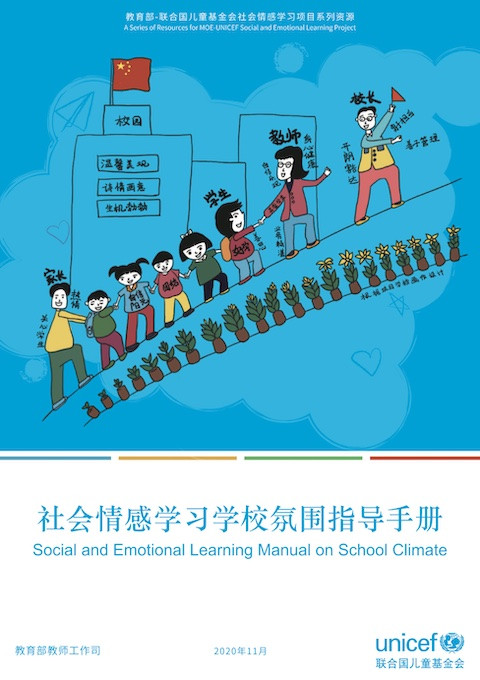 Social and Emotional Learning Manual on School Climate Year of publication: 2020 Corporate author: China. Ministry of Education | United Nations Children's Fund (UNICEF) This material is a guide for school leaders and teachers to promote a positive school climate that supports children's social and emotional learning. It talks about the relationship between school climate and school environment, the key elements of school climates etc.
 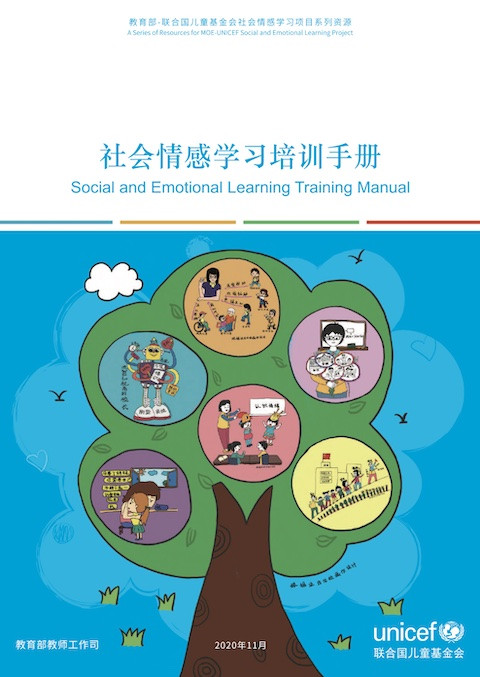 Social and Emotional Learning Training Manual Year of publication: 2020 Corporate author: China. Ministry of Education | United Nations Children's Fund (UNICEF) This material is the training manual of the social and emotional learning training programme organised by the Chinese Ministry of Education and UNICEF. It mainly discusses what is social and emotional learning and its significance, as well as the content of the programme.
 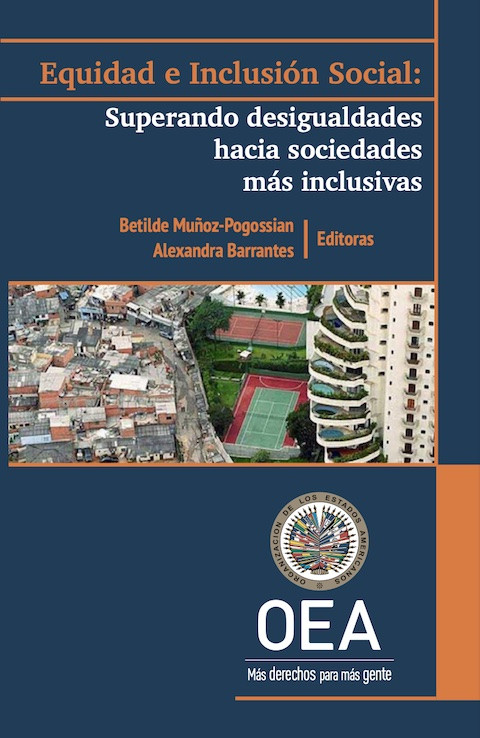 Equity and Social Inclusion: Overcoming Inequalities Towards More Inclusive Societies Year of publication: 2016 Author: Betilde Muñoz-Pogossian | Alexandra Barrantes Corporate author: Organization of American States (OAS) Inequality continues to be one of the main challenges for the countries of the Americas, and the debate about its roots and consequences has permeated all areas of public policy. The truth is that advances in civil and political rights have not been matched by advances in economic, social and cultural rights, and in this context and during the last 15 years, many of the countries of the region have taken measures of public policy to generate greater inclusion and a better redistribution of the benefits of economic growth, with the intention that this will translate into the enjoyment of more rights (in all spheres) for citizens.
  Indigenous Peoples and the United Nations Human Right System Year of publication: 2013 Corporate author: UN Human Rights Council The United Nations general assembly approved the United Nations declaration on the rights of indigenous peoples on September 13, 2007. The rights of indigenous peoples have evolved based on current international law, including human rights treaties, and depending on the circumstances in which the communities found themselves and their priorities, such as the rights to their lands, territories, resources and self-determination. Unfortunately, many indigenous peoples continue to encounter problems in the field of human rights. Some of the greatest difficulties they face stem from the pressure on their lands, territories and resources as a result of their activities related to development and resource extraction.
 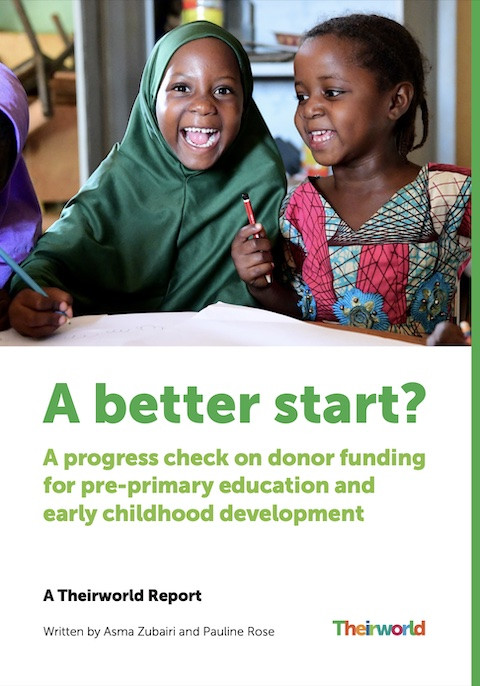 A Better Start?: A Progress Check on Donor Funding for Pre-Primary Education and Early Childhood Development Year of publication: 2021 Author: Asma Zubairi | Pauline Rose Corporate author: Theirworld This report focuses on aid trends to pre-primary education using data reported by donors to the Organisation for Economic Cooperation and Development (OECD) as Overseas Development Assistance. It updates our analysis from our 2019 Leaving the Youngest Behind report, which ranked donors’ performance on pre-primary education and looked at data from 2002 to 2016. The new report tracks whether donors are meeting Theirworld’s recommended target of investing at least 10% of their education aid budget on pre-primary education.
 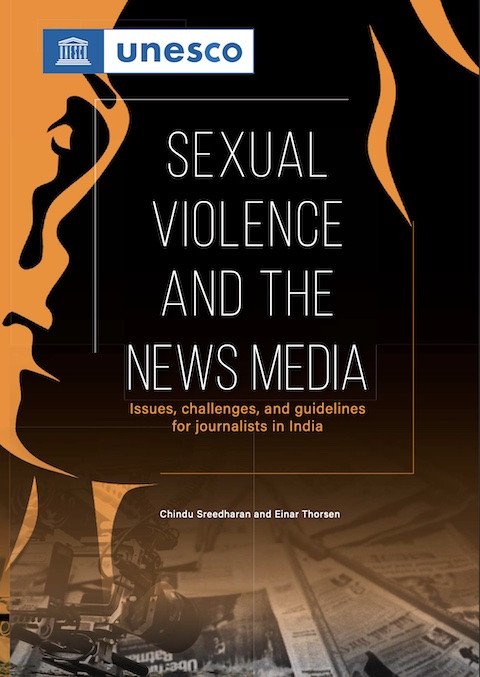 Sexual Violence and the News Media: Issues, Challenges and Guidelines for Journalists in India Year of publication: 2021 Author: Chindu Sreedharan | Einar Thorsen Corporate author: UNESCO New Delhi This report presents the findings of a multilingual national study on the news reporting of sexual violence in India. Drawing on a content analysis of 10 newspapers covering six languages, and semi-structured interviews with 257 journalists working across 14 languages, it provides comparative insights into the routines journalists follow and the challenges they face when they cover sexual violence.The report evidences how news outlets tend to disproportionately publish unusual cases, such as those involving extreme brutality; focus on rape in urban areas; and rely heavily on police sources. Journalists rarely undertake in-depth inquiries into the cases they cover. The challenges they face include safety issues while newsgathering, difficulties in accessing key sources, and distress from the requirements of their assignments. Overall, nearly 20% of our respondents experienced psychological challenges while reporting on sexual violence, and 55% of women journalists reported workplace sexual harassment or violence.Based on the evidence, the report presents seven national and 10 organisational recommendations. It concludes by offering guidelines that individual journalists and media houses can adapt to suit their news routines.
  Global Citizenship: Whitepaper About an Emerging Concept Year of publication: 2021 Corporate author: Melton Foundation The Melton Foundation is an active part of a larger community aiming to develop and promote the understanding of global citizenship as an overarching framework for thought and action. In this context, the Melton Foundation has developed this Whitepaper. This material aims to: Familiarize communities with the concept of Global Citizenship and provide an honest, clear picture of it. Analyze the current state of Global Citizenship, evaluate issues preventing its widespread adoption and put forward suggestive remedies.