
Resources
Explore a wide range of valuable resources on GCED to deepen your understanding and enhance your research, advocacy, teaching, and learning.
8,364 Results found
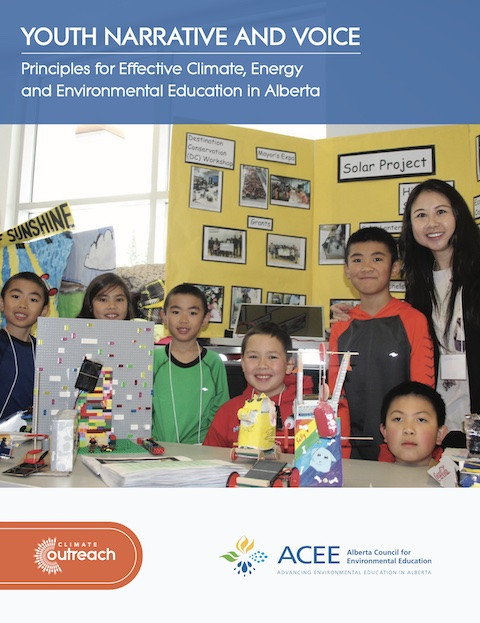 Youth Narrative and Voice: Principles for Effective Climate, Energy and Environmental Education in Alberta Year of publication: 2020 Author: Christopher Shaw | Amber Bennett | Susie Wang Corporate author: Climate Outreach | Alberta Council for Environmental Education (ACEE) This report provides educators with 10 principles for developing new energy and climate change education resources in Alberta, and example narratives and language to engage students. The findings and recommendations are drawn primarily from a series of workshops with Alberta students held during the fall of 2019. A survey of Alberta youth conducted by Leger, a literature review and interviews with Alberta teachers provided additional insights that deepened, broadened and ‘sense checked’ the workshop results.
  The #Talking Climate Handbook: How to Have Conversations About Climate Change in Your Daily Life Year of publication: 2019 Author: Robin Webster | George Marshall Corporate author: Climate Outreach | EIT Climate-KIC This handbook is for anyone who wants to have constructive day-to-day conversations about the climate crisis. It provides pragmatic and evidence-based guidance on how to talk about climate change with friends and family, acquaintances and strangers - on the bus, at work, at a sports event or at home over dinner. The handbook is informed by the idea that you don’t have to be a scientist, or live in a certain place, to care about and want to talk about climate change. It is a topic for everybody, whoever and wherever we are.
 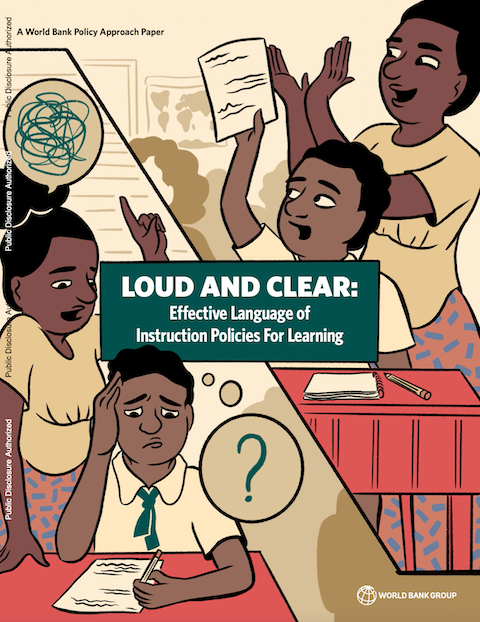 Loud and Clear: Effective Language of Instruction Policies for Learning Year of publication: 2021 Corporate author: World Bank This paper describes the new World Bank policy approach on language of instruction(LoI), as part of the operationalization of the literacy policy package in support of the Bank’s new learning target. This new approach aims to support progress on language of instruction(LoI) Policies and interventions, as loi-based challenges are identified and addressed in light of each country’s context.
  Report of the Director-General of the United Nations Educational, Scientific and Cultural Organization on the follow-up to the implementation of the Declaration and Program of Action on a Culture of Peace Year of publication: 2013 Corporate author: United Nations. Secretary-General, 2007-2016 (Ban, Ki-moon) | UNESCO. Director-General, 2009-2017 (Bokova, I.G.) This is a report submitted by the Director-General of the United Nations Educational, Scientific and Cultural Organization, pursuant to General Assembly resolution 67/1, to follow up on the implementation of the Declaration and Program of Action on a Culture of Peace. The Director-General has reviewed an overview of the activities carried out to promote a culture of peace and non-violence, jointly with the United Nations Educational, Scientific and Cultural Organization (UNESCO) as the lead agency in the United Nations system on this subject.
  The Role of the Teacher in Spreading the Culture of Peace among Secondary School Students in Riyadh Year of publication: 2015 Author: Ali bin Saad Al-Qahtani Corporate author: Fayoum University The study aimed to identify the role of the teacher in spreading the culture of peace among secondary school students in the city of Riyadh, and to clarify the statistically significant differences among the sample members in relation to the role of the teacher in spreading the culture of peace among secondary school students in Riyadh from the point of view of students and teachers. The study population included all day public high school students and teachers in the city of Riyadh, which numbered (51044) students and (3564) teachers.
  Gender Inequality and Early Childhood Development: A Review of the Linkages Year of publication: 2017 Corporate author: Plan International This paper aims to respond to the fact that Early Childhood Development initiatives and programmes, both internal and external, often appear to give limited attention to gender inequality and discrimination. Furthermore, initiatives to promote girls’ rights and gender equality often pay little attention to early childhood, instead focusing on older girls and adolescents.
  What’s the Evidence?: Youth Engagement and the Sustainable Development Goals Year of publication: 2018 Corporate author: Asian Development Bank (ADB) | Plan International UK This study represents an encouraging body of evidence, both primary and secondary, which will inform future practice and policymaking with regard to young women and men’s contributions towards the Sustainable Development Goals (SDGs). The learnings from this study provide important insight that will support the design and implementation of youth programming. It examines five programs across three youth-focused or youth-led organisations: Plan International UK, the Asian Development Bank (ADB), and AIESEC.
  UNESCO Green Academies: Guidelines for Climate-Resilient Buildings Year of publication: 2019 Corporate author: UNESCO Bangkok This brochure encourages capacity building in communities to transition towards climate resilience. It is based on scientific knowledge to improve the relationship between people and the environment as prescribed by the Man and Biosphere Programme.
  From Justice for the Past to Peace and Inclusion for the Future: A Development Approach to Transitional Justice Year of publication: 2020 Author: Lorena Mellado | Chelsea Shelton | Aparna Basnyat | Krishna Velupillai | Chris Mahoney | Djordje Djordjević Corporate author: United Nations Development Programme (UNDP) Comprehensive transitional justice processes supports the achievement of Agenda 2030, by promoting justice, peace, quality education and gender equality as a vehicle towards for more inclusive justice systems.Through more than 10 years, UNDP has been supporting transitional justice processes with an integrated approach to support sustaining peace. This strategic report covers a wide range of UNDP’s support to transitional justice processes providing good practices, country cases and key strategic alliances with UN partners, such as OHCHR, UN Women, and UN peace missions.The report looks to: Outline the main areas of UNDP’s work in transitional justice Share successful experiences and current challenges from countries around the world Offer recommendations for strategic transitional justice programmingThe key areas highlighted in the report are participatory processes, institutional transformation for proper accountability, reparations programmes and conflict prevention and sustaining peace to promote resilience and social cohesion for affected communities.Key lessons and recommendations are also outlined for practitioners to consider when designing and implementing transitional justice programmes and to draw out key findings and recommendations as well as identifies opportunities for more investment in transitional justice moving forward.
 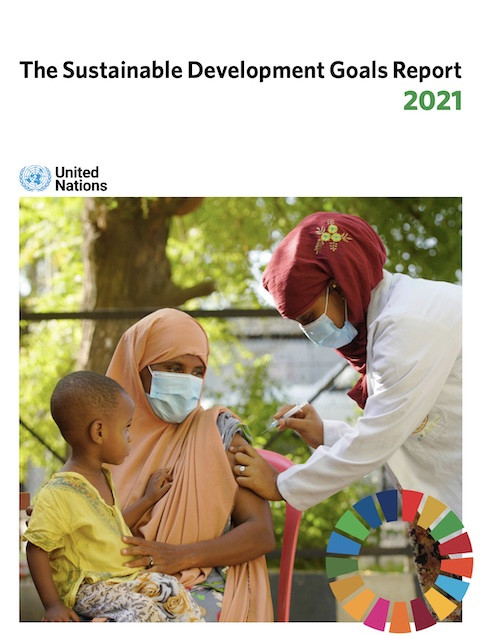 The Sustainable Development Goals Report 2021 Year of publication: 2021 Corporate author: United Nations (UN) As the pandemic continues to unfold, The Sustainable Development Goals Report 2021 outlines some significant impacts in many areas that are already apparent. The global extreme poverty rate rose for the first time in over 20 years, and 119 to 124 million people were pushed back into extreme poverty in 2020. There is a risk of a generational catastrophe regarding schooling, where an additional 101 million children have fallen below the minimum reading proficiency level, potentially wiping out two decades of education gains. Women have faced increased domestic violence, child marriage is projected to rise after a decline in recent years, and unpaid and underpaid care work is increasingly and disproportionately falling on the shoulders of women and girls, impacting educational and income opportunities and health. Notwithstanding the global economic slowdown, concentrations of major greenhouse gases continue to increase. With the global average temperature reaching about 1.2°C above pre-industrial levels, the climate crisis has well and truly arrived, and its impacts are being felt across the world. The pandemic has also brought immense financial challenges, especially for developing countries – with a significant rise in debt distress and dramatic decreases in foreign direct investment and trade. Yet, with a surge in global solidarity and leadership from the highest political level, countries can still deliver on the 2030 Agenda and the 2015 Paris Agreement on Climate Change. A global vaccination plan, designed and implemented by the countries that can produce vaccines today or will be able to do so if properly supported, is an urgent first step in that direction. A recommitment by Governments, cities, businesses, and industries to ensure that the recovery reduces carbon emissions, conserves natural resources, creates better jobs, advances gender equality and tackles growing poverty and inequalities is a further imperative.