
Resources
Explore a wide range of valuable resources on GCED to deepen your understanding and enhance your research, advocacy, teaching, and learning.
8,363 Results found
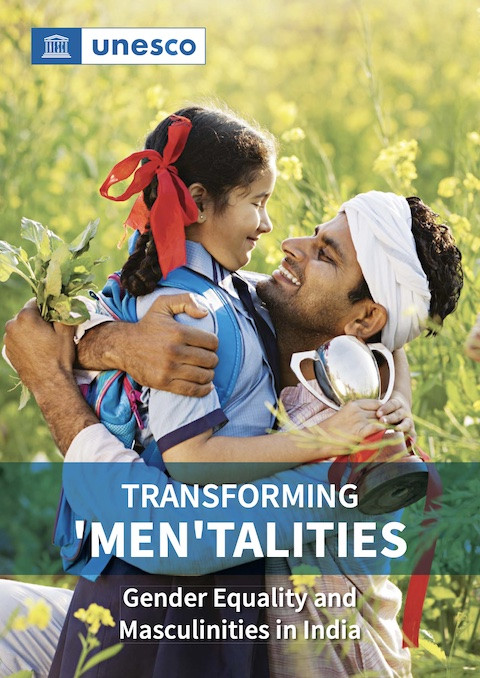 Transforming 'MEN'talities: Gender Equality and Masculinities in India; Roadmap and Scoping Report Year of publication: 2021 Author: Christopher Coley | Christie M. Gressel | Rao R. Bhavani Corporate author: UNESCO This Transforming ‘Men’talities Report is consolidated into a few key messages and crucial responsible parties who can potentially take up these key messages. These recommendations reflect broad areas of theoretical and social science research, policy and governance, and multi- stakeholder engagement. In essence, this report sought to lay a roadmap for how India might best engage men and boys in GEWE (Gender equality and women’s empowerment). Multiple arguments were made in terms of the efficacy of this approach for achieving SDG5; however, these arguments are based largely in theory, in small pilot findings, or in limited sectors. Until now, efforts to engage men and boys in GEWE have been sporadic and limited, given relatively low priority in terms of funding and national and international support, and generally far removed from public consciousness. A more unified and collaborative effort is required to properly understand how to make design effective strategies for engaging men and boys in GEWE.
  Key Challenges of Youth in OIC Countries Year of publication: 2015 Corporate author: Organization of Islamic Cooperation (OIC) | Statistical, Economic and Social Research and Training Centre for Islamic Countries (SESRIC) The report contains four main sections, with the exception of the introductory and concluding sections. The first section briefly reviews some of the main educational outcomes in OIC countries. Literacy and participation rates in tertiary schools and international student mobility are the main indicators reviewed in this section. The second section highlights some important labor market indicators related to the young population in order to identify the main challenges and obstacles in the OIC countries. The third section deals with some social problems of young people. The fourth section deals with mental health issues. The last section is devoted to recommendations.
 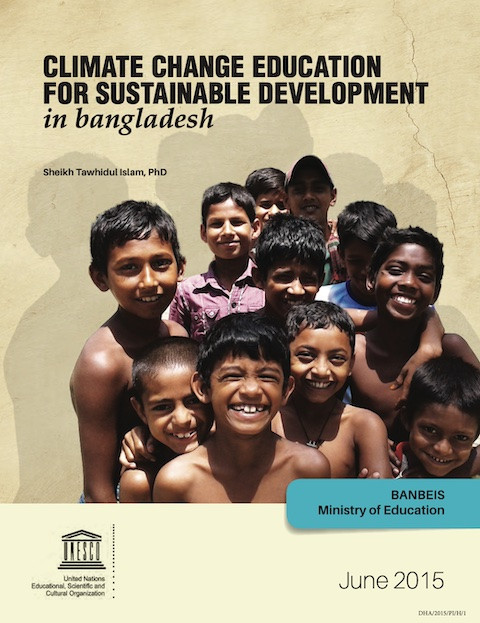 Climate Change Education for Sustainable Development in Bangladesh Year of publication: 2015 Author: Sheikh Tawhidul Islam Corporate author: UNESCO The CCESD pilot study contributes in developing a national baseline scenario regarding disaster and climate change impacts on education sector for the first time in Bangladesh. The information may help education planners and disaster and climate change professionals to act in line with national and international policy directives towards developing a strong and disaster and climate change impact resilient education system in Bangladesh.
 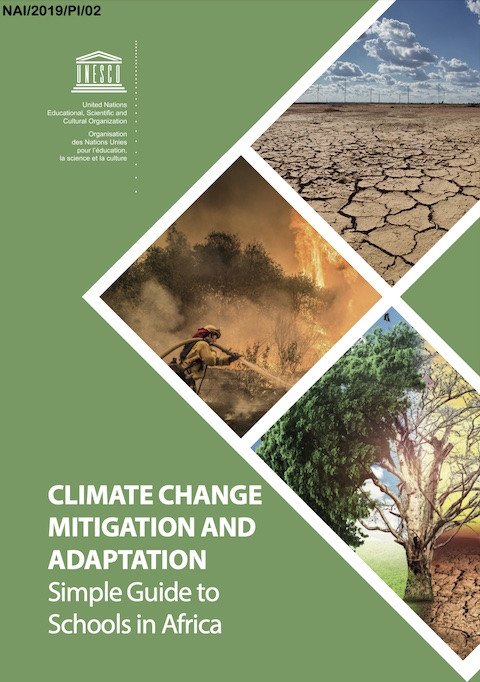 Climate Change Mitigation and Adaptation: Simple Guide to Schools in Africa Year of publication: 2019 Corporate author: UNESCO This booklet aims to support educators in Africa to impart knowledge on climate change to students in secondary level education.
 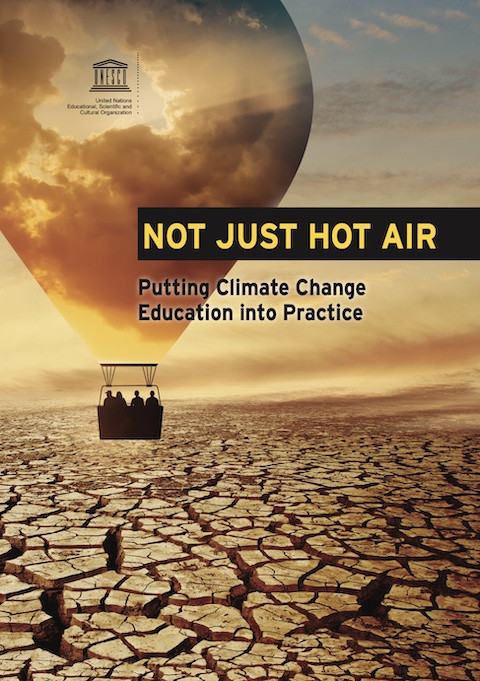 Not Just Hot Air: Putting Climate Change Education Into Practice Year of publication: 2015 Corporate author: UNESCO This publication presents UNESCO’s work on Climate Change Education for Sustainable Development in 2012/2013, and intends to serve as a reference for similar work in the future.It provides: National case studies on five CCESD country pilots conducted by UNESCO in 2012/2013 in: Dominican Republic, Guyana, Mauritius, South Africa and Tuvalu. The case studies include an analysis and assessment of the undertaken CCESD capacity-building work for policy makers and teacher educators, lessons learnt about the implementation of the programme, and conclusions. 16 short country profiles from around the world on policy development regarding ESD and Climate Change Education. Recommendations on Climate Change Education in the context of Education for Sustainable Development, developed by UNESCO in order to establish a common understanding of what needs to be done to enhance education responses to climate change. This publication is intended to provide policy makers and teacher educators with a compact source of information on how to mobilize education to address climate change.
 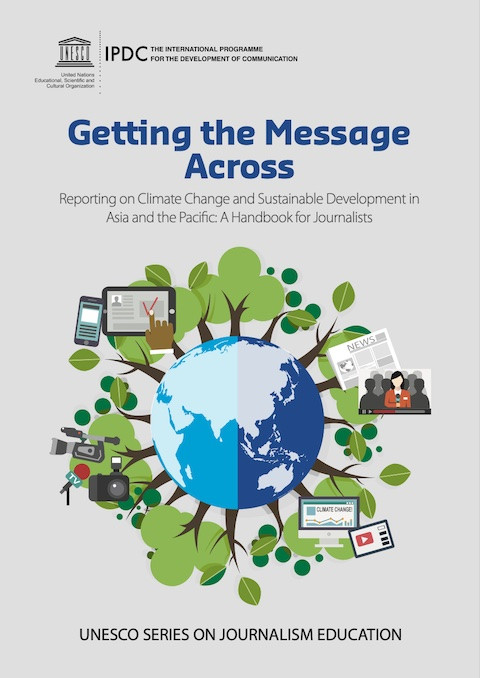 Getting the Message Across: Reporting on Climate Change and Sustainable Development in Asia and the Pacific; A Handbook for Journalists Year of publication: 2018 Corporate author: UNESCO Getting the Message Across, Reporting on Climate Change and Sustainable Development in Asia and the Pacific: A Handbook for Journalists has been customized for journalists to tell the climate change story specific to the region. It explores the essential aspects of climate change, including its injustices to vulnerable communities, especially women and girls and least developed countries, and provides examples of best practices and stories of hope unique to the region. It can be used as a resource for journalists to understand the science of climate change, as well as helping journalists to improve their reporting of the environmental, social, economic ̧ political, technological and other angles of the story.
 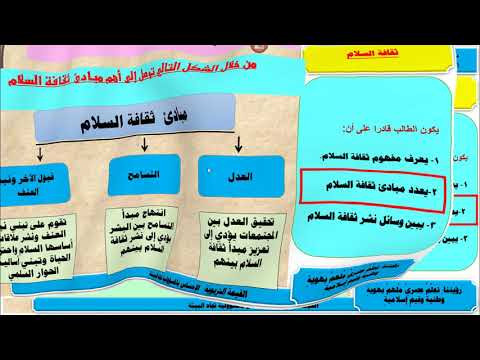 Citizenship of a Culture of Peace Year of publication: 2021 Author: Graeme Simpson Corporate author: AL-andalus Educational Complex The video is a lesson from the social studies book for the tenth grade in the State of Qatar. The teacher explains citizenship for peace and its dissemination. The teacher begins by explaining the concept of a culture of peace and goes on to the principles of peace and the foundations for its dissemination. The class is suitable for Arab students in general to understand what peace is and how to spread it.
 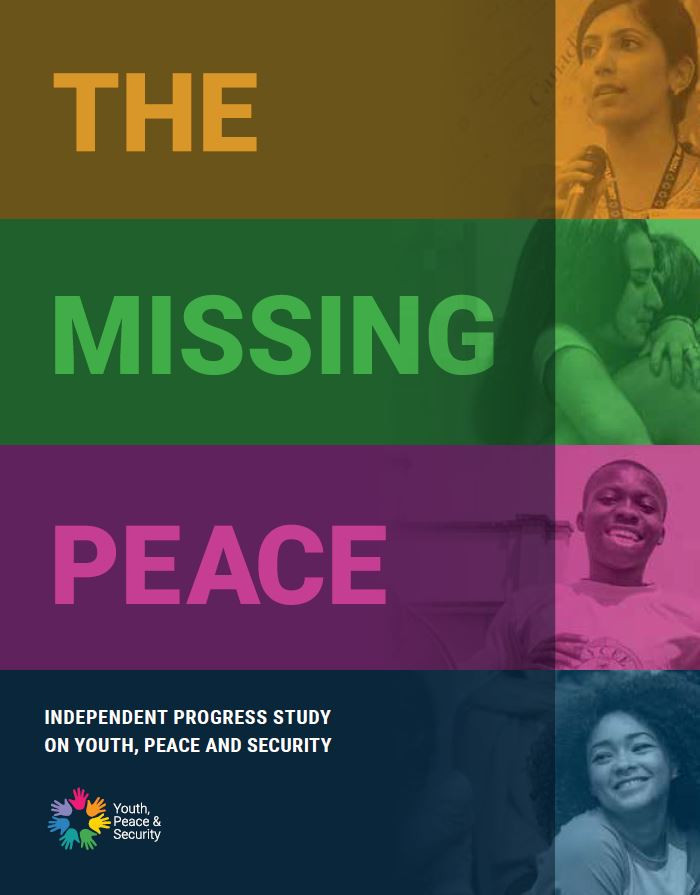 The Missing Peace: Independent Progress Study on Youth, Peace and Security Year of publication: 2018 Corporate author: United Nations Population Fund (UNFPA) | UN. Peacebuilding Support Office (UN. PBSO) The process of how this study was undertaken is just as important as the outcomes it produced. The study used an inclusive and participatory research approach by undertaking regional, subregional and national consultations with young people across the globe; conducting and receiving country case studies; commissioning focus-group discussions with “hard to reach” youth; and drawing on a survey-based mapping of the work done by youth-led peacebuilding organizations. Particular effort was made to reach out beyond easily accessible and elite youth, to young people who would not ordinarily have a say in these sorts of global policy processes. Given the challenge of young people’s increasing distrust in their governments and the multilateral system, it was essential to work with credible civil society organizations with strong trust-based relationships with youth on the ground.
 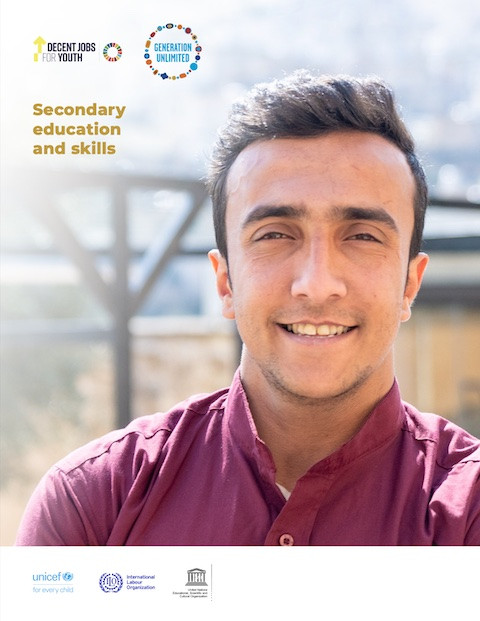 Secondary Education and Skills Year of publication: 2020 Corporate author: Generation Unlimited | Global Initiative on Decent Jobs for Youth All young people need access to quality education and learning that would help them develop the skills, knowledge, attitudes and values they need to find and retain productive work, to make informed decisions, and to positively engage in their communities. However, millions of young people remain out of school or do not have access to quality learning opportunities. The COVID-19 pandemic and the resulting economic downturn have made the challenges facing young people even more pressing, as shrinking labour markets leave low-skilled young people with fewer choices, and render them more vulnerable to exploitation.There is a need for a radical re-think of what works, seeking a radical improvement in traditional curricula, the number of trained professional teachers, student–teacher ratios, and the teaching methods and strict school timetables that have become less relevant to the current needs of young people.The aim of this guide is to support the Generation Unlimited strategic priorities, and to inform policy makers and social partners, so as to guide action on investment, policy change and delivery, increasing the likelihood of successful outcomes and decent jobs for young people.
 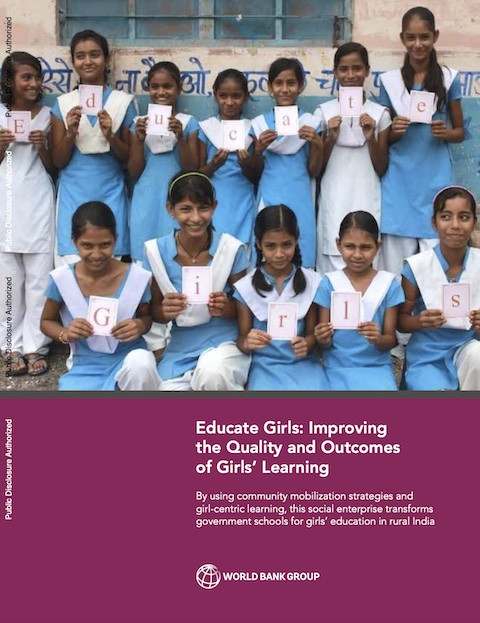 Educate Girls: Improving the Quality and Outcomes of Girls’ Learning Year of publication: 2017 Corporate author: World Bank In India, women and girls, especially in rural areas, are particularly affected by the country’s illiteracy problem, since they face discrimination based on their sex and need for childbearing. In Rajasthan, the north- western Indian state that borders Pakistan, 9 out of 26 districts have the worst gender gap in India for girls’ education.Established in 2007, Educate Girls is holistically tackling issues at the root cause of gender inequality in India’s education system that has helped to ensure over 90% enrollment and significantly higher attendance for all girls as well as improved school infrastructure, quality of education and learning outcomes for all children.As a result of Educate Girls’ efforts to date, an army of “girls champions” has been created to combat cultural issues and support systemic change. More than 150,000 out-of-school girls have been enrolled in school and the program has benefitted around 3.8 million of beneficiaries. Continuing to address the social and cultural barriers in girls’ education can bring about real transformation, such as improvement in health, income levels, and overall livelihoods in rural populations.