
Resources
Explore a wide range of valuable resources on GCED to deepen your understanding and enhance your research, advocacy, teaching, and learning.
8,363 Results found
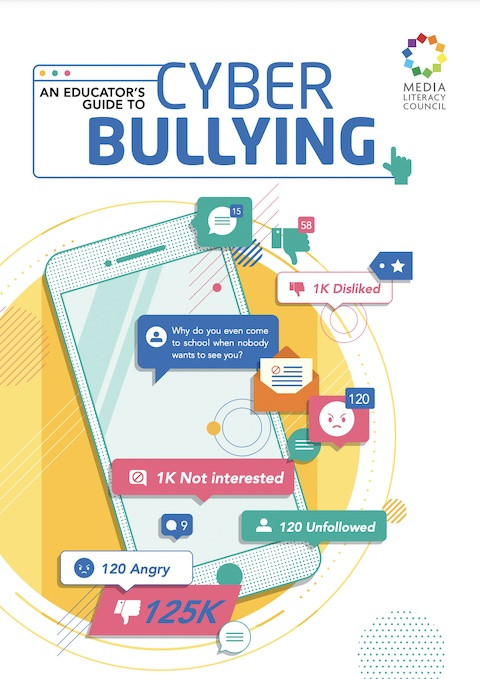 An Educator’s Guide to Cyber-Bullying Year of publication: 2018 Corporate author: Media Literacy Council (MLC) Cyber-bullying is an increasingly worrying problem in schools across Singapore, affecting students of all ages. This Guide gives you supplementary materials - such as information about the issue and lesson plans for lower primary to pre-university - to help you teach and guide your students through this problem.
  School-Based Violence Prevention: A Practical Handbook Year of publication: 2019 Corporate author: World Health Organization (WHO) School-based violence prevention: a practical handbook is a World Health Organization (WHO) resource for school officials and educators to help prevent violence in and around schools. The handbook gives advice on how schools can embed violence prevention within their routine activities and across the points of interaction schools provide with children, parents and other community members.
  Counting the Cost: Achieving Literacy in Countries of the Global Alliance for Literacy Year of publication: 2021 Corporate author: UNESCO Institute for Lifelong Learning (UIL) This paper seeks to determine the cost of achieving Sustainable Development Goal 4 (SDG 4) Target 4.6: 'By 2030, ensure that all youth and a substantial proportion of adults, both men and women, achieve literacy and numeracy'. In an effort to answer this question, UNESCO ran simulations and identified the cost and funding gap for the 29 member countries of the Global Alliance for Literacy within the Framework of Lifelong Learning (GAL). This paper argues that 739 million youth and adults require additional literacy programmes of which 580 million are located in 9 of the 29 member countries (the E-9 countries). Based on the results of the simulation, an estimated US$ 190 billion is needed to achieve Target 4.6 by 2030 in the 29 GAL countries. The E-9 countries account for 80% of this cost as the large majority of the global population of youth and adults who lack basic literacy skills live in these territories. The estimation considers the impact of the COVID-19 crisis on GDP growth and presents several scenarios for consideration. If the 29 member countries allocate the recommended 3 per cent of their national education budget to youth and adult literacy, a funding gap of US$ 17 billion will still remain. However, this gap is greater in the 20 non-E9 countries, which account for US$ 12 billion of the funding gap. These 20 non-E9 countries already experience massive challenges for investing in their public education system due to low economic growth and low education development outcomes. A detailed description of the UNESCO GAL simulation model used to estimate the total cost and identify the financing gap for the 29 countries is presented to help interpret the results. The paper ends with a set of recommendations for governments and the international community to work together and ensure the availability of lifelong learning opportunities for all, especially those often left behind.
 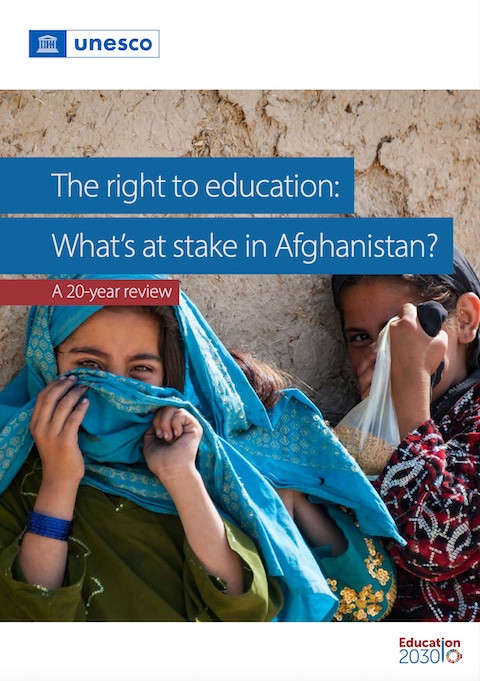 The Right to Education: What’s at Stake in Afghanistan?; A 20-Year Review Year of publication: 2021 Corporate author: UNESCO This report takes stock of the achievements in education made by Afghanistan over the past 20 years and sets out immediate action to safeguard the right to education for all learners following deep political change in the country in 2021.Although Afghanistan lags far behind countries across South and West Asia on most development indicators, it has made impressive progress in education over two decades. Enrolment has increased ten-fold, with substantial gains for girls and female literacy. Female teachers have been hired. Steady efforts have been made to expand the school network across the country.The country has ratified key international normative instruments relating to the right to education; enshrined this right in the Constitution and adopted a wide range of policy measures to increase access, improve education quality and reduce gender, socio- economic and rural/urban disparities.But the challenges remain colossal, with half the primary school-aged children not enrolled in school and very low learning outcomes. The country is highly dependent on external aid to sustain its education system. It needs to uphold state obligations on the right to education without any discrimination and continue removing barriers that impede progress towards the Sustainable Development Goal on education to build the country’s future.
  Violence and Child Abuse Year of publication: 2015 Corporate author: Dubai Foundation for Women and Children (DFWAC) | Center for Statistical, Economic and Social Research and Training for Islamic Countries The study aimed to investigate the phenomenon of violence against children in the United Arab Emirates. It focuses on the extent of violence against children and abuse in its various forms at home and at school. The study came out with a set of recommendations to deal with the phenomenon.
  Gender and Peacebuilding Training for Primary School Teachers: Training Manual Year of publication: 2016 Corporate author: United Nations Children's Fund (UNICEF) The Gender and Peacebuilding training material is intended to be used for teachers teaching in primary or secondary school. It is shaped by a participatory approach. This is because the discussion of gender and conflict issues requires participants to sit back and reflect on their diverse experiences and knowledge. The training encourages the participants to learn from one another by sharing their thoughts, discussing their views and concerns, analysing situations and, most importantly, questioning attitudes and behaviours.
  Applying a Whole School Approach to Prevent School-Related Gender-Based Violence: Lessons From Zimbabwe Year of publication: 2021 Corporate author: United Nations Girls' Education Initiative (UNGEI) In 2018, the United Nations Girls’ Education Initiative (UNGEI) along with the Forum for African Women Educationalists Zimbabwe Chapter (FAWEZI), with support from UNICEF, launched a pilot initiative to test whether and how the eight domains and minimum standards can be operationalized in schools. Miske Witt & Associates (MWAI), a technical partner in the initiative, supported FAWEZI to design and monitor interventions aligned to the minimum standards. The pilot was implemented in ten schools (five primary and five secondary) across two districts in Zimbabwe.Implemented over the period October 2018 – December 2020, including during the COVID-19 lockdown, this policy note briefly describes the pilot, highlights what worked and lessons and recommendations for policy action. The target audience for this policy note are education practitioners, policymakers, researchers and donors.
  Inclusive Early Childhood Care and Education: From Commitment to Action Year of publication: 2023 Corporate author: UNESCO The development of inclusive programmes and services for early childhood care and education is a priority of Sustainable Development Goal 4 on education to which the international community has committed itself to achieve by 2030.This publication calls for a renewed global commitment to early childhood inclusion through the presentation of qualitative and quantitative data and action-oriented thinking. It presents lessons from country practices and recent research to provide policy-makers, partners, and ECCD practitioners with guidelines for action.The publication contains key messages that stakeholders can draw upon for actions that address the diversity and trajectory of each child.
 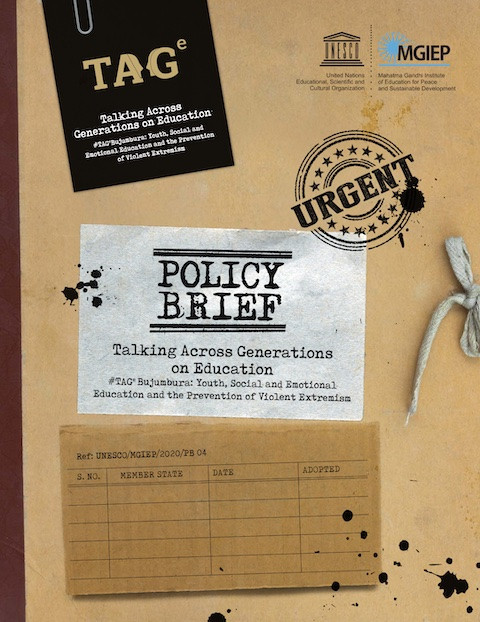 Policy Brief: Talking Across Generations on Education; #TAGe Bujumbura: Youth, Social and Emotional Education and the Prevention of Violent Extremism Year of publication: 2020 Corporate author: Mahatma Gandhi Institute of Education for Peace and Sustainable Development (MGIEP) With the aim to mainstream the voices of Burundi youth and include them in the policymaking process in the areas of education for peace, sustainable development and global citizenship, UNESCO MGIEP, YELI-Burundi (Youth Empowerment and Leadership Initiative Burundi) and the Government of Burundi organised a series of high-level #TAGeBujumbura dialogues. These were an integral part of the Annual Prevention of Violent Extremism (PVE) Youth Blast, which was organised by YELI-Burundi on September 16-17, 2019 in Bujumbura, Burundi. H.E Everlyne Butoyi, Minister of Youth, IT and Posts, inaugurated the event. The theme of the main TAGe plenary was The Place of the Youth and Social and Emotional Learning for the Prevention of Violent Extremism – within the broader context of United Nations Security Council Resolution 2250.This unique UNESCO MGIEP TAGe modality for actionable dialogue comprised the following components – month-long online discussions, live TAGe and actionable outputs. The preceding online discussion had over 1,000 participants, and witnessed rich discussion threads being compressed into insightful, actionable ideas. Subsequently, based on the online engagement and the on-ground work done, six representatives were chosen from these participants to represent the collective voices of the youth. They were joined by three distinguished senior decision-makers (from the Government of Burundi and civil society) in a live TAGe exchange, where they delved into issues and unearthed creative solutions in front of an audience of over 200.
 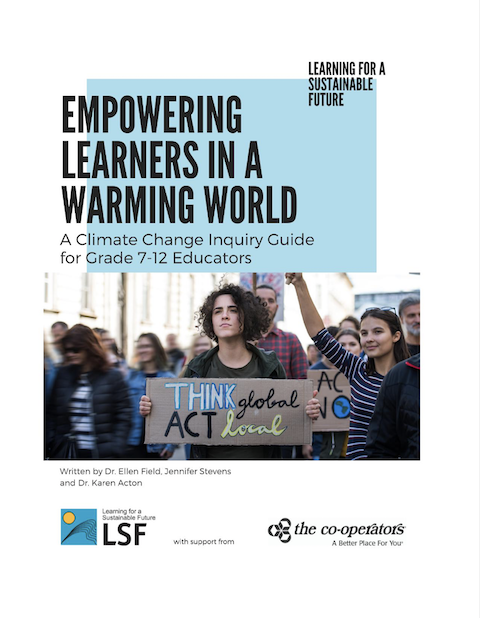 Empowering Learners in a Warming World: A Climate Change Inquiry Guide for Secondary Educators Year of publication: 2020 Author: Ellen Field | Jennifer Stevens | Karen Acton Corporate author: Learning for a Sustainable Future (LSF) The purpose of this guide is to present opportunities to evolve students’ understanding of the climate and climate change, assess the risks and opportunities to mitigate and adapt to the changing climate, unpack ethical dimensions, and honour emotions that are part of the process of coming to understand the complexity and urgency of the issue.Transformative teaching strategies used throughout this guide are important to tackling complex problems like climate change. These strategies often begin with the understanding and experiences that students bring with them. Educators, who themselves are grappling with climate change issues, take the role of facilitators and co-learners as the class works together to learn, critically reflect, and take action.Most importantly, this guide aims to engage students in contributing to solutions in their schools, communities and homes. It aims to connect educators to instructional strategies that allow for students’ perspectives and voice, currently available climate change science and research, teacher resources and activities, datasets, and action solutions.