
Resources
Explore a wide range of valuable resources on GCED to deepen your understanding and enhance your research, advocacy, teaching, and learning.
8,363 Results found
 Asia and the Pacific: SDG Progress Report 2021 Year of publication: 2021 Corporate author: UN. Economic and Social Commission for Asia and the Pacific (UN. ESCAP) This report analyses progress towards the Sustainable Development Goals (SDGs) in Asia and the Pacific and its five subregions as well as the availability of data. It assesses gaps which must be closed to achieve the goals by 2030. This assessment is designed to ensure the region’s actions remain on target and shortcomings are addressed as they arise. It is a resource for all stakeholders involved in prioritization, planning, implementation and follow-up of the 2030 Agenda for Sustainable Development in Asia and the Pacific.
  Disinfodemic: Deciphering COVID-19 Disinformation (Policy Brief; 1) Year of publication: 2020 Author: Julie Posetti | Kalina Bontcheva Corporate author: UNESCO The purpose of this brief is to provide a structure for understanding the COVID-19 disinfodemic and the responses to it, highlighting practices which have a bearing on the UN Sustainable Development Goals (SDGs), the right to health and the right to freedom of expression. SDG 16.10 calls for “public access to information and fundamental freedoms”.
  Media Literacy: eMedia Year of publication: 2021 Corporate author: e-Media project Consortium The eMedia: Media Literacy and Digital Citizenship for All project aims to promote education for all by producing educational guidelines (handbooks) related to digital practices. These handbooks support possibilities for a new and innovative way of teaching different subjects at school. They address educators who are interested in developing their digital competence and improving their understanding of educational robotics as a pedagogical approach in formal or non-formal education.The handbooks are devoted to three aspects of digital competence:Educational robotics: to develop computational thinking with hands-on activities.Media literacy: to understand the power and the risks of online social media.Online Expression: to promote a more responsible use of social media, blogs, web radios and web TVs.In addition to the printed manuals, their electronic versions are also available, with additional information on the topic in question. Free online courses have been created on the Moodle platform.The handbook on Media Literacy gives an insight on the influence of media on young people development and the role of of new information technology in manipulating reality. It is intended to be used as a guideline and source for inspiration for teachers who are willing to expand their knowledge thanks to the practical examples that the handbook provides in order to deal with media literacy in class. The handbook:explains in brief the influence of media on young people developmentgives technical considerations on what media literacy isprovides an overview of the legislative frame, licenses and media ownershipgives practical examples to deal with media literacy in class.
  Gender-Based Hate Crime Year of publication: 2021 Corporate author: Organization for Security and Co-operation in Europe (OSCE) Gender-based hate crimes are a consequence of gender inequalities and disproportionately affect women, as well as anyone perceived as not complying with prevailing gender norms. Gender-based hate crimes often seek to intimidate and suppress ways of life or expressions of identity that are perceived as not complying with traditional gender norms. They have a significant, long-lasting impact on the victims, and undermine security and social cohesion by perpetuating gender inequalities. The existence of such crimes also underscores wider trends of intolerance towards other groups. Everyone has a role to play in countering this and all forms of intolerance.
 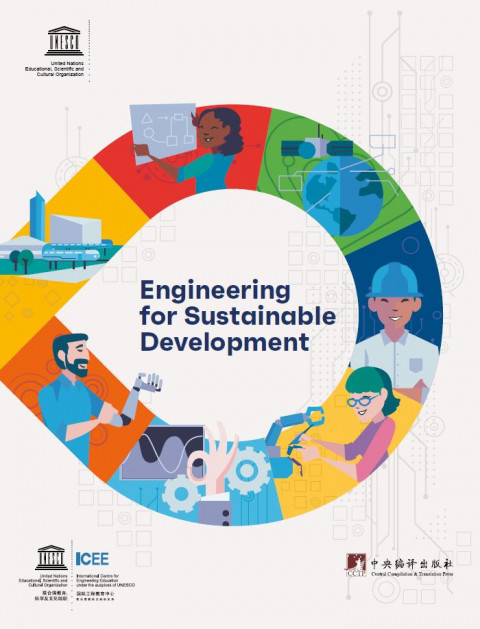 Engineering for Sustainable Development: Delivering on the Sustainable Development Goals Year of publication: 2021 Corporate author: UNESCO | International Centre for Engineering Education (ICEE) The report highlights the crucial role of engineering in achieving each of the 17 SDGs. It shows how equal opportunities for all is key to ensuring an inclusive and gender balanced profession that can better respond to the shortage of engineers for implementing the SDGs. It provides a snapshot of the engineering innovations that are shaping our world, especially emerging technologies such as big data and AI, which are crucial for addressing the pressing challenges facing humankind and the planet. It analyses the transformation of engineering education and capacity-building at the dawn of the Fourth Industrial Revolution that will enable engineers to tackle the challenges ahead. It highlights the global effort needed to address the specific regional disparities, while summarizing the trends of engineering across the different regions of the world.By presenting case studies and approaches, as well as possible solutions, the report reveals why engineering is crucial for sustainable development and why the role of engineers is vital in addressing basic human needs such as alleviating poverty, supplying clean water and energy, responding to natural disasters, constructing resilient infrastructure, and bridging the development divide, among many other actions, leaving no one behind.It is hoped that the report will serve as a reference for governments, engineering organizations, academia and educational institutions, and industry to forge global partnerships and catalyse collaboration in engineering so as to deliver on the SDGs.
 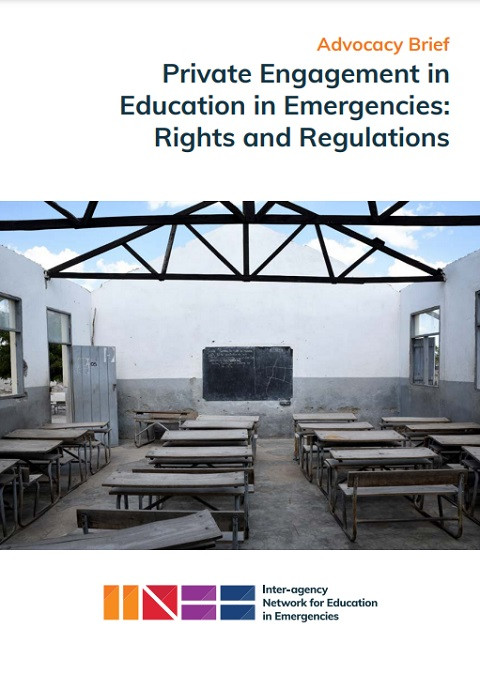 Private Engagement in Education in Emergencies: Rights and Regulations Year of publication: 2021 Author: Francine Sara Menashy | Zeena Zhakaria Corporate author: Inter-agency Network for Education in Emergencies (INEE) Efforts to secure inclusive and equitable education for all have prompted calls for greater engagement by the private sector, asserting that businesses and foundations can play significant roles as partners in achieving Sustainable Development Goal 4 (SDG4).In recent years, given shortfalls in public financing and the need for urgent responses, private actors have increasingly become involved in various aspects of educational programming for education in emergencies (EiE). This arrangement, however, can produce tensions between private engagement and humanitarian response in education, which need to be addressed and in turn require extra coordination, advocacy and attention. This brief explores some of these tensions and makes recommendations to support the prioritization of safe, equitable, and quality public education for all children and young people affected by crises.INEE supports every young person’s right to education and recognizes the State as the primary duty-bearer of schooling, in alignment with international declarations, frameworks, and legal instruments that assert and protect the right to education.
 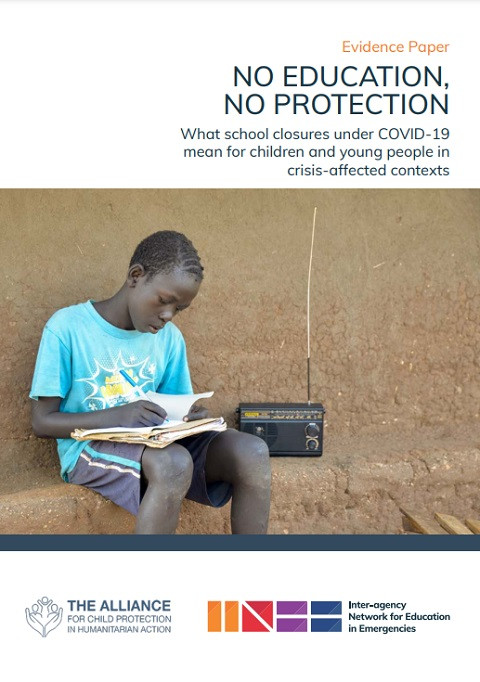 No Education, No Protection: What School Closures Under COVID-19 Mean for Children and Young People in Crisis-Affected Contexts Year of publication: 2021 Corporate author: Inter-agency Network for Education in Emergencies (INEE) | Alliance for Child Protection in Humanitarian Drawing from research and experience on previous infectious disease outbreaks and an emergent body of work from the current COVID-19 pandemic, this report highlights the primarily negative effects resulting from the combination of sudden school closures and restricted access to and availability of services, social networks, and other protective facilities for children and young people living in crisis-affected contexts. The consequences of school closures on education and child protection can be categorized into three principal areas:1. Loss of learning and impediments to providing inclusive, equitable, quality education2. Negative impact on child well-being and healthy development3. Amplified child protection risks and harms experienced by children and young people
  UNESCO MIL CLICKS Social Media Innovation Year of publication: 2016 Corporate author: UNESCO MIL CLICKS is a way for people to acquire media and information literacy (MIL) competencies in their normal day-to-day use of the Internet and social media and to engage peer education in an atmosphere of browsing, playing, connecting, sharing, and socializing.The acronym MIL CLICKS stands for Media and Information Literacy: Critical-thinking, Creativity, Literacy, Intercultural, Citizenship, Knowledge & Sustainability.The objectives of this social media strategy are to use social media to:1) Expose people to become more media and information literate and to2) Raise awareness about the importance of media and information literacy.
 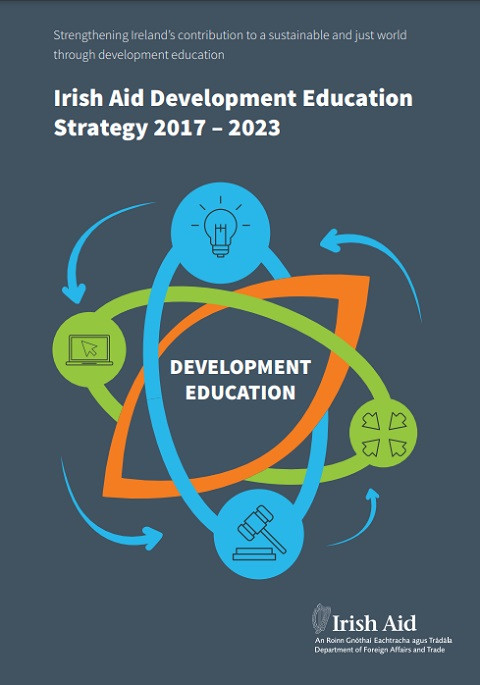 Irish Aid Development Education Strategy 2017-2023: Development Education Year of publication: 2016 Corporate author: Irish Aid Ireland has a long and proud history in development education thanks to many of the civil society organisations represented here today and which pre-dates the start of Ireland’s official aid programme which is itself now over 40 years old.The Development Education Strategy 2017-2023 aims to increase access to development education in Ireland, in schools and colleges, in local and community groups, and among the old and young.Development education is a lifelong educational process which encourages people to critically analyse and challenge the root causes and consequences of global hunger, poverty and injustice, challenge stereotypes and engage in action to bring about change in both their local and global communities.
  Opportunities for Media and Information Literacy in the Middle East and North Africa: Yearbook 2016 Year of publication: 2016 Author: Magda Abu-Fadil | Jordi Torrent | Alton Grizzle Corporate author: International Clearinghouse on Children, Youth and Media (Sweden) Opportunities for Media and Information Literacy in the Middle East and North Africa is the seventeenth Yearbook published by the Clearinghouse and fills a gap in the existing body of literature about the progress of media and information literacy work in different parts of the world. This book also helps educators in the Middle East and North Africa region looking for opportunities to bring to their classrooms elements of MIL education.