
Resources
Explore a wide range of valuable resources on GCED to deepen your understanding and enhance your research, advocacy, teaching, and learning.
8,363 Results found
 Analytical Mapping of Life Skills and Citizenship Education in the Middle East and North Africa Year of publication: 2017 Corporate author: UNICEF Middle East and North Africa The Analytical Mapping of the Life Skills and Citizenship Education in MENA, published in October 2017, provides a multi-stakeholder view of the status of life skills and citizenship education in MENA and the corresponding vision for the region. It does not evaluate existing interventions, nor is it meant to generate an exhaustive list of all existing life skills programmes in MENA. It rather aims to provide an analytical overview of Life Skills and Citizenship Education (LSCE) related intervention in the region. Through analyzation, it also attempts to highlight general challenges encountered in the programming of LSCE, as well as focus on opportunities for LSCE in MENA national education systems.
  Reimagining Life Skills and Citizenship Education in the Middle East and North Africa: A Four-Dimensional and Systems Approach to 21st Century Skills; Conceptual and Programmatic Framework Year of publication: 2017 Corporate author: UNICEF Middle East and North Africa The situation of learning in MENA calls for a holistic, lifelong and rights-based vision of education that maximizes the potential of all children and youth in the region and better equips them to create meaning out of knowledge and to face the transitions from childhood to adulthood, from education to work, and from unreflective development to responsible and active citizenship. This is what drives the MENA Life Skills and Citizenship Education (LSCE) Initiative, kicked off in 2015 with the aim of supporting the countries of the region – conceptually, programmatically and technically – to improve learning and to better invest such learning in individual, social and economic development.The LSCE Conceptual and Programmatic Framework (CPF) puts forth a roadmap to guide policies, strategies and programmes on life skills and citizenship education supporting the region-wide efforts to provide children and youth with opportunities to learn, transition from childhood to adulthood, move from school to work settings, and become responsible and active citizens of their communities.A set of twelve core life skills for MENA has been identified using the four-dimensional learning model: ‘Learning to Know’ (Cognitive Dimension), ‘Learning to Do’ (Instrumental Dimension), ‘Learning to Be’ (Individual Dimension), and ‘Learning to Live Together’ (Social Dimension). The twelve core life skills are life-long, and they build on evidence that underlines the importance of skills acquisition from an early age. Furthermore, the twelve core life skills are acquired and sustained through all forms of learning in a systems approach that recognizes multiple pathways of learning, formal, non-formal and informal.
  Localizing the 2030 Agenda and Global Citizenship Education: An Essential Dialogue Year of publication: 2020 Corporate author: Diputació de Barcelona Diputació de Barcelona has produced a document that offers guidelines to strengthen the links between Global Citizenship Education (GCE) actions and localizing SDGs initiatives, in order to drive real changes in local policies.What we call Global Citizenship Education (GCE) brings together key elements of different educational trends, such as development education, peace education or education for sustainability, among others. Each of them has decades of experience in promoting changes in citizen’s knowledge, attitudes and behaviours through formal or informal channels. This experience can help to reinforce the 2030 Agenda’s capacity to generate real change towards a more sustainable future for the planet, connecting local and global realities and highlighting interdependencies and co-responsibility. The document points out what can be done at the local level to improve this dialogue between SDG and GCE with practical proposals such as introducing GCE perspective in the SDGs training activities or implementing joint initiatives between development cooperation departments and other areas to reach new audiences.
  Ensuring Inclusive Education for Ethnolinguistic Minority Children in the COVID-19 Era: Guidance Note Year of publication: 2021 Corporate author: UNESCO Bangkok This Guidance Note aims to stimulate thinking into the unique challenges facing children from marginalized ethnolinguistic communities as they re-enter school or continue with various forms of distance learning. Links to resources that may not address language directly, but contain information that could be applied to ethnolinguistic minority children, are included as footnotes.
 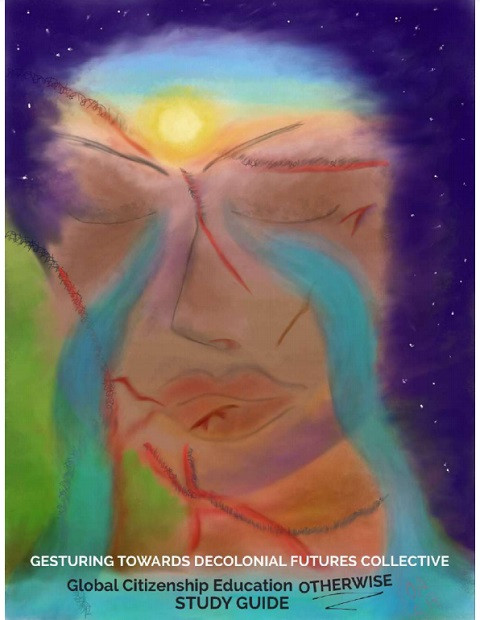 Gesturing Towards Decolonial Futures Collective: Global Citizenship Education Otherwise; Study Guide Year of publication: 2019 Author: Vanessa de Oliveira Andreotti | Sharon Stein | Rene Suša | Dani d’Emilia | Elwood Jimmy | Bill Calhoun | Sarah Amsler | Camilla Cardoso | Dino Siwek | Kyra Fay | Tereza Čajková Corporate author: Decolonial Futures Collective This booklet was developed with a specific audience in mind: educators working with global citizenship education in Europe. It presents an overview of the work of the collective and outlines two pedagogical experiments. The first pedagogical experiment, “Bare Basics” is a program for self or group study consisting of a collection of resources organized around 6 thematic areas (denial of violence, denial of unsustainability, denial of entanglement, how education has helped create the problem, so what/now what?, the difficulties/impossibilities of imagining otherwise). The second pedagogical experiment is an experiential learning program that we run by request (as a TTT or a residency). It involves mapping, imagination, body and land-based exercises. We invite you to engage with the outline of both programs, starting with our “broccoli seed agreement” on the back of the booklet.
  Glocal Education in Practice: Teaching, Researching, and Citizenship (BCES Conference Books; Vol. 17) Year of publication: 2019 Author: Nikolay Popov | Charl Wolhuter | Louw de Beer | Gillian Hilton | James Ogunleye | Elizabeth Achinewhu-Nworgu | Ewelina Niemczyk Corporate author: Bulgarian Comparative Education Society (BCES) This volume contains selected papers submitted to the XVII Annual International Conference of the Bulgarian Comparative Education Society (BCES) held in June 2019 in Pomorie, Bulgaria. The XVII BCES Conference theme is Glocal Education in Practice: Teaching, Researching, and Citizenship. The book includes 34 papers written by 69 authors from 20 countries.
 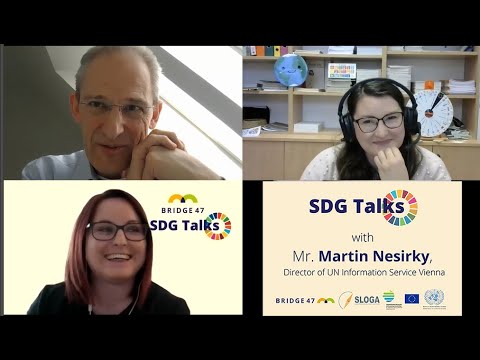 SDG Talk: Mr. Martin Nesirky Year of publication: 2021 Author: Martin Nesirky Corporate author: Sloga Platforma | Bridge 47 SDG Talk with Martin Nesirky, director of UN Information Service Vienna about Sustainable Development Goals, implication od COVID-19 pandemic on education, Global Citizenship Education and more.SDG Talks was prepared in cooperation with the UN Association for Slovenia, as part of the Bridge 47 - Building Global Citizenship project. The project is funded by the European Commission and the Ministry of Foreign Affairs of the Republic of Slovenia, and is implemented by the SLOGA Platform.Content does not reflect positions of the EU or Slovene MFA.
 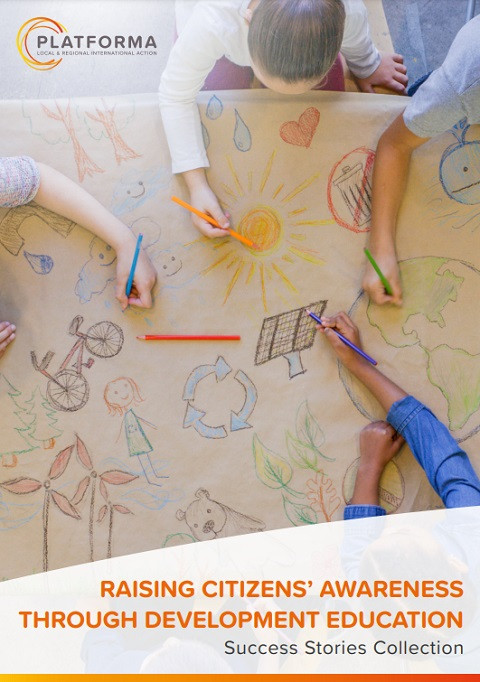 Raising Citizens' Awareness Through Development Education: Success Stories Collection Year of publication: 2020 Author: Lur Fernandez Salinas Corporate author: PLATFORMA Development Education and Awareness Raising (DEAR) are natural lines of action for local and regional governments active in development cooperation and tie in perfectly with their territorial strategies.Awareness-raising among citizens, through the action of municipalities and regions, remains a core component of the co-responsibility, solidarity, mutual knowledge and mutual understanding needed to mobilise and unite communities.Discover this Success Stories Collection which aims to showcase concrete, impactful and transformative experiences of local and regional governments and their associations actively engaged in DEAR projects and decentralised cooperation strategies.
  A Critically Informed Teacher Education Curriculum in Global Citizenship Education: Training Teachers as Field Experts and Contributors to Assessment and Monitoring of Goals (Journal of International Cooperation in Education; Vol.22-2/23-2) Year of publication: 2020 Author: Susan Wiksten Corporate author: CICE Hiroshima University A global market of education development has grown since the 1990s. As the circumstances and contexts of education change globally, there is both a need for shared references in teacher education as well as good reasons for contesting unitary efforts to implement policy goals. Specifically, shared global references for teacher education that can be used by teacher education programs, NGOs and civil society for responding to target 4c. of SDG 4.7 are needed. Accordingly, this article proposes guiding principles and outlines a teacher education curriculum for Global Citizenship Education (GCED) that can be adapted to low-income country contexts as well as high-income contexts. Some of the challenges, possibilities and limitations in the preparation of teachers with the skills needed for supporting the development of the next generation of global citizens are described. The analysis presented draws on data from the UNESCO Institute for Statistics, the OECD teacher survey, indicators developed by the World Bank, and policy efforts to develop a definition of global competence, among other sources. The concluding discussion proposes that an important possibility presents itself in efforts to involve teachers in the monitoring and evaluation of education development goals.
  Non-Formal Education, Sustainable Development and the Education 2030 Agenda: Study of Civil Society Practices in Latin America and the Caribbean Year of publication: 2020 Corporate author: UNESCO Santiago | UNESCO Mexico This publication shows 27 civil society initiatives from various countries in Latin America and the Caribbean that work to promote actions and programs to comply with Target 4.7 within non-formal education. The study seeks that these organizations show their work, the challenges they face as regards the implementation of their programs and their greatest achievements.