
Resources
Explore a wide range of valuable resources on GCED to deepen your understanding and enhance your research, advocacy, teaching, and learning.
8,363 Results found
 Regulatory Authorities for Electronic Media and Media Literacy: Comparative Analysis of the Best European Practices Year of publication: 2018 Author: Robert Tomljenović Corporate author: Council of Europe Information event for stakeholders of the media community in Serbia on presentation of the Study “Regulatory Authorities for Electronic Media and Media Literacy - Comparative analysis of the best European practices” was organized by the Council of Europe Office in Belgrade, JUFREX Programme and the Embassy of Finland in Serbia, on 20 December 2018, in order to jointly point out the importance of the development of media literacy in Serbia and the Western Balkans region.The study analyzes and indicates challenges and issues that come with living in a digitalized, hypertechnological mediated world, in which we are faced with countless information, issues of disinformation and fake news, algorithmic separation in ideological echo chambers, hate speech, clickbait journalism, and decreased trust in both mainstream media and the level of journalistic professionalism. With such a media ecosystem, it is vital to define the position of a regulatory authority for electronic media as well as its responsibilities and obligations, and stress the regulator's role in promoting and developing media literacy, one of the key skills for living in the 21st century and the answer to many questions and challenges that come with the modern era."The Council of Europe considers media literacy one of the main tools for strengthening media pluralism and the quality of media content. All media actors in Serbia have the responsibility to promote media literacy to enable understanding and critical analysis of content offered by traditional and digital media. Especially children have the right to a safe and stimulating media environment" said Head of the Council of Europe Office in Belgrade, Tobias Flesenkemper.The study emphasizes that a prerequisite for every democratic process is a well-informed citizen. The Study presents several examples of best European practices and how to engage regulatory bodies and all other relevant actors to increase media literacy, with a particular focus on the Finnish model in this area. Media education is implemented in Finland wherever there are children and youth, not only in kindergartens and schools, but also in libraries, playrooms, youth centers, even in virtual communities and digital games.As pointed out by the Ambassador of Finland in Belgrade, Perti Ikonen, the high level of media literacy of citizens is what the media in Finland forces to adhere to high professional standards, and basically the work of the institutions responsible for the promotion of media literacy. Finland took over the chairmanship of the Committee of Ministers of the Council of Europe in November this year, and during its term of office, until May 2019, the priorities of the Finnish Presidency will be to strengthen the human rights and rule of law system in Europe, support equality as well as inclusiveness with a particular focus on youth and the prevention of radicalization.The study was developed within the framework of the Joint European Union and the Council of Europe Programme "Strengthening the Judicial Expertise on Freedom of Expression and Media in South-East Europe (JUFREX)".
  Issue to Action: Mathematics; Teaching Toolkit for a Fairer World Year of publication: 2021 Author: Corinne Angier Corporate author: Scotdec These resources offer maths teams an opportunity to take an applications approach within the BGE phase. You might want to make connections to the UN Sustainable Development Goals and you can find some introductory activities to the goals here.The materials explore 3 broad themes – climate change, gender equality and migration – with 2 sets of activities for each theme supported with a PowerPoint presentation.The lessons and worksheets in the booklet and accompanying PowerPoints are all free to download below. All activities are mapped to ‘Experiences and Outcomes’, benchmarks and core maths skills are highlighter.
  ‘Hate Speech’ Explained: A Toolkit Year of publication: 2015 Corporate author: ARTICLE 19 In this toolkit, ARTICLE 19 provides a guide to identifying ’hate speech‘ and how effectively counter it, while protecting the rights to freedom of expression and equality. It responds to a growing demand for clear guidance on identifying “hate speech,” and for responding to the challenges ‘hate speech’ poses within a human rights framework.The toolkit is guided by the principle that coordinated and focused action taken to promote the rights to freedom of expression and equality is essential for fostering a tolerant, pluralistic and diverse democratic society in which all human rights can be realised for all people.As such, it addresses three key questions: How do we identify ‘hate speech’ that can be restricted, and distinguish it from protected speech?What positive measures can States and others take to counter ‘hate speech’? Which types of ‘hate speech’ should be prohibited by States, and under which circumstances? The toolkit is guided by the principle that coordinated and focused action taken to promote the rights to freedom of expression and equality is essential for fostering a tolerant, pluralistic and diverse democratic society in which all human rights can be realised for all people. It is informed by, and builds upon, ARTICLE 19’s existing policy work in this field.In Part I, we outline that there is no uniform definition of ‘hate speech’ under international human rights law, rather, it is a broad concept which captures a wide range of expression. The toolkit advances a typology for identifying and distinguishing different forms of ‘hate speech’ according to their severity, guided by states’ international human rights law obligations. In Part II, we provide guidance on what policy measures State and non-state actors can undertake to create an enabling environment for freedom of expression and equality that addresses the underlying causes of ‘hate speech’ while maximising opportunities to counter it.Finally, in Part III, we outline the exceptional circumstances in which the State is obliged by international law to prohibit the most severe forms of ‘hate speech’, and where also States may under international law place other restrictions on ‘hate speech’. This includes guidance on ensuring that such prohibitions are not abused, and to ensure that where sanctions are imposed they are appropriate and proportionate, as well as ensuring support and redress for victims.ARTICLE 19 believes that ensuring that responses to ‘hate speech’ comply with international human rights law is crucial. Prohibitions that censor offensive viewpoints are often counter-productive to the aim of promoting equality, as they fail to address the underlying social roots of the kinds of prejudice that drive ‘hate speech’. In most instances, equality is better-promoted through positive measures which increase understanding and tolerance, rather than through censorship.This toolkit is not a definitive version, and will be continuously updated to reflect the developing case law and best practices in this area.
  Mapping of Media Literacy Practices and Actions in EU-28 Year of publication: 2016 Corporate author: European Audiovisual Observatory | Council of Europe A project conducted by the European Audiovisual Observatory and financed by the European Commission This study aims at analysing the various media literacy initiatives on a national or regional level in order to provide an overview of what is currently being undertaken. This is the first major mapping exercise to survey the field in Europe. Although this study does not aim at covering the entire media literacy initiatives, it provides a detailed overview of the main trends, coming out of a selection of 547 featured projects involving 939 stakeholders across the European Union, which were identified through a questionnaire addressed at national experts from the different EU-28 member states. So what is Europe doing to encourage our media literacy? What measures are being taken at national and European levels to foster our critical appreciation and understanding of the mass media? The results of this study can be found in a general report accompanied by 4 annexes: Annex 1 provides national summaries showing the findings of the responses concerning each of the 28 EU member states; Annex 2 contains the list of the 547 featured projects; Annex 3 summarises the 145 case-study projects; Annex 4 contains the original responses from the 29 national experts, which are accessible in separate files available on the website of the European Commission.
 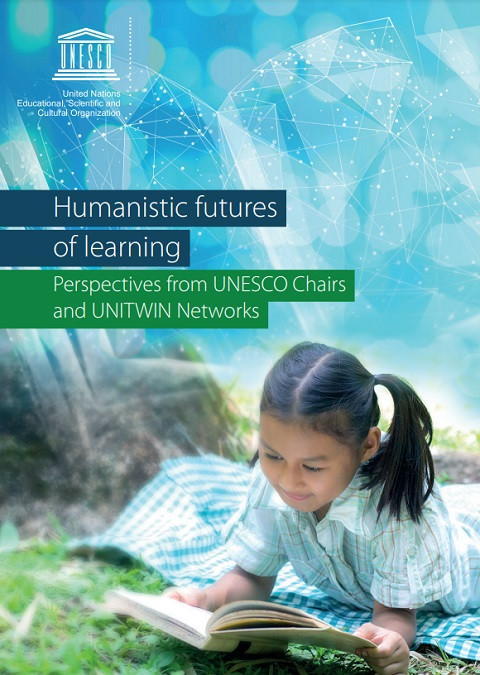 Humanistic Futures of Learning: Perspectives from UNESCO Chairs and UNITWIN Networks Year of publication: 2020 Corporate author: UNESCO UNESCO’s Futures of Education initiative aims to rethink education and shape the future. The initiative is catalyzing a global debate on how knowledge, education and learning need to be reimagined in a world of increasing complexity, uncertainty and precarity. This publication presents the first curated input to the Futures of Education initiative from the UNITWIN/UNESCO Chairs Programme, which now represents an extensive global network of more than 800 higher education institutions in over 115 countries. It features think pieces that highlight key dimensions to be considered in re-visioning and re-purposing education for the future of humanity and the planet. The collection of the pieces calls for greater focus on a number of critical areas such as: The role of culture in strengthening social and environmental sustainability; the values and attitudes that are needed to shape future generations; the importance of both robust public education, as well as of other learning spaces; the need to strengthen human creativity and capability in the digital era, as well as the role of higher education in generating the knowledge and driving the innovation required to transform our world.
 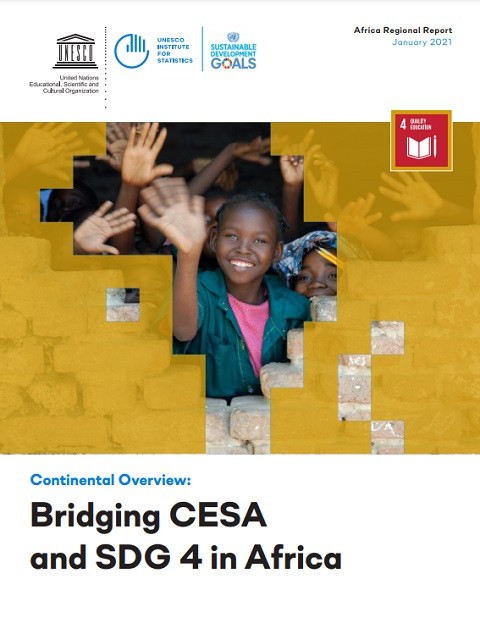 Continental Overview: Bridging CESA and SDG 4 in Africa; Africa Regional Report Year of publication: 2021 Corporate author: UNESCO Institute for Statistics (UIS) Monitoring progress toward Sustainable Development Goal 4 for education (SDG 4) is crucial to ensuring that children around the world have access to a quality education where they can learn and gain the skills they need to meet their full potential. SDG 4 indicators are organized with a view to global, thematic, regional and national targets.This report by the UNESCO Institute for Statistics (UIS) is the first in a series intended to bring a regional focus to SDG 4 monitoring, highlight the work being done in the regions and compare SDG 4 targets with those established by regional bodies.This new series of regional reports serve two purposes. Firstly, to map regional and SDG 4 targets to provide an overview of the symmetries between the two. Continental Overview: Bridging CESA and SDG 4 in Africa looks at how the strategic objectives of the Continental Education Strategy for Africa (CESA) compares with SDG 4 targets. Secondly, it analyses progress towards these objectives by African sub-regions.
 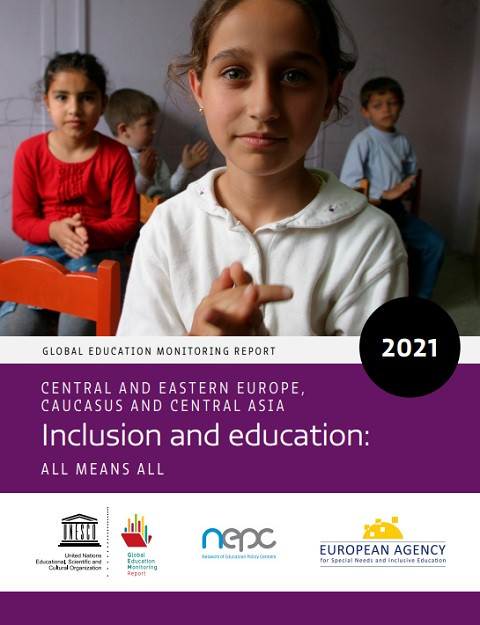 Global Education Monitoring Report, 2021, Central and Eastern Europe, Caucasus and Central Asia: Inclusion and Education; All Means All Year of publication: 2021 Corporate author: Global Education Monitoring Report Team | European Agency for Special Needs and Inclusive Education | Network of Education Policy Centers Prepared by the Global Education Monitoring (GEM) Report, in partnership with the European Agency for Special Needs and Inclusive Education and the Network of Education Policy Centers, the regional report on inclusion and education in Central and Eastern Europe, the Caucasus and Central Asia offers a deep dive into the core challenges and key solutions. The region is working hard to overcome a legacy, whereby children with disabilities attended special schools, once wrongly regarded as an effective solution, segregated by type of disability, if not fully excluded from education.The report draws on in-depth profiles of 30 education systems in the region. It also presents the additional risks to inclusion now posed by the COVID-19 pandemic. Building on the 2020 Global Education Monitoring Report, it documents barriers facing learners, particularly where multiple disadvantages intersect. Its recommendations provide a systematic framework for identifying and dismantling these barriers, according to the principle that ‘every learner matters and matters equally’.
 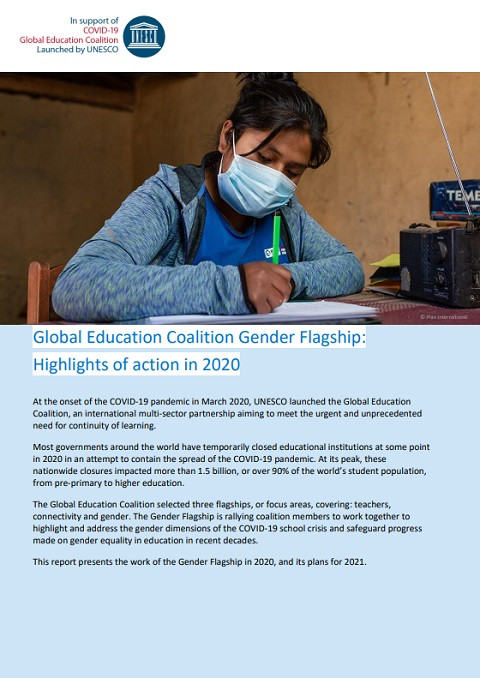 Global Education Coalition Gender Flagship: Highlights of Action in 2020 Year of publication: 2021 Corporate author: UNESCO | Global Education Coalition At the onset of the COVID-19 pandemic in March 2020, UNESCO launched the Global Education Coalition, an international multi-sector partnership aiming to meet the urgent and unprecedented need for continuity of learning.Most governments around the world have temporarily closed educational institutions at some point in 2020 in an attempt to contain the spread of the COVID-19 pandemic. At its peak, these nationwide closures impacted more than 1.5 billion, or over 90% of the world’s student population, from pre-primary to higher education. The Global Education Coalition selected three flagships, or focus areas, covering: teachers, connectivity and gender.The Gender Flagship is rallying coalition members to work together to highlight and address the gender dimensions of the COVID-19 school crisis and safeguard progress made on gender equality in education in recent decades.This report presents the work of the Gender Flagship in 2020, and its plans for 2021.
 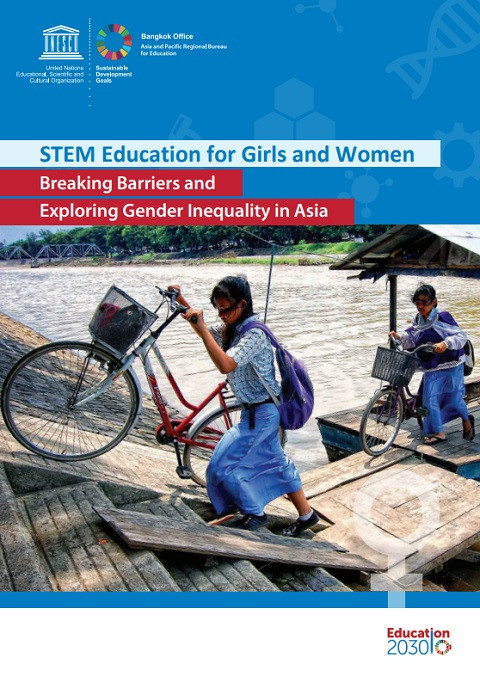 STEM Education for Girls and Women: Breaking Barriers and Exploring Gender Inequality in Asia Year of publication: 2020 Corporate author: UNESCO Bangkok | UNESCO Science, Technology, Engineering and Mathematics (STEM) fields are considered catalysts for the achievement of the 2030 Agenda for Sustainable Development. Yet, particularly for STEM fields, girls and women, for a multitude of social, cultural and psychological reasons, engage and participate at a lower rate than boys and men. This research collection aims to highlight the contextual barriers that girls and women face in STEM education and careers and offer concrete examples of interventions that successfully encourage participation of girls and women in STEM. These eight case studies from across Asia explore both the barriers and the achievements in SDG 4 and SDG 5, and give context-specific analysis of different aspects of gender disparities in the respective countries.
  Guidelines to Strengthen the Right to Education in National Frameworks Year of publication: 2021 Corporate author: UNESCO These Guidelines aim to strengthen national frameworks by assisting countries and stakeholders in conducting an assessment of the compatibility of their national education legal and policy framework with international standard-setting instruments on the right to education, and in light of SDG 4 commitments. These Guidelines provide a hands-on approach aiming to assist in the review of national education legal and policy frameworks in view of:Developing practical knowledge on the right to education based on the Right to education handbook and supporting capacity developmentProviding operational tools to assess the status of the right to education at country level and its compatibility with international and regional human rights obligations and international commitments (notably SDG 4)Identifying legal and policy gaps in education at country level and resulting challengesMaking recommendations for the full alignment of national constitutions, legislation , singular and policies with international standards and provisionsProviding insights on how to implement the recommendations in view of necessary reforms.