
Resources
Explore a wide range of valuable resources on GCED to deepen your understanding and enhance your research, advocacy, teaching, and learning.
8,363 Results found
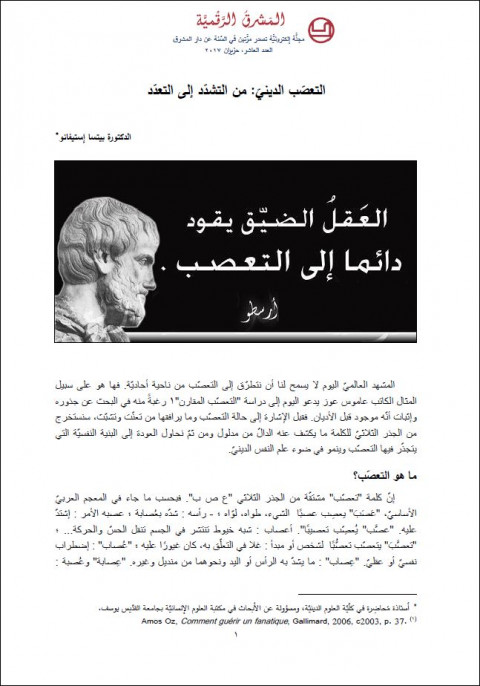 Religious Fanaticism: From Extremism to Pluralism Year of publication: 2017 Author: Pitsa Stefano Corporate author: Al-Machriq Digital Mgazine This article discusses the concept of intolerance in a modern way. The author tries to present to the reader the concept of intolerance through a comparison between pluralism and extremism.
 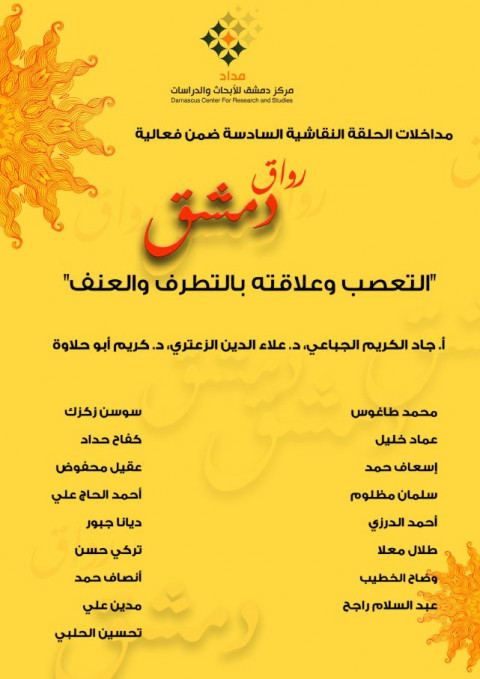 Intolerance and Its Relationship to Extremism and Violence Year of publication: 2017 Author: Jad Al-Karim Al-Jabaei | Aladdin Zaatari | Karim Abu Halawa Corporate author: Damascus Center for Research and Studies This document is a set of research papers discussing intolerance and its relationship to extremism and violence. In this production, the researchers tried to shed light on one of the issues facing societies, which is intolerance.
  Media Literacy in Finland: National Media Education Policy Year of publication: 2019 Corporate author: European Training and Research Centre for Human Rights and Democracy (Austria) | UNESCO Media literacy in Finland is the media literacy policy and the national media education policy document, published by the Ministry of Education and Culture in 2019. The document updates and extends the cultural policy guidelines for media literacy published in 2013. The need to update the policy arose from the changes that have taken place in media culture and the broader than before target groups of media education in particular. The Program of the Government also highlights the need for media skills for all age groups, from children to seniors. The vision of the policy is to improve everyone’s opportunities to develop their media literacy.
  Survey on Privacy in Media and Information Literacy With Youth Perspectives Year of publication: 2017 Author: Sherri Hope Culver | Alton Grizzle Corporate author: UNESCO This report aims to provide conceptual, development and policy recommendations to foster privacy in MIL, while enabling the critical engagement of people, including young women and men, in an environment conducive to sustainable development and to freedom of expression online and offline. It seeks to provide clarity on the complex issue of how MIL and privacy intersect.
  How to Build a Learning City? Make Gender Equality a Priority Year of publication: 2020 Corporate author: UNESCO Institute for Lifelong Learning (UIL) This video tutorial explains how gender equality must be prioritized in learning cities to empower women through learning, eliminate gender-based discrimination and foster equitable, inclusive, resilient and sustainable cities.
  Learning to Live Together Sustainably: Addressing the Challenge of UN Sustainable Development Goal Target 4.7 Year of publication: 2019 Author: Margaret Sinclair | Jean Bernard Corporate author: Protect Education in Conflict and Insecurity (PEIC) | Spectacle Learning Media The practical advice and guidelines in this book help support learning to live together, conflict transformation and peace at the individual, group and community levels. The framework for developing widely accessible, high quality learning materials supports the UN Sustainable Development Goals and is relevant to formal and non-formal education activities and projects. This document also raises important issues about the professional responsibilities of policy-makers at global and national level, who determine what content is addressed in the classroom. In particular, it addresses the need for education materials that support cross-cutting issues such as learning to live together, global citizenship education, and education for sustainable development.
  A Guide for Strengthening Gender Equality and Inclusiveness in Teaching and Learning Materials Year of publication: 2015 Corporate author: RTI International | United States Agency for International Development (USAID) The purpose of this guide is to provide guidance on how to represent members of all subgroups of a society in teaching and learning materials in equitable and non-stereotypical ways. Reviewers can use the strategies proposed in this guide to evaluate existing teaching and learning materials across primary and secondary levels. Authors or developers can employ the strategies to inform the development of new materials. This guide is organized according to themes that emerged from the review of relevant literature. Each theme reflects a particular type of bias that should be considered when evaluating or developing teaching and learning materials.
  NISSEM Global Briefs (Volume II): Educating for the Social, the Emotional and the Sustainable; Pedagogy, Practice and Materials Year of publication: 2020 Author: Andy Smart | Margaret Sinclair Corporate author: Networking to Integrate SDG Target 4.7 and SEL skills into Educational Materials (NISSEM) The timeframe for achieving the Sustainable Development Goals (SDGs) is tight, and the world also faces the consequences of Covid-19. NISSEM Global Briefs aim to show how SDG Target 4.7 themes and social and emotional learning (SEL) can be embedded in education policies, programs, curricula, materials, and practice, to help make progress towards sustainable development.
 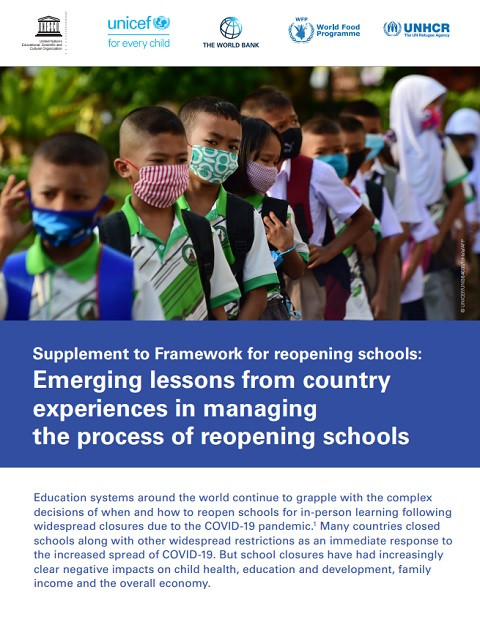 Supplement to Framework for Reopening Schools: Emerging Lessons From Country Experiences in Managing the Process of Reopening Schools Year of publication: 2020 Corporate author: UNESCO | United Nations Children's Fund (UNICEF) | World Bank | World Food Programme | UN. Office of the United Nations High Commissioner for Refugees (UNHCR) Education systems around the world continue to grapple with the complex decisions of when and how to reopen schools for in-person learning following widespread closures due to the COVID 19 pandemic. This supplement to the Framework for reopening schools, originally published jointly by UNICEF, UNESCO, the World Bank, the World Food Programme, and the UN Refugee Agency (UNHCR) in April 2020, summarizes emerging lessons learnt over the past months.The supplement follows the four main dimensions of the Framework (safe operations, focus on learning, wellbeing & protection, and reaching the most marginalized) and highlighting a number of country examples.
 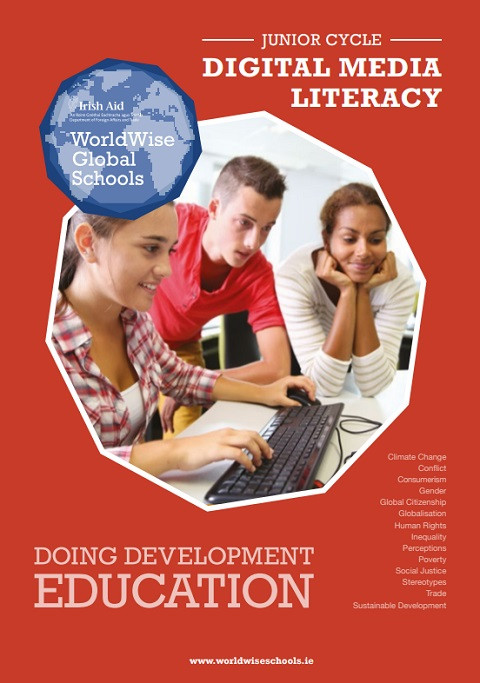 Doing Development Education: Digital Media Literacy; Junior Cycle Year of publication: 2017 Corporate author: WorldWise Global Schools (WWGS) | Irish Aid In Ireland, Development Education themes, such as ethics, respect, rights and responsibilities, consumerism, citizenship, democracy and the role of the media form part of the learning in the junior cycle Digital Media Literacy Short Course.This resource aims to support Digital Media teachers to teach through a global justice lens, a lens with great educational benefits, which meets the requirements as laid out in the junior cycle Digital Media Literacy specification, and in the (2015) Framework for Junior Cycle.