
Resources
Explore a wide range of valuable resources on GCED to deepen your understanding and enhance your research, advocacy, teaching, and learning.
8,363 Results found
 Peacebuilding Toolkit for Educators: Middle School Edition Year of publication: 2011 Author: Alison Milofsky Corporate author: United States Institute of Peace (USIP) The Peacebuilding Toolkit for Educators is designed by and for educators to help develop the next generation of peacebuilders.The lessons are organized around three basic ideas within the field of international conflict management:• Conflict is an inherent part of the human condition.• Violent conflict can be prevented.• There are many ways to be a peacebuilder. Providing detailed plans for educators new to interactive methods, the lessons include handouts, teacher resources, and extension activities geared toward teaching students about the challenges and importance of global peacebuilding. These lessons develop students’ skills (such as communication, relationship building, conflict analysis, negotiation, and mediation) and their capacities to act as peacebuilders in their communities and in the greater world.
  Measuring What Matters: Citizenship Domain Year of publication: 2014 Author: Alan Sears Corporate author: People for Education This report examines why citizenship is a core value for long term success for students and a cohesive, democratic society.
  Analytical Report on the Rights of People With Disabilities in Central Asia and Azerbaijan Year of publication: 2017 Author: Lyazzat Kaltayeva | Nurzhamal Prenova Corporate author: Civil Society Development Association (ARGO) | United States Agency for International Development (USAID) This analytical report is the culmination of a research study conducted in four countries of Central Asia (Kazakhstan, Kyrgyzstan, Tajikistan, and Turkmenistan) and Azerbaijan in spring 2017. The primary focus of the study was disability rights, which have a direct impact on the quality of life experienced by people with disabilities, and analysis of potential strategies and opportunities for civil society organizations to improve disability rights in target countries.Through the study, the research team followed the latest legislative and policy changes relevant to disability rights, and identified and documented best practices, lessons learned, and key challenges related to the promotion and protection of disability rights in the region.
 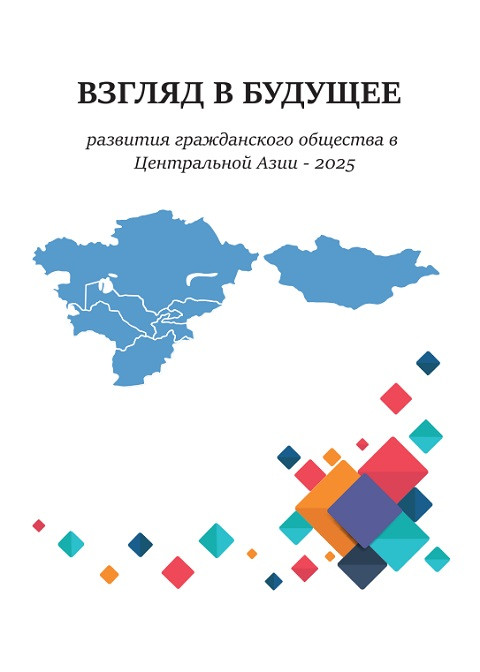 Looking into the Future Development of Central Asian Civil Society 2025 Year of publication: 2020 Corporate author: Civil Society Development Association (ARGO) “Looking into the future Development of Central Asian Civil Society - 2025” is a vision that reflects the role, trends and prospects for the development of civil society in Central Asia for 5 years. The Vision represents an image of civil society (‘We are the ones who’) and defines strategic priorities for the development of civil society in Central Asia.
 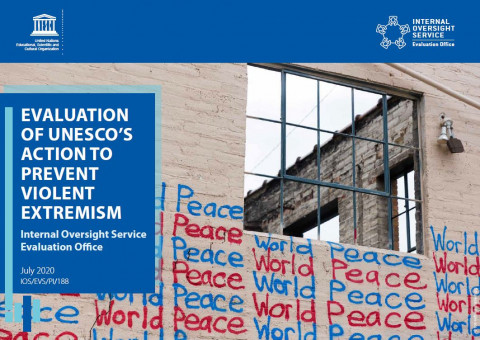 Evaluation of UNESCO’s Action to Prevent Violent Extremism Year of publication: 2020 Corporate author: UNESCO Internal Oversight Service (IOS) The purpose of this evaluation was twofold. To provide evidence, ideas and insights on how UNESCO’s efforts on PVE in the period from 2015-2018 have contributed to enhancing UNESCO’s action and position in the PVE sphere in light of the decisions of Member States. And to provide evidence and formulate lessons learned and good practices on the intersectoral approach with the aim of informing what works and what does not work in intersectoral cooperation.The evaluation found that UNESCO’s work on PVE was context specific and adjusted to respond to the needs of the countries and sub-regions where the work was being implemented.UNESCO’s work is aligned with the agency’s mandate and expertise and makes the most of its strong relationships with government bodies and civil society actors. UNESCO’s work on PVE has led to positive results around the quality, use and effectiveness of guidance documents, around capacity building of UNESCO partners and stakeholders, and around the provision of expertise and policy advice both at national and global level. Using an intersectoral approach led to an increase in information sharing and coordination. However, this was not always translated to intersectoral implementation or delivery of PVE initiatives.
 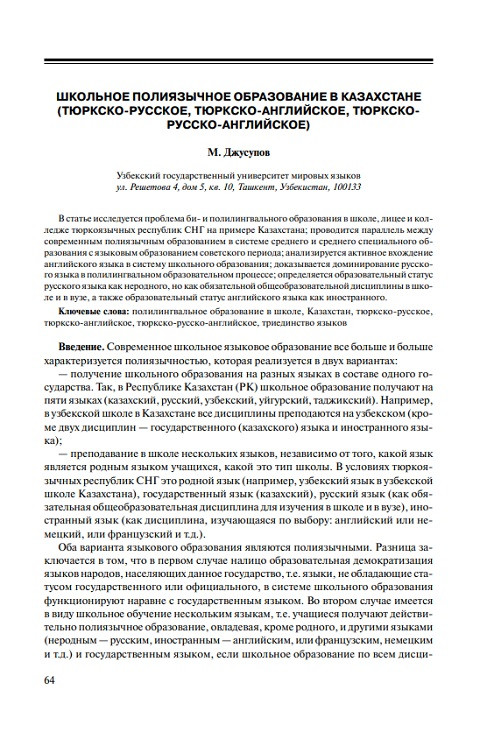 School Polylingual Education in Kazakhstan (Turkic-Russian, Turkic-English, Turkis-Russian-English) Year of publication: 2015 Author: Dzhusupov M. This article deals with a problem of bilingual and polylingual education at school, lyceum and college of Turkic Republic of CIS on the illustration of Kazakhstan; it is drawn an analogy (parallel) between modern polylingual education of — Soviet period; active ingress of English language in a system of school polylingual education has been analyzed; the domination of Russian language in polylingual educational process has been proved, it is determined an educational status of Russian language not as adoptive, but as obligatory general subject at school and in the institute of higher education and educational status of English language as foreign, i.e. as an alternative (optional) subject.
 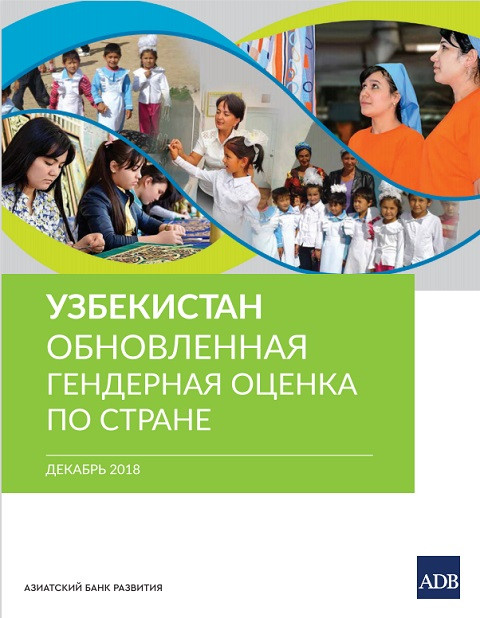 Uzbekistan: Country Gender Assessment Update Year of publication: 2018 Corporate author: Asian Development Bank (ADB) This Country Gender Update Report, prepared by ADB in close collaboration with Uzbekistan Women Committee, provides an analysis of the socio-economic dimensions of gender equality in Uzbekistan. It embraces a wide a range of issues related to the empowerment of women by increasing their economic activity in various sectors. Recommendations from the assessment can be used in the development of a long-term strategy of KJU and ADB, including programs aimed at increasing the employment and income of women, supporting their entrepreneurial initiatives, combating traditional gender stereotypes to further enhance the role and status of women in the country as a whole.
  The State of Global Education in Europe 2019 Year of publication: 2020 Corporate author: Global Education Network Europe (GENE) | European Union (EU) This fourth edition of the State of Global Education in Europe has been developed to provide an updated account of current key issues, policy priorities, funding trends and activities inGlobal Education in Europe, among the Ministries and Agencies that participate in GENE. This report explores key trends, policy themes and budgetary information for Global Education in European countries, drawing on information provided by GENE member Ministries and Agencies during 2018 and 2019.
  Global Education in Estonia: The European Global Education Peer Review Process; National Report on Global Education in Estonia Year of publication: 2019 Corporate author: Global Education Network Europe (GENE) | European Union (EU) This National Report contains the findings from the Peer Review of Global Education in Estonia that took place during 2019. It provides an overview of Global Education in the country and includes observations and recommendations intended to assist Estonian Global Education actors to further improve and increase provision in the country.
 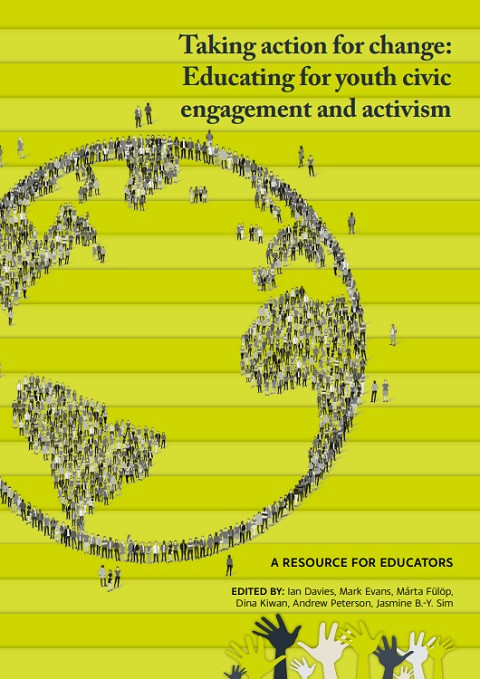 Taking Action for Change: Youth Civic Engagement and Activism; A Resource for Educators Year of publication: 2019 Author: Ian Davies | Mark Evans | Márta Fülöp | Dina Kiwan | Andrew Peterson | Jasmine B.-Y. Sim Corporate author: University of York ‘Youth activism, engagement and the development of new civic learning spaces’ was a project funded by the Leverhulme Trust and developed by an international network of researchers. The project took place between 2016 and 2019.In this resource for education, each member of the project team discusses developments in their own country and identifies key ideas and issues about how young people participate in society and what implications have for education. This book gives several examples that have already been done in different geographical areas and educational perspectives and includes promising practices that begin to illustrate ways in which educators may act.