
Resources
Explore a wide range of valuable resources on GCED to deepen your understanding and enhance your research, advocacy, teaching, and learning.
8,363 Results found
 How to Practice Citizenship Education Effectively Year of publication: 2016 Author: Wang Juchun Corporate author: Management Office of National Teacher Research Fund Civic education is no longer a new topic, but it appears later as a topic within the framework of school-based construction. The methods of school-based teaching and practice are even more varied. Facing such a complex and macroscopic proposition, it is a big challenge for grassroots practitioners to really promote the practice of civic education. In recent years, the author has made some research on the practice of civic education in today’s society, especially on the practice of civic education in rural middle schools.
  Teacher Policy Development Guide Year of publication: 2019 Corporate author: UNESCO | International Task Force on Teachers for Education 2030 Countries will need to have a broad perspective on teacher issues in order to meet Sustainable Development Goal 4 and address the provisions on Teachers in the Incheon Declaration with the Framework for Action of Education 2030. A system to orient the elaboration and/or review of national teacher policies will be a useful tool. The International Teacher Task Force builds on its comparative advantage as a global multiple-stakeholder alliance joining hands to address the global teacher challenges, to offer the present Teacher Policy Development Guide.Users will find relevant definitions of concepts, description of the different dimensions of teacher issues and how they correlate, and suggestions of phases in the process of developing a national teacher policy. Of utmost importance is the involvement of all stakeholders, especially the teachers, in the process.
  Culture | 2030 Indicators: Thematic Indicators for Culture in the 2030 Agenda Year of publication: 2019 Corporate author: UNESCO The Culture|2030 Indicators is a framework of thematic indicators whose purpose is to measure and monitor the progress of culture’s enabling contribution to the national and local implementation of the Goals and Targets of the 2030 Agenda for Sustainable Development (SDGs). The methodology is developed to assist countries and cities with very different capacities regarding the collection of data and cultural statistics. The evidence gathered will inform policies and decisions as well as operational actions enabling greater investments in culture as a sector of activity and a greater recognition of its transversal role across other sectors.
  Gender, Media and ICTs: New Approaches for Research, Education & Training Year of publication: 2019 Author: Lisa French | Aimée Vega Montiel | Claudia Padovani Corporate author: UNESCO Higher education has to grapple with intense change in communications technologies, genres and business models - and with stubborn continuities in gender inequalities. This publication helps to navigate and transform the conundrum. It provides seven structured and practical modules, and a treasure trove of links to further resources. The book’s contents can empower its readers to advance gender equality in and through communications.
 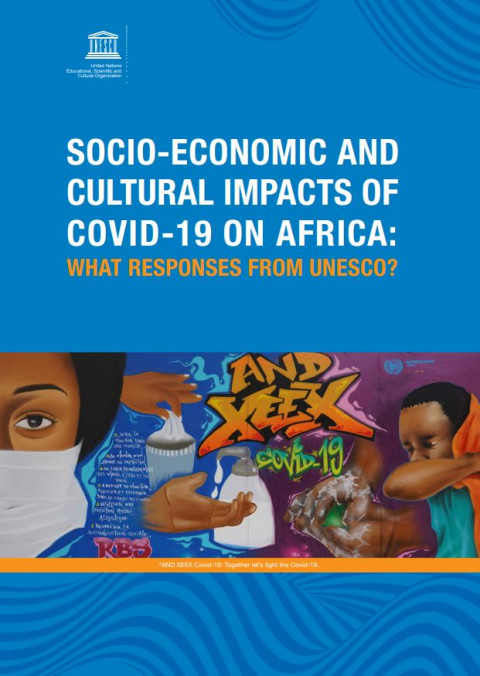 Socio-Economic and Cultural Impacts of COVID-19 on Africa: What Responses from UNESCO? Year of publication: 2020 Corporate author: UNESCO This policy paper analyses the socio-economic and cultural impacts of the disease on Africa as a whole, caused by both the immediate effects and the present and future consequences of the pandemic, including on the African societal fabric, which is likely to lead to a fracture in the trust between States and their citizens and within communities themselves. As such, it highlights the main measures that were adopted by African countries to contain the crisis and its socio-economic and cultural effects. While committing to acting and reflecting on the present and future consequences of the pandemic, UNESCO aims to contribute substantially to the ongoing debates in Africa through the development of a strategic response to help the collective global and regional efforts against the pandemic.
  Innovating Technical and Vocational Education and Training: A Framework for Institutions Year of publication: 2020 Corporate author: UNESCO International Centre for Technical and Vocational Education and Training (UNEVOC) Global developments including the transition to greener economies, the application of digital technologies in the world of work, and the COVID-19 pandemic, amongst others, are changing the way we live and work. These developments are driving technical and vocational education and training (TVET) systems to improve their capacity to identify the future skills demands and to expand access to skills development opportunities. As TVET adapts itself to the impacts of significant social, environmental, and economic disruptions, innovative practices emerge with the potential to rejuvenate the future of skills development. Schools, training centres and colleges have the potential to play a leading role to drive innovation in their local skills and innovation ecosystem.This practical guide provides a systematic, institution-wide, measurable and evidence-based methodology that enables TVET institutions to streamline innovation into their strategic planning, products and services, ecosystem engagement, and teaching and learning processes.
  Let’s Talk SDGs: Supporting Critical Perspectives on the Sustainable Development Goals Year of publication: 2020 Author: Caroline Murphy Corporate author: Centre for Global Education (CGE) This resource is an invitation to development educators to critically interrogate the Sustainable Development Goals and discuss their capacity to deliver upon their intended outcomes. It invites users to ask if the SDGs can support effective global learning and represent a sound critique of the international system. The resource is a useful starting point for a critical discussion on the Goals' capacity for effective advocacy and education toward the eradication of poverty and inequality.
  Research Trends in Global Citizenship Education in South Korea: An Analysis and Its Implications (The Journal of Korean Education; Vol.45, No.3) Year of publication: 2018 Author: HeeJung Raina Sim | Chanmi Kim Corporate author: Korean Educational Development Institute (KEDI) Purpose: Global citizenship education(GCED) has drawn the attention of researchers in the last decade; yet, the number of systematic reviews is still not enough. This study therefore aims to examine general research trends in GCED published in the Korean Citation Index(KCI) journals from January 2000 to July 2018.Design/ Methods: The study implemented a systematic review following the Preferred Reporting Items for Systematic Reviews and Meta-Analyses(PRISMA) statement guidelines. As a result, 218 relevant articles have been identified and this study employed a classification form to categorize the characteristics of the studies during meta analyses.Findings/ Results: The results showed that the number of published articles has significantly increased since 2016. Social science was the most common subject. The most frequently used keywords were multicultural education and global citizenship. while glocal and ecological citizenship has recently emerged. Most studies equally cover all education levels. A literature review was most often employed as a research method. Values: In conclusion, many studies have been published on GCED in South Korea in the last decade, but their general consensus is that most of the studies are too often based on a Western school of thought. The findings from the current study direct future studies on the subject.
  The Theoretic Relationship Between Global Citizenship and Moral Education: An Analysis of Global Citizenship and the Moral Education Curriculum for Middle School Students in South Korea (The Journal of Korean Education; Vol.43, No.3) Year of publication: 2016 Author: Jinhee Kim | Seunghan Cha Corporate author: Korean Educational Development Institute (KEDI) This study explores the theoretical relationship between global citizenship and moral education to enhance global citizenship as espoused within a moral education context.
 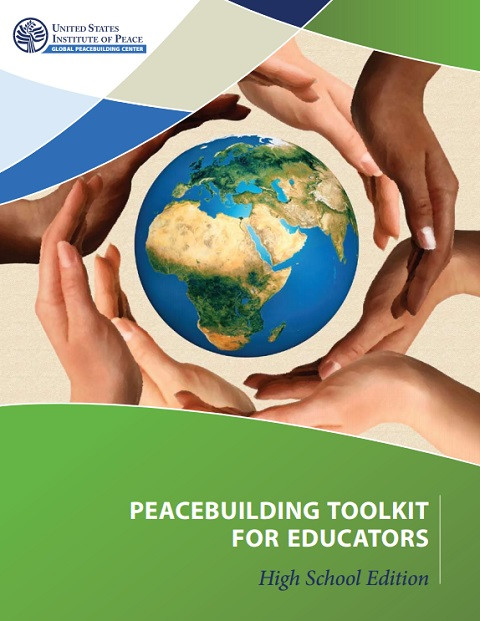 Peacebuilding Toolkit for Educators: High School Edition Year of publication: 2011 Author: Alison Milofsky Corporate author: United States Institute of Peace (USIP) The Peacebuilding Toolkit for Educators is designed by and for educators to help develop the next generation of peacebuilders. This book encompasses interactive lessons introducing peacebuilding themes and skills for students ages 14–18 respectively. The lessons are organized around three basic ideas within the field of international conflict management:• Conflict is an inherent part of the human condition.• Violent conflict can be prevented.• There are many ways to be a peacebuilder. Providing detailed plans for educators new to interactive methods, the lessons include handouts, teacher resources, and extension activities geared toward teaching students about the challenges and importance of global peacebuilding. These lessons develop students’ skills (such as communication, relationship building, conflict analysis, negotiation, and mediation) and their capacities to act as peacebuilders in their communities and in the greater world.