
Resources
Explore a wide range of valuable resources on GCED to deepen your understanding and enhance your research, advocacy, teaching, and learning.
8,363 Results found
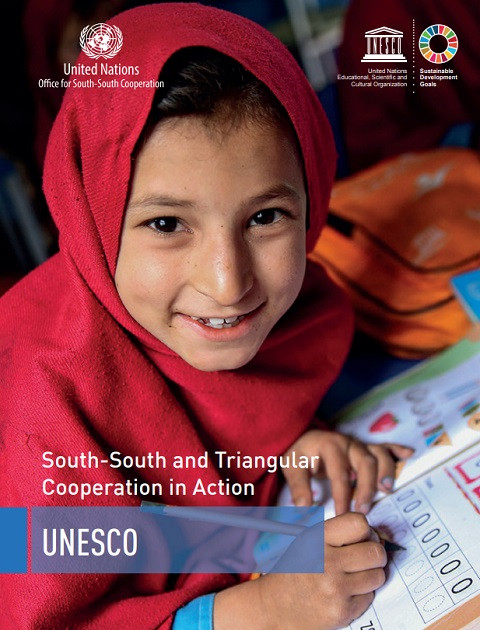 South-South and Triangular Cooperation in Action Year of publication: 2018 Corporate author: UNESCO | UN. Office for South-South Cooperation (UNOSSC) This publication is UNESCO’s first dedicated report on South-South cooperation and triangular cooperation. It presents an overall picture of the progress achieved to support technical cooperation, capacity building and knowledge sharing through South-South and triangular cooperation in UNESCO’s areas of competence with highlights of specific examples. It paves the way for deepening future cooperation in this area.
 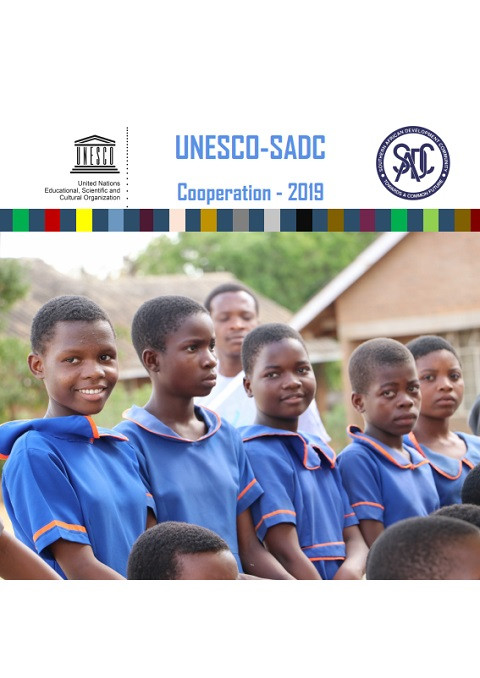 UNESCO-SADC: Cooperation 2019 Year of publication: 2020 Corporate author: UNESCO Harare UNESCO and SADC have a long standing history that culminated in the signing of a Memorandum of Understanding (MOU) in 1996. In 2017, UNESCO and SADC developed a Joint Programme of Action (JPA) which identifies concrete area of cooperation. These include education; technical and vocational education and training (TVET); youth; HIV and health education; science, technology and innovation (STI); water security, renewable energy and disaster risk management; culture; communication and information (including media for SDGs); and data for development.The purpose of this magazine is to highlight UNESCO’ work to improve education quality in the southern Africa region in partnership with SADC.
 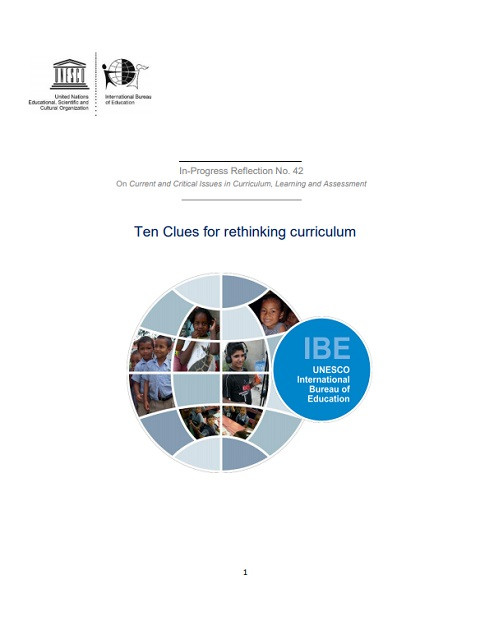 Ten Clues for Rethinking Curriculum (In-Progress Reflection; No. 42, 2021) Year of publication: 2021 Author: Renato Opertti Corporate author: UNESCO International Bureau of Education (IBE) This discussion document highlights the urgency of rethinking curriculum in light of reinforcing the commitments of the Education 2030 Agenda on learning, disruptive systemic worldwide societal changes, and crucially, the profound transformation of education and education systems post Covid-19. Curriculum is always at the core of giving effect to social aspirations and ideals on the why, what, how, when, and where of teaching, learning, and assessing. We propose a series of 10 interconnected clues to deepen on the systemic and holistic understanding of curriculum as contributing to lay foundations for a better, sustainable and fair future. These clues are: understanding the new generations; combatting factors related to vulnerability; reinforcing understanding between school and families; deepening glo-local education; enhancing the focus on the person; promoting synergies among values; valuing diversity; focusing on education that enhances freedom; moving toward hybrid modes of education; and inspiring affection for educators.
 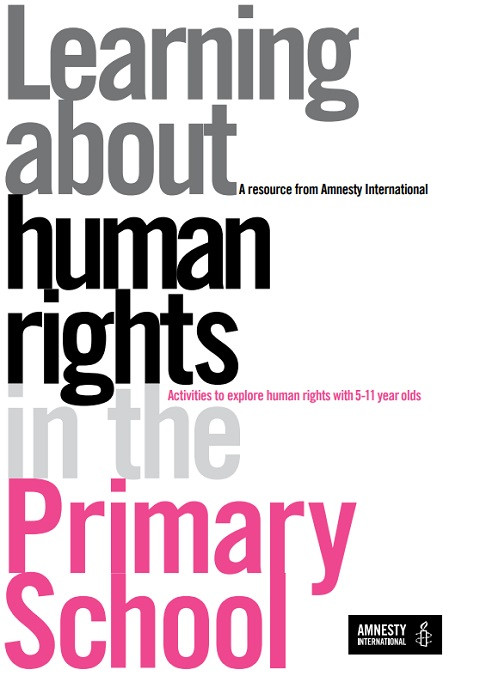 Learning About Human Rights in the Primary School Year of publication: 2013 Corporate author: Amnesty International UK This booklet provides a sample of our human rights education resources produced for primary schools. It helps provide pupils with an understanding of their own human rights and the values and attitudes that underpin them. It will help to foster attitudes of respect and an appreciation of the uniqueness of each individual. Pupils will also develop skills to enable them to take action to defend human rights.You will find a set of 10 interactive lessons for children – five for age 5+ (England and Northern Ireland: Key Stage 1; Wales: Foundation Phase; Scotland: Early and First Level) and five for age 7-11 (England, Nothern Ireland and Wales: Key Stage 2; Scotland: Second Level). Please photocopy and adapt these exercises for your own classroom use.All the activities are designed to encourage pupils to take a basic starting point, often based on something close to home or an event or situation they’ve experienced or can relate to, and then develop it. Pupils are then invited to expand their understanding beyond themselves and to begin to think outwards and towards others, whether locally, nationally or globally.The final activity, Taking action for human rights, explains how schools can sign up to the Junior Urgent Action Network. It’s an opportunity for children to become more actively involved with Amnesty International’s human rights work through our letter-writing campaign. In addition, you can download free resources on a range of human rights issues and order free posters for your school from www.amnesty.org.uk/resources-schools.
  The United Nations Matters: Teacher’s Handbook Year of publication: 2012 Corporate author: United Nations Association - UK (UNA-UK) | United Kingdom National Commission for UNESCO This resource pack has been created to support Key Stage 3 and 4 Citizenship (England) and Education for Sustainable Development and Global Citizenship (Wales). It is also relevant to Learning for Life and Work (Northern Ireland), One Planet and Sustainable Development (Scotland), as well as Geography; History; Local and Global Citizens; Personal, Social, Health and Economic Education; Politics; and Religious and Moral Education. The pack supports the ‘Global Dimension’ in all parts of the UK.This resource aims to develop students’ awareness and understanding of the United Nations (UN) system and the global issues it tackles. It encompasses five lessons that can either be run as a full scheme of work or used independently.
  Building Back Better: Youth, Power and Planet Year of publication: 2020 Author: Valerie Duffy | Leo Gilmartin | Eva Janssens | Dermot O’Brien Corporate author: National Youth Council of Ireland (NYCI) Building Back Better: Youth, Power and Planet is about power. The understanding of power in youth work is vitally important for the development of young people as they navigate through their lives and society.The aim of this resource is to support young people and youth workers in understanding power, seeing power, claiming power, and activating power. It includes a wealth of background information on concepts around power and terminology, as well as a guide on ‘How to Use this Resource’, activities, stimulus sheets. This toolkit explores the issue of power and helps you make links to the Sustainable Development Goals.It is designed for global educators, youth workers, development education practitioners, trainers, climate activists, changemakers of all shapes and sizes but in particular those working with the current generation of young people.Building Back Better contains 4 main sections:Section 1. Defining PowerSection 2. Seeing PowerSection 3. Claiming PowerSection 4. Activating PowerIt also contains:an introduction to power in theory and in practice 10 activities with interactive exercisesaction power templates for planningstriking visuals, case studies on human development for adapting This was resource was created by the NYCI Youth 2030 programme.
  The Role of Education in Addressing Future Challenges Year of publication: 2020 Corporate author: Bridge 47 In response to UNESCO’s Futures of Education consultation, Bridge 47 has released the following report on the power that transformative education has to address future challenges, including those linked to inequalities, climate change and health.Through the consultation process UNESCO raises questions about the importance and purpose of education by 2050. In a fast-evolving world, Bridge 47 supports the idea that education should foster the kind of education that helps learners of all ages to become active global citizens and thus contribute to building a more just and sustainable report world for all.The report, ‘The Role of Education in Addressing Future Challenges’, further emphasises the importance of measuring and monitoring the progress towards achieving the transformative vision of education as outlined in Sustainable Development Goal Target 4.7. It is hoped that the overall Future of Education report will encourage a measuring framework for SDG 4.7 that acknowledges the connection between non-formal and formal education as well as supporting dialogue between key actors that the reflect any conceptual shifts within the fields of Education for Sustainable Development and Global Citizenship Education.
  The White Paper of EKOME on Media & Information Literacy Year of publication: 2018 Corporate author: EKOME S.A. EKOME is concluding 2018 Global UNESCO Media and Information Literacy Week celebrations with the launch of the White Paper on Media & Information Literacy available in Greek & English.The White Paper is EKOME’s viewpoint on the third pillar, Education, setting out a paradigm for a national infrastructure on media and information literacy. By highlighting the main priorities in the field, the White Paper of EKOME aims to contribute to a national strategic plan and build a constructive relationship with the creative industry.
 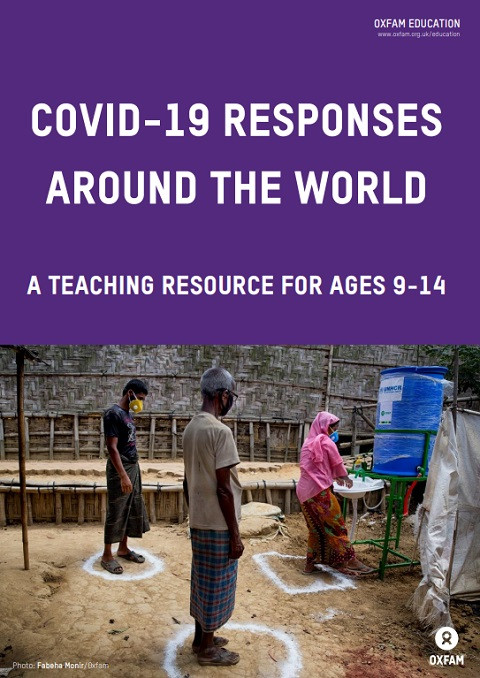 COVID-19 Responses Around the World: A Teaching Resource for Ages 9-14 Year of publication: 2021 Corporate author: Oxfam GB This resource helps learners to discuss their thoughts and feelings about the pandemic with others. Learners will also find out about ways to stop the current ‘infodemic’ – the rapid spread of misinformation and disinformation about COVID-19.This material will help learners to:discuss their thoughts and feelings about COVID-19.investigate some of the incredible ways in which people have been responding to this crisis.understand the difference between information, disinformation and misinformation.consider their own responses to the pandemic and possible actions that they might take to manage their own wellbeing and support others.
 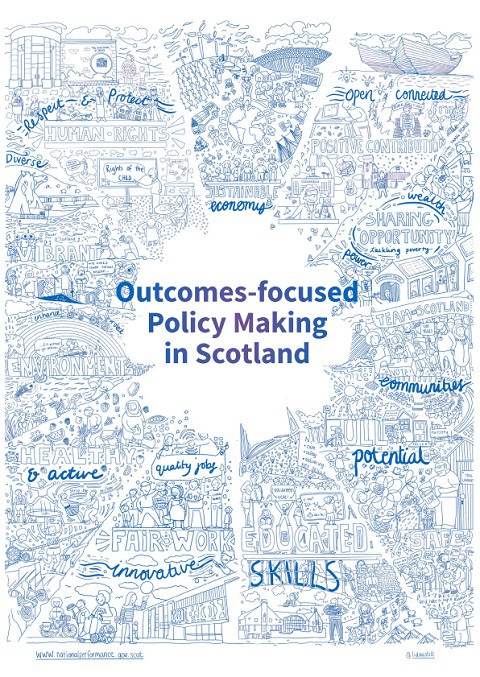 Outcomes-Focused Policy Making in Scotland Year of publication: 2021 Corporate author: Government of Scotland | Scotland's International Development Alliance | SDG Network Scotland | Oxfam Scotland | International Development Education Association Scotland (IDEAS) | Bridge 47 Scotland’s International Development Alliance has co-created a new Scottish policy making guide focused on the Sustainable Development Goals (SDGs) and the National Performance Framework (NPF). The guide supports holistic policy making that reflects our interconnected world & addresses the need to better navigate its complexities.The resource is the result of a partnership between the Scottish Government’s National Performance Framework team, the International Development Education Association of Scotland (IDEAS) Network, Scotland’s International Development Alliance, the SDG Network Scotland and Oxfam Scotland. The partnership was initiated, supported and funded by the Bridge 47 – Building Global Citizenship project and special thanks go to Northern Star Associates for their work developing the content.What is the resource?The National Performance Framework (NPF) is Scotland’s way of localising the Sustainable Development Goals (SDGs). The 17 different goals and 11 NPF National Outcomes are key measures of how Scotland can move towards a more just and sustainable future. The resource has two main parts. The first half features a general overview of the United Nations Sustainable Development Goals (SDGs), Scotland’s National Performance Framework (NPF) and how the two are interlinked. The second half provides practical, interactive activities to explore how to apply the NPF and SDGs in the policy making process.Why is this resource important?Policy is a mechanism for creating change. Ensuring that the policy produced in Scotland is inclusive and takes a holistic view of systemic problems will have a positive impact for both people and planet.This resource comes at a critical juncture. The Covid-19 pandemic has emphasised local-global interconnections and the difficulties posed by complex global problems. They require us to be holistic in our policy making and understand we are part of a bigger system, where the decisions we make and the actions we take have an impact on others locally and globally, now and in the future.How was the resource created?The guide was co-created by a partnership between the NPF team at the Scottish Government and civil society stakeholders including the SDG Network Scotland, Scotland’s International Development Alliance and the EU project, Bridge 47. The development of the resource was funded through the Bridge 47 – Building Global Citizenship project, which is based at the International Development Education Association of Scotland (IDEAS) network. As a project, Bridge 47 supports building partnerships across different sectors with the aim of raising awareness of the SDGs and the transformative power of education as outlined in SDG Target 4.7.