
Resources
Explore a wide range of valuable resources on GCED to deepen your understanding and enhance your research, advocacy, teaching, and learning.
8,363 Results found
 Media Literacy in the Library: A Guide for Library Practitioners Year of publication: 2020 Corporate author: American Library Association (ALA) | Institute of Museum and Library Services As information providers and hubs for lifelong learning, libraries have always been resources for helping communities develop media literacy skills. Now, in the midst of a global pandemic, and in an age when we increasingly rely on digital media for information and communication, these critical thinking skills are more important than ever. The American Library Association (ALA), working with talented thought leaders across the library and media literacy sectors, has created Media Literacy in the Library: A Guide for Library Practitioners to help library workers prepare for day-to-day interactions like the imagined reference desk one above.In this guide, we offer resources and ideas to plan programs and activities to teach media literacy skills to adults and also to integrate these skills into programming you already offer at your library. This guide has been created for out-of-school adult audiences, who library workers will generally meet in a public library context.
  Developing Online Educational Materials for Global Education in Korea: Project Report Year of publication: 2020 Corporate author: APCEIU | Korea R. Ministry of Education This project aims to enhance the intercultural understanding of Korean teachers and students by utilizing global education and Global Citizenship Education(GCED) materials produced by partner countries’ teachers. Simultaneously, for the teachers from partner countries, the project is expected to enhance their educational competency, global competency, and online teaching competency required in this pandemic era. The project also aims to establish an online teaching and learning model by using online educational materials in Korean classrooms and accumulate and expand educational achievements in response to the spread of online exchange.
  2020 Online SSAEM Conference: Teaching Across Borders; Final Report (November 24-30, 2020) Year of publication: 2020 Corporate author: APCEIU | Korea R. Ministry of Education 2020 Online SSAEM (Sharing Stories of Asia-Pacific Education Movements) Conference is a space for examining and sharing the educational outcomes of the participating teachers and schools of the Programme. This Conference, which has been held annually since 2014, aims to provide an excellent opportunity for the Programme participants and stakeholders to showcase the impact of the Programme and to explore methods on strengthening cooperation for further development of the Programme. Main Programme included the Panel Discussion of the Ministry representatives of the 8 countries, the Presentation and Live Talk show of 2012-2019 programme alumni, and the exhibition of various educational materials etc. More than 450 teachers participated and their educational network has strengthened. Table of Contents PrologueWhat is 「Asia-Pacific Teacher Exchange about」?Ⅰ. 2020 Online SSAEM ConferenceBackground and ObjectivesConference OutlineConference ContentsConference OutcomesⅡ. Presentations by Exchange TeachersDay 1Day 2Day 3
  Asia-Pacific Teacher Exchange for Global Education: 2020 Final Report Year of publication: 2020 Corporate author: APCEIU | Korea R. Ministry of Education The Asia-Pacific Teacher Exchange for Global Education (APTE) has been conducted since 2012 and marks its 9th anniversary this year. This report looks back over the past 9 years and the achievements of the programme for 2020.This year, due to the pandemic effects, the Office of International Teacher Exchange (ITE) focused on expanding the foundation for online exchange and developing content to strengthen the sustainability of educational exchange and ensure the internal stability of the programme.
  Feasibility Study on Monitoring Global Citizenship Competences in the Asia-Pacific Region (Phase I) Year of publication: 2020 Author: Aaron Benavot Corporate author: APCEIU In accordance with SDG 4.7, countries are promoting GCED and other aspects of Target 4.7. It is necessary to measure learner levels and progress in global citizenship competencies to assess the extent to which learners are acquiring knowledge, attitudes, and skills related to global citizenship.This report is organized into three substantive sections. Section II discusses existing definitions and conceptualization of GCED and GCC drawing on different sources. Section III describes which Asia-Pacific countries are included in this feasibility study and how relevant policy and curriculum documents are identified and analyzed. This section also discusses some common and share features of GCED that emerge from an analysis of country documents. Section IV briefly reviews existing measurement approaches of GCED or related concepts and then proposes a Measurement Framework of GCC for possible use in the A-P region. Section V of the report provides some forward-looking suggestions.
  Second Annual Meeting of the Global Citizenship Education Actors’ Platform: Meeting Report Year of publication: 2020 Corporate author: APCEIU This meeting report provides readers with an overview of the sharing and discussion points during the “Second Annual Meeting of the GCED Actors’ Platform” held on 19 November 2020 virtually. The meeting was attended by regional coordinators and key representatives from the five Regional GCED Network (Arab States, Asia-Pacific, Europa and North America, Latin America and the Caribbean and Sub-Saharan Africa) and a representative from the GCED Youth Network. The meeting provided a space for discussion on the current implementation of GCED in each region, with focus on research, and suggestions on how to further strengthen the GCED promotion and collaboration across different regions amid the pandemic.
  Education 21st Century Children: Emotional Well-being in the Digital Age (Educational Research and Innovation) Year of publication: 2019 Corporate author: Organisation for Economic Co-operation and Development (OECD) This report examines modern childhood, looking specifically at the intersection between emotional well-being and new technologies. It explores how parenting and friendships have changed in the digital age. It examines children as digital citizens, and how best to take advantage of online opportunities while minimising the risks. The volume ends with a look at how to foster digital literacy and resilience, highlighting the role of partnerships, policy and protection.
  Case Study on Finnish TVET: A Resilient Model of Training During COVID-19 Year of publication: 2021 Corporate author: UNESCO | Omnia Education Partnerships This case study examines how technical and vocational education and training (TVET) was organized during the state of emergency caused by the COVID-19 pandemic in Finland. The disruption accentuated the importance of flexibility within the education system to make it resilient. Finnish TVET, created as a hybrid solution combining school-based, work-based and online-based learning environments, remained responsive and functional throughout the difficult time in spring 2020.To urgently improve the resilience of education, this case study emphasizes the necessity to improve system-level flexibilities across all levels and all types of TVET, including alternative modes of delivery and hybrid learning opportunities, as the one size fits all approach increases rigidity and redundancy of education and training. Flexible measures are key to improve resilience, also beyond the COVID-19 pandemic.
  UNESCO-UNEVOC Medium-Term Strategy for 2021-2023: Strengthening TVET Capacities and Cooperation in the Member States Year of publication: 2020 Corporate author: UNESCO International Centre for Technical and Vocational Education and Training (UNEVOC) The Medium-Term Strategy for 2021-2023 (MTS-III) sets out how UNESCO-UNEVOC will support TVET institutions to meet the demands of dynamic labour markets and provide quality skills training for a sustainable future of work. MTS-III focuses on developing the capacities of TVET leaders, supporting TVET institutions in implementing change programmes, and facilitating knowledge sharing and peer learning within the UNEVOC Network.
 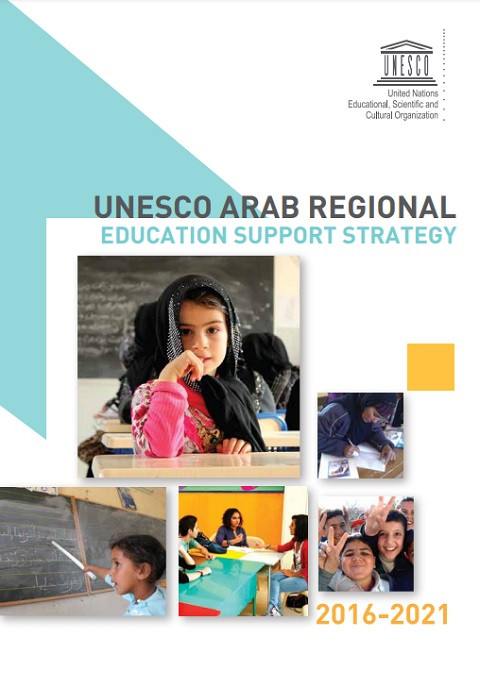 UNESCO Arab Regional Education Support Strategy: 2016-2021 Year of publication: 2016 Corporate author: UNESCO Beirut Covering the period of 2016-2021, this strategy document aims to provide tangible support for each Member State in the Arab Region, taking into account national needs and priorities and thus employing nationally relevant approaches based on the Agenda 2030 for Sustainable Development.