
Resources
Explore a wide range of valuable resources on GCED to deepen your understanding and enhance your research, advocacy, teaching, and learning.
8,363 Results found
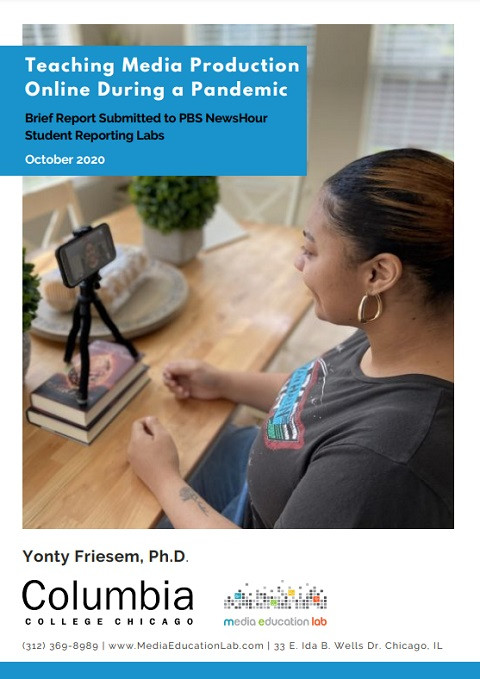 Teaching Media Production Online During a Pandemic: Brief Report Submitted to PBS NewsHour Student Reporting Labs Year of publication: 2020 Author: Yonty Friesem Corporate author: Media Education Lab How are media production teachers coping with remote video production with students?Starting in mid-March, US schools moved to remote instruction due to COVID-19 pandemic. Media production teachers had to shift their teaching to online without the possibility to use their high-end equipment in school. This report showcase the findings from Dr. Yonty Friesem’s research with media teachers who used the curriculum of PBS NewsHour Student Reporting Lab as they adapt to online and remote instruction. Dr. Friesem shared the report with PBS NewsHour Student Reporting Lab and the audience of the webinar.
  Information Neighbourhoods Year of publication: 2020 Corporate author: Shout Out UK | U.S. Embassy London | Association for Citizenship Teaching (ACT) We live in a world where information has a variety of purposes. So how can you identify what each type of information is trying to do? Now more than ever, media literacy (the ability to critically analyse information) is critical for us as citizens and for our democracy to function. This video explains what Information neighbourhoods exist and how to identify them.
 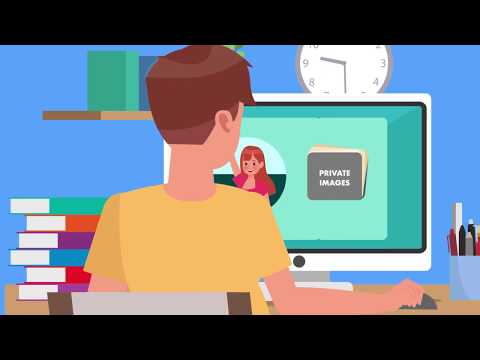 How to Understand Misinformation, Disinformation and Malinformation Year of publication: 2020 Corporate author: Shout Out UK | U.S. Embassy London | Association for Citizenship Teaching (ACT) We live in a world where information is very easy to fabricate. Now more than ever, media literacy (the ability to critically analyse information) is critical for us as citizens and for our democracy to function. This video explains the difference between Misinformation, Disinformation and Malinformation and presents you with some examples! This video is part of a resource pack created and designed by Shout Out UK, supported by the US Embassy in London and in collaboration with the Association For Citizenship Teaching.For more info: https://www.shoutoutuk.org/media-literacy/
 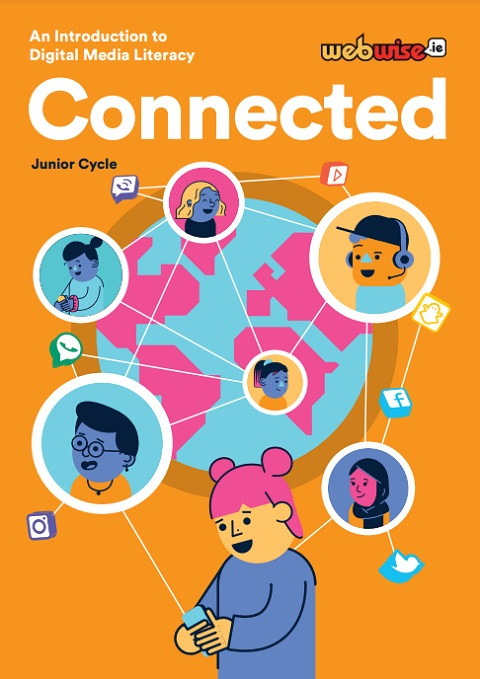 Connected: An Introduction to Digital Media Literacy Year of publication: 2020 Corporate author: Webwise | Professional Development Service for Teachers (PDST) Connected comprises five modules exploring young people’s rights and responsibilities online, emerging digital technologies and topics including big data and the data economy, deep fakes, false information and online wellbeing. The five modules are:1. My Online Wellbeing2. News, Information and Problems of False Information3. Big Data & the Data Economy4. My Rights Online5. Publishing Online - Group ProjectThe programme is mapped to the Junior Cycle Digital Media Literacy Short Course and will give students an understanding of the role of digital technologies and will help students develop key digital media literacy skills to responsibly navigate the online environment.
  Media Literacy: Implementation Toolkit Year of publication: 2019 Corporate author: Regional Educational Media Center (REMC) Association of Michigan This toolkit has been designed to support educators as they introduce students to the process of finding, organizing, using, producing, evaluating, and distributing information in a variety of media formats.The toolkit contains resources organized into six sections:Organizations Supporting Media Literacy EducationEducator ToolkitsCurriculum ResourcesInteractive Student Apps, Experiences, and ChallengesProfessional Development for Media LiteracyTools to Support Media Literacy
  Voices Against Violence: Younger Years Corporate author: World Association of Girl Guides and Girl Scouts | International Women's Day (IWD) This resource aims to help children and young adolescents to understand gender stereotypes and develop the mindset and strategies to challenge them.The lesson objectives are to:think about what toys and films tell us about being a girl or a boyunderstand how these stereotypes are used in play and how they limit the lives and development of girls and boysnegotiate more positive gender rules and roles in the playgroundThe Pack materials are aimed at children aged:5 - 11 years
  Auditing Educational Equity in Light of the COVID-19 Pandemic: A Guide for Education Unions Year of publication: 2020 Corporate author: Education International (EI) The COVID-19 pandemic has led to unprecedented school closures that have affected over 1.5 billion students worldwide. However, the impact of the pandemic has not been equal, with vulnerable and disadvantaged students disproportionately affected by the resulting global crisis in teaching and learning."Auditing Educational Equity in Light of the COVID-19 Pandemic" is a guide to support education unions as they advocate for equity audits to be conducted at both education institution and systems levels.The guide stresses the importance of equity audits in enabling education institutions and systems to adapt more effectively to a COVID-19 ‘new normal’ and also address entrenched structures of inequality that have long prevented countries from realising the universal right to education.
  Engaging Girls, Boys and Youth as Active Citizens: Plan International’s Position Paper Year of publication: 2020 Corporate author: Plan International Plan International believes that every child and young person has the right to express their views freely and safely; influence decisions and take action on issues that matter to them. However, around the world children and young people – particularly girls and young women – face significant challenges in realising this right. They tend to be wrongly dismissed as insufficiently mature to participate in political and civic processes. They also tend to be stigmatised as potential perpetrators of disruption, not as valued citizens and contributors to society who can lead and drive positive change. Plan International is calling for a paradigm shift in the way the international community talks about, engages and partners with children and young people. Children and young people are not just the future. They are the present. Young people constitute almost half of the world’s population, yet they are dramatically underrepresented – even excluded – in political decision-making. It is critical that their views and needs are taken into account politically, socially, legally and economically. Promoting the voices and views of children and young people – especially girls and women – in all their diversity and supporting them to actively engage in decision-making on issues that affect their lives must be an urgent priority for the world’s power holders. Realising children and young people’s civil and political rights is a prerequisite for building sustainable and peaceful societies, and a gender just world envisioned in international human rights frameworks and the 2030 Agenda’s Sustainable Development Goals (SGDs).Across the 75+ countries Plan International works in, young people have consistently identified the denial of their political and civil rights as a priority issue. In March 2017, Plan International conducted consultations with young women and men aged 14 to 30 from 14 countries. In every country, young people reported a sense of “citizen responsibility” and an interest in public life, yet identified the lack of platforms to meaningfully engage with decision-makers and inability to ensure their opinions are taken seriously as key barriers. Girls and young women in particular have called for the removal of gendered norms that increase those barriers, silence their voices and disproportionately hold them back from leadership and active citizenship.
  Speak Out - Be Protected! Development Framework: Guide for Practitioners; Creating Child-sensitive Reporting Mechanisms of Alleged Cases of Violence Against Children Year of publication: 2016 Author: Raša Sekulović | Stephanie Delaney Corporate author: Plan International Produced by Plan International, the Child-Sensitive Reporting Mechanisms toolkit “Speak Out – Be Protected!” identifies simple, user-friendly processes through which children and their peers (and families) can raise child protection concerns and report them to child protective agencies, services or trusted community groups and institutions.
 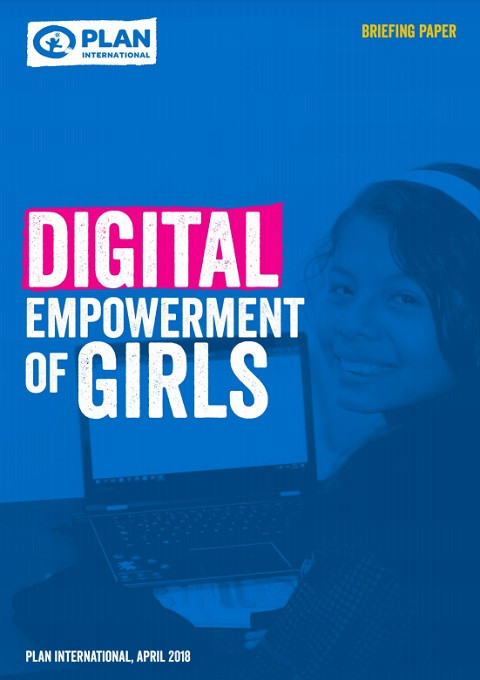 Digital Empowerment of Girls Year of publication: 2018 Corporate author: Plan International Despite the accumulated efforts and commitments of the past 20 years, today’s women and girls continue to face gender-based barriers that prevent them from accessing and utilising technology and digital tools at the same level as boys and men.Girls are 5 times less likely to consider a career in tech than boys.Equality of education is essential to redress the digital gender gap – which is sadly growing – but it’s not the only method.We must make tech safe, affordable and accessible to girls – wherever they live. We must tackle the ingrained gender norms that prevent girls from seeing digital roles as accessible career paths.Rather than making assumptions about what girls want and need from technology, we must work with them to create solutions for the issues that affect them by enabling them to learn digital skills.Technology can be a powerful tool for girls’ voices to become even louder and reach even further.This briefing paper provides recommendations for closing the digital gender gap that will enable girls to participate in and contribute to our increasingly digital future.Despite the accumulated efforts and commitments of the past 20 years, today’s women and girls continue to face gender-based barriers that prevent them from accessing and utilising technology and digital tools at the same level as boys and men.Promoting girls’ digital literacy and closing the digital gender gap will play an important role in achieving gender equality and promoting the rights of girls and women worldwide.Plan International strives to build a world in which girls have the tools and the power to shape their own futures and influence decision making and policy processes at local and global levels. Technology is not a prerequisite for being a change agent or a leader, but it can be a powerful tool for girls’ voices to become even louder and reach even further. Similarly, social media can be used as a vehicle to spread inspirational stories of female leaders and connect activists and changemakers across the world.Digital technologies have a strong potential to empower girls and women economically and socially. Girls feel safer and more connected when they have a mobile phone, and they use mobile phones to save time and money and access educational opportunities. Yet girls and women are, on average, less likely than men to own a mobile phone, use mobile data, social media apps or SMS. There is also a stark gender disparity in access to the Internet, which limits the ability of girls and women to benefit from many innovations of the digital economy, such as digital payments and mobile money. The gender disparity in access to technology is compounded by a significant gender divide in terms of career and academic aspirations related to ICTs.Advancing digital equality for girlsThis briefing paper argues that promoting girls’ digital literacy and closing the digital gender gap will play an important role in achieving gender equality and promoting the rights of girls and women worldwide. Indeed, bridging the digital gender divide is essential in ensuring girls and women are not left behind in an increasingly digital future.The paper also argues that actions promoting girls’ digital empowerment should be guided by the principle of engaging girls and women as active, capable partners in our work, not merely passive recipients or targets. Rather than making assumptions about what girls want and need from technology, it is important to work together with girls to strengthen and develop their use and creation of technology and digital tools.