
Resources
Explore a wide range of valuable resources on GCED to deepen your understanding and enhance your research, advocacy, teaching, and learning.
8,348 Results found
 Forecast the Adult Learning Education in Kuwait Through 2024 (Journal of Educational and Psychological Sciences; vol.4, no.33) Year of publication: 2020 Author: Rasha Mhdi Al-Ajmi | Sheikha Ibrahim Al-Tuwaijri | Fatima Mutlaq Al-Otaibi | Ghazi Al-Rashidi Corporate author: Arab Institute of Science and Research Publishing (AISRP) This study aimed to identify the predictive values of the secular trend for the next five years of the time series to the most important educational factors in Literacy and Adult Learning Education in Kuwait. Also, it aimed to compare between growth rate on the secular trend of the time series towards the most important educational factors at Literacy and Adult Learning Education at the different phases. Time series was used to analyze Literacy and Adult Learning Education’s statistics; which were taken from Ministry of Education in Kuwait, from 2014 to 2019. The study showed several results such as most of the educational factors’ growth rates were low. In addition, it appeared that most of the predictive values from 2020 to 2024 were degreased. The growth rate for the total centers for adult learning was- 2.7%; whereas, it was- 3.7% for classes. Also, the growth rate for the total of students was- 1.9%. The last but not the least, the growth rate for the total of teachers was the lowest which was- 6.0%. Several recommendations and suggestions were given based on the results of this study.
  Digital Citizenship and Its Relationship With Self-Efficacy Among Kuwait University Students (Journal of Social Sciences; vol.48, no.4) Year of publication: 2020 Author: Owaiyed Almeshaan | Noura Alanzy Corporate author: Kuwait University This study aims at examining relationship between digital citizenship and self-efficacy as well exploring the differences between males and females with respect to the research variables.Methods: The sample consists of (536) students: (270) females (260) males. Results: The study found that there was a significant positive relationship between digital citizenship and self-efficacy and that there were significant differences between males and females in digital citizenship. Males obtained higher scores in comparison to females. In addition, there were no significant differences between males and females in self-efficacy. No significant differences were found among freshmen and senior students with regard to digital citizenship.
  Challenges Facing Inclusion Programs Hearing Impairment Students from the Perspective of Teachers in Hail City (Literature for Psychological and Educational Studies; vol.6, no.1) Year of publication: 2024 Author: Theeb Turayhib Aljbreen Almutairi | Nouf Ayed Huders Alenezi Corporate author: Dhamar University The study aimed to identify the challenges facing students with hearing impairment in inclusion programs in Hail city from teachers' perspectives, highlighting the differences between the responses of teachers of students with hearing impairment and those of general education regarding such challenges attributed to gender, experience, study major and level variables. The descriptive analytical approach was adopted. The study sample iconsisted of (211) teachers, and a questionnaire was used for data collection. The results showed that there were challenges facing students with hearing imapirment in the inclusion programs from the point of view of teachers. The challenges were ordered as follows: educational challenges facing students with hearing impairment, challenges related to the acceptance of sound hearing students to those with hearing imparment, challenges pertaining to coopertation between general education teachers and those of hearing imapired students, and challenges related to school adminstration. It was also revealed that there were no statistically significant differences in the responses of teachers of hearing imapaired students and general education instructors on the challenges attributed to gender, experience, major and study level variables.
  Challenges Facing University Students with Special Needs in Egyptian Universities and a Proposed Visualization of The Role of Social Service (The Arab Journal of Disability and Talent Sciences; vol.4, no.14) Year of publication: 2020 Author: Ahmed Wagih Fathy Ahmed Corporate author: Arab Institution for Education, Science and Arts (AIESA) This study seeks to identify the challenges faced by students with disabilities at the university, which are represented in administrative challenges, educational challenges, psychological challenges, social challenges, and finally challenges related to movement and transportation to and from the university. Thestudy also aims at reaching a proposed vision from the perspective of social service through which it is possible to deal with the various challenges faced by students with disabilities at the university in order to activate the support and assistance services provided to them and help them adapt to university life. The sample of this study consisted of 140 male and female students, 77 males and 63 females, representing 56% of the total number of students with disabilities enrolled at the university during the study. A questionnaire was used to assess the level of challenges facing students with disabilities at the university as a tool for collecting data.
 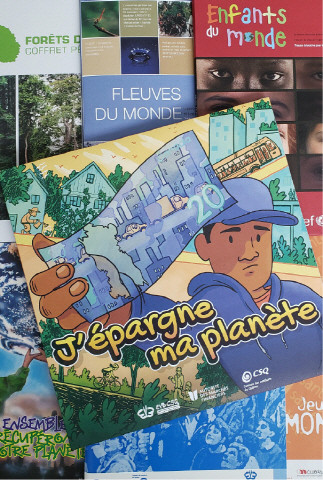 I Spare My Planet Year of publication: 2019 Corporate author: Quebec Labour Congress Produced by the ACTES movement and the Unions Central of Quebec, these vignettes are sure to make you smile, while creating important links between the way we consume and the social and environmental issues that concern us all.They can be viewed on their own or used in conjunction with the activities in the educational kit of the same name, which you can find on the Actes movement website. The themes of the 5 vignettes are:1 - Consumerism2 - Public services3 - Personal debt4 - Ecological limits5 - Thinking the world differently
  Protection of Victims of Sexual Violence in Côte d'Ivoire: Progress Made, but Many Gaps Remain (FIDH; no. 818f) Year of publication: 2023 Author: Alice Mogwe | Eléonore Morel Corporate author: International Federation for Human Rights (FIDH) The International Federation for Human Rights (FIDH) has published a follow-up report on sexual violence protection measures in Côte d'Ivoire, in association with several other local associations. The aim of this note is to study these new measures in the light of the recommendations in the FIDH report, in order to gain an overall view of the situation, draw up an initial assessment of the progress made, and highlight the points to be strengthened in order to improve the status of women in the country.
  Genocide Timeline Year of publication: 2024 Corporate author: United States Holocaust Memorial Museum (USHMM) This timeline proposed by the United States Holocaust Memorial Museum shows the major conceptual and legal advances in the evolution of the term "genocide" . It does not seek to detail every case that could be considered genocide, but to show how the term has entered the political, legal and ethical vocabulary from 1900 to 2016 to express threats of violence against groups.
 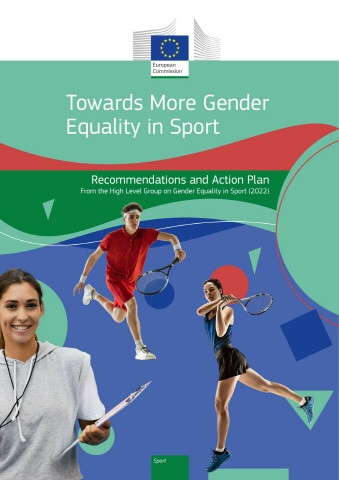 Towards More Gender Equality in Sport: Recommendations and Action Plan From the High Level Group on Gender Equality in Sport (2022) Year of publication: 2022 Corporate author: European Commission | European Union (EU) Gender equality is a fundamental European Union (EU) principle. Enshrined in the Treaties, it is something the EU is actively trying to achieve – most recently through its Gender Equality Strategy 2021-2025. The Strategy aims to give women, men, girls and boys, in all their diversity, the freedom to pursue their chosen path in life and equal opportunities to thrive and to participate in and lead European society. Looking back at the steps already taken, the ‘Gender equality in sport – Proposal for strategic actions 2014-2020’ has certainly led to achievements, but the pace of reforms needs to be accelerated. Firstly, the principle of gender equality now underpins all actions funded under Erasmus+ Sport and projects supporting women’s sport are actively encouraged. Secondly, awareness raising is at the core of EU action in this field, notably through studies or discussions, such as within the Commission Expert Group on Good Governance. Finally, initiatives such as the annual #BeInclusive EU Sport Awards recognise those organisations using sport to increase social inclusion, including gender equality. In 2020, Commissioner Gabriel announced the setting up of an expert group with the aim of discussing the way forward and proposing future actions in the area of gender equality in sport to the European Commission, EU Member States and sports organisations. The work of the experts will lead to the implementation of concrete actions at local, national and European level. This report is the result of the work of the European Commission High-Level Group (HLG) on Gender Equality in Sport. The 15 members of the HLG were appointed in December 2020. Work began in February 2021 and was completed in December 2021. Meetings focused on six areas of engagement identified by the experts. Scientists and practitioners shared findings of their research and good practices. Each meeting was followed by working sessions to summarise the presentations and formulate recommendations.
  World Migration Report 2024 Year of publication: 2024 Corporate author: Organisation Internationale pour les Migrations (OIM) The World Migration Report 2024 provided by the IOM aims at providing a better understanding of the migration phenomenon through a series of key questions: What is the proportion of migrants in the world? Are most migrants men or women? Which are the main host countries? The interactive edition presents only some of the key information contained in the full report.
 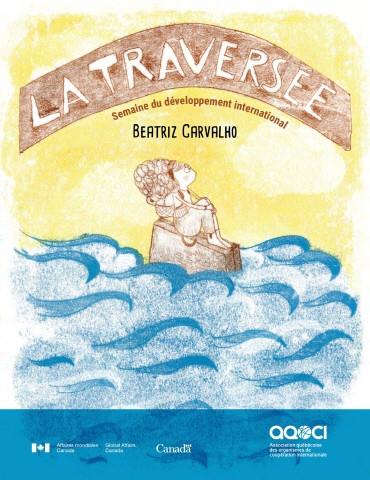 The Journey: International Development Week Year of publication: 2021 Author: Beatriz Carvalho Corporate author: Quebec Association of International Cooperation Organizations (AQOCI) Each year, International Development Week (IDW) highlights an international issue of concern to society. In Quebec, the Association québécoise des organismes de coopération internationale (AQOCI) organizes this public awareness week. CRÉDIL plays an active role in this campaign, and has participated in the production of comic strips as educational tools, such as "La Traversée" in 2021, that attempts to rehumanize our view of border issues and challenges, and offer questions and reflections that touch on the universal. What are we? What is our identity made of? Who gives us the right to have rights?