
Resources
Explore a wide range of valuable resources on GCED to deepen your understanding and enhance your research, advocacy, teaching, and learning.
8,348 Results found
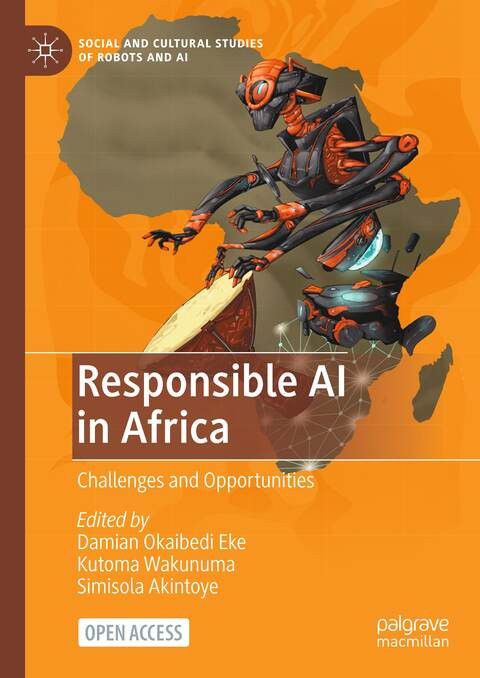 Responsible AI in Africa: Challenges and Opportunities Year of publication: 2023 Corporate author: Palgrave Macmillan This open access book contributes to the discourse of Responsible Artificial Intelligence (AI) from an African perspective. It is a unique collection that brings together prominent AI scholars to discuss AI ethics from theoretical and practical African perspectives and makes a case for African values, interests, expectations and principles to underpin the design, development and deployment (DDD) of AI in Africa. The book is a first in that it pays attention to the socio-cultural contexts of Responsible AI that is sensitive to African cultures and societies. It makes an important contribution to the global AI ethics discourse that often neglects AI narratives from Africa despite growing evidence of DDD in many domains. Nine original contributions provide useful insights to advance the understanding and implementation of Responsible AI in Africa, including discussions on epistemic injustice of global AI ethics, opportunities and challenges, an examination of AI co-bots and chatbots in anAfrican work space, gender and AI, a consideration of African philosophies such as Ubuntu in the application of AI, African AI policy, and a look towards a future of Responsible AI in Africa.
  Challenging Systematic Prejudices: An Investigation into Bias Against Women and Girls in Large Language Models Year of publication: 2024 Author: Daniel Van Niekerk | Maria Peréz Ortiz | John Shaw-Taylor | Davor Orlic | Ivana Drobnjak | Jackie Kay | Noah Siegel | Katherine Evans | Nyalleng Moorosi | Tina Eliassi-Rad | Leone Maria Tanczer | Wayne Holmes | Marc Peter Deisenroth | Isabel Straw | Maria Fasli | Rachel Adams | Nuria Oliver | Dunja Mladenić | Urvashi Aneja | Madeleine Janicky Corporate author: UNESCO | International Research Centre on Artificial Intelligence (IRCAI) This study explores biases in three significant large language models (LLMs): OpenAI’s GPT-2 and ChatGPT, along with Meta’s Llama 2, highlighting their role in both advanced decision-making systems and as user-facing conversational agents. Across multiple studies, the brief reveals how biases emerge in the text generated by LLMs, through gendered word associations, positive or negative regard for gendered subjects, or diversity in text generated by gender and culture. The research uncovers persistent social biases within these state-of-the-art language models, despite ongoing efforts to mitigate such issues. The findings underscore the critical need for continuous research and policy intervention to address the biases that exacerbate as these technologies are integrated across diverse societal and cultural landscapes. The emphasis on GPT-2 and Llama 2 being open-source foundational models is particularly noteworthy, as their widespread adoption underlines the urgent need for scalable, objective methods to assess and correct biases, ensuring fairness in AI systems globally.
  Generative AI and the Future of Education Year of publication: 2023 Corporate author: UNESCO. Assistant Director-General for Education, 2018- (Giannini, Stefania) The digital revolution has brought about significant changes in how we live, learn, and interact, with multiple waves of technological advancements. The current AI revolution represents a new and profound shift, particularly through AI's ability to simulate human language and conversation. This development challenges our understanding of language, intelligence, and the role of technology in education and society.As AI begins to generate human-like responses and knowledge, it raises fundamental questions about its impact on education, societal values, and our concept of humanity. Education systems are now grappling with how to integrate and regulate AI, which has been rapidly introduced into classrooms without sufficient oversight. The author emphasizes the importance of carefully considering the risks and ethical implications of AI, particularly in its potential to manipulate and shape knowledge systems. There is a need for balanced development, where AI technology is aligned with human values, and education remains a deeply human-centered process.UNESCO is working with countries to develop strategies for the safe use of AI in education, emphasizing the need for a cautious approach and robust regulatory frameworks. The overarching message is that while AI offers immense possibilities, it must be integrated thoughtfully to ensure it enhances education and society without undermining human agency, equity, or the foundational values of learning.
 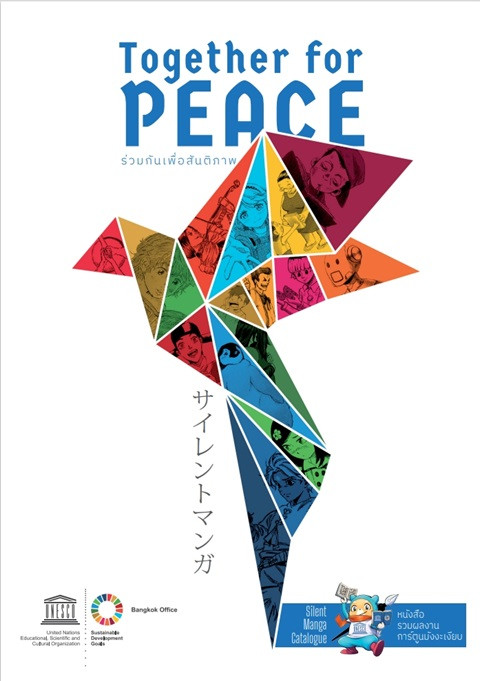 Together for Peace: Silent Manga Catalogue Year of publication: 2020 Author: Walden Schertz | Jeremy Clay | Santibhap Ussavasodhi Corporate author: UNESCO Bangkok | Coamix This Together for Peace Silent Manga Catalogue is a compilation of silent manga – manga stories told entirely through illustration without the use of dialogue. These works of art were selected from 274 entries submitted by artists in 117 countries worldwide to join SILENT MANGA AUDITION® Round 13 held under the theme Together for Peace, in collaboration with UNESCO Bangkok, the Asia and Pacific Regional Bureau for Education. Silent manga is a powerful medium of communication in the Asia-Pacific. Although the region is the most diverse in the world, it can be enjoyed by anyone regardless of their background. Silent manga has no language barrier. These works showcase different reflections of peace as expressed by artists around the world while conforming to the Japanese manga style.
 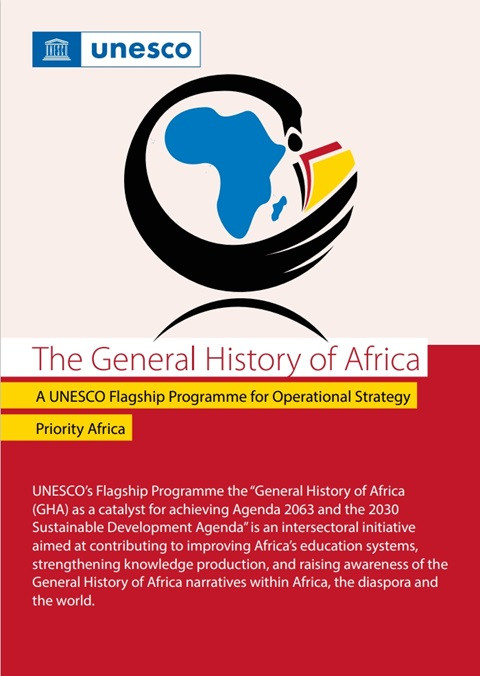 The General History of Africa: A UNESCO Flagship Programme for Operational Strategy Priority Africa Year of publication: 2024 Corporate author: UNESCO As part of UNESCO’s Operational Strategy for Priority Africa (2022 – 2029), the General History of Africa (GHA) Flagship Programme responds to the challenge of reconstructing Africa and its diaspora historical memory and conscience by revisiting Eurocentric and colonial biases in the representation of their history and societies. It aims to advance a common identity and pride in Africa’s heritage, progress towards greater justice and an inclusive and fair future through the reappropriation and production of knowledge on Africa and its diaspora history in a manner that could contribute to the transformation of education in Africa and beyond. The GHA is aligned with the African Union Agenda 2063, The Africa We Want, the Charter for African Cultural Renaissance, and the United Nations 2030 Agenda for Sustainable Development.
  UNESCO Futures of Education Report Explained by Members of the International Commission Year of publication: 2022 Corporate author: UNESCO Initiated by UNESCO, the International Commission on the Futures of Education has prepared a new report on how education can best shape the future of humanity and the planet. In this video, members of the Commission and its chair explain the main recommendations and defining features of their report, Reimagining our futures together: A new social contract for education. The report is part of UNESCO’s Futures of Education initiative which aims to rethink education and shape the future. The initiative is catalyzing a global debate on how knowledge, education and learning need to be reimagined in a world of increasing complexity, uncertainty, and precarity.
 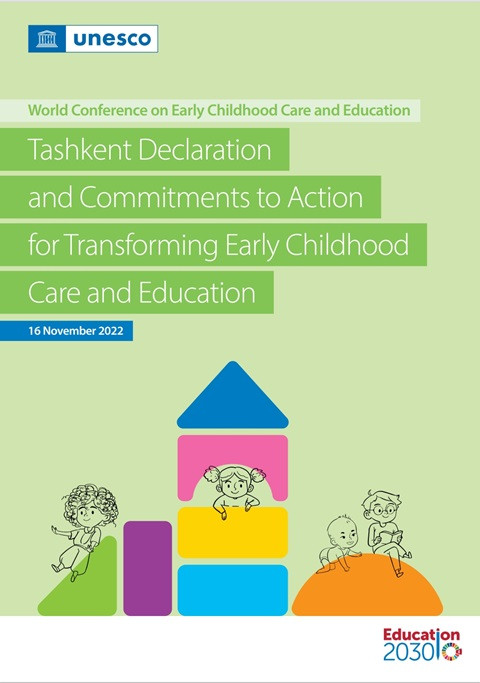 World Conference on Early Childhood Care and Education: Tashkent Declaration and Commitments to Action for Transforming Early Childhood Care and Education, 16 November 2022 Year of publication: 2022 Corporate author: UNESCO From 14 to 16 November 2022, the second World Conference on Early Childhood Care and Education took place in Tashkent, Uzbekistan. Over 2,600 conference participants from 147 Member States, including ministers, development partners, practitioners, scientists, civil society, and private organizations, came together to reaffirm the right of every young child to quality early childhood development, care, and education. The Tashkent Declaration and Commitments to Action for Transforming Early Childhood Care and Education (ECCE) sets out the guiding principles and strategies for the urgent transformation of ECCE for accelerating achievement of SDG Target 4.2, and concrete actions for Member States, the international community, non-governmental organizations, and UNESCO to be regularly monitored, reviewed, and evaluated.
 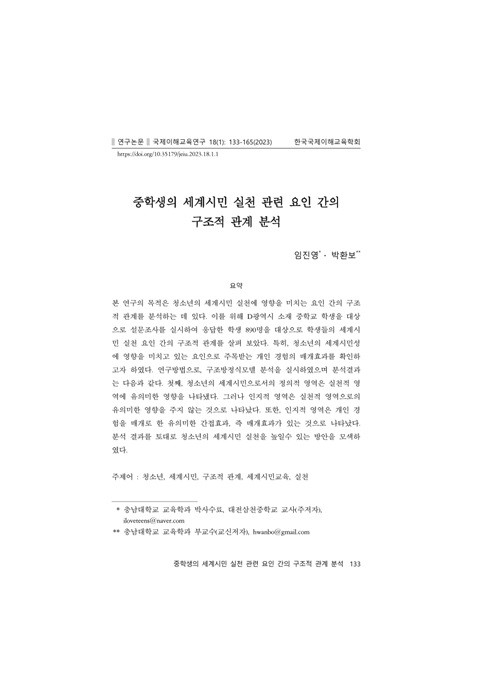 중학생의 세계시민 실천 관련 요인 간의 구조적 관계 분석 (국제이해교육연구; Vol. 18, No. 1) Year of publication: 2023 Author: 임진영 | 박환보 Corporate author: Korean Society of Education for International Understanding (KOSEIU) 본 연구의 목적은 청소년의 세계시민 실천에 영향을 미치는 요인 간의 구조적 관계를 분석하는 데 있다. 이를 위해 D광역시 소재 중학교 학생을 대상으로 설문조사를 실시하여 응답한 학생 890명을 대상으로 학생들의 세계시민 실천 요인 간의 구조적 관계를 살펴 보았다. 특히, 청소년의 세계시민성에 영향을 미치고 있는 요인으로 주목받는 개인 경험의 매개효과를 확인하고자 하였다. 연구방법으로, 구조방정식모델 분석을 실시하였으며 분석결과는 다음과 같다. 첫째, 청소년의 세계시민으로서의 정의적 영역은 실천적 영역에 유의미한 영향을 나타냈다. 그러나 인지적 영역은 실천적 영역으로의 유의미한 영향을 주지 않는 것으로 나타났다. 또한, 인지적 영역은 개인 경험을 매개로 한 유의미한 간접효과, 즉 매개효과가 있는 것으로 나타났다. 분석 결과를 토대로 청소년의 세계시민 실천을 높일수 있는 방안을 모색하였다.
  Minimum Standards for Education: Preparedness, Response, Recovery Year of publication: 2024 Corporate author: Inter-agency Network for Education in Emergencies (INEE) Since 2004, the INEE Minimum Standards for Education: Preparedness, Response, Recovery (INEE MS) have provided a framework for inclusive and equitable quality education. The purpose of the handbook is:-To improve the quality of education preparedness, response, and recovery;-To increase access to safe and relevant learning opportunities;-To ensure that the actors who provide these services are held accountable The INEE MS are designed to be applicable to crisis response in many different situations, including emergencies caused by conflict, by natural hazards such as those induced by climate change, and slow- and rapid-onset crises in both rural and urban environments.
 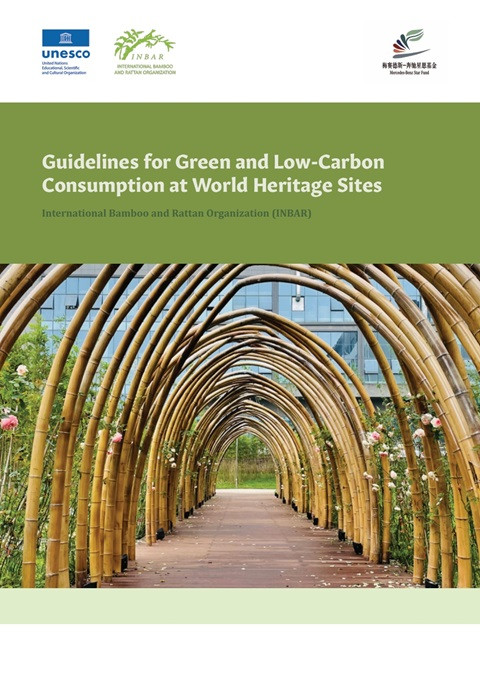 Guidelines for Green and Low-Carbon Consumption at World Heritage Sites Year of publication: 2024 Corporate author: UNESCO Beijing | International Bamboo and Rattan Organization (INBAR) Benefiting from Chishui’s rich tourism resources, such as Chishui Danxia World Heritage site, national nature reserves, and attractive landscapes with bamboo featured, ecotourism is flourishing in Chishui. Since 2018, within the framework of China Youth Development Foundation Mercedes-Benz Star Fund "Conservation and Management of World Heritage Sites in China" project, UNESCO Regional Office for East Asia has been implementing the “Bamboo for Carbon Neutrality in Rural Areas” pilot activity on bamboo handicraft sustainable livelihood and carbon reduction and low-carbon development in collaboration with Chishui World Heritage Administration, Chishui Forestry Administration and International Bamboo and Rattan Organization (INBAR) with the support from the Intangible Cultural Heritage Department of Ministry of Culture and Tourism and the Guizhou Forestry and Grassland Administration. In recent years, the Chinese government has attached great importance to green consumption in implementing the Action Plan for Carbon Dioxide Peak Before 2030 and has achieved remarkable results. However, rigid constraints still exist in several industries, meaning that the long-term mechanism for promoting green consumption and the supporting role of green consumption in high-quality economic development need to be strengthened. In response to this demand, the Guidelines for Green and Low-Carbon Consumption at World Heritage Sites takes the development and utilization of bamboo resources as an entry point to provide systematic guidance for World Heritage sites to implement green and low-carbon concepts in consumer activities, especially in tourism development.