
Resources
Explore a wide range of valuable resources on GCED to deepen your understanding and enhance your research, advocacy, teaching, and learning.
8,348 Results found
 Climate Risk Informed Decision Analysis (CRIDA): Collaborative Water Resources Planning for an Uncertain Future Year of publication: 2024 Corporate author: UNESCO Intergovernmental Hydrological Programme (IHP) | International Center for Integrated Water Resources Management (ICIWaRM) | Alliance for Global Water Adaptation (AGWA) | Deltares The importance of integrating climate change considerations into water resources planning is recognized on a global scale. Various frameworks, such as the Sendai Framework for Disaster Risk Reduction, the United Nations Sustainable Development Goals, and the Paris Agreement, emphasize the need for proper planning, policy-making, and adaptation strategies. The Climate Risk Informed Decision Analysis (CRIDA) methodology was launched in 2018 as a response to these international agendas, bridging the gap between climate change uncertainty and water resource planning.
 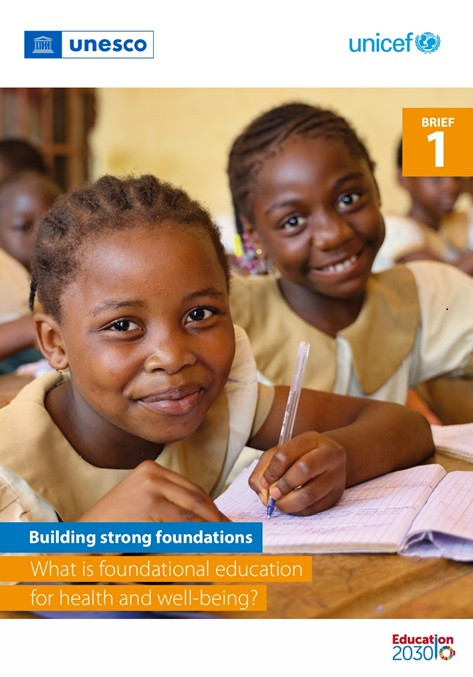 Building Strong Foundations: What is Foundational Education for Health and Well-being? (Brief 1) Year of publication: 2024 Corporate author: UNESCO | United Nations Children's Fund (UNICEF) In a rapidly changing world, establishing strong foundations for children is vital for their well-being and resilience. Quality education is central to this endeavour and is the key to lifelong health and success. Recognizing that children thrive in the classroom when they are in good health, it is crucial to learn about health and well-being early on in primary schools. The Building strong foundations briefs, developed jointly by UNESCO and UNICEF, provide evidence-based guidance to support primary school-aged children to thrive through foundational education for health and well-being. Drawing from extensive research and consultations with leading experts from various fields and across the world, these briefs serve as a roadmap for education stakeholders to equip learners with the requisite knowledge and skills to navigate their current and future health and well-being needs. This document is the first of four briefs. It provides an overview of the essential role that primary schools play in enhancing health and well-being. The document outlines what foundational refers to, why it is important for health and education, and how it contributes to paving the way for healthier, inclusive and thriving societies. The brief shares compelling evidence and case studies to distill six essential elements for an effective whole-school approach to health and well-being.
  Greening Curriculum Guidance: Teaching and Learning for Climate Action Year of publication: 2024 Corporate author: UNESCO This Guidance responds to the calls from young people for a holistic approach to climate change and sustainability in the curriculum. It outlines a common language on how quality climate change and sustainability can be reflected in the curriculum by setting expected learning outcomes per age group (from 5-year olds and up to 18+ age group, including a lifelong learning approach).This is crucial for accelerating country-level action and ensuring joint monitoring of progress. The objective is to have 90 per cent of all countries include climate change in their curricula by 2030, as established by the Greening Education Partnership.This Guidance aims to support countries, schools or individual practitioners in reassessing their ongoing practices to adopt a more action-oriented, holistic, scientifically accurate, justice-driven and lifelong learning approach to climate change.
  Green School Quality Standard: Greening Every Learning Environment Year of publication: 2024 Corporate author: UNESCO Climate change threatens our planet and future. Schools and other learning institutions are central places for accelerating climate action among learners and local communities. By empowering teachers and students to understand climate change in their own context contribute to making societies more sustainable and climate resilient. This publication provides for the first time ever a quality standard for greening schools and other learning environments. It outlines four core areas for integrating sustainability principles and climate action: 1) school governance, 2) facilities and operation, 3) teaching and learning, and 4) community engagement. Through the Greening Education Partnership, this standard establishes a common language for all stakeholders to jointly reach the global target of greening at least 50% of schools in all countries by 2030. Policy-makers and ministries in charge of education accreditation schemes, as well as educators, learners and communities are encouraged to use the green school quality standard and join the climate-ready school movement to ensure that every learner is equipped to address climate challenges.
 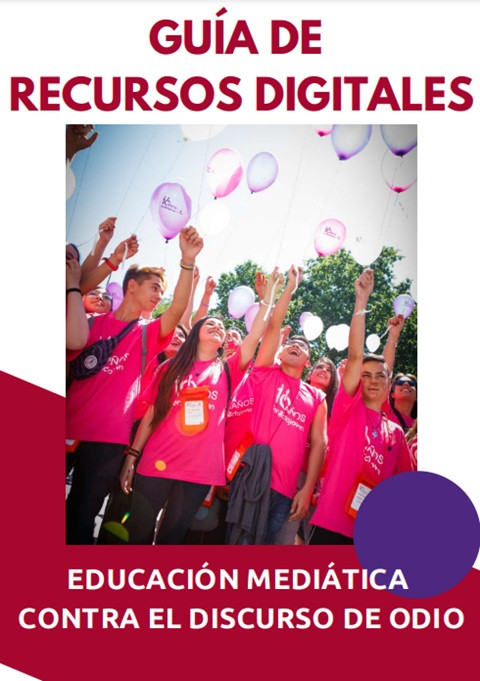 Digital Resource Guide: Media Education Against Hate Speech Year of publication: 2022 Corporate author: Esplai Foundation We could define hate speech as the set of communicative actions aimed at defending, promoting or instigating hatred, humiliation or contempt of a person or group of people. Although hate speech is not something exclusive to the Internet, but is part of the reality beyond the networks, it is true that the potential of the networks facilitates the movement of communication flows, because it facilitates both the production and the creation of messages. Hate speech has also benefited from this and, in addition, has found in the networks other characteristics such as anonymity, brevity, free messaging services or legitimacy granted by the number of followers. With this guide we want to provide digital tools for the creation of this counter-discourse that allows for the creation of messages that offer a positive alternative to extremist propaganda.
  School Convivencia : Reviewing the Concept (Psicoperspectivas; No. 18, Vol. 1) Year of publication: 2019 Author: Cecilia Fierro-Evans | Patricia Carbajal-Padilla Corporate author: Catholic University of Valparaíso. School of Psychology This article reports an effort to review the concept of school convivencia (peaceful coexistence, living together) in the Spanish context with the purpose of advancing into its clarification, and thus contributing to developing a common language in the Latin American region. The authors conduct a basic literature review oriented to identify the main theoretical approaches in the convivencia field. Subsequently, they analyze four studies focused in systematizing the prevailing approaches in the study of school convivencia. As a result, they propose a concept of convivencia from a social justice perspective adapted to education, and they operationalize it in three areas of school life: pedagogical-curricular, organizationaladministrative, and the socio-communitarian. This comprehensive notion of school convivencia may guide future research, educational initiatives, and school assessments in the convivencia field that may respond to the violence and pervasive social exclusion that exist in the Latin American region.
  Building Democratic Citizenship in School: Memory and Human Rights Year of publication: 2021 Corporate author: Argentina. Ministry of Education | Organization of Ibero-American States for Education, Science and Culture (OEI) | Spanish Agency for International Development Cooperation (AECID) This material seeks to reflect on the ways of approaching the construction of democratic citizenship, memory and human rights in secondary schools. The book thus proposes a series of memory activities and exercises based on significant historical sources and documents. At the same time, guidelines and suggestions are presented for the development of a citizenship construction project as a teaching strategy.
  Critical and Reflective Digital Literacy: Digital Citizenship Year of publication: 2024 Corporate author: Innovation Center Mineduc Coni helps her grandfather do the online shopping for the house and her grandfather helps her understand how apps work and become more aware of her privacy. Join Coni and her friends to discover what digital citizenship is and how they exercise it from home and school. This is the first of a series of four capsules that introduces us to the dimension of “Critical and reflective digital literacy”, which is understood as the acquisition of knowledge and the development of skills and attitudes to autonomously use, understand and evaluate digital technologies.
 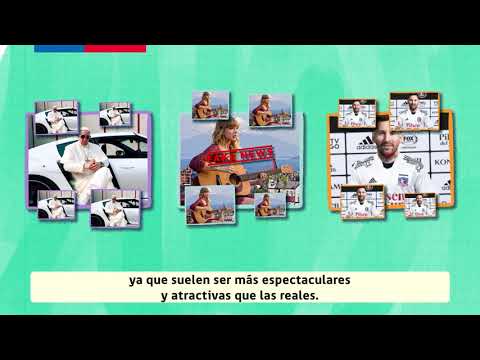 Chapter 4: What Is Disinformation and How Do We Deal With It? Year of publication: 2024 Corporate author: Chile. Ministry of the General Secretariat of Government Why have fake news become so popular? How can we avoid them when doing homework, assignments and getting informed about what is happening in the country and the world? In this capsule, aimed at parents, guardians and tutors, we will learn what disinformation is, more popularly known as the phenomenon of fake news, along with advice on how to confront it and not continue its spread. This capsule was produced by the Ministry of the General Secretariat of Government in collaboration with Mineduc, within the framework of the Citizenship and Digital Literacy Plan.
  Transformative Education for Global Citizenship in the Spanish Education System: Recommendations for Its Incorporation and Approach Year of publication: 2022 Author: Fabiola Fares Sade | Carolina Del Río Usábel | Yénifer López Ramos | Marta Martín Pastor | Elisabet Santpere Baro Corporate author: Movement for Transformative Education and Global Citizenship This document is the Report corresponding to the research commissioned by the Movement for Transformative Education and Global Citizenship to the University of Santiago de Compostela within the framework of the agreement "For a transformative education and for Global Citizenship committed to the fulfillment of the SDGs" led by the NGOs Alboan, Entreculturas, InteRed and Oxfam Intermón, which has been approved and financed by the Spanish Agency for International Development Cooperation, AECID. This publication aims to highlight the most significant elements of the analysis and conclusions obtained in the research, whose ultimate objective is to state recommendations for the inclusion of Transformative Education approaches for Global Citizenship in the formal education system. These recommendations seek to be a contribution to the intersectoral dialogue between the different agents with responsibilities in the educational field, both at the state and regional level.