
Resources
Explore a wide range of valuable resources on GCED to deepen your understanding and enhance your research, advocacy, teaching, and learning.
8,348 Results found
 How Can We Talk About Climate Without Turning It Into a Contentious Issue? Year of publication: 2023 Author: Laurent Cordonier Corporate author: Le Monde How can we tackle the climate issue without talking only to the convinced? Debates on the climate issue run the risk of becoming a highly divisive political issue, hampering much-needed action, warns sociologist Laurent Cordonier in a new episode of “Chaleur humaine”, a weekly podcast for reflection and debate on ways of tackling the climate challenge.
 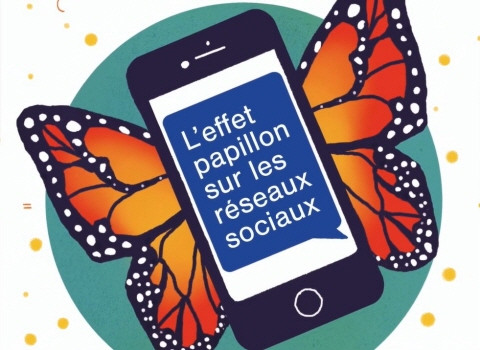 The Butterfly Effect on Social Networks Year of publication: 2021 Corporate author: Canada Learning Code This video shows the dangers of the internet and social networks through the story of 12-year-old Amira in the form of a comic strip.
 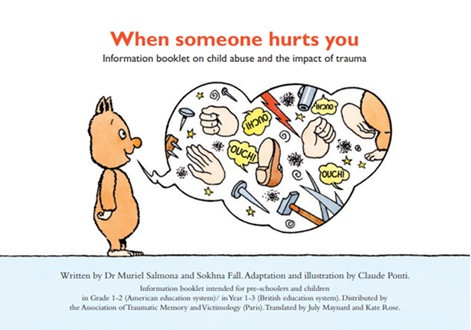 When Someone Hurts You: Information Booklet on Child Abuse and the Impact of Trauma Year of publication: 2022 Author: Muriel Salmona | Sokhna Fall Corporate author: UNICEF France | French Association for Traumatic Memory and Victimology This educational booklet is designed to help young children from kindergarten to Third grade to identify their feelings of unease following a situation of violence or threat of violence (physical, moral or sexual), understand the causes and consequences, and give advice on how to protect themselves and seek help.
  The State of the World’s Human Rights: April 2024 Year of publication: 2024 Corporate author: Amnesty International Le Rapport d’Amnesty International décrit la situation des droits humains dans le monde en 2023 dans 155 pays différents. Les équipes de journalistes et d’enquêteurs de l'ONG peignent un portrait plutôt sombre, avec notamment un recul du droit des femmes, les conséquences dramatiques du réchauffement climatique sur les populations les plus vulnérables, le recul du droit de manifester, ou encore la prolifération de la haine en ligne dans le monde. La multiplication des conflits armés et le choc du 7 octobre ont également eu des conséquences dramatiques. Cependant, quelques bonnes nouvelles sont aussi à noter, avec des avancées pour les droits des personnes LGBTI par exemple. Amnesty International Report describes the human rights situation worldwide in 2023 in 155 different countries. TheNGO's teams of journalists and investigators paint a rather gloomy picture, with, in particular, a decline in women's rights, the dramatic consequences of global warming on the most vulnerable populations, a decline in the right to protest, and the proliferation of online hate around the world. The multiplication of armed conflicts and the shock of October 7 have also had dramatic consequences. However, there is some good news too, with advances in LGBTI rights for example.
 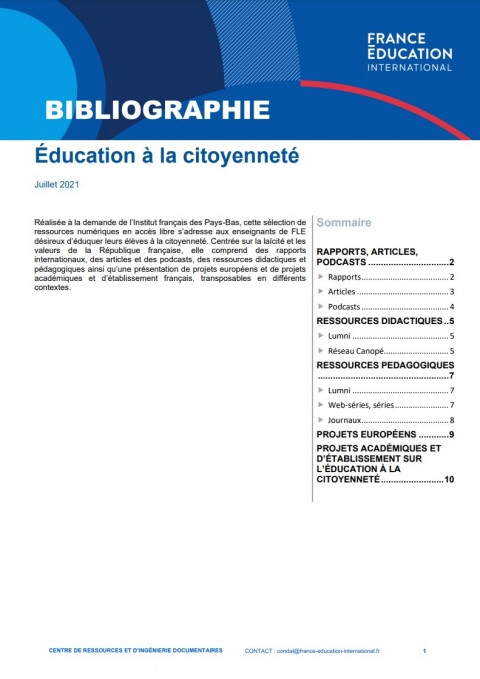 Bibliography: Citizenship Education Year of publication: 2021 Corporate author: France Education International Prepared at the request of the French Institute of the Netherlands, this selection of freely accessible digital resources is aimed at French as a Foreign Language (FLE) teachers who wish to educate their students about citizenship. Focused on secularism and the values of the French Republic, it includes international reports, articles and podcasts, didactic and pedagogical resources, as well as presentations of European projects and French academic and school projects that can be adapted to various contexts.
 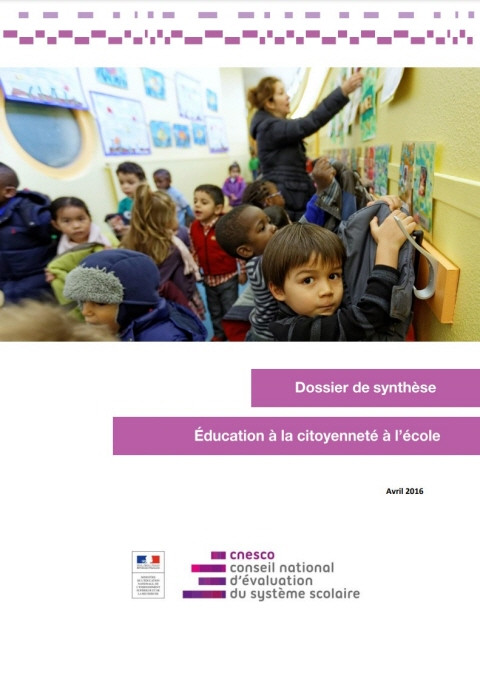 Citizenship Education in Schools: Summary Report Year of publication: 2016 Corporate author: National Center for the Study of School Systems (CNESCO) This report explores the evolution of citizenship education in French schools in response to contemporary challenges. It highlights the key principles of this education and its impact on students, supported by recent research and surveys. The report also compares international practices and presents innovative examples, offering insights to enhance citizenship teaching in France.
 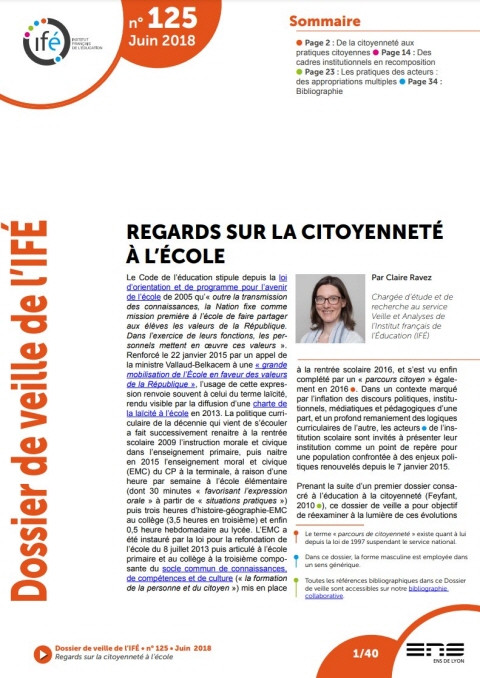 Perspectives on Citizenship in School (IFE Monitoring Report; (vol. 125, no.6) Year of publication: 2018 Corporate author: École normale supérieure de Lyon.L’Institut français de l’Éducation Prenant la suite d’un premier dossier consacré à l’éducation à la citoyenneté (Feyfant, 2010 l), ce dossier de veille a pour objectifde réexaminer à la lumière de ces évolutions récentes la question des liens entre école et citoyenneté. Following up on an initial report dedicated to citizenship education (Feyfant, 2010 I), this monitoring report aims to re-examine the relationship between school and citizenship in light of recent developments.
  Education Pack: Dominique Schnapper, sociologue Year of publication: 2023 Corporate author: French Institute of Netherlands Member of the Constitutional Council from 2001 to 2010, Dominique Schnapper is a French sociologist and political scientist. pedagogical file #1 is dedicated to civic education, with contributions from Claire Ravez, Dominique Schnapper, FEi and the BnF.
 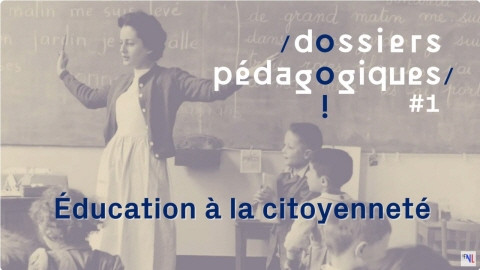 Educational Pack: Claire Ravez, research analyst focused on monitoring and analysis, IFE Year of publication: 2021 Corporate author: French Institute of Netherlands As a professor of history and geography, Claire Ravez joined the Monitoring and Analysis team of the French Institute of Education within the École normale supérieure de Lyon in 2017.Pedagogical file #1 is dedicated to civic education, with contributions from Claire Ravez, Dominique Schnapper, FEi, and the National Library of France.
  Developing Digital Citizenship and Language Competences Year of publication: 2023 Author: Christian Ollivier | Catherine Jeanneau Corporate author: European Centre for Modern Languages (ECML) The profile of citizens who use languages and digital tools helps to define the objectives to pursue in language training that incorporates digital citizenship education. The Didactic Framework outlines a socio-interactional approach that enables this integration.