
Resources
Explore a wide range of valuable resources on GCED to deepen your understanding and enhance your research, advocacy, teaching, and learning.
8,348 Results found
 The Contribution of the New Mexican Culture to Education for World Citizenship(Sinéctica, Revista electrónica de educación; no. 60) Year of publication: 2023 Author: Gloria Esther Briceño Alcaraz Corporate author: Sinéctica, Revista Electrónica de Educación A couple of years ago, UNESCO suggested transforming educational models based on an in-tegral and humanist paradigm in order to train new generations with a social and civic di-mension, based on human rights. In this essay we propose to analyze the work of education as a preferential instrument not only to develop traditional school skills, but also as an ac-tion to form citizens with a sense of responsibility and social self-awareness that promote a culture of peace. The citizen-subject represents an identity or discursive construction that is forged in the social framework in which it is situated, always in tension between individual freedom, autonomy and collective normative frameworks (Cerda, 2004), hence the interest in approaching from a critical perspective of discourse analysis (Van Dijk, 2014) to the pro-posal of the new educational model of Mexico called the New Mexican School (2022) and open the discussion on this pedagogical model and the formative fields that affect education for global citizenship.
  Internationalization in Basic Education: Languages of Reality(Revista iberoamericana de educación; vol. 93, no. 1) Year of publication: 2023 Author: Vera Lucia Felicetti | Vanessa Gabrielle Woicolesco Corporate author: Revista Iberoamericana de Educación The presence of internationalization practices in Basic Education schools has been quietly taking shape on the national, Ibero-American and international stage, but the absence of records of the actions that characterize them as internationalization continues to be a gap in their understanding. From these silent practices of internationalization we see the potential to build knowledge while respecting the interculturality that permeates the educational space. In this sense, we must recognize and understand these practices as internationalization processes, with a view to debating and reflecting on how they can contribute to the improvement of the educational system from an Ibero-American perspective.
  Bilingual and Intercultural Border Schools Project: A Cross-Border and Integrative Project in the Iberian Peninsula(Revista iberoamericana de educación; vol. 93, no. 1) Year of publication: 2023 Author: María Matesanz del Barrio | Maria Helena Araújo e Sá | Vivianne Ferreira Martins Corporate author: Revista Iberoamericana de Educación The Bilingual and Intercultural Border Schools Project / Projecto de Escuelas Bilingües e Interculturales de Frontera (PEBIF) is a proposal that seeks to promote inter-cultural education supported by the bi-/multilingualism and intercomprehension. The general objective of the project is to promote cooperation between Spain and Portugal in the educational, social and economic development of the border territories through the creation of a network of schools that pro-vides the populations knowledge and skills associated with bilingualism and interculturality relevant to citizenship, continuation of studies and employability in both countries. This article presents the PEBIF project, both its structuring theoretical principles and the implementation carried out, as well as the most relevant results obtained so far.
  Education for Democratic Citizenship and a Culture of Peace Year of publication: 2022 Author: Jéssica Marisol Vera Carrera Corporate author: University of Santiago de Cali Education for peace and citizen training as a promotion of peace construction. It is a global need in educational centers, particularly when making a comparison in Colombia and Mexico, to understand that education is a dynamic, continuous and permanent educational process by playing a fundamental role in the formation of the citizen; It is also the conducive setting for the promotion of socio-emotional skills that allow students to have sufficient tools to be a citizen agent of peace.
 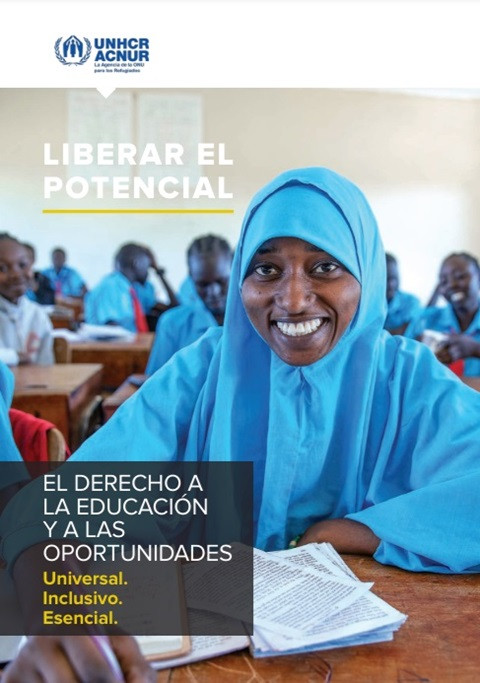 Unleashing Potential: The Right to Education and Opportunity Year of publication: 2023 Corporate author: UN. Office of the United Nations High Commissioner for Refugees (UNHCR) The UNHCR Refugee Education Report 2023 presents the challenges faced by almost 15 million school-aged refugee girls and boys under UNHCR mandate, including others in need of international protection. It also highlights the achievements and aspirations of young refugees who, with the right support, achieved the highest educational goals through perseverance, resilience, determination and enormous effort.
  The World's Largest Flower: Resource Guide Year of publication: 2023 Corporate author: Organization of Ibero-American States for Education, Science and Culture (OEI) The creation of a pedagogical resource for Education for Global Citizenship, based on the story “The Largest Flower in the World”, written by José Saramago, arose on the occasion of the Commemorations of the Centennial of the Birth of José Saramago 2021-2022, as part of the activities of the Organization of Ibero-American States (OEI) in Portugal and was promoted by the José Saramago Foundation (FJS) and the General Directorate of Education (DGE). To carry out the project, an alliance was made with Help Images, which produced the four videos that accompany the proposal. The activities aim to support the work of teachers, educators and animators within the framework of formal and non-formal education, in the construction of learning for a committed, coherent, supportive and respectful global citizenship of human rights, crossing the experiences of the students with the themes and contents presented in this proposal.
  Study on International Development Cooperation for Children Year of publication: 2023 Corporate author: Chinese Academy of International Trade and Economic Cooperation International development cooperation for children is vital to safeguarding child rights. With support from the United Nations Children’s Fund (UNICEF), the Chinese Academy of International Trade and Economic Cooperation conducted a study on international development cooperation for children. This report presents case studies on international development cooperation for children among four top donors, including the United States, the United Kingdom, Japan, and Germany. It examines the different contexts, strategies, policies, institutional mechanisms, and challenges related to international development cooperation for children and revealed several notable characteristics of international development cooperation for children. The study analyzed the evolution of China’s international development cooperation model for children in the past few decades. Considering the new demands and challenges in international development cooperation for children, this report provides recommendations to the Government of China.
 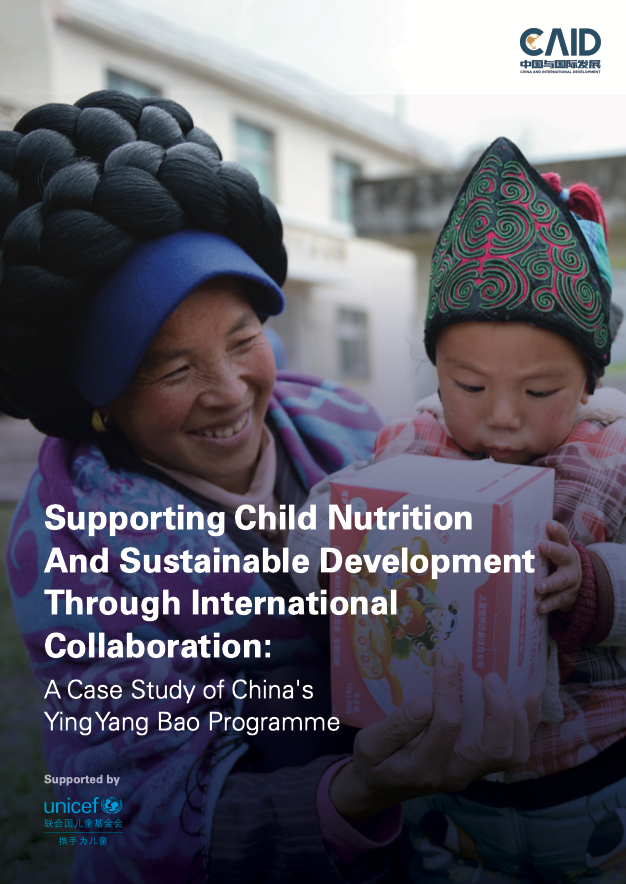 Supporting Child Nutrition and Sustainable Development through International Collaboration Year of publication: 2023 Author: Wang Luo | Chen Xiaoning | Huang Yangmu Corporate author: Chinese Academy of International Trade and Economic Cooperation(CAID) | United Nations Children's Fund (UNICEF) Child health and nutrition are key goals under the 2030 Sustainable Development Agenda. Currently, around 45% of deaths among children under five years of age are linked to undernutrition. These mostly occur in low- and middle-income countries. In June 2023, the Chinese Academy of International Trade and Economic Cooperation (CAITEC) and the UNICEF China Office convened a forum on “Supporting Child Nutrition and Sustainable Development Through International Co-operation”. Participating experts discussed China’s experience, and the potential presented, and challenges faced by Chinese product, in boosting the improvement of child nutrition in impoverished regions of Africa and Asia. The case study is a summary of the views presented at the forum. The content covers global needs and challenges in child nutrition, the importance of complementary food supplements in improving child nutrition, effective practices implemented by the international community to promote the use of complementary food supplements, advantages and on-the-ground results of China’s YYB, challenges to taking the YYB international and recommendations for driving product internationalization of the YYB.
 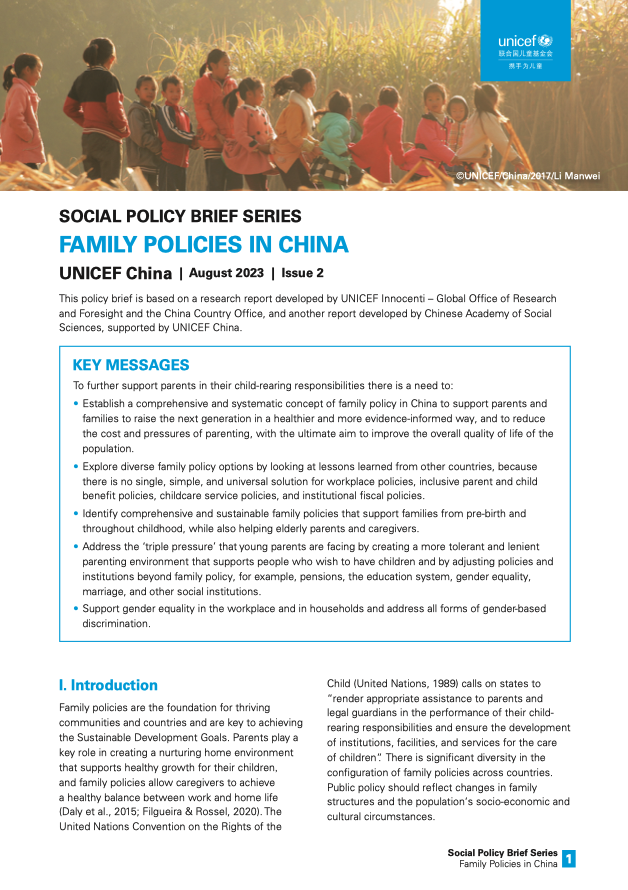 Family Policies in China Year of publication: 2023 Corporate author: UNICEF China To further support parents in their child-rearing responsibilities there is a need to:• Establish a comprehensive and systematic concept of family policy in China to support parents and families to raise the next generation in a healthier and more evidence-informed way, and to reduce the cost and pressures of parenting, with the ultimate aim to improve the overall quality of life of the population.• Explore diverse family policy options by looking at lessons learned from other countries, because there is no single, simple, and universal solution for workplace policies, inclusive parent and child benefit policies, childcare service policies, and institutional fiscal policies.• Identify comprehensive and sustainable family policies that support families from pre-birth and throughout childhood, while also helping elderly parents and caregivers.• Address the ‘triple pressure’ that young parents are facing by creating a more tolerant and lenient parenting environment that supports people who wish to have children and by adjusting policies and institutions beyond family policy, for example, pensions, the education system, gender equality, marriage, and other social institutions.• Support gender equality in the workplace and in households and address all forms of gender-based discrimination.
 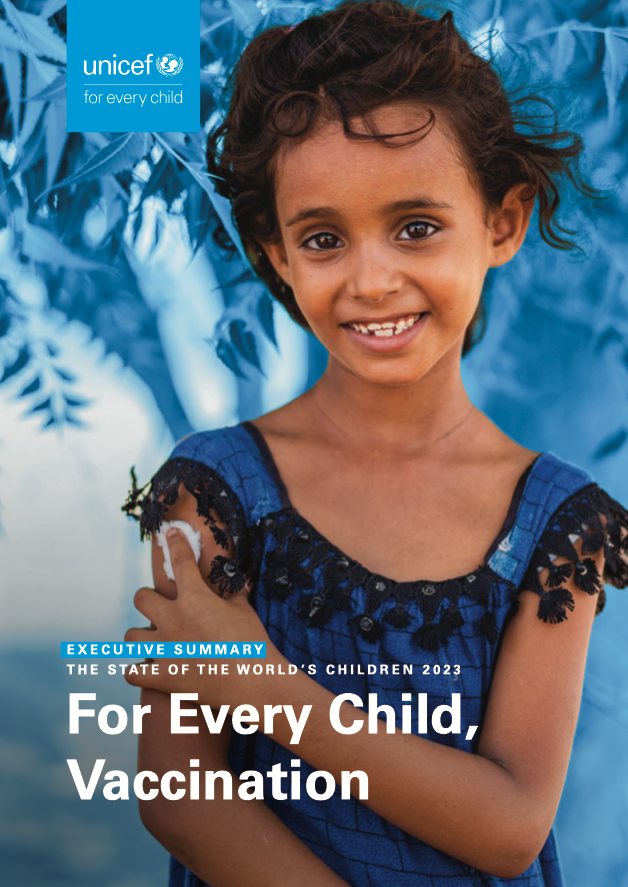 The State of the World’s Children 2023 Executive Summary Year of publication: 2023 Corporate author: United Nations Children's Fund (UNICEF) The world is facing a red alert for children’s health: Vaccination coverage dropped sharply during the COVID-19 pandemic, leaving millions more children unprotected against some of childhood's most serious diseases. In addition, many millions of children from some of the world's most marginalized communities have long missed out on life-saving vaccination. Catch-up and recovery are needed urgently to vaccinate the children missed and to avoid further backsliding. And greater effort is needed to reach the children historically left behind.The State of the World’s Children 2023 examines what needs to happen to ensure that every child, everywhere is protected against vaccine-preventable diseases. In the wake of the COVID-19 pandemic, which set back progress in childhood immunization globally, it focuses on the role of poverty, marginalization and gender in determining whether or not children are vaccinated. Drawing on lessons learned during the pandemic and from UNICEF's decades-long expertise and experience in vaccinating children, the report examines the ways in which primary health care can be strengthened to better support immunization services. It looks, too, at concerns around trust in vaccines. And it examines a range of innovations in vaccine development and delivery and in financing.