
Resources
Explore a wide range of valuable resources on GCED to deepen your understanding and enhance your research, advocacy, teaching, and learning.
8,354 Results found
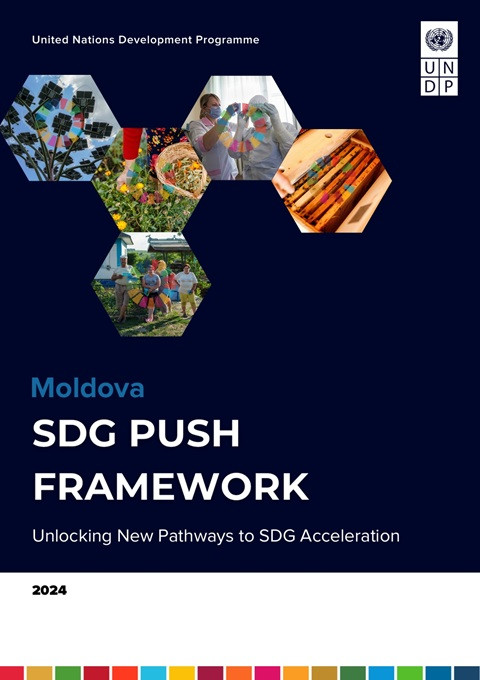 Moldova SDG Push Framework: Unlocking New Pathways to SDG Acceleration Year of publication: 2024 Corporate author: United Nations Development Programme (UNDP) SDG Push is about realizing development ambition and redefining how we build acceleration pathways. It helps pinpoint policy choices that ‘move the needle’ towards the achievement of the Sustainable Development Goals. A UNDP flagship initiative, SDG Push uses digital and data innovation, systems thinking, and futures approaches to provide a comprehensive and country-specific tool to plan and implement SDG breakthroughs in a variety of development contexts. SDG Acceleration Pathways, specific to context and need, were co-created in collaboration with Indonesia, Moldova, Namibia, Peru and South Africa. These pilots helped to refine the SDG Push approach and the digital SDG Push Diagnostic and formed the foundation of the Integrated SDG Insights Reports, presented at the 2023 SDG Summit. This integrated, modular approach includes the analysis of development trends and priorities with data visualization, integrating generative dialogue, foresight methods and economic modelling to assess the impact of potential accelerators.
 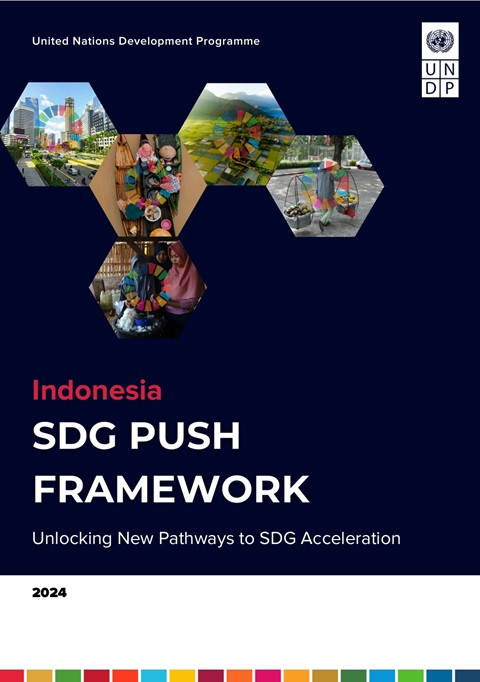 Indonesia SDG Push Framework: Unlocking New Pathways to SDG Acceleration Year of publication: 2024 Corporate author: United Nations Development Programme (UNDP) SDG Push is about realizing development ambition and redefining how we build acceleration pathways. It helps pinpoint policy choices that ‘move the needle’ towards the achievement of the Sustainable Development Goals. A UNDP flagship initiative, SDG Push uses digital and data innovation, systems thinking, and futures approaches to provide a comprehensive and country-specific tool to plan and implement SDG breakthroughs in a variety of development contexts. SDG Acceleration Pathways, specific to context and need, were co-created in collaboration with Indonesia, Moldova, Namibia, Peru and South Africa. These pilots helped to refine the SDG Push approach and the digital SDG Push Diagnostic and formed the foundation of the Integrated SDG Insights Reports, presented at the 2023 SDG Summit. This integrated, modular approach includes the analysis of development trends and priorities with data visualization, integrating generative dialogue, foresight methods and economic modelling to assess the impact of potential accelerators.
 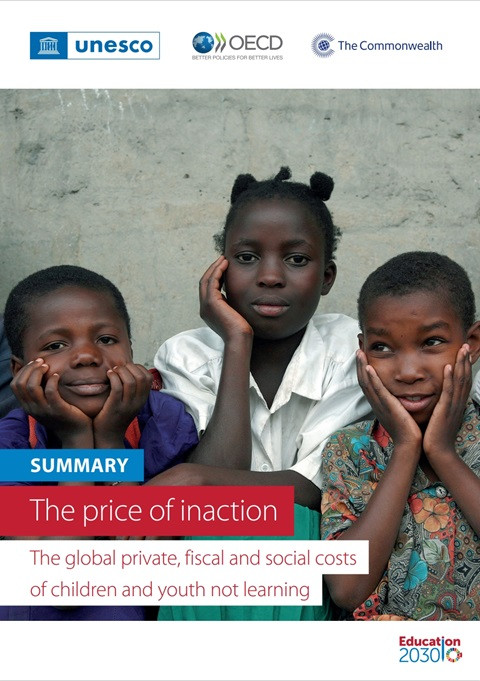 [Summary] The Price of Inaction: The Global Private, Fiscal and Social Costs of Children and Youth Not Learning Year of publication: 2024 Corporate author: UNESCO | Organisation for Economic Co-operation and Development (OECD) | Commonwealth Secretariat Education is a fundamental human right for all. The United Nations Sustainable Development Goal (SDG) 4 on education has received considerable attention since its adoption in 2015. But more than halfway through the implementation period, achieving the ambitious agenda of inclusive and equitable quality education for all by 2030 remains a significant challenge for countries around the globe. As this report shows, the US$10 trillion social cost of failing to educate all the world’s children is just too high. This is the summary of The Price of Inaction: The Global Private, Fiscal and Social Costs of Children and Youth Not Learning.
 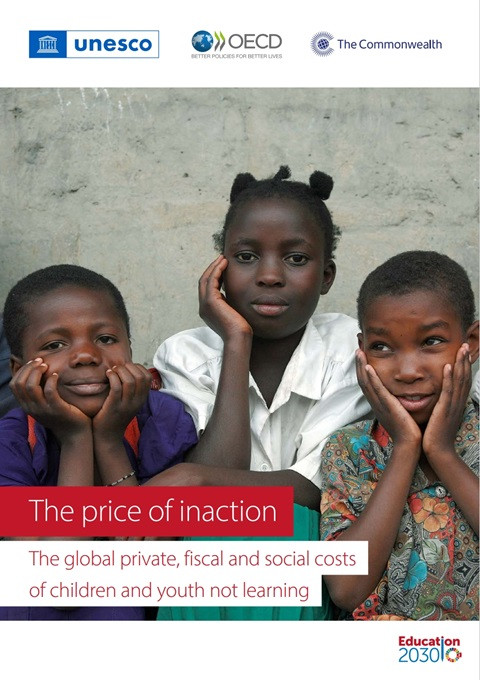 The Price of Inaction: The Global Private, Fiscal and Social Costs of Children and Youth Not Learning Year of publication: 2024 Author: Giorgio Brunello | Lorenzo Rocco | Matthias Eck Corporate author: UNESCO | Organisation for Economic Co-operation and Development (OECD) | Commonwealth Secretariat Despite efforts by countries, the number of out-of-school children remains significant, with 128 million boys and 122 million girls excluded from schooling. Educational skills deficits are also immense – 57 per cent of the world’s children have not gained basic skill levels. UNESCO, OECD and the Commonwealth Secretariat have developed the first global report to illustrate the monetary costs to economies around the world of leaving children and youth behind in education. Using available evidence, the report calculates the costs, globally and by region, of children and youth that are not in school or gaining basic skills. Calculations are also provided for twenty selected countries in which there are gender disparities in education at either girls’ or boys’ expense. If governments were to increase efforts so that every child was in school and achieving basic skills, the future world GDP would raise by more than US$6.5 trillion annually, not to mention eliminating the social costs of failure. This publication offers the evidence and insights that show that for economic development to accelerate, so must prioritizations and investments in education and gender-transformative action.
 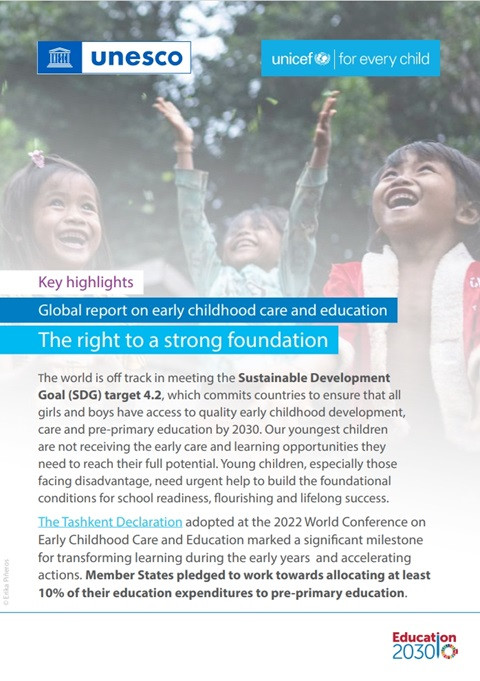 Global Report on Early Childhood Care and Education: The Right to a Strong Foundation; Key Highlights Year of publication: 2024 Corporate author: UNESCO | United Nations Children's Fund (UNICEF) This document is the key highlights of the Global Report on Early Childhood Care and Education: The Right to a Strong Foundation.
 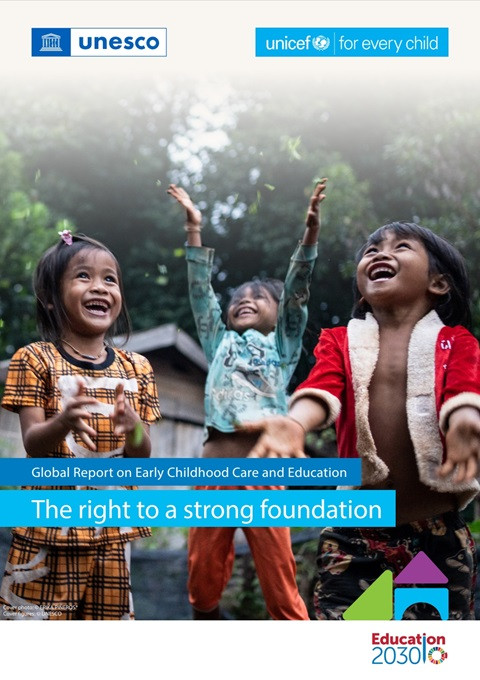 Global Report on Early Childhood Care and Education: The Right to a Strong Foundation Year of publication: 2024 Corporate author: UNESCO | United Nations Children's Fund (UNICEF) Inclusive and quality early childhood care and education (ECCE) are vital for promoting school readiness, foundational learning, and lifelong well-being. Yet almost 60% of children in low-income countries do not have access to early care and learning opportunities. To meet national targets of providing at least one year of organized learning before primary school, low-income and lower-middle-income countries must fill an annual financial gap of USD 21 billion and recruit at least six million more educators before 2030. The first global report, jointly published by UNESCO and UNICEF, offers insights into global and regional ECCE trends. The report, which is a key response to the commitments outlined in the Tashkent Declaration, synthesizes scientific evidence on ECCE’s importance, and exposes persistence gaps in policy and investment. It illustrates how countries have responded to providing equitable and quality ECCE opportunities. The report invites all stakeholders, from governments and policy-makers, to educators, parents and organizations, to ensure that the commitments made in the Tashkent Declaration are fully realized by building a strong foundation for every child.
  People's Climate Vote 2024 Year of publication: 2024 Author: Cassie Flynn | Silvia Tovar Jardon | Stephen Fisher | Matthew Blayney | Albert Ward | Hunter Smith | Paula Struthoff | Zoë Fillingham Corporate author: United Nations Development Programme (UNDP) | University of Oxford The Peoples’ Climate Vote is the world’s largest standalone public opinion survey on climate change. It serves as a platform for people to express their concerns and needs on climate change to world leaders. This initiative, carried out by UNDP and the University of Oxford, was launched in 2021 with a first poll that surveyed people across 50 countries through adverts in popular mobile gaming apps. The 2024 survey is bigger in terms of scope: 77 countries, representing 87 percent of the world’s population, were asked their views on climate change. The 15 questions in the 2024 edition have never been put to people in any survey before. They asked how people’s day-to-day lives are impacted by climate change, how they feel it is being addressed in their countries and what they would like the world to do about it. The results give the most comprehensive public account yet of how people feel and respond to climate change. The Peoples’ Climate Vote 2024 results come at a crucial time. Leading scientific bodies warn that climate change is accelerating faster than expected. Meanwhile, global GHG emission levels continue to rise, and international tensions and conflicts are similarly on the increase. With more than half of the world’s population potentially voting in 2024, understanding how citizens are thinking about climate change is more important than ever. The survey’s results can help decision makers navigate this challenging context, and beyond. To explore the data and country results in more detail, please visit: https://peoplesclimate.vote/
 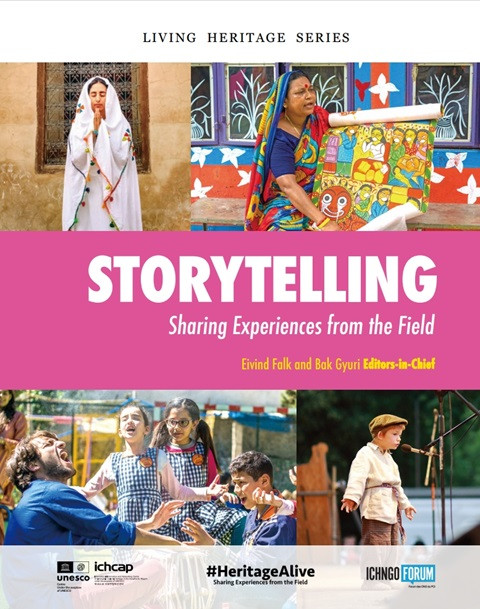 Storytelling: Sharing Experiences from the Field (Living Heritage Series VII, 2023) Year of publication: 2023 Corporate author: International Information and Networking Centre for Intangible Cultural Heritage in the Asia-Pacific Region (ICHCAP) The International Information and Networking Centre for Intangible Cultural Heritage in the Asia-Pacific Region under the auspices of UNESCO (UNESCO ICHCAP) has published the 2023 edition of the Living Heritage series, titled “Story Telling,” which conveys stories from the field as NGOs and experts implement storytelling-related projects. “Story Telling” is the seventh publication in the Living Heritage series, and offers insight into achievements in terms of safeguarding extant heritage through storytelling activities in 12 cases.
 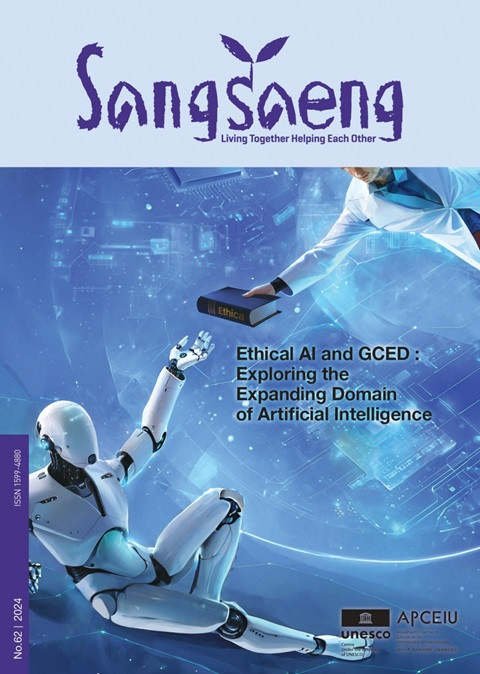 Ethical AI and GCED: Exploring the Expanding Domain of Artificial Intelligence (SangSaeng; No. 62, 2024) Year of publication: 2024 Corporate author: APCEIU The 62nd issue of SangSaeng has been published with the theme of “Ethical AI and GCED: Exploring the Expanding Domain of Artificial Intelligence.” AI has never been as pervasive and influential as it is in today’s rapidly changing world. Despite the convenience and cutting-edge technology AI has offered us, it has the potential to pose a threat to humanity. This is where ethics for AI should come forward. In this regard, this issue will lead readers to the alarming side of AI as well as its future developments, focusing on the importance of GCED and AI ethics in tackling any potential problems. Contents03 Editor's Note 04 Special ColumnEmbracing Change to Cultivate Success — Integrating Global Citizenship Education into Tertiary Education / Dendev Badarch 08 FOCUS: Ethical AI and GCED: Exploring the Expanding Domain of Artificial IntelligenceRole of Ethics in the Era of AI — Protecting and Guiding AI Processes for Humanity to Flourish / Emma Ruttkamp-BloemPaying Attention to AI Ethics — An Avenue for a New Competitive Edge in Business / Myoungshin KimDriving Innovative Education — Balancing Future Possibilities and Ethical Concerns: How GCED Can be Used to Address AI Issues / Angelique Southern 20 Special ReportEmpowering a Climate Generation — From Classrooms to Climate Frontlines: The Transformative Role of Education highlighted at COP28 / Djian Sadadou 22 Best PracticesNavigating an AI Future — Ethical AI and the Importance of Critical Thought / Hannah GrantGLACE Brings the World to a City — Empowering Youth as Global Citizens: Lessons from Navotas City’s Project GLAC / Marco D. MedurandaLowering Eco-Anxiety — Teaching Climate Change Through Media and Information Literacy / Laetitia Legrand 33 GCED YOUTH NETWORK New Wave of Youth Advocacy — Role of AI in Youth Advocacy and its Ethical Implications to Global Citizenship / Oshan M. Gunathilake and Diego Manrique 36 Understanding the Asia Pacific RegionDiscovering Auroville — Where Boundaries Fade, Nature Thrives, and Global Minds Unite / Akanksha Arya 39 Peace in My MemoryHappiness without Violence — Mindanao Peace ForumCelebrates Building a Culture of Peace / Ludivina Borja-DekitPeace Scholar Passes Away Amidst Turbulent Times / Kwang-Hyun KIM 45 Story TimeThe Right Footing — My Life Has Purpose Thanks to Football / Hajar Abulfazl 48 LetterShared Challenges of Global Citizens / Natsuki Nagata 50 APCEIU in Action
 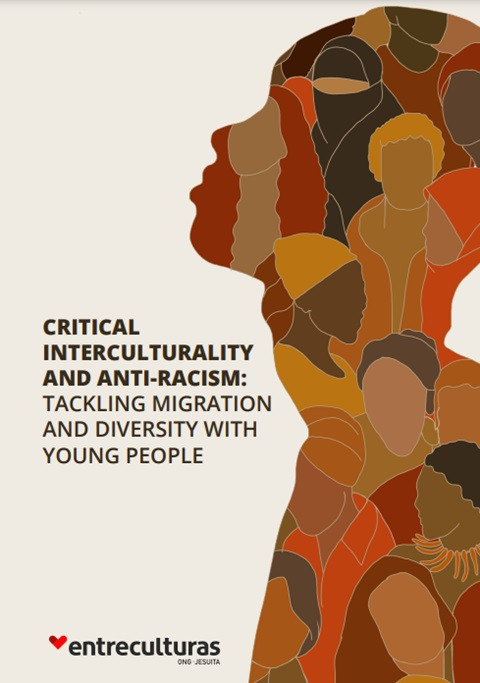 Critical Interculturality and Anti-racism: Tackling Migration and Diversity With Young People Year of publication: 2023 Corporate author: Entreculturas | European Union (EU) Through this guide, educators, teachers, professionals who support youth groups, as well as anyone who works or wants to work with young people on this topic will be able to find useful tools to generate educational spaces from which to build more tolerant societies. It is available in Spanish and English, and in it readers will be able to find key concepts that will help them become familiar with the language and approaches used in matters of migration and diversity, practical tools for working with young groups, as well as self-assessment exercises and reflection questionnaires through which to review their own perspectives on cultural diversity and migration narratives.