
Resources
Explore a wide range of valuable resources on GCED to deepen your understanding and enhance your research, advocacy, teaching, and learning.
8,376 Results found
 Currículos escolares y sus orientaciones sobre historia, sociedad y política: significados para la cohesión social en Latinoamérica Year of publication: 2009 Author: Cristián Cox | Robinson Lira | Renato Gazmuri Corporate author: Uqbar Editores | Elsevier The purpose of this work is to analyse the results of the curricula reform that took place from 1999 to 2000 in regards to the role of schools in providing a model for social integration or cohesion among all groups and social strata. The analysis and critical reflection is based on the assessment done on the curricula for citizenship formation in primary and secondary education in seven countries: Argentina, Brazil, Colombia, Chile, Guatemala, Mexico, and Peru. The main question being answered whether the patterns observed in the different curricula contribute to social cohesion. Global citizenship: abstraction or framework for action Year of publication: 2006 Author: Lynn Davies Corporate author: Educational Review This paper explores whether the notion of ‘global citizenship’ is too abstract to be valuable in driving curriculum policy and active citizenship for students. The paper looks firstly at three of the key aspects of an active role: a concern for social justice; rights; and culture and cultural conflict. It then examines actual curricula and programmes of study for global citizenship, and compares the conceptual frameworks, progression routes and emphases within these curricula. It moves on to review the research on teachers’ practices and orientations in teaching global citizenship, finding some variation and problems, particularly in areas such as teaching controversial issues. Factors in successful impact of global citizenship education are outlined, such as various forms of democratic decision-making and community service. Constraints are nonetheless identified of curriculum overload, resources, time and confidence. The paper then describes existing research on the needs and wishes of learners within global citizenship. The conclusion confirms the consensus on the importance of global citizenship and argues that it can be turned into a more radical and politicised curriculum area; however, more research is needed on impact of the learning, including research by students themselves. Education for global and multicultural citizenship: a strategy for Victorian Government schools 2009-2013 Year of publication: 2009 Corporate author: State of Victoria (Australia) | Melbourne. Department of Education and Early Childhood Development. Office of Government School Education. Student Learning Programs Division The purpose of this strategy is to provide a renewed vision for global and multicultural education in Victorian Government schools; to align priorities to current legislative, policy and curriculum frameworks; and to guide action across schools, regions and the Department. The strategy offers a new concept for thinking about multicultural education: global and multicultural citizenship. The actions outlined will pursue the following objectives: improving educational outcomes for all students through the implementation of inclusive practices and through learning and teaching that utilises the Victorian Essential Learning Standards (VELS) domains relevant to global and multicultural citizenshipdeveloping the intercultural literacies that students, parents, educators, and leadership groups need to live and work as part of a diverse and globalised populationpromoting social cohesion and diversity as sources of educational and economic advantage for all students • enhancing the engagement, wellbeing and sense of belonging for all students in safe and secure learning environmentsbuilding the capacity of the school community to identify and address overt, subtle and institutionalised racism, stereotyping and other forms of prejudicebuilding and sustaining inclusive and participative school–community partnerships that prepare all students for global and multicultural citizenship. Globalising the school curriculum: gender, EFA and global citizenship education (RECOUP working paper 17) Year of publication: 2008 Author: Harriet Marshall | Madeleine Arnot Corporate author: Research Consortium on Educational Outcomes and Poverty (RECOUP) This paper aims to bring the school curriculum into the analysis of gender, education and development. There is a marked absence of discussion both in the academic field of development studies and in the political domain of educational policy making around Education for All about what is required of the school curriculum so that it could help promote gender equality. All too often national school curricula reproduce gender inequalities in the public and private sphere and sustain hegemonic male regimes on a national and global scale (Arnot, 2002). Curriculum research, however, can challenge these social messages embedded in curricular formations as well as raise deeper questions about whose forms of knowledge should be transmitted through official forms of schooling. Critical sociological research, for example, recognises the importance of the rules governing the access and redistribution of knowledge, and also the politics behind the selection, organisation and evaluation of legitimate knowledge through formal national educational institutions within developing economies and the impact these have on indigenous social stratifications. It can also critically assess new global interventions into the school curriculum whether in the name of economic progress, human rights or social justice. These global developments are controversial not least because of the challenge they represent to what has been considered the prerogative of national governments – to transmit its own selection of educational knowledge to its citizens, using its own contextualised pedagogic style. The study of national curricula therefore offers the possibility of exploring the equity dimensions of global–national and local educational interfaces and policy agendas. The paper has limited but hopefully valuable ambitions. It aims to initiate discussion of the curriculum in relation to gender, education and development by exploring the global significance of recent interventions on gender, and in particular girls’ education. The first section briefly considers the implications of globalisation as a transformative process on the development of educational knowledge and queries whether the school curricula could address persistent worldwide gender disparities, inequalities and female subjugation. In the second section, we focus specifically on whether new global declarations around gender equality such as those analysed in the UNESCO Education for All Global Monitoring Reports imply certain roles for the school curriculum. The final section addresses the possibilities for gender equality implied by recent interest global citizenship education – a new curriculum subject and approach that promises much. We consider in a preliminary way whether these new developments represent a move towards forms of educational knowledge that are critical rather than legitimating and ‘normalising’ in relation to gender inequalities. Planning education with and for youth Year of publication: 2015 Author: Anja Hopma | Lynne Sergeant Corporate author: UNESCO International Institute for Educational Planning (IIEP) As a central stakeholder in education, young people should be involved in educational planning. This publication focuses on the rationale for and obstacles to youth involvement, as well as the efforts of ministries of education to engage youth in their planning work. It is based on discussions and recommendations that emerged from the high-level international policy forum on ‘Engaging youth in planning education for social transformation’ organized by the UNESCO International Institute for Educational Planning (IIEP) in Paris from 16 to 18 October 2012. This policy forum set out to explore the following broad themes: (i) youth engagement in planning education for conflict transformation and peace building; (ii) strengthening young people’s skills and opportunities for civic engagement within formal and non-formal education systems; and (iii) enhancing the relevance of education systems for young people in their transition to employment. This publication draws on the exchanges during the pre-forum online debates, discussions among participants during the forum, and testimonials from practitioners and youth.
 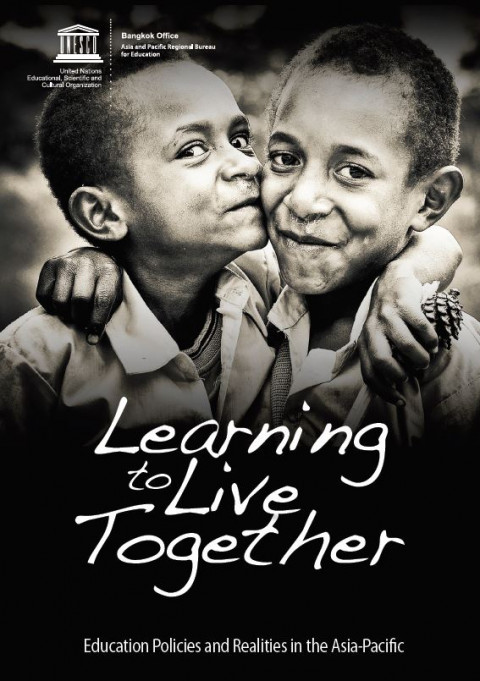 Learning to live together Year of publication: 2014 Corporate author: UNESCO Bangkok The importance of LTLT has increased in recent years. Indeed, relevant competencies appear to be gaining focus in international frameworks and educational initiatives across countries. This is all the more necessary as Voogt and Roblin (2012) argue, given the demands of our increasingly knowledge-based society in which “ideas and knowledge function as commodities” (p. 299 –300) and to which effective social and emotional skills are critical. It is perhaps all the more critical given the multivariate global challenges in the 21st Century and the need for unified global commitment to effectively combat these challenges. In this context, the significance of LTLT is reflected in both the rise of and growing interest in Global Citizenship Education (GCE), Education for Sustainable Development (ESD), Education for International Understanding (EIU) as well as peace and human rights education. The UN Secretary-General’s Global Education First Initiative, which lists ‘Fostering Global Citizenship’ as one of its three global priorities, also implicitly recognizes the significance of LTLT as a precursor to the building of a more peaceful society, one in which discrimination is intolerable and common challenges such as climate change and abject poverty are tackled together.Yet despite the significance of LTLT in the 21st Century, and despite numerous international initiatives to foster LTLT competencies, there is a large gap of evidence identifying how this supposition is translated into effective policy and curricula, and eventually into the reality of schools, teachers and learners. This report is a response to this gap, and attempts to understand how ten selected countries in the Asia-Pacific region – Afghanistan, Australia, Indonesia, Malaysia, Myanmar, Nepal, The Philippines, Republic of Korea, Sri Lanka and Thailand – have reflected and integrated LTLT into their education policies and initiatives. This variety of countries aims to reflect their diverse experiences in terms of reflecting LTLT through their education systems. By exploring a number of areas, namely policy, curricula, teachers and assessment, this study aims to identify what has so far been achieved in education systems of the Asia-Pacific region in the area of LTLT.This report is therefore targeted predominantly at education policy makers, researchers, academics as well as education practitioners of the Asia-Pacific region. Given its connection to Global Citizenship Education and other relevant international initiatives around sustainability and peace education, this report is also relevant to UNESCO’s partner organizations and the broader educational development community.This report will first present the research framework for the study, before exploring the social and economic contexts in the ten selected countries and wider regional factors in the Asia-Pacific in relation to global challenges in Chapter Two. Chapter Three will then examine national policy frameworks, including the vision of those policies in defining LTLT in education. Chapter Four focuses on the national curriculum in selected countries and the extent to which they incorporate learning objectives, subjects, and extra-curricular activities reflecting the concept of LTLT and related skills and competencies. In Chapter Five, teaching practices are examined, including the role of teachers and teacher education, as well as teaching methods and application of media and information literacy (MIL) in the classroom. Chapter Six then looks at assessment, and how far countries have attempted to develop assessment frameworks that measure the skills and competencies related to LTLT. Finally, Chapter Seven provides reflections and conclusions based on the main findings of the study, while also identifying trends across policy domains, shortcomings and some policy considerations.
 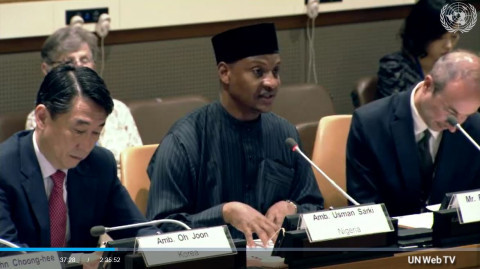 [Video] Global Citizenship Education for a just, peaceful, inclusive and sustainable world: a conceptual framework and its application in the field Year of publication: 2015 Corporate author: United Nations (UN) The Seminar held at UN HQs entitled, "Global Citizenship Education for a Just, Peaceful, Inclusive, and Sustainable world: A Conceptual Framework and its Application in the Field" was co-organized by the Permanent Missions of France, Nigeria, Qatar and the Republic of Korea, the United States Mission and the United Nations Educational, Scientific and Cultural Organization (UNESCO), in support of the Secretary-General’s Global Education First Initiative (GEFI).The panel discussion was moderated by H.E. Ambassador Hahn Choong‐hee of Korea. Some of the speakers for this event included H.E. Ambassador Richard Erdman, Acting Representative to ECOSOC of the Permanent Mission of the United States of America to the United Nations; H.E. Ambassador Usman Sarki, Deputy Permanent Representative of the Permanent Mission of the Federal Republic of Nigeria to the United Nations; Yousef Laram, Deputy Permanent Representative of the State of Qatar to the United Nations; Mr. Francois Gave, Counsellor at the Permanent Mission of France to the United Nations; and Christopher Castle, Chief of UNESCO’s Section of Global Citizenship Education.This event was divided into two segments. In the first, GCED was discussed at the level of concept. How can it strengthen the three pillars of the United Nations and the three pillars of sustainable development in furtherance of a just, peaceful, inclusive and sustainable world. In the second, examples from the field – the local, national and international levels – were presented and discussed as were certain opportunities going forward including the important role of media. Pan-African forum: sources and resources for a culture of peace Year of publication: 2013 Corporate author: African Union The Pan-African Forum “ Sources and resources for a culture of peace” was held in Luanda, Angola, from 26 to 28 March 2013, and was jointly organized by UNESCO, the African Union and the Government of Angola, under the High Patronage of H. E. Mr José Eduardo dos Santos, President of the Republic of Angola. This forum was the result of a close cooperation between UNESCO and the African Union, one of their main objectives being building peace in Africa, through the promotion of a culture of peace based on the intrinsic values of African societies. The Republic of Angola Government, through its President of the Republic H. E. Mr José Eduardo dos Santos, resolutely engaged in this process with major financial and technical support for the organization of the Forum in the Angolan capital city. As indicated in the Action Plan adopted by the participants in plenary (Annex I), recommendations made during the Forum are directed at all components of African society : political leaders, national and regional institutions, civil society, community associations, youth movements and women’s organizations, religious and traditional leaders, entrepreneurs and leaders from the private sector, etc. The implementation of the Action Plan will be continuously monitored by the two institutions that jointly organized the Luanda Forum, the African Union and UNESCO. Representatives from the 55 African countries participating in the Forum will both contribute to the proposal for action by bringing their national experience and take the lead in the follow‐up of the recommendations made at country level. In order to ensure this follow‐up it will be important to link together the participants by the creation of an African Network for the Promotion of a Culture of Peace and Non‐violence. The representatives of African countries will play the role of focal points of the awareness campaign at the national level. Finally, the agenda of the Forum includes a plan to hold a roundtable on the establishment of a multi-stakeholder partnership for action. Organized with the participation of regional institutions, public and private economic actors as well as representatives of Governments and Civil Society, this session will be the occasion to launch a continental and lasting Movement for the promotion of a culture of peace. For this round table and for the Campaign, the stakeholders can now witness the action as their Foundation / Company / Institution / Organization leads to help in building the defence of peace in the minds of men and women and ensure that peace is a reality: "Make Peace Happen". Fórum Panafricano: fundamentos e recursos para uma cultura de paz Year of publication: 2013 Corporate author: African Union The Pan-African Forum “ Sources and resources for a culture of peace” was held in Luanda, Angola, from 26 to 28 March 2013, and was jointly organized by UNESCO, the African Union and the Government of Angola, under the High Patronage of H. E. Mr José Eduardo dos Santos, President of the Republic of Angola. This forum was the result of a close cooperation between UNESCO and the African Union, one of their main objectives being building peace in Africa, through the promotion of a culture of peace based on the intrinsic values of African societies. The Republic of Angola Government, through its President of the Republic H. E. Mr José Eduardo dos Santos, resolutely engaged in this process with major financial and technical support for the organization of the Forum in the Angolan capital city. As indicated in the Action Plan adopted by the participants in plenary (Annex I), recommendations made during the Forum are directed at all components of African society : political leaders, national and regional institutions, civil society, community associations, youth movements and women’s organizations, religious and traditional leaders, entrepreneurs and leaders from the private sector, etc. The implementation of the Action Plan will be continuously monitored by the two institutions that jointly organized the Luanda Forum, the African Union and UNESCO. Representatives from the 55 African countries participating in the Forum will both contribute to the proposal for action by bringing their national experience and take the lead in the follow‐up of the recommendations made at country level. In order to ensure this follow‐up it will be important to link together the participants by the creation of an African Network for the Promotion of a Culture of Peace and Non‐violence. The representatives of African countries will play the role of focal points of the awareness campaign at the national level. Finally, the agenda of the Forum includes a plan to hold a roundtable on the establishment of a multi-stakeholder partnership for action. Organized with the participation of regional institutions, public and private economic actors as well as representatives of Governments and Civil Society, this session will be the occasion to launch a continental and lasting Movement for the promotion of a culture of peace. For this round table and for the Campaign, the stakeholders can now witness the action as their Foundation / Company / Institution / Organization leads to help in building the defence of peace in the minds of men and women and ensure that peace is a reality: "Make Peace Happen". Expert group meeting “youth civic engagement:enabling youth participation in political, social and economic life” 16-17 June 2014 UNESCO Headquarters Paris, France: concept note Year of publication: 2014 Corporate author: UN. Department of Economic and Social Affairs (UN. DESA) From 16-17 June 2014, the Division for Social Policy and Development in the Department of Economic and Social Affairs of the United Nations and UNESCO will organize an Expert Group Meeting at UNESCO Headquarters, Paris, under the theme “Youth Civic Engagement: enabling youth participation in political, social and economic life.” The meeting will bring together experts and representatives of youth organizations, academia, representatives of Member States, United Nations entities, and intergovernmental organizations to discuss the ways in which youth civic engagement can be an enabler for political, social and economic participation, as well as to examine current opportunities and challenges affecting such potential. These topics will be considered under the framework of both the World Programme of Action for Youth1 and of the UN System-Wide Action Plan on Youth which respectively incorporate youth participation and youth civic engagement among their priority areas for action.