
Resources
Explore a wide range of valuable resources on GCED to deepen your understanding and enhance your research, advocacy, teaching, and learning.
8,340 Results found
 Gender Bias, Citizen Participation, and AI (Policy Research Working Papers; Planet; RRR; 11046) Year of publication: 2025 Author: Jose Antonio Cuesta Leiva | Natalia Gisel Pecorari Corporate author: World Bank This paper investigates the role of gender bias in artificial intelligence–driven analyses of citizen participation, using data from the 2023 Latinobarómetro Survey. The paper proposes that gender bias—whether societal, data driven, or algorithmic—significantly affects civic engagement. Using machine learning, particularly decision trees, the analysis explores how self-reported societal bias (machismo norms) interacts with personal characteristics and circumstances to shape civic participation. The findings show that individuals with reportedly low levels of gender bias, who express political interest, have high levels of education, and align with left-wing views, are more likely to participate. The paper also explores different strategies to mitigate gender bias in both the data and the algorithms, demonstrating that gender bias remains a persistent factor even after applying corrective measures. Notably, lower machismo thresholds are required for participation in more egalitarian societies, with men needing to exhibit especially low machismo levels. Ultimately, the findings emphasize the importance of integrated strategies to tackle gender bias and increase participation, offering a framework for future studies to expand on nonlinear and complex social dynamics.
  The Convention on the Elimination of All Forms of Discrimination against Women and its Optional Protocol: Handbook for Parliamentarians No. 36; Revised edition Year of publication: 2023 Corporate author: Inter-Parliamentary Union (IPU) | UN. Office of the United Nations High Commissioner for Human Rights (UN. OHCHR) More than four decades after its adoption, the Convention on the Elimination of All Forms of Discrimination against Women remains an essential and ambitious guide for achieving gender equality across the board – from the family and the classroom to executive boards and political leadership roles. Despite considerable progress since the Convention came into force, no country can yet claim to have fully achieved gender equality. This revised edition of The Convention on the Elimination of All Forms of Discrimination against Women and its Optional Protocol: Handbook for Parliamentarians is a joint collaboration undertaken by the Inter-Parliamentary Union (IPU) and the Office of the United Nations High Commissioner for Human Rights (OHCHR).
  The Impact of Climate Change on Education and What to Do about It Year of publication: 2024 Author: Sergio Venegas Marin | Lara Schwarz | Shwetlena Sabarwal Corporate author: International Bank for Reconstruction and Development | World Bank Education can be the key to ending poverty in a livable planet, but governments must act now to protect it. Climate change is increasing the frequency and intensity of extreme weather events such as cyclones, floods, droughts, heatwaves and wildfires. These extreme weather events are in turn disrupting schooling; precipitating learning losses, dropouts, and long-term impacts. Even if the most drastic climate mitigation strategies were implemented, extreme weather events will continue to have detrimental impacts on education outcomes.
  World Social Report 2023 : Leaving No One Behind in an Ageing World Year of publication: 2023 Corporate author: UN. Department of Economic and Social Affairs (UN. DESA) Population ageing is a defining global trend of our time. People are living longer, and more are older than ever before. Spectacular improvements in health and survival and reductions in fertility have driven this momentous shift, which has begun or is expected to begin soon in all countries and areas. This change brings both challenges and opportunities as countries strive to achieve the Sustainable Development Goals (SDGs). In 2022, the world marked the twentieth anniversary of the adoption of the Madrid International Plan of Action on Ageing. To commemorate this landmark, the World Social Report 2023 explores the economic and social implications of the ageing of the human population. It builds on the Plan of Action’s framework for national policies to create equitable, inclusive societies for people of all ages, providing recommendations to put the rights and well-being of older persons at the centre, across the life course. Population ageing is an inevitable result of the demographic transition towards longer lives and smaller families. While the shift towards older populations is largely irreversible, collective actions and policy decisions shape its path and consequences. Postponing critical measures that allow societies to benefit from and adapt to population ageing would impose high social, economic, fiscal and health-related costs, for both current and future generations. By contrast, with appropriate foresight and planning, Governments can manage the challenges from population ageing while enhancing opportunities for all people to thrive and ensuring that no one is left behind. As elaborated in this report, population ageing needs to be widely understood as more than just a set of discrete concerns mainly for one group of people who have advanced beyond a given age. Ageing touches all parts of economies and societies, from health care and education to employment and taxation. Each stage of life can contribute to or detract from well-being at older ages.
 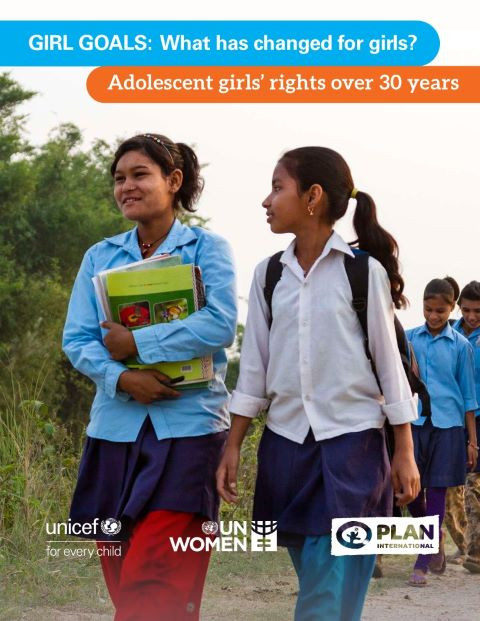 Girl Goals: What has Changed for Girls? Adolescent Girls’ Rights over 30 Years Year of publication: 2025 Corporate author: United Nations Children's Fund (UNICEF) | United Nations Entity for Gender Equality and the Empowerment of Women (UN Women) | Plan International This report makes three key recommendations on action we can take now to advance adolescent girls’ rights at scale, in ways that account for fiscally constrained contexts and multiple competing priorities: 1. Ensure tangible and actionable support for adolescent girls’ voices, advocacy and action. The current generation of girls are raising their voices to be heard and are already at the forefront of making change around the world. With the right support, resources and seats at the table, adolescent girls can help transform the world for the better, shaping better policy outcomes for themselves and everyone. This is not about girls’ voices above all others, or endless consultation, but about specific, meaningful actions that ensure girls get the support they need and are heard on policy issues that matter to them. 2. Establish and track explicit targets for change for adolescent girls, who are too often invisible and sidelined Setting explicit targets to monitor outcomes for adolescent girls is key to making progress. Context-specific prioritization will be necessary, but there are some issues that stand out globally. Gaps in progress (such as child marriage gains accruing disproportionately to wealthier households) demonstrate the need forprogrammes that address poverty and economic realities alongside harmful social norms. The disproportionate number of adolescent girls not in education, employment or training, not entering the labour market as young women, and left behind when it comes to digital skills, is a threat to the gains made for girls and to economic growth that will benefit everyone. Stagnation on issues like underweight also stand out. Country- specific priorities supported by data- driven accountability mechanisms and investments are needed to translate policy commitments into change on the ground. 3. Resource and deliver smartly to unlock the social and economic dividend Governments and partners should invest in solutions proven to change outcomes across multiple SDGs at scale – for example, investing in education and skills, cash transfers and economic empowerment programmes designed to support girls. Existing systems, from maternal health care to school curricula, should be adapted to meet girls’ needs rather than creating small- scale, separate projects. Streamlined, evidence-based ‘add-ons’ – such as adding parenting support to existing maternal health-care programmes – can be cost effective and accelerate outcomes if well designed. Change is possible, and this report shows that great gains have been made. Smart investments now can transform the world for girls, families, communities and national economies. It is time to act.
 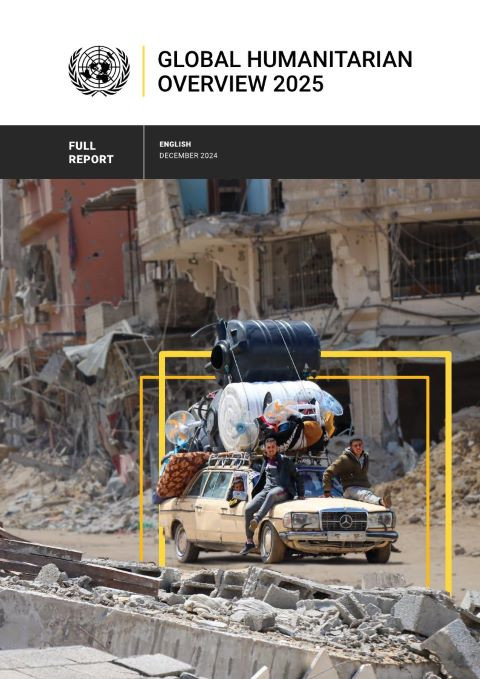 Global Humanitarian Overview 2025 Year of publication: 2024 Corporate author: UN. Office for the Coordination of Humanitarian Affairs (UN. OCHA) A snapshot of the global trends driving increased humanitarian needs in 2025, analysis from 2024 and an overview of where the system is delivering better to help those affected by crises. The Global Humanitarian Overview (GHO) is the world’s most comprehensive, authoritative and evidence-based assessment of humanitarian need. Through plans that prioritize those most in need, it aims to fight hunger, killer diseases, gender-based violence and displacement. The GHO 2025 presents an analysis of global crises and needs and the humanitarian plans to address them. In 2025, humanitarian partners are appealing for over US$47 billion to assist nearly 190 million people facing life-threatening and urgent needs across 72 countries. The report looks at response trends to strengthen, such as localization, cash, accountability and the changes needed to deliver aid effectively: security and funding. The GHO presents a collective picture of humanitarians' achievements and, conversely, what happens when humanitarians are unable to deliver aid. Explore the full report and interactive content through humanitarianaction.info.
 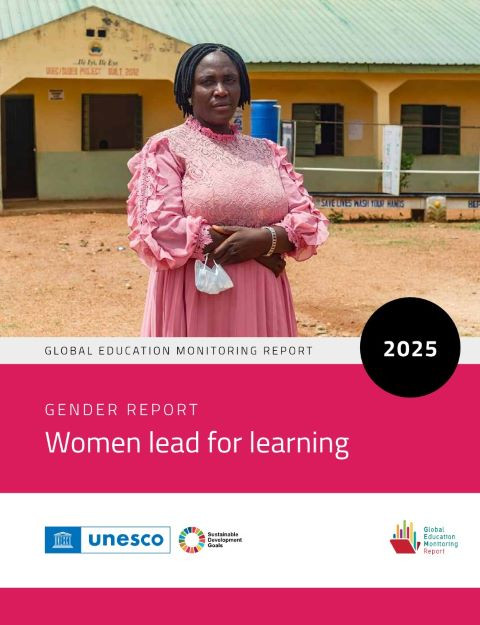 Global Education Monitoring Report 2025: Gender Report: Women Lead for Learning Year of publication: 2025 Corporate author: UNESCO Barriers to gender equality in education leadership positions can and need to be overcome This gender edition, which is part of the 2024/5 Global Education Monitoring Report on leadership in education, addresses the remaining obstacles for women in their efforts to climb up the leadership ladder in education. Although the teaching profession has been feminized, there are considerable gender gaps in school management, education administration and political leadership positions, a situation illuminated in detail with examples from all over the world. Gender disparity in education leadership is the result of entrenched stereotypes and biases – conscious or unconscious – on the one hand and on the other institutional processes or professional development mechanisms that are insufficiently supportive. Research suggests that women leaders display some differences relative to men in their approaches to education leadership, for example the extent to which they emphasize collaboration, build relationships with the community and retain a focus on learning. While there is little to suggest that these differences are universal or immutable, the evidence points to the fact that the lack of equitable opportunities translates to less talent and fewer diverse approaches to leadership, which are a loss to education systems – not to mention the obvious need for equity. This is particularly evident in parts of the world where gender disparities remain large. This gender edition calls on countries to take a much closer look at gender disparity in education leadership and adopt measures to raise awareness, improve mechanisms and strengthen capacities to address discrimination and bias and thus encourage women who aspire to such careers to pursue them. Gender disparity in education leadership is the result of entrenched stereotypes and biases – conscious or unconscious – on the one hand and on the other institutional processes or professional development mechanisms that are insufficiently supportive. Research suggests that women leaders display some differences relative to men in their approaches to education leadership, for example the extent to which they emphasize collaboration, build relationships with the community and retain a focus on learning. While there is little to suggest that these differences are universal or immutable, the evidence points to the fact that the lack of equitable opportunities translates to less talent and fewer diverse approaches to leadership, which are a loss to education systems – not to mention the obvious need for equity. This is particularly evident in parts of the world where gender disparities remain large. This gender edition calls on countries to take a much closer look at gender disparity in education leadership and adopt measures to raise awareness, improve mechanisms and strengthen capacities to address discrimination and bias and thus encourage women who aspire to such careers to pursue them.
  Think Tank Report: Empowering Communities through Citizenship Education and Lifelong Learning Year of publication: 2025 Corporate author: UNESCO Institute for Lifelong Learning (UIL) This short, explorator y repor t from the UNESCO Institute for Lifelong Learning (UIL) is the outcome of ‘Placing citizenship education within a lifelong learning perspective: From research to action’, a think tank meeting held in Hamburg in 2023. The meeting brought together experts from international organizations and academia and was organized by UIL in collaboration with the Asia-Pacific Centre of Education for International Understanding. The report reflects the inputs of participants while also drawing on the proposals of the International Commission on the Futures of Education (ICFE, 2021); the findings of the Fifth Global Report on Adult Learning and Education (GRALE 5) (UIL, 2022a); the Marrakech Framework for Action (UIL, 2022b); and the outcomes of the United Nations Transforming Education Summit of September 2022 (UN, 2023a; UN 2023b); as well as UNESCO’s Revised Recommendation concerning Education for International Understanding, Co-operation and Peace (UNESCO, 2023). It makes a case for putting citizenship education, interpreted not as a means of reproducing the status quo but as a catalyst for civic and social empowerment, at the heart of efforts to create more equitable, tolerant and just societies for all. It argues that citizenship, so construed, should be woven into the fabric of education, throughout and across the life course, recognizing its role in narrowing social and economic inequalities, overcoming social fragmentation, addressing the climate crisis and tackling the backlash against human rights and gender equality. This report calls for citizenship education and lifelong learning to be core pillars of a systems-level transformation in education, and provides recommendations for policy-makers, national and local governments, educators and civil society organizations to make citizenship education a priority in their policies and practices.
  Asia-Pacific Migration Report 2024: Assessing Implementation of the Global Compact for Migration Year of publication: 2024 Corporate author: UN. Economic and Social Commission for Asia and the Pacific (UN. ESCAP) | International Labour Organization (ILO) | International Organization for Migration (IOM) | UN. Office of the United Nations High Commissioner for Human Rights (UN. OHCHR) | United Nations Centre for Human Settlement Programme (UN Habitat) | United Nations Entity for Gender Equality and the Empowerment of Women (UN Women) | United Nations Development Programme (UNDP) | UNESCO | UN. Office of the United Nations High Commissioner for Refugees (UNHCR) | UN. Office on Drugs and Crime (UNODC) | World Bank This report aims to assess the state of GCM implementation in the region, its progress and its challenges since the first Asia-Pacific Regional Review of Implementation of the Global Compact for Migration in 2021, in which a Chair’s summary was adopted. Chapters 2 to 5 each consider clusters of GCM objectives, as presented in General Assembly resolution 73/326 and following the same groupings as in the Asia-Pacific Migration Report (APMR) 2020. These chapters open with a summary of the discussions from the first regional review of the GCM, held in 2021, drawing from the Chair’s summary. Chapter 6 provides overarching recommendations to support and accelerate GCM implementation in Asia and the Pacific. At the end of the report are annexes with information on the GCM objectives and guiding principles, references to migration in Voluntary National Reviews to the High-Level Political Forum on Sustainable Development, and GCM pledges at the level of the State or City, Municipality and Local Authority.
  Fostering Women's Leadership Year of publication: 2024 Author: Mariagrazia Squicciarini | Anna Rita Manca | Garance Sarlat Corporate author: UNESCO No (leadership) share no gain (for societies and economies)! Leveraging UNESCO’s unique Gender-Based Resilience Framework, this report explores the role of women in leadership positions in both decision-making and high-tech, including in artificial intelligence-related innovations. It further highlights progress towards the G20 Brisbane Target, aimed to accelerate progress on gender equality by reducing the gender gap in labour market participation rates by 25% by 2025. Women remain underrepresented in decision-making, holding only about 26% of seats in national parliaments worldwide on average. In the world of work, female labour participation continues to lag behind men’s, at 47% for women against 72% for men on average. Despite progress by G20 members towards the Brisbane Target, a 2% average gap in absolute terms remained to be filled in 2022. In the high-tech world, women make up only 30% of AI professionals, and even less of leaders. Female inventors in AI account for about 37% of patents filed in 2022-23.