
Resources
Explore a wide range of valuable resources on GCED to deepen your understanding and enhance your research, advocacy, teaching, and learning.
8,348 Results found
 Leveraging Artificial Intelligence to Enhance Early Action towards the Kunming-Montreal Global Biodiversity Framework Year of publication: 2024 Author: Nicole DeSantis | Lea Phillips | Christina Supples | Julien Pigot | Jamison Ervin | Doley Tshering | Juan Calles Lopez | Dharshani Seneviratne | Enrique Paniagua | Monica Mora Corporate author: United Nations Development Programme (UNDP) This publication releases the methodology behind the National Biodiversity Strategies and Action Plans (NBSAP) Target Similarity Assessments and identifies key lessons learned and opportunities for future applications.
  Gender and Recovery Toolkit: Advancing Gender Equality and Women’s Empowerment in Crisis and Recovery Settings; Updated 2024 Year of publication: 2024 Corporate author: United Nations Development Programme (UNDP) The Gender and Recovery toolkit is a practical resource in the hands of UNDP personnel to help government, civil society and other partners put gender equality at the core of immediate and long-term recovery processes. It shows how to incorporate gender perspectives and women’s participation throughout the recovery programme cycle – from assessment, strategic planning and framing of results to budgeting and implementation, and monitoring and evaluation.The toolkit emphasizes the need to address the root causes of gender inequality and fragility by transforming power dynamics. It advocates for approaches that go beyond increasing women’s representation, focusing on tackling masculinities and reshaping institutions, behaviors, and norms. It underscores the importance of holistic strategies to address the interconnected challenges of climate change, peacebuilding, and gender equality in crisis contexts, highlighting the role of technology and innovative programming in empowering women. The seven guidance notes and tip sheets incorporate recent updates to global policy frameworks with updated indicators and robust data sources. While primarily designed for UNDP practitioners, this resource is valuable for all partners in crisis and recovery settings.
  Paris Agreement Year of publication: 2015 Corporate author: United Nations (UN) The Paris Agreement is a legally binding international treaty on climate change. It was adopted by 196 Parties at the UN Climate Change Conference (COP21) in Paris, France, on 12 December 2015. It entered into force on 4 November 2016.Its overarching goal is to hold “the increase in the global average temperature to well below 2°C above pre-industrial levels” and pursue efforts “to limit the temperature increase to 1.5°C above pre-industrial levels.”
  Declaration on a Culture of Peace Year of publication: 1999 Corporate author: United Nations (UN) Solemnly proclaims the present Declaration on a Culture of Peace to the end that Governments, international organizations and civil society may be guided in their activity by its provisions to promote and strengthen a culture of peace in the new millennium.
 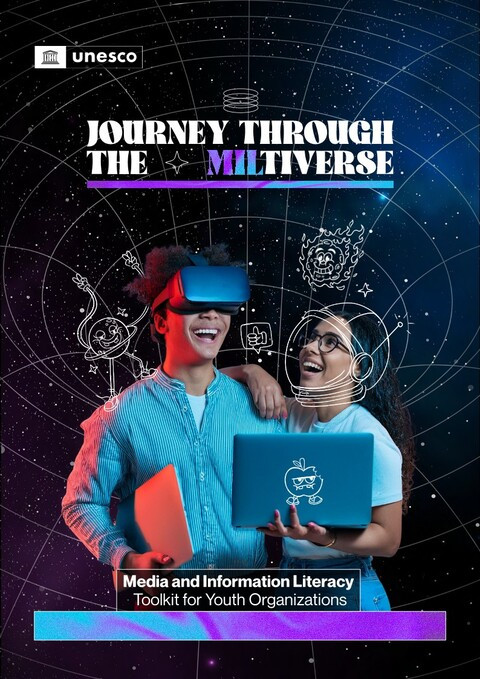 Journey through the MILtiverse: Media and Information Literacy Toolkit for Youth Organizations Year of publication: 2024 Author: Sandra Acero Pulgarin | Natalia González-Gil | Alejandro Santamaría Virviescas Corporate author: UNESCO Empowering Youth Organizations with and for Media and Information LiteracyIn an era where digital interactions dominate, young people must be equipped with more than just basic digital literacy skills. Media and Information Literacy (MIL) has become an essential competency, enabling them to critically navigate the overwhelming ow of information in our fast-paced and complex information ecosystem. \With the Internet user base getting younger every day — data shows that one in three internet users is a child — countries worldwide are increasingly working on integrating MIL into their education systems. Despite these advancements, many young people still grapple with challenges such as disinformation, hate speech, and other harmful online content. Additionally, new technologies continue to emerge, creating challenges with unknown impacts. For example, 80% of young people aged 10 to 24 use AI multiple times a day for education, entertainment, and other purposes. Global youth organizations are at the forefront of UNESCO’s eorts to promote MIL among young people through informal education. This toolkit serves as a primary resource to help these organizations incorporate MIL into their strategies, policies, and operations, aiming to make MIL a lasting component of their practices and peer-to-peer educational programs. Join us on this journey through the MILtiverse and empower the next generation by making MIL a fundamental life competence for their futures.
  Asia and the Pacific SDG Progress Report 2025: Engaging Communities to Close the Evidence Gap Year of publication: 2025 Corporate author: UN. Economic and Social Commission for Asia and the Pacific (UN. ESCAP) The SDG progress report 2025 presents the latest data and insights on progress toward the Sustainable Development Goals (SDGs) in the Asia-Pacific region. While celebrating regional achievements, it also highlights persistent challenges—such as climate change, natural disasters, and critical data gaps—that risk leaving marginalized communities behind. By showcasing innovative community-level partnerships, the report explores how local efforts can help bridge the evidence gap, ensuring that progress toward the SDGs is inclusive and leaves no one behind.
  Carbon Inequality Kills: Why Curbing the Excessive Emissions of an Elite Few Can Create a Sustainable Planet for All; Executive Summary Year of publication: 2024 Author: Mira Alestig | Nafkote Dabi | Abha Jeurkar | Alex Maitland | Max Lawson | Daniel Horen Greenford | Corey Lesk | Ashfaq Khalfan Corporate author: Oxfam International The only way to beat climate breakdown and deliver social justice is to radically reduce inequality. This briefing paper reveals the catastrophic climate impacts of the richest individuals in the world, and proposes taking urgent action to protect people and the planet. What little carbon dioxide we can still safely emit is being burned indiscriminately by the super-rich. We share new evidence of how the yachts, jets and polluting investments of the 50 richest billionaires are accelerating the climate crisis. Oxfam’s research shows that the emissions of the world’s super-rich 1% are causing economic losses of trillions of dollars; contributing to huge crop losses; and leading to millions of excess deaths. As global temperatures continue to rise, risking the lives and livelihoods of people living in poverty and precarity, we must act now to curb the emissions of the super-rich and make rich polluters pay.
  Carbon Inequality Kills: Why Curbing the Excessive Emissions of an Elite Few Can Create a Sustainable Planet for All Year of publication: 2024 Author: Mira Alestig | Nafkote Dabi | Abha Jeurkar | Alex Maitland | Max Lawson | Daniel Horen Greenford | Corey Lesk | Ashfaq Khalfan Corporate author: Oxfam International The only way to beat climate breakdown and deliver social justice is to radically reduce inequality. This briefing paper reveals the catastrophic climate impacts of the richest individuals in the world, and proposes taking urgent action to protect people and the planet. What little carbon dioxide we can still safely emit is being burned indiscriminately by the super-rich. We share new evidence of how the yachts, jets and polluting investments of the 50 richest billionaires are accelerating the climate crisis. Oxfam’s research shows that the emissions of the world’s super-rich 1% are causing economic losses of trillions of dollars; contributing to huge crop losses; and leading to millions of excess deaths. As global temperatures continue to rise, risking the lives and livelihoods of people living in poverty and precarity, we must act now to curb the emissions of the super-rich and make rich polluters pay. Notice of Corrections available for this report.
  Countering and addressing online hate speech: a guide for policy makers and practitioners Year of publication: 2023 Corporate author: UN. Office on Genocide Prevention and the Responsibility to Protect Online hate speech remains a critical challenge to advancing the objectives set out in the UN Strategy and Plan of Action on Hate Speech and the pillars of the United Nations work, namely Peace and Security, Human Rights and Sustainable Development. The recommendations outlined in this policy paper, provide a framework for countering hate speech, in line with international human rights norms and standards. The recommendations are based on three years of consultations and dialogue, including with the technology and social media companies, experts, the UN Working Group on Hate Speech and civil society. Their implementation should be part of broader efforts to address hate speech globally, including its root causes and impact offline, in line with the UN Strategy and Plan of Action. The pursuit of these recommendations should also prioritize participation and engagement directly with the victims of hate speech, underpinned by the principles of non-discrimination and leaving no one behind.
  A Comprehensive Methodology for Monitoring Social Media to Address and Counter Online Hate Speech Year of publication: 2024 Corporate author: UN. Office on Genocide Prevention and the Responsibility to Protect This report introduces a standardized methodology for monitoring online hate speech, to identify, assess, and mitigate risks, including when it constitutes risks of genocide, war crimes, and crimes against humanity. This methodology is based on an extensive review of existing methodologies used for this purpose across academia, technology companies, governments, the United Nations, and NGOs, and synthesizes those approaches into a standard set of practices that best fit the use cases relevant to the UN and its partners.