
Resources
Explore a wide range of valuable resources on GCED to deepen your understanding and enhance your research, advocacy, teaching, and learning.
8,340 Results found
 UNESCO Women for Ethical AI: Outlook Study on Artificial Intelligence and Gender Year of publication: 2024 Corporate author: UNESCO The gender chapter of the UNESCO Recommendation on the Ethics of AI is a concrete commitment by 194 Member States to advance gender equality in the AI ecosystem. To track progress in the implementation of the gender provisions of UNESCO’s Recommendation, and to assess the impacts of AI on gender equality, the UNESCO Women for Ethical AI (W4EAI) Platform has been established. This report advances the workstream through evidence-based insights in three critical areas: women’s participation in AI development and deployment, the inclusion of gender equality concerns in AI governance and the impact of AI on gender equality. It highlights the significant underrepresentation of women in AI, the lack of gender-disaggregated data, and the compounded challenges women face in the field. The report also addresses the neglect of gender dimensions in AI policy, the risks posed by AI systems to women, and the need for responsible and ethical AI governance to promote gender equality. Finally, it outlines actionable recommendations to enhance gender equality through and in AI, emphasizing the importance of comprehensive data collection, targeted interventions, and inclusive policy-making.
  Artificial Intelligence and Gender Equality: Key Findings of UNESCO’s Global Dialogue Year of publication: 2020 Corporate author: UNESCO The purpose of the UNESCO’s Dialogue on Gender Equality and AI was to identify issues, challenges, and good practices to help: Overcome the built-in gender biases found in AI devices, data sets and algorithms; Improve the global representation of women in technical roles and in boardrooms in the technology sector; and Create robust and gender-inclusive AI principles, guidelines and codes of ethics within the industry. This Summary Report sets forth proposed elements of a Framework on Gender Equality and AI for further consideration, discussion and elaboration amongst various stakeholders. It reflects experts’ inputs to the UNESCO Dialogue on Gender Equality and AI, as well as additional research and analysis. This is not a comprehensive exploration of the complexities of the AI ecosystem in all its manifestations and all its intersections with gender equality. Rather, this is a starting point for conversation and action and has a particular focus on the private sector. It argues for the need to 1. Establish a whole society view and mapping of the broader goals we seek to achieve in terms of gender equality;2. Generate an understanding of AI Ethics Principles and how to position gender equality within them; 3. Reflect on possible approaches for operationalizing AI and Gender Equality Principles; and4. Identify and develop a funded multi-stakeholder action plan and coalition as a critical next step.
  Beyond COVID-19: A Feminist Plan for Sustainability and Social Justice Year of publication: 2021 Corporate author: United Nations Entity for Gender Equality and the Empowerment of Women (UN Women) As the world learns to live with COVID-19, to emerge from the current crisis, and to “build back better”, UN Women’s new Feminist Plan for Sustainability and Social Justice is a visionary but practical roadmap for putting gender equality, social justice, and sustainability at the centre of the recovery. The Feminist Plan maps the ambitious and transformative policies – on livelihoods, care, and the environment – that are needed to build a more equal and sustainable future. To get there, calls for context-specific policy pathways, tailored political strategies, and financing. The plan identifies key levers that can create change and the actors at global, national, local levels that need to take action to move towards this vision.
 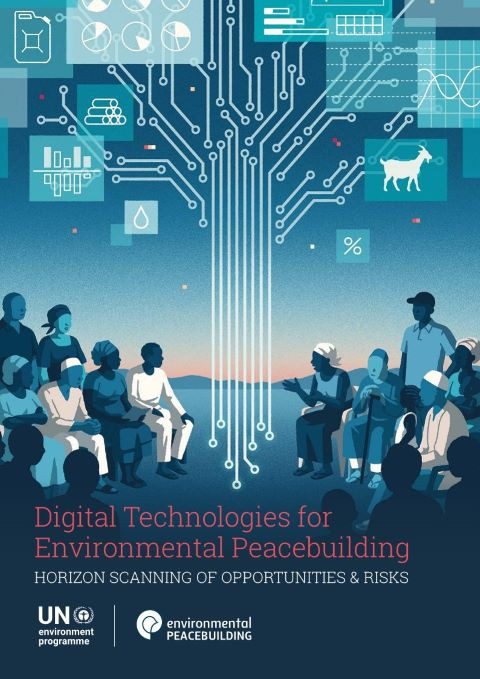 Digital Technologies for Environmental Peacebuilding : Horizon Scanning of Opportunities and Risks Year of publication: 2024 Corporate author: United Nations Environment Programme (UNEP) This report specifically delves into how digital technologies can be harnessed to manage environmental and natural resource risks that contribute to insecurity and social conflict, as well as the opportunities they present for peacebuilding, cooperation, and social cohesion. It examines relevant use cases spanning the peace and security continuum and concludes with a set of important policy and governance recommendations. The report is designed to inform and contribute to significant upcoming frameworks addressing digital technologies, including the Summit of the Future and the Global Digital Compact.
 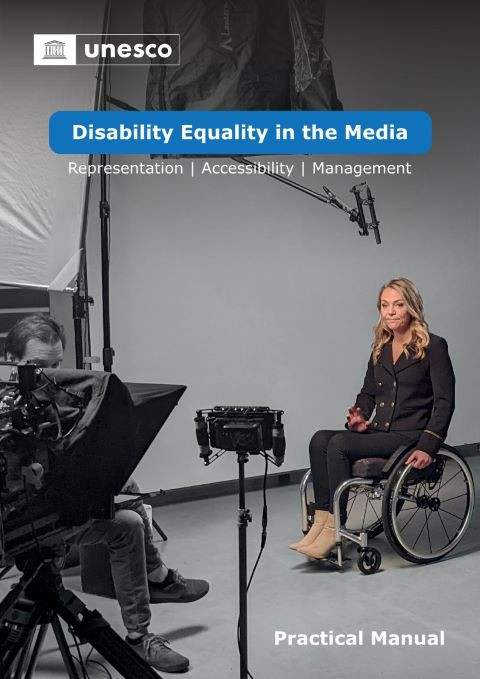 Disability Equality in the Media: Representation, Accessibility, Management; Practical Manual Year of publication: 2025 Corporate author: UNESCO Promoting Disability Equality in the Media Despite all the positive changes happening in newsrooms and leadership roles, diversity in the media remains a challenge.When certain groups are left out, the media fails to present all angles of a story, missing diverse perspectives and innovative ideas. Consequently, audiences do not receive the full picture, and promises of fair and accurate representation often fall short, affecting our perceptions of each other in society. It is the case of persons with disabilities, who make up 16 percent of the global population but remain one of the most marginalized groups. Media coverage frequently overlooks them, and when their stories are told, they are often framed through stereotypes. This not only creates barriers but also denies them their rights. To address this, media organizations should enhance editorial policies and representation, improve employment conditions, and foster a more inclusive environment for professionals with disabilities.The Practical Manual and Master Class provide hands-on advice to editorial teams on how to ensure fair and unbiased coverage of disability. For content producers, it details how to make media content and services accessible. To managers and decision makers, the material inspires change, demonstrating how disability equality can contribute to media industry growth and create new revenue streams.This work contributes to the implementation of the United Nations Convention on the Rights of Persons with Disabilities (2006) and promotes freedom of expression, media development, and access to information for the meaningful participation of persons with disabilities in public debate.
 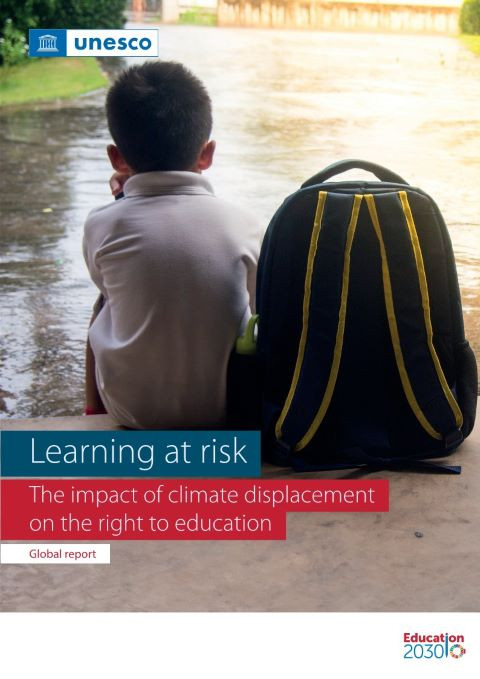 Learning at Risk: the Impact of Climate Displacement on the Right to Education; Global Report Year of publication: 2023 Corporate author: UNESCO How climate displacement the impacts the right to education The growing impacts of climate change and displacement on education can no longer be ignored. The increasing number of people displaced due to climate change faces unique vulnerabilities, especially in terms of access to education. This challenge is not only attributed to the often limited political and legal recognition of these displaced persons, but also stems from the global community’s lack of awareness of the diverse obstacles they encounter in seeking access to education. This global report, which concludes the “Initiative on the impact of climate change and displacement on the right to education”, aims to provide guidance to policy-makers worldwide on how to better respect, protect and fulfil the right to education of climate-displaced people. It provides an overview of climate-induced barriers to education, and global policy guidance on how to ensure the protection of the right to education of these populations. The report will inform UNESCO’s Initiative on “The evolving right to education within a lifelong learning perspective” which is investigating how the right to education, as enshrined in international normative instruments, could be strengthened to meet modern needs in our rapidly changing societies.
 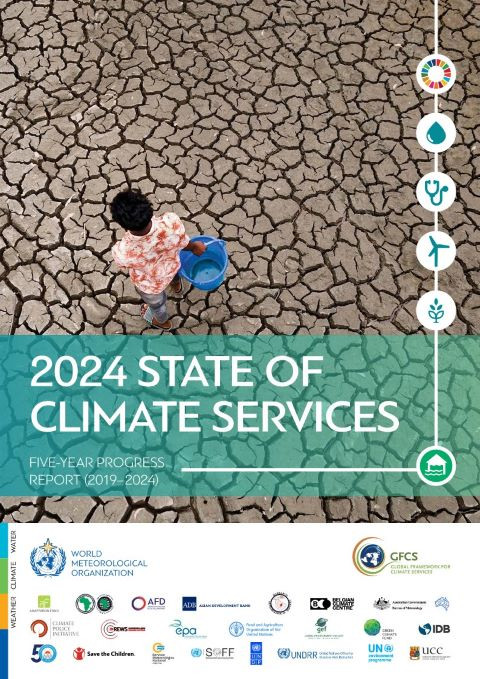 2024 State of Climate Services: Five-year Progress Report (2019–2024) Year of publication: 2024 Corporate author: World Meteorological Organization (WMO) In 2018, the Conference of the Parties serving as the meeting of the Parties to the Paris Agreement at the 24th Conference of the Parties to the United Nations Framework Convention on Climate Change (UNFCCC) called on WMO, through its Global Framework for Climate Services (GFCS), to regularly report on the state of climate services. WMO has issued annual reports on the state of climate services since 2019 in response to this United Nations request for more information on the adaptation needs of countries. The information helps countries, funding agencies and development partners to identify steps needed to address climate services gaps and needs, to inform more effective investment and to enhance adaptation and development outcomes. The 2024 edition of the report describes the current state of climate services while also examining and assessing the progress that has been made during the last five years. The report explores the climate policy response to the climate challenge and advancements made by Members across numerous value chain components. This year’s edition also includes an in-depth look at how a selection of 13 countries have successfully leveraged climate services to deliver socioeconomic benefits at a national, regional or global level. The analysis draws on 113 case studies that were developed over the last five years across multiple sectors, and examines the key success factors, including showcasing the value being created by climate services.
  SDG4 이행 촉진을 위한 지표 연구 Year of publication: 2025 Author: 박근영 | 주형미 | 문무경 | 오예진 | 류기락 | 조혜승 | 변종임 | Sunmi Ji | 이슬비 | 박기웅 | 안해정 | 서무계 Corporate author: Korean National Commission for UNESCO 지속가능발전목표(SDGs) 이행의 전환점을 맞아 국내 교육의 현황과 과제를 SDG4 지표를 통해 진단하고 향후 방향을 탐색한 연구 보고서 <목차> 발간사 ‘SDG4 이행 촉진을 위한 지표 연구’ 보고서를 발간하며 서론 현 시점의 SDG4 이행 수준 점검과 개선 방향 탐색의 당위성 SDG 4.1 공평하고 양질의 초·중등 교육 이수 보장에 대한 한국 현황 및 향후 과제 SDG 4.2 영유아 교육과 보육 지표 검토와 향후 과제 SDG 4.3 고등교육의 수월성과 형평성 논의 및 향후 과제 SDG 4.4 고용을 위한 스킬: SDG 4.4의 이행 현황과 과제 SDG 4.5 교육 형평성 실현을 위한 SDG 4.5 지표 검토와 이행 현황 분석 SDG 4.6 한국의 SDG 4.6 이행 현행과 과제: 성인 문해력 SDG 4.7 더불어 살기 위한 학습을 향하여: 세계시민교육 및 지속가능발전교육 이행 현황과 모니터링 개선 방안 탐색 SDG 4.a SDG 4.a.1과 한국 디지털 교육 이행 현황: 접근성, 사용도, 스킬 SDG 4.b 공적개발원조(ODA) 장학금 확대 SDG 4.c 자격을 갖춘 교사의 공급 관련 이행 현황 및 개선 방안 결론 엄격한 현실 인식에 기반한 다음 목표로의 이행 준비
  Preparing for the Next Pandemic Leveraging Social and Human Sciences for Crisis: Lessons from COVID-19 Year of publication: 2024 Author: Erwan Dianteill | N'Dri Thérèse Assié-Lumumba Corporate author: UNESCO The Social Sciences Response to COVID-19 Understanding the social impact of the COVID-19 pandemic is crucial for crafting effective and inclusive recovery policies. Prior to the pandemic, growing gaps in well-being were already undermining environmental sustainability, the social fabric, and progress worldwide. Fragile and unequal systems proved to be a pre-existing aggravating condition that fuelled the pandemic on a global scale. COVID-19 widened the gap between developed countries—which already had the financial means to respond to the crisis and had easy access to the vaccine—and the rest of humanity, resulting in devastating effects in the Global South, with more than 130 million people crossing the poverty line. Addressed to policymakers and scholars, this publication presents a comprehensive state of knowledge of the social science perspectives on the COVID-19 pandemic, covering a wide range of topics from its impact on mental health, education, climate change, economy, governance, migration, demography, digitalization, and more. The authors analyse the challenges faced by society during the pandemic and present actionable proposals for policymakers and practitioners. This publication is a reminder of the importance of Social Sciences and Humanities in addressing global challenges and provides a roadmap for future research and policy action to build more resilient societies.
  Green Technology Book 2022: Solutions for Climate Change Adaptation Year of publication: 2022 Corporate author: World Intellectual Property Organization WIPO’s new Green Technology Book puts innovation, technology and intellectual property at the forefront in the fight against climate change. This inaugural edition focuses on available solutions for climate-change adaptation, which aim to reduce vulnerability and increase resilience to climate impacts. The Green Technology Book comes at a time when we are all experiencing the effects of climate change. It concentrates on three areas where climate impacts are important: agriculture and forestry, water and coastal regions, and cities. A practical guide for those struggling with climate change firsthand, the book showcases 200 solutions for climate-change adaptation that are readily available or in the making. The findings build on the WIPO GREEN Technology Database, which connects green technology providers from around the world with those seeking environmentally friendly solutions. The Green Technology Book is a source of encouragement and inspiration, demonstrating the diversity of solutions available and ready to be scaled up.1. Climate change adaptation and technology2. Innovation and transfer of solutions3. Agriculture and forestry4. Water and coastal regions5. Cities6. Conclusion and recommendations