
Resources
Explore a wide range of valuable resources on GCED to deepen your understanding and enhance your research, advocacy, teaching, and learning.
8,348 Results found
 Resource Kit for Working With Families in Digital Citizenship Year of publication: 2024 Corporate author: Chile. Ministry of Education The role of families and guardians is essential to help children and adolescents learn to navigate the digital environment, taking advantage of its opportunities and minimizing its risks. For this reason, it is important that schools work with families and guardians to provide support in the digital environment, safeguarding the rights of children and adolescents and promoting their autonomy in a progressive way, through the development of digital citizenship. This kit is composed of: Capsules for parents/guardians that deal with issues related to the digital environment, Booklets “Recommendations for working with families on their mediating role in the use of mobile devices” and a training module “Digital Citizenship”.
  Podcast: Learning for the Future; Education for Sustainability Year of publication: 2024 Author: Alicia Santi | Maximiliano Molina Corporate author: Chile Foundation | Educarchile In this edition of the podcast: Learning for the Future, we develop, together with CEDEUS, the topic of "Education for Sustainability" and the multidimensional view of this phenomenon in educational establishments.
  Dad, Mom, They’re Harassing Me! Year of publication: 2024 Corporate author: Ministry of Education of Peru Do you notice that something is not right with your child's academic performance or behavior at school? You may be wondering: What is happening to him or her? Is there a problem affecting him or her? When faced with this situation, it is important to stop and reflect. Talk to your child about what is happening and ask him or her how he or she feels. Analyze together the possible causes of the problem. It is possible that your child is being bullied. If so, we offer you some guidelines for addressing the issue.
  A Tree to Bloom Year of publication: 2023 Corporate author: Center for Memory, Peace and Reconciliation The Camino a Casa room of the Memory, Peace and Reconciliation Center is committed to memory processes that recognize children as active subjects with the full capacity to reflect and dialogue about the recent past of violence and struggles for the construction of democracy and peace. This document is written under the metaphor of a tree: it is proposed that change and movement become a possibility for continued growth, therefore the role of adults is related to being the nutrients of the tree. In so far as their daily work can contribute to other axes, which would be the branches. And finally, children play the role of caretakers of memory - they are the tree - based on their authenticity and creativity.
  I Don’t Want… War! Year of publication: 2024 Corporate author: Amnesty International | Entreculturas | Mundo Cooperante | Save the Children On the occasion of the International Day of the Girl Child, which is commemorated on October 11, the organizations Amnesty International, Entreculturas, Mundo Cooperante and Save the Children, under the framework of the joint alliance NO QUIERO, denounce the serious consequences that armed conflicts have on girls and their integral development. Today, more than ever, it is urgent to address the effects of wars that prevent millions of girls from living a future free of violence, such as child and forced marriage or sexual violence.
  Podcast: Learning for the Future; Digital Citizenship; Tools to Prevent and Eradicate Cyberbullying Year of publication: 2022 Author: Alheli Arona | Patricio Romero Corporate author: Chile Foundation | Educarchile One of the dimensions of digital citizenship is protection and security. This includes digital harassment or cyberbullying, a problem that affected more than 22% of students in Chile during the months of October and December 2021, according to the Citizen Participation Survey “Together against cyberbullying and digital violence” applied by the Superintendency of Education. What can we, as teachers, management teams and education professionals, do to prevent and eradicate this type of violence and help our students?
 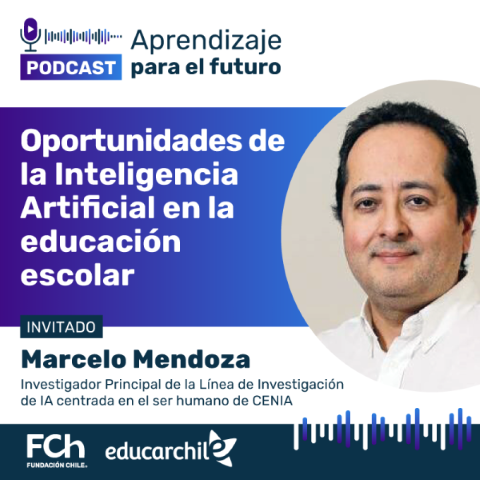 Podcast: Learning for the Future; Opportunities of Artificial Intelligence in School Education Year of publication: 2024 Author: Marcelo Mendoza Corporate author: Chile Foundation | Educarchile In this edition of the podcast: Learning for the Future, we spoke with Marcelo Mendoza, Principal Investigator of the Human-Centered AI Research Line at CENIA, with whom we developed the topic: Opportunities for Artificial Intelligence in school education. We also learned about the experience of the Bicentennial People Help People High School in Pilmaiquén using AI in various processes, together with teacher Cristóbal Morales.
  Citizenship and Digital Literacy Plan 2024 Year of publication: 2024 Corporate author: Chile. Ministerio Secretaría General de Gobierno | Chile. Ministerio de Educación The Ministry of the General Secretariat of the Government together with the Ministry of Education have launched the “Citizenship and Digital Literacy” Plan with the aim of addressing the growing challenges, opportunities and risks involved in the use of digital technologies in everyday life. The actions presented in the plan seek to strengthen the skills of citizens in general and also with a focus on educational communities, supported by the frameworks of digital citizenship and media, information and digital literacy. This plan includes three axes: 1.) Training for citizenship and digital literacy; 2.) Incorporation of media literacy and digital citizenship in the national school curriculum; and 3.) Resources and guidelines for strengthening citizenship and digital literacy.
  On Educating and Learning for Better Futures: A Journey Through Education in Times of Transformation Year of publication: 2024 Author: Renato Opertti The author of the book, Renato Opertti, president of the OEI Advisory Board, presents this publication divided into six chapters: On the global and the local, On Ibero-America, opportunities and pending challenges, On thinking, educating and learning, PISA findings and the resilience of educational systems, Regarding Meirieu and educators and On the new generations and the future of education in Uruguay.
 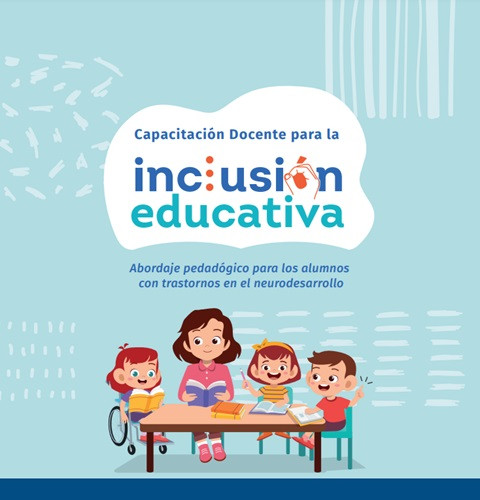 Teacher Training for Educational Inclusion: Pedagogical Approach for Students With Neurodevelopmental Disorders Year of publication: 2024 Corporate author: Paraguay. Ministry of Education and Science | Organization of Ibero-American States for Education, Science and Culture (OEI) The course aims to design teacher training for educational inclusion with a specific pedagogical approach for students with neurodevelopmental disorders. This course is divided into ten modules, addressing fundamental topics such as: basic notions and concepts of inclusive education, the main paradigms and approaches, the types of accessibility necessary to eliminate barriers to learning and student participation. It also deals with the application of the dimensions of inclusive education (policy, practice and culture) and the exploration of the principles of reasonable adjustments and Universal Design for Learning (UDL).