
Resources
Explore a wide range of valuable resources on GCED to deepen your understanding and enhance your research, advocacy, teaching, and learning.
8,348 Results found
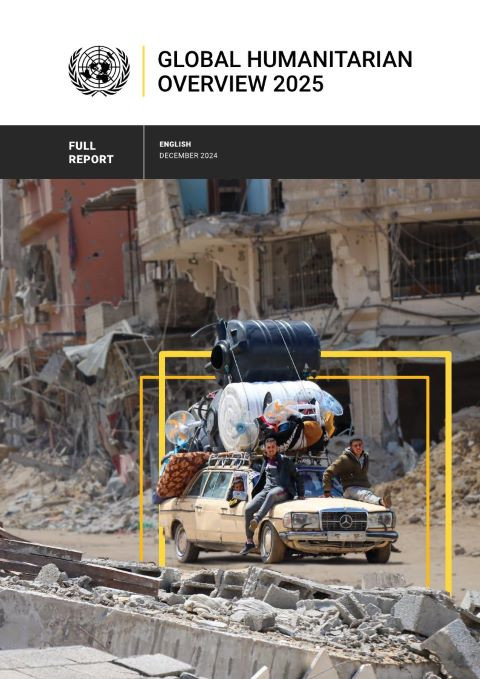 Global Humanitarian Overview 2025 Year of publication: 2024 Corporate author: UN. Office for the Coordination of Humanitarian Affairs (UN. OCHA) A snapshot of the global trends driving increased humanitarian needs in 2025, analysis from 2024 and an overview of where the system is delivering better to help those affected by crises. The Global Humanitarian Overview (GHO) is the world’s most comprehensive, authoritative and evidence-based assessment of humanitarian need. Through plans that prioritize those most in need, it aims to fight hunger, killer diseases, gender-based violence and displacement. The GHO 2025 presents an analysis of global crises and needs and the humanitarian plans to address them. In 2025, humanitarian partners are appealing for over US$47 billion to assist nearly 190 million people facing life-threatening and urgent needs across 72 countries. The report looks at response trends to strengthen, such as localization, cash, accountability and the changes needed to deliver aid effectively: security and funding. The GHO presents a collective picture of humanitarians' achievements and, conversely, what happens when humanitarians are unable to deliver aid. Explore the full report and interactive content through humanitarianaction.info.
 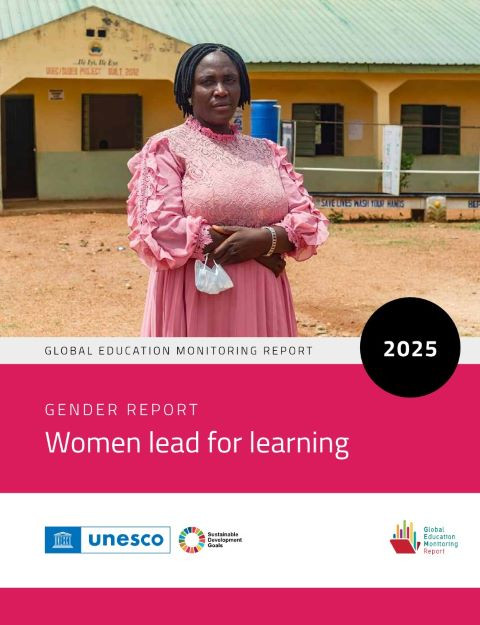 Global Education Monitoring Report 2025: Gender Report: Women Lead for Learning Year of publication: 2025 Corporate author: UNESCO Barriers to gender equality in education leadership positions can and need to be overcome This gender edition, which is part of the 2024/5 Global Education Monitoring Report on leadership in education, addresses the remaining obstacles for women in their efforts to climb up the leadership ladder in education. Although the teaching profession has been feminized, there are considerable gender gaps in school management, education administration and political leadership positions, a situation illuminated in detail with examples from all over the world. Gender disparity in education leadership is the result of entrenched stereotypes and biases – conscious or unconscious – on the one hand and on the other institutional processes or professional development mechanisms that are insufficiently supportive. Research suggests that women leaders display some differences relative to men in their approaches to education leadership, for example the extent to which they emphasize collaboration, build relationships with the community and retain a focus on learning. While there is little to suggest that these differences are universal or immutable, the evidence points to the fact that the lack of equitable opportunities translates to less talent and fewer diverse approaches to leadership, which are a loss to education systems – not to mention the obvious need for equity. This is particularly evident in parts of the world where gender disparities remain large. This gender edition calls on countries to take a much closer look at gender disparity in education leadership and adopt measures to raise awareness, improve mechanisms and strengthen capacities to address discrimination and bias and thus encourage women who aspire to such careers to pursue them. Gender disparity in education leadership is the result of entrenched stereotypes and biases – conscious or unconscious – on the one hand and on the other institutional processes or professional development mechanisms that are insufficiently supportive. Research suggests that women leaders display some differences relative to men in their approaches to education leadership, for example the extent to which they emphasize collaboration, build relationships with the community and retain a focus on learning. While there is little to suggest that these differences are universal or immutable, the evidence points to the fact that the lack of equitable opportunities translates to less talent and fewer diverse approaches to leadership, which are a loss to education systems – not to mention the obvious need for equity. This is particularly evident in parts of the world where gender disparities remain large. This gender edition calls on countries to take a much closer look at gender disparity in education leadership and adopt measures to raise awareness, improve mechanisms and strengthen capacities to address discrimination and bias and thus encourage women who aspire to such careers to pursue them.
  Think Tank Report: Empowering Communities through Citizenship Education and Lifelong Learning Year of publication: 2025 Corporate author: UNESCO Institute for Lifelong Learning (UIL) This short, explorator y repor t from the UNESCO Institute for Lifelong Learning (UIL) is the outcome of ‘Placing citizenship education within a lifelong learning perspective: From research to action’, a think tank meeting held in Hamburg in 2023. The meeting brought together experts from international organizations and academia and was organized by UIL in collaboration with the Asia-Pacific Centre of Education for International Understanding. The report reflects the inputs of participants while also drawing on the proposals of the International Commission on the Futures of Education (ICFE, 2021); the findings of the Fifth Global Report on Adult Learning and Education (GRALE 5) (UIL, 2022a); the Marrakech Framework for Action (UIL, 2022b); and the outcomes of the United Nations Transforming Education Summit of September 2022 (UN, 2023a; UN 2023b); as well as UNESCO’s Revised Recommendation concerning Education for International Understanding, Co-operation and Peace (UNESCO, 2023). It makes a case for putting citizenship education, interpreted not as a means of reproducing the status quo but as a catalyst for civic and social empowerment, at the heart of efforts to create more equitable, tolerant and just societies for all. It argues that citizenship, so construed, should be woven into the fabric of education, throughout and across the life course, recognizing its role in narrowing social and economic inequalities, overcoming social fragmentation, addressing the climate crisis and tackling the backlash against human rights and gender equality. This report calls for citizenship education and lifelong learning to be core pillars of a systems-level transformation in education, and provides recommendations for policy-makers, national and local governments, educators and civil society organizations to make citizenship education a priority in their policies and practices.
 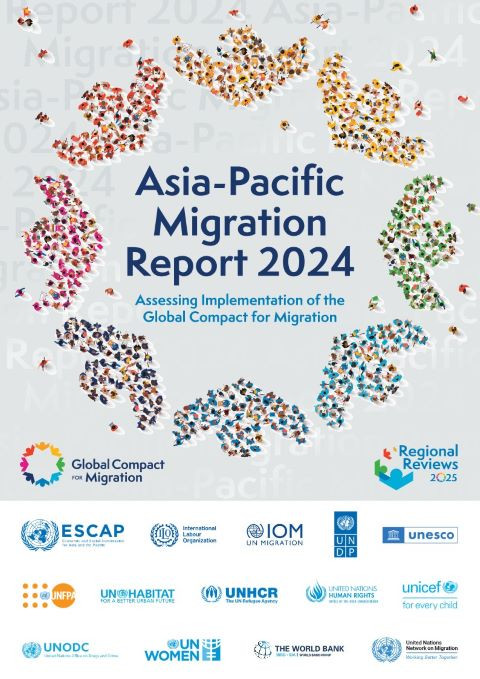 Asia-Pacific Migration Report 2024: Assessing Implementation of the Global Compact for Migration Year of publication: 2024 Corporate author: UN. Economic and Social Commission for Asia and the Pacific (UN. ESCAP) | International Labour Organization (ILO) | International Organization for Migration (IOM) | UN. Office of the United Nations High Commissioner for Human Rights (UN. OHCHR) | United Nations Centre for Human Settlement Programme (UN Habitat) | United Nations Entity for Gender Equality and the Empowerment of Women (UN Women) | United Nations Development Programme (UNDP) | UNESCO | UN. Office of the United Nations High Commissioner for Refugees (UNHCR) | UN. Office on Drugs and Crime (UNODC) | World Bank This report aims to assess the state of GCM implementation in the region, its progress and its challenges since the first Asia-Pacific Regional Review of Implementation of the Global Compact for Migration in 2021, in which a Chair’s summary was adopted. Chapters 2 to 5 each consider clusters of GCM objectives, as presented in General Assembly resolution 73/326 and following the same groupings as in the Asia-Pacific Migration Report (APMR) 2020. These chapters open with a summary of the discussions from the first regional review of the GCM, held in 2021, drawing from the Chair’s summary. Chapter 6 provides overarching recommendations to support and accelerate GCM implementation in Asia and the Pacific. At the end of the report are annexes with information on the GCM objectives and guiding principles, references to migration in Voluntary National Reviews to the High-Level Political Forum on Sustainable Development, and GCM pledges at the level of the State or City, Municipality and Local Authority.
  Fostering Women's Leadership Year of publication: 2024 Author: Mariagrazia Squicciarini | Anna Rita Manca | Garance Sarlat Corporate author: UNESCO No (leadership) share no gain (for societies and economies)! Leveraging UNESCO’s unique Gender-Based Resilience Framework, this report explores the role of women in leadership positions in both decision-making and high-tech, including in artificial intelligence-related innovations. It further highlights progress towards the G20 Brisbane Target, aimed to accelerate progress on gender equality by reducing the gender gap in labour market participation rates by 25% by 2025. Women remain underrepresented in decision-making, holding only about 26% of seats in national parliaments worldwide on average. In the world of work, female labour participation continues to lag behind men’s, at 47% for women against 72% for men on average. Despite progress by G20 members towards the Brisbane Target, a 2% average gap in absolute terms remained to be filled in 2022. In the high-tech world, women make up only 30% of AI professionals, and even less of leaders. Female inventors in AI account for about 37% of patents filed in 2022-23.
  Global Citizenship Education in Australian Elementary Schools(Journal of Ethics; Vol. 137, No 1) Year of publication: 2022 Author: 한은영 | 추병완 Corporate author: 한국윤리학회 Global citizens think and act about the world as a universal community of borderless members who care for each other and are dedicated to taking care of the earth. Considering these visions and moral ideals, global citizenship education is an important goal and content of moral education. However, at present, we do not have a framework for dealing with global citizenship education in moral education. In this regard, Australia is the country we should pay attention to. Australia declared a national statement for global citizenship education in 2002. Since 2009, it has been reflected in the Australian curriculum. This article examines the historical development of global citizenship education in Australia, analyzes the current systems of global citizenship education system in primary schools, and investigates what Australia's approach to global citizenship education suggests for elementary moral education in Korea. In conclusion, we proposed three things. First, we must develop and apply a framework for the practice of global civic education in moral education. Second, we should emphasize the aspects of knowledge and understanding, skills and processing, behavior and participation as well as values and attitudes. Third, we must seek a balance between moderate global citizenship education and critical global citizenship education.
  UNESCO Associated Schools Network (ASPnet) Strategic Framework for Action 2025-2029: Building Peaceful and Sustainable Futures through Transformative Education Year of publication: 2025 Corporate author: UNESCO The ASPnet Strategic Framework explains how UNESCO's pioneering Associated Schools Network (ASPnet) contributes to the achievement of UNESCO’s strategic objectives for Education. This Framework outlines the key thematic areas, innovative educational approaches, and the anticipated outcomes of this dynamic community of educational innovators. It also delineates the roles and responsibilities of its primary stakeholders. The three thematic areas are : "Peace through Global Citizenship Education," "Education for Sustainable Development," and "Intercultural Learning and Appreciation of Cultural Diversity and Heritage." Through initiatives in these areas, ASPnet members inspire and empower teachers, principals, students, families, education professionals, and policymakers to champion transformative education. This prepares learners to become responsible global citizens in an ever-evolving and complex world. Ultimately, the goal is for all participants in this ecosystem to learn from one another and promote international understanding.
  The “Hate Speech” Policies of Major Platforms during the COVID-19 Pandemic Year of publication: 2021 Corporate author: UNESCO Montevideo This document reports an increase in so-called “hate speech” posts on Facebook, Twitter, and YouTube after the onset of the COVID-19 pandemic. Although dissimilar, such an increase can be observed in the transparency reports of the different platforms and the surge in content moderation since March 2020.During the same period—as a result of the lockdown measures adopted in most countries around the world—platforms increased the use of AI tools for content moderation. Therefore, we can’t fully say whether the interannual growth is linked to increased posts or changes in monitoring systems.
 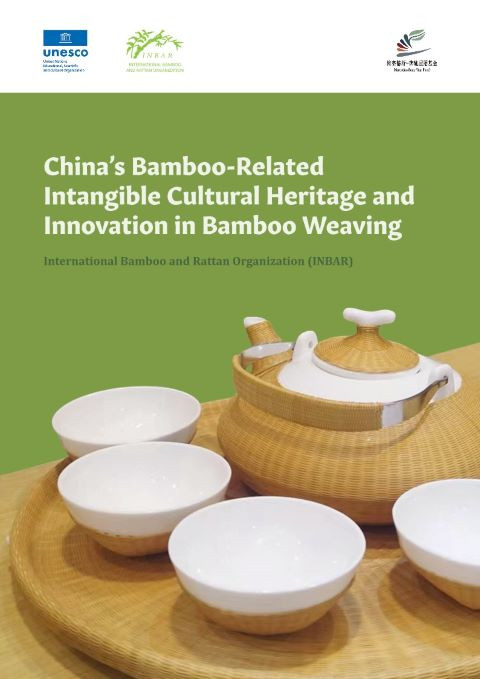 China’s Bamboo-Related Intangible Cultural Heritage and Innovation in Bamboo Weaving Year of publication: 2024 Author: Li Yanxia | Liu Chenge | Wang Renfei Corporate author: UNESCO Beijing | International Bamboo and Rattan Organization (INBAR) In the writing and editing of China’s Bamboo-Related Intangible Cultural Heritage and Innovation in Bamboo Weaving (hereinafter called the “Booklet”), we have focused on introducing Chinese bamboo weaving to allow readers to comprehend relevant knowledge about the craft, fully appreciate its charm, and inspire the passing down and innovation of bamboo-weaving techniques.The Booklet includes six chapters focusing on intangible cultural heritage, China’s national bamboo related intangible cultural heritage elements, the development of Chinese bamboo weaving, analysis of bamboo-weaving patterns, modern designs and product innovations, and a tutorial series on bamboo-woven products. The first chapter introduces the definition of global and Chineseintangible cultural heritage. The second chapter systematically outlines the history, model for classification and contemporary development status of China’s traditional bamboo crafts. The third chapter presents an in-depth analysis of the development of bamboo-weaving skills. The fourth chapter features 12 flat weaving patterns recorded by the project team in Chishui City, Guizhou Province, where “China Danxia, a World Heritage Site, is located. It provides a detailed exploration of pattern characteristics and weaving methods, accompanied by picture and video tutorials for readers to practice by hands. The fifth chapter comprehensively elaborates on the innovative design system of bamboo-woven products and showcases real-world cases through personal involvement in designing and collecting innovative bamboo-woven products from both domestic and international sources. Finally, the sixth chapter explains the production methods of common bamboo-woven products to readers through video tutorials.
  World Trends in Freedom of Expression and Media Development: Special Digital Focus 2015 Year of publication: 2017 Author: Iginio Gagliardone | Danit Gal | Thiago Alves Pinto | Gabriela Martinez Sainz Corporate author: UNESCO Given the success of the first World Trends report and the need for additional research, UNESCO led a second edition in the series, focusing in depth on selected digital-era trends. World Trends in Freedom of Expression and Media Development – Special Digital Focus 2015 provides a substantive analysis of key areas identified in the first World Trends as particularly relevant for further study, namely the issues of: online hate speech, protection of journalism sources, and the role of internet intermediaries in fostering freedom of expression, as well as continued focus on the safety of journalists. It also builds on issues raised in the 2015 UNESCO study titled Keystones to foster inclusive Knowledge Societies.