
News
Follow the newest trends and news in GCED.
1,676 Results found
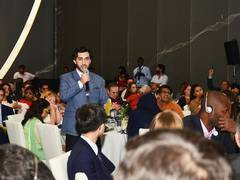 Education policy-makers and youth agree on the way forward at the first International Conference on the Prevention of Violent Extremism through Education 30 September 2016 Over 200 senior education policy-makers, experts, as well as youth advocates in the field, from close to 70 countries came together in New Delhi, India, from 19 to 20 September, for the first “UNESCO International Conference on the Prevention of Violent Extremism through Education: Taking Action”.Participants, concerned by the global rise in attacks perpetrated by violent extremist groups, came together to seek a common understanding about how education systems can appropriately and effectively take action.For many participants, it requires addressing controversial issues in a responsible way, in and out of school through formal and non-formal education, and ensuring that education systems, as a whole, are mobilized and equipped to face the challenge.“Young people are […] the main targets of recruitment strategies of extremist groups and fall victim to its violence”, said Mr Gwang-Jo Kim, the Director of the UNESCO Bangkok Office, speaking on behalf of The UNESCO Director–General. “If we rely exclusively on hard power to find solutions, we will not tackle the many underlying conditions that breed violent extremism and drive youth to join violent extremist groups.” “We also risk losing a generation of youth to despair and disengagement.” Priority areas of actionThe Conference, co-organized by UNESCO Headquarters and the UNESCO Mahatma Gandhi Institute of Education for Peace and Sustainable Development (MGIEP), generated concrete ideas on the way forward by identifying priority areas of work relating to educational content, teachers, learning environments and the need for more and better partnerships.These recommendations underlined the need to invest in prevention efforts, understanding that it requires vision, a long term and sustained commitment to change, as well as strong leadership at every level of education systems until results can be seen.More specifically, participants emphasized the importance of removing content which fuels anger, stereotypes and prejudice from educational materials. This was deemed critical to provide learners with a safe space for open dialogue on sensitive issues in schools.The importance of supporting teachers - as educators, change agents and mediators - was also highlighted in order to ensure that schools and the broader community work with a common goal. This implies investing in relevant pre- and in-service training, as well as appropriate psycho-social support to teachers who are victims of violent extremism.Because schools can unfortunately also be places where violence is learned, education personnel need to implement and enforce inclusive educational policies that allow girls and boys alike to feel safe, empowered and confident that they belong to the learning community. Inclusion is also fundamental to nurture solidarity among learners and reinforce their resilience against violent extremist messaging.Finally, participants underscored the educational value of effective partnerships with other education stakeholders and sectors, such as youth groups, law enforcement officers committed to prevention work, social workers, the media, faith-based organizations, and families.An important feature of the event was the Talking Across Generations on Education (TAGe) session which had 50 youth delegates from across the world engage in a free dialogue on the prevention of violent extremism. The lively discussion, which was moderated by acclaimed educator, author and activist Irshad Manji, concluded with the launch of MGIEP’s Knowledge Commons, an online dialogue-driven platform. Follow-up activitiesThe Conference concluded with a commitment to follow-up activities:UNESCO’s Guide for Policy-Makers on the Prevention of Violent Extremism through Education will be finalized on the basis of the suggestions of the Conference and made available in English and French by the end of the year with other languages to follow.UNESCO will ensure that Conference participants stay connected and networked and will further develop its Online Clearinghouse on Global Citizenship Education with educational materials that support the prevention of violent extremism.Capacity building activities, in cooperation with key partners will also be launched to equip policy-makers, teachers and educators with appropriate tools that can support effective prevention efforts.Finally, MGIEP committed to facilitating the global dialogue on critical issues and recommended the development of digital learning tools and platforms to serve as safe spaces for dialogue. Highlighting the need to mainstream youth voices in policy-making, the institute will support the development of a youth-led guide to PVE.The conference was organized with the support of the OIF, the Kingdom of Saudi Arabia, provided by the Saudi Delegation to UNESCO and the U.S. Department of State.
 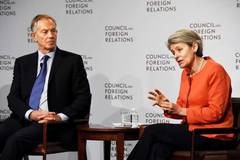 Open Exchange on Educating Against Extremism with Tony Blair 27 September 2016 In an open dialogue hosted by the Council on Foreign Relations in New York on 22 September 2016, former British Prime Minister Tony Blair and UNESCO Director-General Irina Bokova exchanged on the theme of “Extremism, Education and Global Leadership.”Mr Blair commended UNESCO’s approach to global citizenship that he described as “extremely relevant and the most beneficial in the UN system.”The need to rethink education in a globalized world ran through the discussion. Mr Blair stressed the need for changing education systems so that they do not lead to “closed minded views of the world.” He shared his ambition to rally political leaders around a global commitment on education to “weed out religious prejudice and promote religious tolerance”. New skills must be nurtured to build resilience and global competences, including for employment: “intercultural skills, critical thinking, knowledge of human rights, of heritage and history have been far too neglected,” said the Director-General. This is beginning to change, she said, as governments see the transformative power of education, citing the cases of Iraq where UNESCO will be reviewing national curricula to Afghanistan where a new fund for culture will also have an explicit educational dimension, through the promotion of culture, heritage and history as forces for identity, reconciliation and resilience. “All this is about changing the narrative,” said Ms Bokova. ”There is not one path towards radicalization and not one response. Critical thinking is key, to evaluate information, relate and share with other.” Both noted the role of critical thinking in relationship to social media, and urged for support to encourage youth civic engagement. “We need to give this issue a far greater profile otherwise we will always be dealing with the symptoms rather than the causes,” said Mr Blair. The former British Prime Minister founded the Tony Blair Faith Foundation in 2008. It develops projects and tools to prevent religious extremism through building the capacity of educators and enhancing collaboration between communities.
 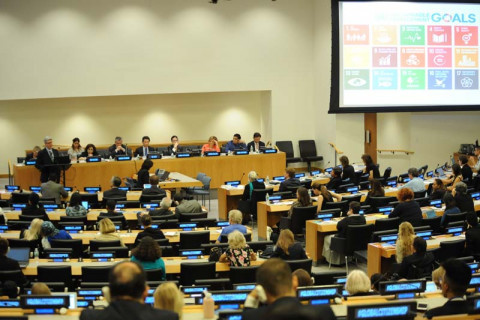 2016 UN GCED Seminar showed Strong Support for GCED as part of the 2030 Agenda 23 September 2016 On 9 September 2016, APCEIU, sponsored by Ministry of Education of the Republic of Korea, together with the Permanent Missions to the United Nations of the Republic of Korea, Croatia, Andorra, and Jordan, UN agencies including the UNESCO Liaison Office in New York, UN Global Education First Initiative (GEFI) as well as other partner institutions, co-organized the 2016 UN Global Citizenship Education Seminar at the United Nations (UN) Headquarters in New York. The Seminar attracted important stakeholders on GCED at the UN, including members of permanent missions, representatives from Civil Society Organizations (CSO), students and teachers alike, sparking the discussion on GCED’s role in realizing the Sustainable Development Goals and in the prevention of violent extremism. The Seminar capitalizes on the inclusion of GCED in the Sustainable Development Goals as Target 4.7 in 2015, and the global action done ever since. Permanent missions of each country showcased the support that various governments provide to the promotion of GCED, and UN agencies, as well as GCED-supporting organizations, shared their experiences in engaging stakeholders across all levels and recommended strategies on how to align these efforts to increase impact and to ensure inclusivity. Ambassador Oh Joon, Permanent Representative of the Republic of Korea to the United Nations, welcomed the participants to the Seminar by highlighting the role of GCED in current global challenges. “GCED is now becoming a key fundamental solution for a variety of problems we face in a globalized world.” He further mentioned that GCED reflects the changing role of education, in that, “In the past, education has often been quite regarded as a means of securing jobs. GCED offers a new direction for learning…it teaches mutual understanding and respect for diversity, it educates people as global citizens who know how to live together and become part of addressing global challenges.” Ambassador Oh Joon highlighted the role of the Republic of Korea and of APCEIU in promoting GCED. He said “The Republic of Korea stands ready to promote GCED in partnership with the United Nations and civil society”, additionally citing APCEIU’s role in developing curriculum on GCED among other plans to engage schools in implementing this global agenda. For the keynote speech, Fernando Reimers, Professor at the Graduate School of Education of Harvard University, strongly resonated the message of GCED’s importance not only as the international community faces challenges and threats that include violent extremism, but in reinstating the value of school as an institution that promotes peace. Following the keynote speech, Ambassador Hahn Choong-hee, Deputy Permanent Representative of the Republic of Korea to the United Nations, handled the moderation of the panel discussion. The panel discussion which included presentations from UN agencies and GCED-implementing institutions showed insights on current activities on GCED, as well as its challenges, and ways in moving forward. Utak Chung, Director of APCEIU, explained the various activities of the Centre in support of GCED. Through its 4 programmes areas-capacity-building workshop for educators and teachers, research and curriculum development, material and information dissemination, establishment of partnerships and networks-APCEIU has been engaging with stakeholders in defining GCED as the cornerstone of twenty-first century education. He explained that the concept of GCED is clear: it is about promoting a sense of belonging and solidarity, and that it promotes universal values. He further encouraged stakeholders to support global efforts to join hands of stakeholders by suggesting initiatives including the establishment of a global network for GCED, and a UN Decade for GCED to monitor and support global action for this agenda. The panel discussion included presentations from representatives of UN agencies based in New York including Marie Paule Roudil, Director of UNESCO Liaison Office in New York, and Ravi Karkara, Senior Advisor for Strategic Partnerships and Advocacy of UN Women. Georgina Galanis from Coalition for Global Citizenship 2030 presented the work of CSOs on GCED, and Lyndal Rowlands from InterPress Service presented the important role of media in engaging with the public through imagery. Representing the youth and the Youth Advocacy Group of GEFI, Esther McFarlane highlighted the work that youth has been doing through GEFI and APCEIU, and its plans in the future. The UN Global Citizenship Education Seminar will be done next year as well, and is expected to further look into the implementation of specific action plans towards its realization until 2030. URL:2016 UN GCED Seminar showed Strong Support for GCED as part of the 2030 Agenda > APCEIU News - APCEIU (unescoapceiu.org)
 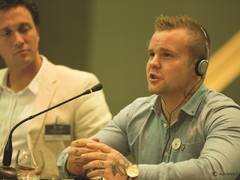 Kimmie Åhlén - from White Power extremist to youth worker educator 21 September 2016 Kimmie Åhlén is the best man for his job, teaching youth workers how to interact with young people vulnerable to being influenced by violent extremism.That’s because when he was just 12 he joined the Swedish White Power movement and became a leading figure in the Nationalsocialistisk Front for nine years.Now he works with the Brottsförebyggande Centrum (Crime Prevention Centre) in Värmland, Sweden sharing his unique experience and knowledge about extremist groups and what attracts young people to them, to develop the preventive work of youth workers, politicians and other officials.Mr Åhlén was an invited speaker at the UNESCO-MGIEP Preventing Violent Extremism through Education conference held in New Delhi from September 19 – 20 where he shared his knowledge at a session entitled Paths to radicalization and drivers of violent extremism. Critical role of school and parentsHe spoke to UNESCO of his startling life-change and the crucial role of school, parents and open communication to prevent violent extremism.“I grew up in a small village of 3000 people with one factory everyone depended on for work. Very traditional. Very high unemployment. You could say it was a typical poor small town but burning with frustration and anger. My father was a racist who hated immigrants, gay people, anyone different. From the first time I can remember he would speak to me about immigrants as rapist and thieves and murderers. I was six years old. I believed him.”While in junior school he was diagnosed with Attention Deficit Disorder which made him the target of relentless bullying.“I had no friends, no identity, no belief system. I turned in on myself and my fantasies,” he said.All that changed when he discovered a discarded CD and began to listen to the music of the ‘Viking rock’ band Ultima Thule, who have been associated with a White Power following.“The lyrics told me I was a Viking and I was descended from Kings and Gods. I started to feel included for the first time. I had an alternative identity, I believed I was a patriot. Also the skinheads were the cool popular guys with shaved heads and bomber jackets. I wanted to be cool and popular as well.”At 12 years old his life began to spiral out of control when he became a skinhead and began to drink heavily. When a close friend killed himself he further blocked out his feelings with drugs and crime.While undergoing rehabilitation in 2010 a friend suggested he learned to box as a way to deal with his anger. The right teacher at the right time could have changed everything“The gym was full of immigrants and I was paired with an Iranian guy. I said I didn’t want him as a partner but in the end I started to learn to box with him. He would talk to me about his wife and kids, about leaving Iran and coming to Sweden. He would tell me details about his kids – their favourite colours. He never stopped talking! Then I started to talk as well and we soon became friends and I realised that my father was wrong. This immigrant wasn’t a rapist or a murderer or a thief. He wanted a good life with his family and friends which is exactly what I wanted.”He decided to put his experience to use as a trainer of youth workers who work with young people exactly like he used to be.He is convinced that if there had been a teacher to talk to, to make him reflect on his ideas, to build his critical thinking, he might have not have taken the extremist path.“We need to talk to each other about subjects like the Holocaust and those who deny it, about homophobia,” he said. “Let people meet each other, let a Swedish Nazi meet a Somalian refugee. Listen to him or her. Afterwards it is not so easy to maintain your racism.”
 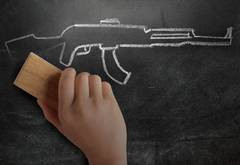 UNESCO international conference seeks common understanding on educational measures to prevent violent extremism 19 September 2016 Violent extremists are made, not born. But why do people engage in such actions and what can education do to prevent them?This is the subject of high-level discussions to take place at the first International Conference on the Prevention of Violent Extremism through Education: Taking Action (PVE-E), co-organized by UNESCO and the UNESCO Mahatma Gandhi Institute of Education for Peace and Sustainable Development (MGIEP), on 19-20 September 2016, in New Delhi, India.Over 150 participants from around 70 countries including Ministers of Education, senior education policy-makers, experts and youth activists in the field, will come together to build a common understanding about how education systems can appropriately and effectively prevent violent extremism.At the event UNESCO’s Teacher’s Guide on the Prevention of Violent Extremismwill be presented. The first draft of the Policy Guide on the Prevention of Violent Extremism through Education, developed by UNESCO, will also be discussed, providing participants with the opportunity to share comments during the Conference.At the conference, UNESCO MGIEP will also be hosting its first Talking Across Generations on Education (TAGeDelhi) in which 50 youth delegates from around 30 countries will engage in a forthright dialogue on the prevention of violent extremism through education without the artificial barriers of podia. The session will be moderated by acclaimed author, journalist and educator Irshad Manji and the objective will be to mainstream youth voices to the highest level of policy-making.Daily discussions can be followed on Twitter and Facebook with outcomes of the discussions and videos posted on the Conference website.
 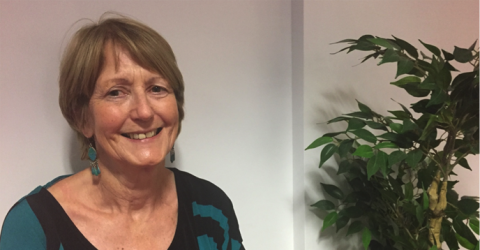 Lynn Davies: Can education prevent violent extremism? 19 September 2016 Hard power is not enough to counter violent extremism based on hatred and ignorance. How can education help? What should we do to build resilience to propaganda among youth around the globe? How should schools address the issue? Should teachers have a surveillance role? These are some of the questions raised in this opinion piece by Lynn Davies, Emeritus Professor of International Education at the University of Birmingham.Preventing Violent Extremism through Education is the theme of the UNESCO International Conference organized with the Mahatma Gandhi Institute of Education for Peace and Sustainable Development, in New Delhi, India, on 19 and 20 September 2016.Whether education can help in the global race to prevent violent extremism (PVE) is not a straightforward matter. We start from the fact that there is no one internationally agreed definition of extremism, and that it takes many different shapes – religious, far right, neo-Nazi, far left, animal rights and even climate change activists. What is more, within these movements there are many different and ever changing variants locally, with equally shifting methods and targets.A further complication is that there is no one route into radicalization, so single target that we can isolate and provide an antidote. Poverty might be a factor, for some, in a country like Somalia, but not all poor people become extremists. Foreign policy cannot really be influenced, nor can the major faultlines of sectarianism. Educational institutions cannot be held as major players in counter-terror.Nonetheless, those of us working in the PVE field have to believe that education can do something. It does not have military power, or negotatiating power; but it does have some power over the spread or containment of ideas. It can help build resilience to propaganda, to the enticements of extremist groups, to the myths and bold narratives which can be so attractive. How is resilience built?The first reminder is that you do not build resilience through harsh discipline and authoritarianism. A lack of critical thinking and unquestioning obedience to rules can all feed the extremist mindset and the acceptance of violence as a solution to a problem. Nor do you build resilience through ‘character’ education: many extremists will demonstrate courage, a sense of justice, grit, determination and all the attributes that are promoted in the current fashion for character and virtue education. It is how you use your attributes that counts. But conversely, you do not build resilience by some bland form of peace education, preaching love and inner harmony. Fundamentalist movements will often stress intense group love, or love of a God.Instead, the perhaps counter-intuitive strategy is to create tension and positive conflict. To avoid the black and white, binary views of extremists, young people must be exposed to clashes of perspectives, to dissent, to the constant possibility of alternatives (which is the essence of a democracy). The best virtue is a degree of cynicism. Rather than just ‘respecting diversity’, they must be given skills and frameworks to make judgments on what to tolerate and what not to tolerate in their social and cultural world. Building confidenceIn Connectfutures, we bring youth together across a range of backgrounds and teach skills of debating, arguing and predicting others’ arguments.In a very short time, we find we can teach them media skills and the use of social media platforms such as Twitter, so that they can face a TV camera and mount an argument on a controversial issue, or use social media for campaigning. Underpinning this process is building confidence – particularly in young people who are not used to speaking out or even telling their stories. We foster joint problem solving with the police, so both sides understand the value of community engagement in the fight against violent extremism. It’s about stretching horizons and the possibilities for interaction.Being exposed to different histories is also important – from our research with former extremists, we have developed a video of them talking about their experiences, why they joined and why they left. The research found how their thinking became more and more narrow within their movements and then more complex again once they started to question the ideologies. Value pluralismSimilarly, expert psychologists at the University of Cambridge have developed programmes in ‘integrative complexity’ – enabling students to embrace value pluralism, learning how to recognize and validate a wider range of viewpoints in themselves and others. In countries as far apart as Scotland and Pakistan, students are introduced to ‘hot topics’, and a range of views generated in safe spaces for discussion. Rather than focusing on the content of ideology or beliefs, the focus is on the structure and greater complexity of thinking. Participants can see religious and secular, for example, not as enemies or choices to be made, but as both able to be protected and to co-exist. Knowledge of rightsBut value pluralism does not mean simply accepting all values as equal. PVE work needs to be set within a framework of understanding of rights. Human rights are what are called ‘enabling constraints’: they enable certain freedoms – of life, religion, speech, dignity – while ensuring that these rights are upheld through the constraining rule of law. A lens of rights enables young people to discuss controversial topics such as female genital mutilation or gay marriage and question who has the right to decide, and who needs to be protected because of the right to certain freedoms. Knowledge of rights (and the difference between absolute, qualified and limited rights) helps people decide their inner core of principles while understanding how others might see the world differently. Students can resist extremist messaging by understanding how universal rights mean that violence, rape, torture, kidnapping cannot be justified just because someone has been designated an enemy. Networks to counter extremismAfter learning about argument, gaining confidence and understanding rights comes the fourth aspect of a preventative role, which is harnessing the power of communication networks. Young people across the world are hugely networked – whether just chatting or posting pictures of themselves, or searching for information. The question is whether educational institutions can capitalize on this facility, to encourage networks of young people to counter violence.There are a growing number of international networks for young people to counter extremism, for example ISD’s (Institute for Strategic Dialogue) YouthCan (Youth Civil Activism Network) which mounts innovation labs where campaigns are generated. These range from satirical videos about eating halal meat to digital comics to raise awareness of rights and extremism in Africa. There are international learning platforms such as E-twinning, which are considering how to use this for PVE. UReport is a growing movement whereby young people use SMS messaging to research their communities and mount campaigns against all forms of injustice. This started in Uganda, but is now an international force. Young people are also generating their own materials, for example films on propaganda through the organization Digital Disruption, such as the satirical The Vampire Conspiracy. Also delighting in humour is the Indonesian series Burka Avenger, where the super heroine helps fight injustice, and engages in bold actions such as saving girls’ schools. But if students want to start a network for themselves, there are a number of skills needed – how to design a campaign, how to lobby, how to manage finance, how to build alliances, what the legal restrictions might be and how to ensure sustainability in a highly fluid young population. All this should be part of a good political or global citizenship education. Bulwarks against propagandaThus a really preventative school knows to address and combine those four aspects – value pluralism, confidence, rights and networks for social action. Simply building confidence and expanding networks could be (and is) used by extremist groups to gain recruits. Conversely, simply opening up ideas without giving extra confidence, skills and mechanisms to challenge inequity leads to frustration and can be counter-productive. Knowing what to do with a grievance is part of learning how to create change, not just to protest. And engaging in social action might be some bulwark against the adventures and excitement promised by jihadist groups. A final note of caution relates to the possible role of the teacher in identifying those individuals ‘at risk’. Should teachers have a surveillance role? In countries such as United Kingdom, this is part of the school’s duty, but has led to criticism resulting from some instances of misunderstanding and overreaction, and stigmatizing of Muslim communities.The reality is that there is no one path into extremism, no one set of signs of vulnerability, no one community especially hazardous. Increased arguing, dressing in a particular way, being active on social media or becoming more religious or political might be typical of any teenager searching for their identity. Nonetheless, there are signals which put together could be cause for alarm, for example when students express polarizing, paranoid or hateful views, when they are becoming isolated, when they claim they are being victimized, when they reject the rules of authority based on ideological grounds, when they spend time on the computer looking at extremist groups or posting pictures of fighters on Twitter and when they start to support violence for a cause.Unless the signs are immediately alarming (if a student is known to be taking part in extremist group activities, engaging in recruitment of others, planning violent acts, learning about weapons or planning a trip to a conflict zone), the key strategy is discussion with colleagues, parents, governors and community leaders as well as the students themselves before any sudden referral to authorities. Schools and colleges need to have processes in place for logging of concerns and also awareness of referral procedures locally and nationally. But schools cannot always tell – and we have examples of young people going off to fight in Syria where neither school nor parents had any warning. All that schools and youth projects can do is provide the safeguarding and resilience mechanisms outlined above and hope that this generation will not join up to violent extremism for themselves nor become part of a community that supports violence in the name of a cause. Lynn Davies* * *Lynn Davies is Emeritus Professor of International Education at the University of Birmingham, United Kingdom. Her interests are in education and conflict, extremism and education in fragile contexts, and she has done research and consultancy in conflict-affected states such as Afghanistan, Bosnia, Angola and Sri Lanka. Her UK work includes evaluating programmes to counter extremism and radicalisation, a project interviewing former extremists about their backgrounds, and training young people and teachers in preventing violent extremism. In October 2014 Lynn was awarded the Sir Brian Urquhart award for Distinguished Service to the United Nations and its goals by a UK citizen.
 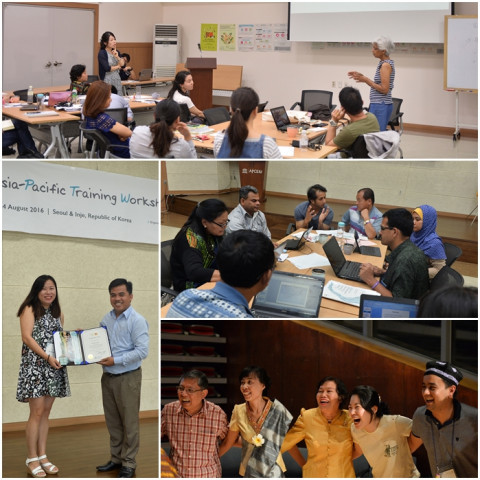 Sharing value of co-existence with educators from Asia-Pacific 13 September 2016 “The fact that every human being and the nature is interconnected, we need to learn that in order to live for the better world together.” The 16th Asia-Pacific Training Workshop was held from 16 to 24 August in Seoul and Inje, Korea with the topic of ‘Global Citizenship Education: Nurturing Global Citizens’. This year, the workshop was participated by 26 passionate educators from 21 different countries in Asia-Pacific region such as Cambodia, Myanmar and Tonga. In his opening remarks, Dr. Utak Chung, director of APCEIU said that he sincerely welcomes all the participants to flagship workshop program of APCEIU which has been contributing to disemission of EIU/GCED. In addition, he emphasized that GCED should be disseminated even broader as a solution to counter the violence and complex challenges of the world. During the workshop, participants experienced and learned the value of living together through interactive activities covering topics such as peace, human rights and sustainable development. Also, participants had a chance to discuss together the ways to make better world where people live in harmony. Especially, field trip to DMZ observatory and school visits helped participants to feel by heart the value of peace and co-existence beyond understanding of the facts. Moreover, listening to the lecture by Rajesh Ram, the 2016 EIU best practice winner (New Zealand) and presentations on Action Plans, provided participants with a ground for methodological research on practice of GCED at local school settings. One participant commented “This workshop was very helpful to me as it goes beyond providing new knowledge and taught me how to reorganize all the knowledge and experiences to utilize in classrooms.” APCEIU will continue supporting participants in order that these GCED training modules developed during the programme are constantly practiced in their respective countries and in order that GCED may be more widespread throughout the Asia-Pacific region. URL:Sharing value of co-existence with educators from Asia-Pacific > APCEIU News - APCEIU (unescoapceiu.org)
 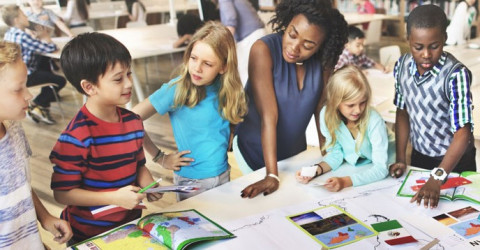 European Ministers back education for democracy to counter extremism, racism 12 September 2016 Education ministers and officials from 50 countries attended the Council of Europe Standing Conference of Ministers of Education, in Brussels from 11-12 April, 2016, to discuss the theme “"Securing democracy through education: The development of a Reference Framework of Competences for Democratic Culture".Speaking at the event, which focuses on the democratic mission of education to face the challenges of violent extremism, migration and racism, Mr Qian Tang, UNESCO Assistant Director-General for Education, commended the Council of Europe for “giving such high attention to the fundamental role of education in building and maintaining democracy and peace.”Mr Tang presented UNESCO’s pioneering work on Global Citizenship Education and on Preventing Violent Extremism through Education, including the new UNESCO Teachers’ Guide on the Prevention of Violent Extremism and a forthcoming Guide for Policymakers to be launched in September this year in Paris.In his welcoming remark, Mr Thorbjørn Jagland, Secretary General of the Council of Europe said: “If we want to promote democratic ideals we need to promote values, teach children to live with others equally.”Minister of Education for the Flemish Community of Belgium Ms Hilde Crevits said: “In the long term education will be more important than any anti-terrorist law. Education plays a pivotal role in safety and security in Europe and beyond.”The European Commissioner for Education, culture and sports Mr Tibor Navracsics added “While education is not the only solution, there is no other solution without education.”New education tool to teach democratic valuesThe event also launched a new tool for teaching democracy and democratic values. The Reference Framework of Competences required to participate in Democratic Culture, developed by the Council of Europe with input from over a thousand teachers and experts across the continent, was launched at the event. “UNESCO is supporting countries to deliver education programmes that build young people’s resilience to violent extremist messaging and foster a positive sense of identity and belonging” said Mr Tang. He also expressed the hope that the event would help strengthen collaboration between UNESCO and the Council of Europe in providing effective citizenship education to prevent extremism and combat radicalization and a look at the relationship between European and global challenges.In a Final Declaration, the Ministers of Education invite the Council of Europe to reinforce cooperation with strategic partners in order to further support education reforms in member States, including the United Nations system and its agencies, notably UNESCO, for its work on global citizenship education and the prevention of violent extremism.
  UNESCO highlights links between peace and Education 2030 Agenda at Amsterdam meet 12 September 2016 he role of education in peacebuilding is the theme of the UNESCO keynote speech at a research findings seminar in Amsterdam on April 20-22.Mr Jordan Naidoo, Director, Division of Education 2030 Support and Coordination, UNESCO will address the Research Consortium on Education and Peacebuilding on April 22 on the links and interdependence between Sustainable Development Goal 4 and peacebuilding.UNESCO’s constitution enshrines its mission to “build peace in the minds of men and women.” The issue of peace and education is dealt with in the new education agenda in target 4.7 of SDG4 which calls for the “promotion of a culture of peace and non-violence and global citizenship.” The Framework for Action, the implementation guide for the SDG4-2030 Agenda, contains 17 references to peace.During times of conflict SDG4 specifies that efforts must be made to:Ensure that education institutions are protected as zones of peace, free from violence, including school-related gender-based violence;Schools and educational institutions – and the routes to and from them – must be free from attack, forced recruitment, kidnapping and sexual violence; andActions must be taken to end impunity for persons and armed groups that attack education institutions.Building global citizensUNESCO encourages Global Citizenship Education to enable learners of all ages and backgrounds to develop into informed, critically literate, socially-connected, and ethical and engaged global citizens.The consortium is a partnership between the University of Amsterdam, the University of Sussex, Ulster University and UNICEF and aims to contribute to UNICEF’s Learning for Peace programme.
 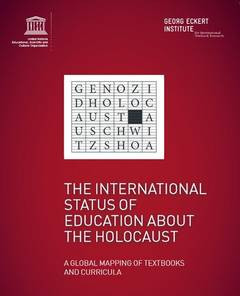 UNESCO releases Holocaust education recommendations in six languages 12 September 2016 The purpose of the recommendations, the work of UNESCO and the Georg Eckert Institute for International Textbook Studies, is to help education policy-makers ensure that educational media meet standards of historical accuracy and are enabled to place the Holocaust in perspectives which bear resonance in given local environments.They also provide advice on conceptual and narrative standards that will help learners acquire historical knowledge and deeper understanding of the nature, the complexity, and the impact of crimes perpetrated by the Nazi regime, in particular the genocide against the Jewish people.These recommendations will thus provide guidance on how educational media can help raise awareness among leaners of how to prevent similar events from occurring.The recommendations draw on an extensive research performed by the Georg Eckert Institute and UNESCO to map Holocaust education worldwide, and compare representations of the Holocaust through the analysis of 272 valid curricula in 135 countries and 89 textbooks in use in 26 countries.The research, titled The International Status of Education about the Holocaust, A Global Mapping of Textbooks and Curricula, was published in 2015. The recommendations are preceded with a summary of the research.