
News
Follow the newest trends and news in GCED.
1,676 Results found
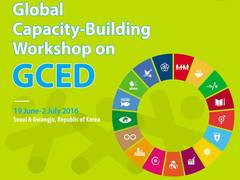 L'UNESCO lance une nouvelle formation pour aider les éducateurs à lutter contre l'extrémisme violent 12 September 2016 UNESCO and the Asia Pacific Centre of Education for Intercultural Understanding (APCEIU) are developing a new partnership to boost training for educators worldwide on the prevention of violent extremism.As part of APCIEU’s Global Citizenship Education international and regional trainings new modules will be introduced by UNESCO to sensitize educators to the issue of violent extremism and to the educational measures that can build learners’ resilience to extremist narratives.In addition, the APCEIU and UNESCO have agreed to introduce sessions dealing with the history of genocides, in particular the Holocaust, as a means to raise awareness of the dangers of mass violence in contemporary societies, and help young people become critical thinkers able to oppose group-targeted violence.Regional seminars to follow opening workshopThe first training seminar, titled Global Capacity-Building Workshop is taking place in Seoul, Korea, from 19 June to 2 July 2016. It gathers teacher-trainers and teachers from 26 countries including Mongolia, Cambodia, Uganda, Lebanon and Colombia and covers all aspects of Global Citizenship Education, from policy design to pedagogy and teaching practices, in workshops partly led by UNESCO.It will also include sessions conducted in partnership with the Radicalisation Awareness Network (RAN), a European Union body supporting youth stakeholders confronted with violent extremism, and of the United States Holocaust Memorial Museum, one of the world’s leading institutions for Holocaust education and research and genocide prevention. The workshop will be followed throughout 2016 and 2017 by several similar training seminars with a more regional scope.UNESCO is engaged in a programme to contribute to the prevention of violent extremism through education, within its work on Global Citizenship Education. This includes the development of guidance for policy-makers and to support the work of teachers in the classroom and capacity-building for education stakeholders.
  UNESCO Director-General pays tribute to the memory of Elie Wiesel 12 September 2016 The UNESCO Director-General, Ms Irina Bokova, paid tribute to Elie Wiesel, Nobel Peace Prize Laureate, and author of a unique body of work on the memory of the Holocaust."Elie Wiesel was a pillar of the conscience of humanity, a moral compass for human rights, human dignity, human strength," said Irina Bokova. "Through his work, he put words on the unspeakable, to awaken all minds to the horror of the Holocaust. His legacy is unparalleled and his message is more relevant than ever to fight against antisemitism in all its forms. We all owe him an immense debt, and this is our duty to take forward.""Elie Wiesel was a great friend and champion of UNESCO, presiding the Universal Academy of Cultures, founded by Federico Mayor. His thinking informed the work of the Organisation across many years, as he embodied UNESCO's mission to 'build the defences of peace in the minds of women and men."
  UNESCO 1974 Recommendation used to measure progress towards education target 4.7 12 September 2016 The UNESCO Director-General has launched the Sixth Consultation on the implementation of the 1974 Recommendation concerning Education for International Understanding, Cooperation and Peace and Education relating to Human Rights and Fundamental Freedoms for the period 2012-2015. Every four years, as part of its standard-setting and monitoring role, UNESCO invites Member States to report on progress made in implementing the 1974 Recommendation. The principles of the 1974 Recommendation are closely aligned to Target 4.7 of the Sustainable Development Goal on education. Target 4.7 is concerned with sustainable development and sustainable lifestyles, human rights, gender equality, the promotion of a culture of peace and non-violence, global citizenship and appreciation of cultural diversity, as well as on culture’s contribution to sustainable development. Therefore, this four-year reporting process has been recognized by the 199th Session of the UNESCO Executive Board, as the main source of data to chart progress towards the achievement of Target 4.7. The deadline for submission of country reports to UNESCO is 30 September 2016. Member States are invited to compile their reports in consultation with relevant national stakeholders, NGOs working in these areas, and National Commissions for UNESCO. All relevant information and data should be included. Questions concerning the 6th Consultation process can be directed to UNESCO’s Section of Education for Sustainable Development and Global Citizenship at: gced(a)unesco.org. Link: The Sixth Consultation on the implementation of the Recommendation concerning Education for International Understanding, Cooperation and Peace and Education relating to Human Rights and Fundamental Freedoms (1974)
  Teaching on the history of the Holocaust, other genocides and mass violence in the region: capacity building seminar and meeting of the Latin American Network 12 September 2016 Senior managers in charge of history teaching, curriculum revision and teacher training in Argentina, Chile, Costa Rica, El Salvador, Guatemala, Paraguay, Peru and Uruguay will participate on 9 and 11 September in a meeting of the Latin American Network for Education on the Holocaust and other Genocides and in a capacity building seminar on these topics.Member States participating in the UNESCO Latin American Network for Education on the Holocaust and other Genocides will meet at the University of Southern California (USC) Shoah Foundation Headquarters on 9 September 2016 thanks to the work of the UNESCO Chair for Genocide Education at USC. The meeting will review actions taken in the region to foster education on the Holocaust, genocides and mass atrocities.The Network was founded in 2014 in Costa Rica with a view to enhance regional dialogue on Holocaust education, genocide prevention, and dealing with difficult pasts through education. The Network stimulates national activity and gives rise to regional programmes conducted under the guidance of UNESCO and in partnership with organizations providing expertise in the field, such as Yad Vashem (Israel) and the United States Holocaust Memorial Museum.The meeting in Los Angeles will notably include the participation of representatives of Yahad-In-Unum (France) and of Yad Vashem (Israel). It will serve to discuss recent actions taken within the Network and present new educational, academic and cultural initiatives that could be expanded at regional level.The project is supported by the Ministry of Foreign Affairs and International Development of France. Capacity buildingThe meeting of the Latin American network will be followed by a capacity-building workshop for specialists at Ministries of Education of 8 countries of Latin America. This workshop is organized by the Shoah Foundation of USC and will take place on 10 and 11 September, in the same place.The seminar “Teaching about the History of Genocide and Mass Violence” will cover history teaching, curriculum revision and teacher training, and will focus on teaching methods in the classroom, with emphasis on the use of survivors’ testimonies. It will also cover challenges pertaining to teaching about genocides in a comparative perspective, and include discussions on the relevance of Holocaust education in Latin American contexts.The seminar will be conducted by education specialists and academics of the USC Shoah Foundation and guest presenters from the Iberoamericana University (Mexico), the Jewish Museum of Chile and the Auschwitz Institute for Peace and Reconciliation (United States of America). The programme will also include a visit to the Los Angeles Museum of the Holocaust.“Teaching about the Holocaust is an excellent starting point to raising the awareness of young people of the dangers of propaganda, hate speech and demonization of the other”, said Karel Fracapane, UNESCO specialist in Education about the Holocaust based in Paris. He noted that “the Nazis are gone but extremist ideologies based on racism and antisemitism live on, and their potential is deadlier than ever”. Elspeth McOmish, specialist at the Regional Bureau of Education in Latin America and the Caribbean (OREALC/UNESCO Santiago) highlights that “UNESCO’s work in the field of Holocaust and genocide education resonates strongly in Latin America, and serves as a guidepost to deal with difficult pasts that may not yet have been the object of much attention in education.” She adds: “By analyzing and drawing lessons from history, young people develop an understanding of how they can combat prejudice and violence, as responsible and active global citizens.”
 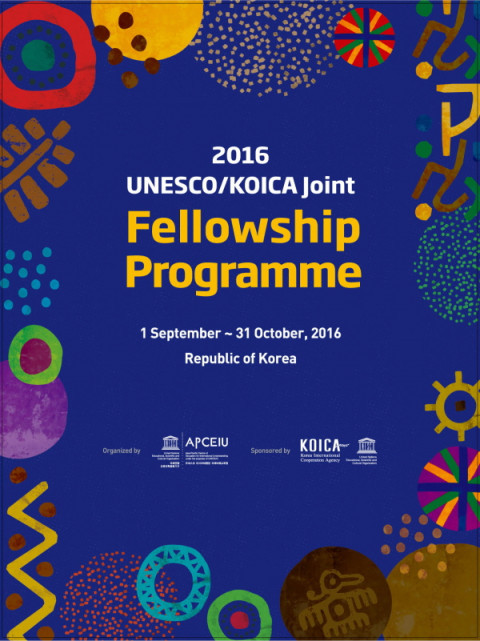 APCEIU Supports Capacity Building for Educators of Africa and Asia-Pacific 5 September 2016 From 1 September to 31 October, APCEIU will organize the ‘2016 UNESCO/KOICA Joint Fellowship Programme: Capacity Development for Basic Education of Africa and Asia-Pacific’ for 25 educators from 17 different countries in Asia-Pacific and Africa. Celebrating its 10th year, the 2016 UNESCO/KOICA Joint Fellowship Programme will be co-sponsored by UNESCO and the Korea International Cooperation Agency (KOICA). This year, the programe will be composed of 4 main modules: “Teacher Training for Basic Education,” “Leadership in Global Education (Global Citizenship Education),” “Use of ICT for Education (or e-Learning),” and “Girls’ Education”. Participants will explore related issues through the workshops, lectures, field-visit, and individual project development. First, participants will be given lectures and participate in workshops to enhance their knowledge and understanding of Basic Education on particular areas, such as Korean education policy and curriculum, policies on teacher education, lifelong education and vocational education. There will be field study visits to relevant sites including schools in Korea, the Regional Offices of Education, and the Korean Education Broadcasting System (EBS). In addition to lectures and workshops, there will be discussion seminars for the understanding of basic concepts and transformative pedagogies related to GCED. Workshop participants will also make a field visit to Dora observatory and the 3rd underground tunnel in Paju DMZ where they can experience and reflect on the issues of human rights and peace. On 3 October, participants will visit RCE Tongyeong (Regional Centre of Expertise on Education for Sustainable Development in Tongyeong) to discuss sustainable development and also take part in photo classes at Dongpirang mural village, Tongyeong central traditional market, and Dara park. Furthermore, ICT education, which is a growing field in education, especially in developing countries, will be a part of the programme. Topics range from ‘how to utilize MS Office programs,’ to ‘how to make audio-visual education materials.’ Lastly, as a new module in this year’s programme, ‘girls’ education’ will be discussed under the theme of “Better Life for Girls.” Through lectures and study visits participants will explore the following topics: provision of education opportunity for girls, health education and vocational education for capacity building of girls especially in developing countries. Following, participants will create storybooks based on their own interviews of girls in the neighborhood. These storybooks are expected to be used as educational materials for girls’ education in their own countries. Through this programme, APCEIU hopes that participants can develop the capacity building for educators in their own countries. APCEIU also expects participants to produce learning materials on GCED and develop lesson plans and training modules which can then be used in their local educational settings. URL: APCEIU Supports Capacity Building for Educators of Africa and Asia-Pacific > APCEIU News - APCEIU (unescoapceiu.org)
 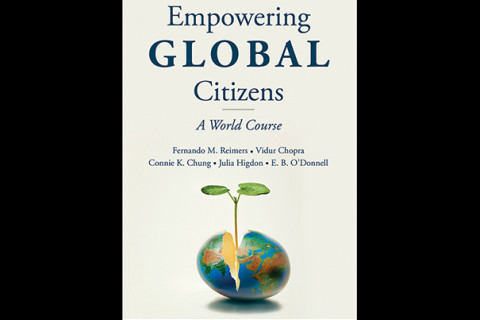 Harvard professor creates a course for the world 1 September 2016 The world is changing, says Harvard Professor Fernando Reimers, and schools everywhere must change with it. Preparing students to become global citizens should be a priority for all educators, but how exactly should these lessons be approached?“If we are serious about preparing students to understand globalization, we should treat this the way we treat any other subject about which we are serious,” says Reimers, director of >Harvard Graduate School of Education’s (HGSE), International Education Policy Program. “We should have high-quality curriculum. It should be rigorous curriculum and it should provide extended opportunities for students to engage with the subject.”With a group of HGSE doctoral students, Reimers began to consider what it would take to create such a curriculum, starting by identifying the competencies high school students should have in order to understand and, ultimately, better the world. The result is “Empowering Global Citizens: A World Course,” a book designed not only to support the educators who are already teaching with globalization in mind, but also to challenge those who are not.In this edition of the Harvard EdCast, Reimers speaks about the book and gives insight into a curriculum designed to empower all citizens of the world.
 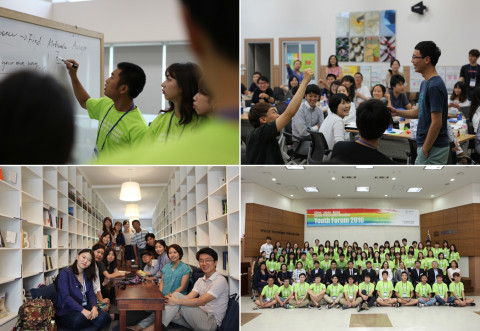 China-Japan-Korea College Students Seek Better Future through Global Citizenship 23 August 2016 “If you, young people, do not stand together, if you do not work together, if you do not do better than your preceding generations, the world we live in will not get better.” From 7 to 11 August 2016, 60 students coming from China, Japan, and Korea gathered at APCEIU to participate in the ‘China-Japan-Korea Global Citizenship Education Youth Forum 2016’. During these five days, the students discussed the role youth play in enhancing trilateral cooperation for a peaceful co-existence and sustainable future in the region and beyond. During the congratulatory remarks, Dr. Marielza Oliveira, Director of the UNESCO Beijing Office, emphasized the positive effects that youth can bring to the world acknowledging their greater role and responsibility in solving many global issues while building a peaceful and sustainable future. In addition during his keynote speech, Prof. Chung-in Moon, Distinguished Professor (Emeritus) of Yonsei University, suggested global citizenship as a valid alternative for young people to move forward beyond the limitations of nationalism. He advised them, saying “Be aware of what is going on in the world. Have empathy. Take actions.” Students participated in various sessions including lectures, titled ‘Global Citizenship and the Role of Youth in Northeast Asia’, ‘Youth Leadership for Better Community’, ‘Sustainable Development Goals (SDGs) and Asian Youth’ and later also participating in workshops and dialogues. Especially in the CJK Youth Dialogue session, students had a chance to think deeply about what global citizenship means and discuss it with their peers. Through the Panel Talk session, students had an opportunity to interact with three young professionals from the three different countries that are actively working in diverse fields. The three speakers were Ms. Yifan Ling from China, who is a popular webtoon artist, Ms. Misaki Iwai, Community & Entrepreneurship Programme Manager at Impact Hub Tokyo (a social enterprise that empowers novice entrepreneurs), and Mr. Gilrok Daniel Do, Chief Operating Officer at Ecube Lab (a rising company in the global waste management market). These three speakers shared their personal stories on how they decided to pursue their current career paths and work, enlightening students on the diverse ways to pursue career paths and explore contributions for a better future for the world through profession. Students learned that they could act as a global citizen in any of their fields and also discovered ways to initiate various projects as youth leaders. A field-visit was arranged according to topics of their interest. The six sites selected were UN ESCAP (Sub-regional Office for East and NorthEast Asia), Trilateral Cooperation Secretariat, National Human Rights Commission in Korea, Haja Centre, Root Impact, and Incheon Open Port. By hearing from presentations and interviews given by professionals at each site, students were able to clear questions in each field and deepen their understanding on major issues around each respective field. To cap off their experiences from the five days, students created and shared their action plans by group. Groups that visited UN ESCAP, Root Impact and National Human Rights Commission proposed an easily accessible online platform where youth of diverse nationalities could share ideas and build up discussions on topics such as sustainable environment, vocational training and education, and gender equality. The group that visited the Trilateral Cooperation Secretariat also designed an online platform where youth from the three countries could freely share viewpoints about the economy, environment, and education as well as share culture and make friends. Participants who visited the Incheon Open Port planned a volunteer tour guiding program for foreign students studying outside their home country. The Haja Centre group designed a project called “Drop-outs Help-outs” that would help high school dropouts by providing a global pen pal service and helping them to find job opportunities. URL:China-Japan-Korea College Students Seek Better Future through Global Citizenship > APCEIU News - APCEIU (unescoapceiu.org)
 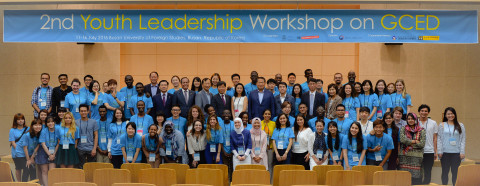 2nd Youth Leadership Workshop on GCED gathers youth voices from around the world 20 July 2016 The 2nd Youth Leadership Workshop on GCED kicked off on 12 July and will last until 16 July 2016 . APCEIU co-organized the 2nd Youth Leadership Workshop on Global Citizenship Education (GCED) with the UN Secretary General’s Global Education First Initiative (GEFI) at the Busan University of Foreign Studies in Busan, Republic of Korea. For this event, Busan University of Foreign Studies(BUFS) and Geumjeong District of Busan Metropolitan City will be working as cooperation partners. The workshop aims to build the capacity of dynamic young leaders and facilitate international exchange among participants from 5 regions (North America-Europe, Asia-Pacific, Africa, Latin America, Middle East and North-Africa) to lead and advocate for GCED. A total of 49 youth leaders from 38 countries are attending the workshop, selected on the basis of their current engagement and future commitment in educating youth at the local and national levels around GCED. Members of the Youth Advocacy group of the UN Secretary General, previous GCED Youth workshop participants in different regions of the world and APCEIU staff are leading the workshop as the five main facilitators for discussion to construct GCED Youth network. In the opening ceremony, Dr.Utak CHUNG, Director of APCEIU, gave opening remarks to participants. Following his words, Ms. Min-Jeong KIM, head of secretariat of GEFI and Dr. Jeong-Bae LEE, vice president of BUFS also gave welcoming remarks. The congratulatory remarks were delivered by Mr. Jeong-hee WON, mayor of Geumjeong District. Dr. Utak CHUNG emphasized the importance of the GCED Youth network to amplify the voice of youth. He stated in his opening remark, “This (GCED Youth) network will become an invaluable resource of advancing the GCED agenda beyond 2015, in a way that resonates with the voice of youth and their needs.” He asked participants’ to actively engage with all components of the workshop, saying he truly hopes participants make this workshop “for the youth, and by the youth.” Ms. Min-Jeong Kim said that UNESCO believes in the power of energy, innovativeness and dynamism of youth. She encouraged participants by saying: “Imagine the transformative change that could be brought by collective action of 1.8 billion young people in the world.” Mr. Jeong-hee WON commented in his congratulatory remark, “The following 4 days will be an important asset to achieve participants’ dream, which will work to give hope to everyone in the world.” During the first day, participants had lessons on understanding concepts of SDGs, SDG 4.7 and GCED, and the ways in which APCEIU is working on targeting youth while promoting GCED. There were also sessions in which the youth shared their recommendations on the previous GCED youth workshops and had the opportunity to made friends with each other while taking part in icebreaker activities. The workshop consists of a wide variety of interactive sessions and activities, such as - plenary sessions to understand GCED, exploring local initiatives on GCED with local youth, discussion on the GCED youth network etc. The workshop aims to enable the participants to build a common understanding of GCED and its key priorities, to elaborate on leadership strategies suitable for implementation at the local and national levels, and concretize plans for the establishment of a GCED Youth Network to advance the GCED agenda and UN SDGs. Throughout the workshop, participants are expected to share their previous GCED leadership experiences based on the three principal motos of GCED; Think, Share and Act. At the end of the workshop, participants will propose leadership strategies as the outcome of their group discussions and identify future activities to participate in for the GCED youth network. URL: 2nd Youth Leadership Workshop on GCED gathers youth voices from around the world > APCEIU News - APCEIU (unescoapceiu.org)
 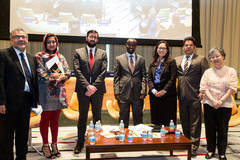 UN discusses innovative solutions to prevent violence extremism through education 9 June 2016 It is critical that young people experience positive values in a safe, open and inclusive learning environment to build their resilience against violent extremism. This was a key message at a UN roundtable discussion on the prevention of violent extremism at the United Nations headquarters, on Thursday 2 June, at UN Headquarters, in New York.The discussion, organized by the UN Secretary-General Global Education First Initiative, in cooperation with the Permanent missions of the Principality of Andorra, the Republic of Korea and Tunisia to the United Nations, was part of an on-going dialogue for policy-makers, practitioners and researchers to share innovative solutions and exploring the role education can play in the different contexts where young people might be susceptible to movements and organizations promoting violent extremism.“Global citizenship education is an entry point to respond to violence and extremism, as it equips youth with skills, values and knowledge to empower them as global citizens through the practice and promotion of tolerance, human rights, social justice and acceptance of diversity,” said Jorge Sequeira, Director of UNESCO Chile Field Office and UNESCO Representative to the cross-agency UN Counter-Terrorism Implementation Task Force, who moderated the discussion. One of the key initiatives presented was UNESCO’s Teacher’s Guide for the Prevention of Violent Extremism published in May. The Teacher’s Guide provides practical advice and tips to teachers on how to discuss these issues in the classroom setting. ”Schools have to provide room for dialogue and not avoid “taboo” subjects”, said UNESCO Director of the Division for Inclusion, Peace and Sustainable Development and UNESCO’s focal point on education to prevent violent extremism Soo-Hyang Choi who presented the publication. Yet she stressed that education should not be looking at individuals but rather at the breeding grounds of violent extremism and radicalization.Two UNESCO guidance tools on the prevention of violent extremismThis roundtable discussion comes at a useful juncture: following the presentation in January 2016 of the UN Secretary General’s launch of a Plan of Action to Prevent Violent Extremism and the development of two UNESCO guidance tools for teachers and education policy makers for the prevention of violent extremism.Ms Choi also presented key recommendations of a Policy Guide on the prevention of violent extremism to be published later this year. For reducing the risk of youth turning to violent extremism, the following strategic approaches: revising of curricula to eliminate negative values and promote positive values; improving learning environment with particular attention to integration of all students; and fostering closer links with families and communities.Both guides will be presented at the “International Conference on the Prevention of Violent Extremism: Taking Action” that will be organized by UNESCO in cooperation with Mahatma Gandhi Institute of Education for Peace and Sustainable Development in New Delhi, India, on 19 and 20 September 2016.As a follow-up to the Conference, UNESCO will continue its work in this field through capacity-building activities of policy-makers and teachers in cooperation with its partners, notably the Asia-Pacific Centre of Education for International Understanding.
 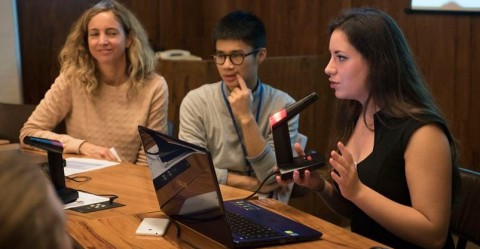 UNESCO conference highlights good practices in intercultural dialogue to prevent extremism, with the Delegations of United Kingdom and Lithuania 7 June 2016 On 19 May 2016, the Conference on “An Alternative to Extremism: Cooperation among the Communities of Different Religious Faiths in Multinational Cities” was held at UNESCO, co-organized by the Permanent Delegation of the United Kingdom of Great Britain and Northern Ireland to UNESCO, the Permanent Delegation of the Republic of Lithuania to UNESCO, the Woolf Institute, Cambridge (UK). The conference brought together scholars, expert stakeholders, and representatives of non-governmental organizations: The discussion was moderated by Prof. George Joffe, Research Fellow at the Centre of International Studies, with the participation of H.E. Mr Hatem Atallah, Executive Director of the Anna Lindh Foundation; Dr Valdas Mackela, Assistant Professor in Catholic Theology; Ms Radia Bakkouch, President of the Interconvictional Movement of the Young "Coexister”; Dr Shana Cohen, Deputy Director of the Woolf Institute and Dr Angus Ritchie, Director of the Contextual Theology Centre. Mr Qian Tang, UNESCO Assistant Director-General for Education highligthed the importance of cities as spaces for multiculturalism and intercultural encounters to learn to live together. The Permanent Delegate of Great Britain and Northern Ireland, H.E. Matthew Sudders underlined the relevance of such meetings, bringing together people of different faiths and scholars, to better understand the issues at stake in the current international context. The Permanent Delegate of Lithuania, H.E. Arunas Gelunas, highlighted violent extremism as a major obstacle for building cohesive societies, in a vicious circle where attacks and violence fuel hatred and prejudices towards specific communities or faith. All participants highlighted the need to foster education of global citizenship and to build a more comprehensive and strategic approach for intercultural dialogue, building the new “cultural literacy” to equip young people with the skills they need to interact in societies today. Cooperation and dialogue between faith communities play a important role in today’s multicultural cities. The extent to which community organization and grassroot social action encourage constructive interaction across individuals and groups of different beliefs was also discussed.The Executive Director of the Anna Lindh Foundation, Mr Hatem Atallah, argued that the most influential factor in violent extremism propaganda today is the absence of a counter- narratives demonstrating that cultural diversity and cultural exchanges are at the roots of all civilizations. Dr Valdas Mackela raised the issue of intolerance among religious communities in Lithuania and the related deficiencies in the adaptation and recognition of religious diversity. Rather than tolerance, however, the concept of “active coexistence” was proposed by Ms Radia Bakkouch, as a relevant alternative response to extremism.The Conference focused on innovative practices experienced in London and other relevant projects in Paris, Berlin, Rome, Delhi and Doha. Dr. Shana Cohen from the University of Cambridge shared the results of a study on alternatives to extremism. She underscored the need to develop a much stronger dialogue between citizens on one hand, especially community and religious leaders, and political elites on the other hand. “Lack of communication and cooperation creates exclusion and fuel prejudice, misunderstanding at the heart of religious and ethnic conflicts.” she said.A second project was presented by Dr Angus Ritchie, Director of the Contextual Theology Centre at the Royal Foundation of St Katharine (London), who focused his intervention on one practice of a broad-based community-organizing initiative in Great Britain. He highlighted the importance of learning from best practices and of having a pluralist and inclusive conception of community-organizing, which offers valuable opportunities to upscale interfaith and interreligious cooperation and to counter extremism on a more solid basis. The conference concluded with a round table discussion on the previous presentations and offered valuable insights relating to innovative ways of reinforcing social cohesion and mutual knowledge amongst religious communities.