
News
Follow the newest trends and news in GCED.
1,676 Results found
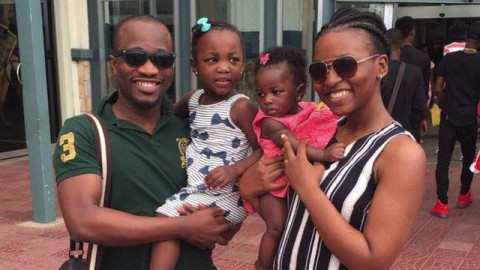 Identity 2016: 'Global citizenship' rising, poll suggests 4 May 2016 People are increasingly identifying themselves as global rather than national citizens, according to a BBC World Service poll. The trend is particularly marked in emerging economies, where people see themselves as outward looking and internationally minded. However, in Germany fewer people say they feel like global citizens now, compared with 2001. Pollsters GlobeScan questioned more than 20,000 people in 18 countries. More than half of those asked (56%) in emerging economies saw themselves first and foremost as global citizens rather than national citizens. In Nigeria (73%), China (71%), Peru (70%) and India (67%) the data is particularly marked. By contrast, the trend in the industrialised nations seems to be heading in the opposite direction. In these richer nations, the concept of global citizenship appears to have taken a serious hit after the financial crash of 2008. In Germany, for example, only 30% of respondents see themselves as global citizens.Are you a global citizen? Graphic showing how respondents from 18 countries answered a question about whether they viewed themselves more as a According to Lionel Bellier from GlobeScan, this is the lowest proportion seen in Germany since the poll began 15 years ago. "It has to be seen in the context of a very charged environment, politically and emotionally, following Angela Merkel's policy to open the doors to a million refugees last year." The poll suggests a degree of soul-searching in Germany about how open its doors should be in the future. It says 54% of German respondents approved of welcoming Syrians to their country. In the UK, where the government has resolutely capped the number of Syrian refugees, the figure was much higher at 72%. A significant proportion of Germans also sat on the fence when they were asked about issues to do with immigration and society.What are your views on intermarriage between different races/ethnic groups? Graphic showing the breakdown of results from Spain, the UK, France, Germany and Russia on the question of intermarriage On the question of whether intermarriage was a welcome development, for example, 46% of German respondents were not sure how to respond or they tried to qualify their answers by saying it depended what the circumstances were. This is in stark contrast to other European countries, such as France, where people were much more emphatically in favour of marriages between people from different racial or religious backgrounds. These grey areas on the bar charts could suggest Germany is still grappling with whether it wants to welcome newcomers or not. "There is a lot of uncertainty there," says Mr Bellier. "German respondents are showing a high level of indecisiveness when they are asked if they approve or disapprove of these developments and whether they accept the fact that their country is taking a lead on refugees." Jump media playerMedia player helpOut of media player. Press enter to return or tab to continue. Media captionIdentity 2016: Are you a global citizen? According to the data, there are some clear divides in attitudes within continents. In Europe, it is Russia which has the strongest resistance to intermarriage, with 43% of Russians actively disapproving of marriages between different races and ethnic groups. Compare that with Spain, where only 5% would be opposed to such matches. Spain also noticeably has the most respondents who see themselves as global citizens Russia appears to have the strongest overall opposition to immigration. Only 11% of the Russians polled would approve of accepting refugees from Syria, for example. On the other hand, Spain would be the most welcoming of all the countries polled when it comes to receiving refugees from the Syrian conflict. There, an eye-catching majority - 84% - believe they should take in more of those fleeing the five-year civil war.What are your views on accepting Syrian refugees? Graphic showing the breakdown of results from Spain, the UK, France, Germany and Russia on the question of accepting refugees from Syria The figures suggest there is also an interesting divide emerging in North American attitudes to refugees. Of those Canadians asked, 77% said they would approve of accepting Syrians fleeing their home country. But in the United States that figure drops to 55%. Indonesia has the weakest sense of national citizenship (4%). Instead, it seems Indonesians have a much stronger sense of localism, with over half of respondents seeing their immediate communities as the most important way of defining themselves. In general, religion plays a much smaller part how people define themselves compared to nationality. The big exception to that rule is Pakistan, with 43% of Pakistanis appearing to identify themselves first and foremost by their religion - considerably higher than any other country. The polling on religion also reminds us of one of the defining differences between old-world Europe and the United States. In the US, 15% of those asked would who define themselves first and foremost by religion. In European countries that figure is only 5%.What is 'global citizenship' anyway? One problem with polling attitudes on identity is that "global citizenship" is a difficult concept to define and the poll left it open to those taking part to interpret. For some, it might be about the projection of economic clout across the world. To others, it might mean an altruistic impulse to tackle the world's problems in a spirit of togetherness - whether that is climate change or inequality in the developing world. Global citizenship might also be about ease of communication in an interconnected age and being able to have a voice on social media. And for many, it will be about migration and mobility. We are, after all, witnessing the biggest movements of people since the World War Two. This is not just driven by war and conflict. It is also because the world as a whole is becoming more prosperous and air travel is becoming more affordable to the rising middle classes.
  Living together in Inclusive societies: A challenge and a goal 3 May 2016 Representing UNESCO’s Director-General at the 7th Global Forum of the United Nations Alliance of Civilizations (UNAOC) held in Baku, Azerbaijan, Qian Tang, Assistant Director-General for Education, emphasized “the immense need for social cohesion and intercultural dialogue in these turbulent times”. Addressing the UNAOC Group of Friends High Level Meeting on 26 April, Mr Tang underlined the challenges facing UNESCO in fulfilling its mission to contribute to peace, the eradication of poverty, and the promotion of sustainable development and intercultural dialogue through education, the sciences, culture, communication and information. He reiterated the central role of education as the world faces “the real danger of losing young women and men to violent extremism and forced migrations (...) There is no stronger foundation [than Education] for recovery, and reconciliation,” he said. Mr Tang said that, in line with the 2030 Agenda for Sustainable Development, notably SDG 4 on education, UNESCO works towards “inclusive and equitable quality education and promote lifelong learning opportunities for all.” He underlined that Global Citizenship Education “nurtures respect for all, a sense of belonging to a common humanity and helps learners become responsible global citizens in a diverse and increasingly complex world”. He also highlighted the pertinence of initiatives led by UNESCO such as #Unite4Heritage global media campaign, the Abdullah bin Abdulaziz International Programme for a Culture of Peace and Dialogue and the UNESCO-UNAOC-UNITWIN Network on Media and Information Literacy and Intercultural Dialogue. The Assistant Director-General for Education ended by recalling UNESCO’s Director-General statement during the previous World Forum on Intercultural Dialogue held in Baku: “Cultural diversity is the other name for human dignity and human rights. All cultures are interlinked, and we need to embrace them all, to fully feel ourselves, to fully feel human”. During his visit to Baku, Mr Tang met Azerbaijani government officials, including the Minister of Education, to discuss cooperation between Azerbaijan and UNESCO in the field of education.
 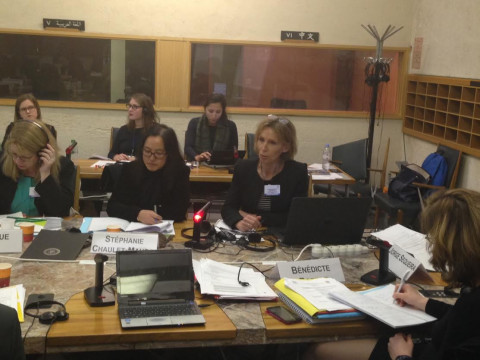 Experts meet to produce technical guide on education to prevent violent extremism 18 April 2016 International experts in education and in the prevention of violent extremism met to develop the outline of a Technical Guidance document designed to support education policy-makers. The consultation meeting, held at UNESCO Headquarters on 21-22 March 2016, brought together experts from around the world to share experiences and advise on the preparation of the technical guide. The guide will support the work of policy-makers within ministries of education to prioritize, plan and implement effective and appropriate education-related actions that can address the drivers of violent extremism. It will also complement the publication designed for educators, A Teacher’s Guide on the Prevention of Violent Extremism, which is being finalized at the moment. A holistic and pragmatic approach to the prevention of violent extremism through education The meeting focused on the role and responsibilities of the education sector in preventing violent extremism in view of ensuring that the guide provides realistic and pragmatic support to policy-makers. Participants identified critical issues to be addressed in the guide such as the specific responsibilities of teachers, key skills and competencies that can help build resilience to violent extremist messaging and effective approaches to engage other sectors of society and educational stakeholders in prevention efforts. The guide will be designed as a policy tool adaptable for education sectors in different world contexts. A first draft will be made available during the Global Meeting on Prevention of Violent Extremism, set to take place in September 2016.
  UNESCO and the Commonwealth team-up for peace and education through sport 18 April 2016 UNESCO and the Commonwealth have entered into a new agreement to cooperate in the areas of Education, Youth and Sport and Peace-building and Dialogue. The agreement will focus on collaborative approaches so that, for example, the Commonwealth’s on-line Education Hub can be used to support UNESCO’s programme in Global Citizenship Education.Following the signing ceremony with the Commonwealth’s Secretary-General, UNESCO Director-General Irina Bokova underline the importance of deepening cooperation across the board. “I believe the time has come, indeed to update it, to strengthen cooperation, with a focus on education, on youth empowerment, on promoting intercultural dialogue,” said Irina Bokova. The Commonwealth’s Secretary-General, Rt Hon Patricia Scotland QC, said by working together, the two organisations can empower young people so they can tackle some of the world’s most pressing problems, from climate change to ending poverty. “I am confident that this renewed partnership will lead to concrete results in a range of areas, from the development of curricula to support the Sustainable Development Goals to the creation of alternate narratives to those of extremist recruiters, in order to counter violent extremism.” During her visit, the Commonwealth Secretary-General addressed UNESCO’s Executive Board, briefing them on her priority areas: ending domestic violence, reducing the impact of climate change and creating opportunities for young people. UNESCO and the Commonwealth first signed a memorandum of understanding in 1980. This latest renewal will last for five years and will strengthen their ability to deliver concrete programmes on the ground.
  Irina Bokova In defense of Pluralism through Education 4 April 2016 “What education do we need to build a more peaceful and sustainable future for all?” In a roundtable discussion at the Global Centre for Pluralism in Ottawa, UNESCO Director-General Irina Bokova outlined new approaches to living together in increasingly diverse and vulnerable societies.Welcoming Ms Bokova, the Centre’s Secretary General, John McNee, affirmed that“finding ways of living together in diverse societies is one of the biggest challenges of the 21st century. If diversity is valued and accommodated, societies are more peaceful.”The Director-General concurred that “violent extremism is one of the biggest threats to peace, security and living together. We have to understand the root causes and bring the full force of UNESCO’s mandate to bear in the response. More than ever we need to bridge cultures through dialogue on the basis of respect and understanding, we need to make the most of diversity.”She affirmed that education - but not just any education - is one of the most powerful tools for countering violent extremism, while cultural heritage offers a formidable channel to promote diversity and common understanding. She stressed the need for new approaches and mindsets to empower youth with skills for critical thinking, with cultural competences and opportunities for civic engagement.She outlined UNESCO’s action to promote education for global citizenship and prevent violent extremism, citing two global forums, with the third to be held in Ottawa in 2017, and the forthcoming launch of a teachers’ guide.An animated discussion focused how to strengthen the forces of pluralism and make it work in practice.Mr Khalil Shariff, Chief Executive Officer of the Aga Khan Foundation Canada, pleaded for a “bifocal vision” on education that prepares young people for the job market and to play their role in democracies. Multilingualism,the role of education in reconciliation, new trends in teaching and learning and the sharing of best practices, including in the integration of refugees, were among the topics raised by representatives from government, NGOs and the education community.The Centre for Global Pluralism is the result of a partnership between the Government of Canada and His Highness the Aga Khan, to advance the vision of diverse and plural societies.
  UNESCO’s YESPeace Network taps the power of youth worldwide to change the future 30 March 2016 “We have to bring young people back into society and what they need is identity and meaning,” said Dr Anantha Kumar Duraiappah, Director of the UNESCO Mahatma Gandhi Institute of Education for Peace and Sustainable Development (MGIEP) in New Delhi.MGIEP is UNESCO’s specialist institute on education for peace and sustainable development and named in tribute to the non-violent, sustainable living principles of Mahatma Gandhi.Dr Duraiappah, who was interviewed after participating in a UNESCO experts’ consultation on preventing violent extremism through education, says the YESPeace Network is part of the institute’s response to just such challenges.Unifying youth around peace and sustainable development“Young people want a voice and they want dignity,” he said. “They live in an interconnected increasingly small world and they are surrounded by social media chatter. We want to build a platform that unifies them around our mandate of peace, sustainable development and global citizenship.”The network is one element of the institute’s Youth Programme, which aims to empower young people through education to construct a peaceful and sustainable future. It brings them together to focus on the Sustainable Development Goals, and in particular SDG Target 4.7 which relates to Education for Sustainable Development (ESD) and which MGIEP has taken ownership of. “We spoke to youth about the target and they told us it was fuzzy and didn’t mean much to them whereas real issues such as poverty, clean water, equal access to education and health did, so we took that on board,” he said.In response MGIEP is developing a knowledge base from youth-led monitoring of Target 4.7 which includes a mobile app so that they can directly upload real life examples of behaviour change from the community in relation to ESD.“We want to put youth in the driving seat to implement and monitor the SDGs,” he said.No one size fits all’ solutionDr Duraiappah says that young people are searching to believe in something and as a result some end up being influenced by extremists but cautions against a ‘one size fits all’ solution.“We have to remember that what drives a young person in Afghanistan or in Syria is very different from what drives a young person in Canada or elsewhere,” he said.“We want to show young people how to become global citizens, that multiple identities within society are to be embraced and that self-doubt is not a sign of weakness but a strength.”Youth-led campaign on global citizenshipIn addition to the YESPeace Network, MGIEP runs the Campus Ambassadors Programme which promotes intercultural dialogue and is developing the Changemakers Programme which focuses on training and leadership based on humane and compassionate values. Each year the institute holds the event TAG 2016, Talking Across Generations, which in 2016 was devoted to Violent Extremism and Education and included a first time ever joint concert by Pakistan band Junoon and Indian band Indian Ocean. Coming up, a second major music concert with the two bands is planned for October 2 which is International Day of Non-violence and the birthday of Mahatma Gandhi.
  With Secretary-General Ban Ki-moon, Irina Bokova reiterates UNESCO’s commitment to UN Plan of Action to Prevent Violent Extremism 22 March 2016 “Preventing violent extremism calls for new forms of action, by States, by international organizations, at every level”, said Director-General Irina Bokova at a high-level luncheon hosted by Secretary-General Ban Ki-moon on the occasion of the annual retreat of the Counter-Terrorism Implementation Taskforce (CTITF) on 17 March, at the United Nations Headquarters in New York.The event brought together principals and senior representatives from CTITF entities, including a large number of UN agencies, to explore the way forward on the Secretary-General’s Plan of Action to Prevent Violent Extremism.Together with the Secretary-General, UN High Commissioner for Human Rights Zeid Ra’ad al Hussein and UN Women Executive Director Phumzile Mlambo-Ngcuka, the Director-General highlighted the importance of coordination and urgent mobilization across the UN to act and achieve greater impact in preventing violent extremism. “What we do know is that “hard power” is not enough to counter a threat fueled by exclusive ideological visions, based on distorted interpretations of faith, hatred and ignorance - we must seek to prevent it”, stressed Irina Bokova, “It must begin by empowering young people, especially young women, so that they can live up to their potential as positive change actors”, she added. This echoed Secretary-General Ban Ki-moon’s statement that “prevention should come first” in the UN’s collective efforts to address violent extremism, considering its added-value in addressing the multiple and complex political, economic and social root causes of radicalization. “The UN needs to think urgently together, to act and deliver as one to counter the threat of violent extremism”, concluded the Secretary-General.
 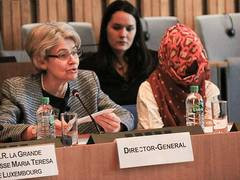 Education, the key to preventing and combating violent extremism 10 March 2016 The role of education in combating violent extremism and its consequences for girls and women was the common point highlighted by the participants of the round table "Violent extremism and radicalization: women as victims, accomplices and engines of change," held at UNESCO Headquarters as part of its focus on International Women's Day.Inaugurated by the Director General of UNESCO, Irina Bokova, the President of the Executive Board, Michael Worbs and Grand Duchess Maria Teresa of Luxembourg, the meeting aimed to develop the case of women as architects of peace and shaping a new narrative, while also recognizing the efforts of many women who said "no" to extremism."My name is Assiatou. I'm 15 years old. I'm here to tell you my story, because I was abducted by Boko Haram."These were the opening words of a Nigerian teenager telling her story of escape from the clutches of these extremists and who now lives in neighbouring Niger.Her face covered, and using a false name to protect her true identity, Assiatou told her story: "When the sect came, they took us to a brothel. We were forty. The men selected girls and we were locked up. It was in this place that someone had chosen me as his wife. They insulted our parents and we were abused. They made us believe that our parents were not strong believers and they were there to teach us the Qur'an. A month later I was forced into marriage. This is the worst moment of my life. (...) To combat ignorance, it is essential to go back to school, so I decided to resume my studies. I would like to become a doctor."Amina Sa'id, who heads an association that frees abducted women and girls from the minority Yezidi community who were kidnapped in Iraq by Daesh, explained, "Women are the first victims of the wars in the world. They are abused and turned into sex slaves or brainwashed to become suicide bombers."The organization she heads has, to date, successfully secured the release of 2000 women and children in individual operations, but estimates that 3000 Yazidis are still under the control of the this extremist group in territory it controls in Mosul and the surroundings areas.The Director-General of UNESCO, Irina Bokova, said women and girls bear a heavy burden. "Women are abused, exposed to sexual slavery, trafficked, forced into early marriages and endure female genital mutilation." She added, "Against violence we must respond with the most powerful tools we have - education, prevention, awareness. (...) The fight against extremism is played out in the mind of each individual, and education is in the frontline to reinforce the defences of each – along with the ability to reject hatred."HRH Maria Teresa, Grand Duchess of Luxembourg and Goodwill Ambassador of UNESCO for the education of girls and women, emphasized the importance of international cooperation to combat the radicalization of young people."No country, big or small, will succeed or be convinced by its own means, as we face a global problem, said the Grand Duchess, adding, “The role of women is essential, they give life, birth. They must be a counterweight to the propaganda of the Islamic State, which promises a society based on a death wish."The Chairman of the Executive Board of UNESCO, Michael Worbs, reinforced the commitment of the Organization to "educate young people to keep them away from radical forces" and stressed the need to promote educational programs based on "global citizenship, human rights and peace."Among those participating in the debate, organized by the Division for Gender Equality of UNESCO, were French journalist Kaci Mina, author of the book "Kidnapped by Boko Haram," Professor Feride Acar, a committee member of the Convention on the Elimination of all Forms of Discrimination Against Women (CEDAW), Hanaa Edwar, secretary general of the Iraqi Al-Amal Association, Yosra Frawes, representative of the International Federation of Human rights in Tunisia and Jayne Huckerby, Director of the International Clinic of Human Rights and a member of the Faculty of Law at Duke University in the United States.
  New agreement to measure global citizenship and sustainable development education 4 March 2016 UNESCO and the International Association for the Evaluation of Educational Achievement (IEA) have established an official agreement to collaborate in the area of measuring Global Citizenship Education (GCED) and Education for Sustainable Development (ESD).The UNESCO – IEA collaboration will focus on measuring Target 4.7 of the 2030 Education Agenda which includes GCED and ESD, the aim of which is to “…ensure all learners acquire knowledge and skills needed to promote sustainable development, including among others through education for sustainable development and sustainable lifestyles, human rights, gender equality, promotion of a culture of peace and non-violence, global citizenship, and appreciation of cultural diversity and of culture’s contribution to sustainable development.”IEA administers the International Civic and Citizenship Education Study (ICCS), one of the major sources of data collection for Target 4.7. UNESCO and IEA have already collaborated in identifying a set of potential indicators for measuring Target 4.7, one of which is being considered as a potential global indicator for Target 4.7.The two organizations will continue their collaboration to further align future cycles of the ICCS study with the indicator for Target 4.7 and to develop at least one thematic report, relevant to GCED and ESD.More information about UNESCO’s work on:GCEDESDFor more information about IEA and the ICCS study
 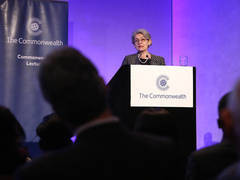 In Commonwealth Lecture, a call to educate for inclusion, dialogue and peace 3 March 2016 A community of 53 countries harbouring a quarter of the world’s population – of which 60% are under 25 – she affirmed that “UNESCO and the Commonwealth are guided by similar principles of dialogue, tolerance, respect and understanding, cooperation and joint action.” She noted the scope of UNESCO’s cooperation with the Commonwealth, spanning teachers, technical and vocational education and training, higher education, ICTs, as well as Open Educational Resources. From combating violent extremism to connecting the dots between the social, economic and environmental dimensions of sustainable development, Ms Bokova affirmed that there is no more powerful force than education, to advance social inclusion, break the vicious circle of poverty and hold up human rights.“Lasting peace and sustainable development are unthinkable while exclusion and deep inequality persist,” she warned.She opened on the Syria crisis and the risk of losing a generation to despair, poverty and violence, asserting that “education cannot wait – it must be a priority from the top, in disaster risk reduction, in humanitarian action, in peacebuilding – because there is no stronger foundation for reconstruction and recovery, for lasting peace.” This crisis, she said, highlights the wider challenge of building more just and inclusive societies, in what she described as a “global struggle for hearts and minds.”“Education is the way to disarm the processes that may lead to violent extremism, by undermining prejudice, by fighting ignorance and indifference,” she said, citing UNESCO’s actions to engage youth in strengthening the narrative of a single humanity and empowering them as agents of change.Noting that inclusion lies at the core of the 2030 Agenda for Sustainable Development, she outlined UNESCO’s leadership in shaping a comprehensive and holistic vision of education, and its work with Governments to build more inclusive education systems and schools that are “crucibles of tolerance and solidarity.” She emphasized that the promotion of gender equality, a global priority for UNESCO, is the foundation for dignity and the catalytic force for development, citing UNESCO’s cooperation in several Commonwealth countries, including Bangladesh and Pakistan.Today’s challenges call for new ways of seeing the world, of thinking and behaving – and this starts with education. “Given the depth of transformation affecting all societies, I am convinced we need to think big again today about education, to make the most of its transformational force for equity and inclusion, for global solidarity,” said the Director-General, stressing that global citizenship education is a priority for UNESCO.“This is about learning to live in a world under pressure, about new forms of cultural literacy, about sharing the wealth of cultural and linguistic diversity as a force for renewal, belonging and innovation.”She highlighted the work of the Mahatma Gandhi Institute of Education for Peace and Sustainable Development based in New Delhi, which promotes youth action for transformative learning and social change, including through its YESPeace Network.Irina Bokova also underlined the importance of Education for Sustainable Development, including to take forward the Paris Climate Change Agreement. Noting that the Commonwealth counts a large number of Small Island Developing States, she listed UNESCO’s work to strengthen disaster preparedness through teacher training, safe school facilities and climate change education.Reacting to the lecture, the Chair of the session, Lord John Alderdice, renown for his lifetime work on conflict resolution and peace building, praised the focus placed on values. “We tend to speak about education in instrumental terms. This brought us back to its fundamental purpose, which is about values, dialogue and peace – the human dimension. Concluding the event, the Secretary-General of the Commonwealth of Nations, Mr Kamalesh Sharma, affirmed that “investing in young people is essential for securing a peaceful future. UNESCO and the Commonwealth are committed to dialogue and knowledge sharing as the pathway to sustainable development and mutual understanding. ” He outlined plans to reinforce collaboration in the areas of education, youth, peace-building and dialogue, stating that this commitment takes on heightened importance in the context of violent extremism.