
News
Follow the newest trends and news in GCED.
1,676 Results found
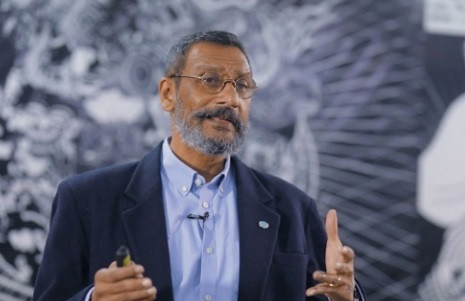 How social-emotional learning helps kids thrive in and outside the classroom 13 September 2023 by Brett Henebery 18 April 2023 In schools around the world, teachers are using Social-Emotional Learning (SEL) to equip children with vital life skills such as managing emotions, achieving goals, displaying empathy, building relationships, and making responsible decisions.This holistic approach not only prepares students to excel academically but also equips them with essential life skills in the face of many complex challenges they will face when they leave school.One expert who understands the value of this approach well is Dr Anantha Duraiappah, the Director of the UNESCO Mahatma Gandhi Institute of Education for Peace and Sustainable Development (MGIEP).Since June 2014, he has been responsible for developing the Empathy, Mindfulness, Compassion, Critical inquiry (EMC2) model – the Institute’s novel approach on SEL, and has positioned the Institute as a forerunner in the development of cutting-edge learning and teaching modules on SEL for students from K-12 to University.“As our world continues to rapidly evolve, the traditional approach to education is no longer sufficient to prepare students for the challenges and opportunities of the 21st century,” Dr Duraiappah told The Educator.“Instead, taking a SEL approach can help students succeed in not only a school setting but work and life too.”Dr Duraiappah said that for SEL to become successful, the pedagogy needs to be markedly different to that of the traditional teaching approach.“For example, SEL should not be taught as an academic subject in school, it must be practiced and experienced; both within and outside the classroom – meaning the learning continuum must include the home, the immediate community, and communities afar and different,” he said.“To do so, a link must be created between classroom instructions and real-life experiences but depending on the social, economic, and ecological context the links between both may differ.”Dr Duraiappah says despite this, the Social and Emotional Competencies (SECs) – attention regulation, emotion recognition, emotion regulation, empathy and compassion – remain the same which provides the possibility to interact and engage with people from diverse backgrounds and cultures. How students can apply their SEL skills in real-world situationsDr Duraiappah said the reason why real-world situations are considered one of the best pedagogical tools for SEL is that these tend to be experienced by many people.“For example, climate change is one of the biggest challenges faced by all living species. To address something as impactful as climate change, people across the world will need to act and change - building empathy towards those climate change effects is one way that leads to change,” he said.“Having a deeper understanding of real-world situations urges people to adapt their ways through acts of compassion and kindness, and SECs. And, as a result, personal responsibility, promoting collaboration and building resilience are key practical ways to build SECs.”Dr Duraiappah said participation in community service and volunteer work can provide some important opportunities for students and help them apply their SEL skills in real-world situations.“Typically, traditional learning takes place in a formal classroom setting which can be deemed as pressurised. For SEL to be successful, this approach needs to take place in a setting that enhances its effectiveness – an informal setting outside the classroom,” he said.“For example, community service projects or school extracurricular activities are known to provide more relaxed and less pressurised settings than in formal classrooms. Therefore, the effectiveness of these will be even more profound if the learning assessments are based on these projects and activities versus the traditional time-constrained formal setting of exams.”Consequently, says Dr Duraiappah, SEL ingrained in activities outside the classroom ensure lifelong learning for success in both personal and professional settings.“SEL must not be approached just as a classroom subject to be studied, examined, and forgotten - it should be built through a combination of academics and practice using real-life situations and challenges,” he said.“The overall end goal of this learning approach is to make being empathetic, compassionate, and emotionally resilient a trait and not just competency; a constitutive part of oneself and not just acquired competencies for instrumental reasons.” https://www.theeducatoronline.com/k12/news/how-social-emotional-learning-helps-kids-thrive-in-and-outside-the-classroom/282325
 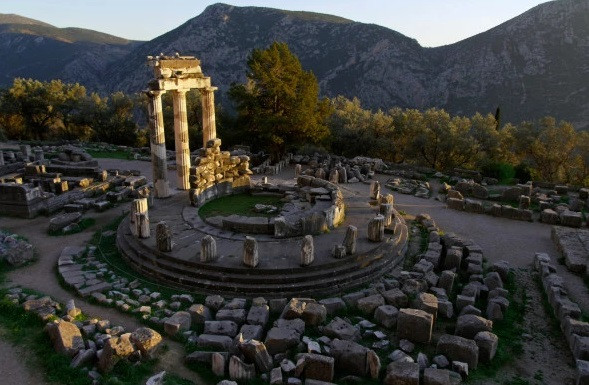 50th anniversary of World Heritage Convention: achievements and prospects 12 September 2023 14 November 2022Adopted in mid-November 1972, the Convention for the Protection of the World Cultural and Natural Heritage is about to turn 50. On the occasion of this anniversary, UNESCO and Greece are co-organizing an international conference in Delphi on Thursday 17 and Friday 18 November, which will take stock of the Convention and chart its future. The eventThe celebration of the 50th anniversary of the Convention for the Protection of the World Cultural and Natural Heritage will take the form of an international conference which will bring together several dozen experts from all over the world for two days on the site of Delphi.Alongside representatives of UNESCO and the States Parties serving on the World Heritage Committee, the experts will take stock of the Convention’s achievement and examine the challenges it faces in the 21st century.The event will be opened on Thursday 17 November at 11am by Audrey Azoulay, Director-General of UNESCO, and Kyriakos Mitsotakis, Prime Minister of Greece.The Director-General of UNESCO will announce a three-pronged action plan to make World Heritage more representative, accessible and sustainable over the coming decades.Thursday 17 afternoon and Friday 18 November will be devoted to round-table discussions on themes such as the priority to be given to Africa, the resilience of World Heritage in the face of climate change, sustainable tourism and digitization. The challenges to the future of World HeritageThe announcements that will be made on the occasion of the 50th anniversary of World Heritage aim to address three challenges: 1. RepresentativenessFifty years after its creation, the World Heritage Convention has been ratified by 194 States Parties, giving it a truly universal scope. It has paved the way for the inscription of 1,154 sites in more than 167 countries, recognizing a great diversity of cultural and natural heritage.Nevertheless, significant geographical disparities persist in the World Heritage List. While some countries have more than 50 inscribed properties, others have none, a is the case of 12 African States Parties to the Convention. The whole of Africa only accounts for 9% of World Heritage sites.Representativeness also requires greater inclusion of local and indigenous populations, who should be able to participate fully in the process from the nomination of sites for inscription to their management. They should also be able to reap the benefits of inscription. 2. AccessibilityThe inscription of sites on the World Heritage List recognizes their outstanding universal value to be shared by all of humanity. The Convention’s main purpose is to ensure that such properties are preserved and transmitted to future generations.While sharing and transmission are the two pillars of World Heritage, much remains to be done to ensure that sites are truly accessible to everyone, and in particular to the youngest. To help meet this challenge in the years to come, the international community disposes of new tools made available by digital technologies. 3. SustainabilityToday, there are 52 World Heritage sites “in danger”. Almost half of them are located on the African continent. They require the deployment of urgent safeguarding measures.Faced with multiple human pressures including urban development, exploitation of resources, pollution, and overtourism, as well the resurgence of conflicts, all World Heritage sites need better protection.Climate change has become the number one threat to natural World Heritage sites. It is already having negative impacts on 34% of them, and on 70% of marine sites. By 2100, half of all World Heritage glaciers and all World Heritage coral reefs could disappear. World Heritage in numbersThere are currently 1,154 sites on UNESCO’s World Heritage List: 897 cultural sites 218 natural sites 39 mixed sites (both cultural and natural) 43 transboundary sites (straddling the territories of two or more countries52 sites are currently listed as being in danger. In 50 years, three sites have been removed from the World Heritage List.World Heritage sites are to be found in 167 countries. The World Heritage Convention has been ratified by 194 countries. https://www.unesco.org/en/articles/50th-anniversary-world-heritage-convention-achievements-and-prospects
  Intangible Cultural Heritage: Committee meets to decide on new inscriptions 12 September 2023 22 November 2022The Intangible Cultural Heritage Committee will meet in Rabat from 28 November to 3 December to examine 56 nominations for inscription on the intangible heritage lists. A press conference will be held at the start of the meeting.Composed of 24 representatives elected from among the 180 States Parties to the Convention for the Safeguarding of the Intangible Cultural Heritage, and chaired this year by the Kingdom of Morocco, the Committee will examine 56 applications for inscription, which break down as follows: 46 requests concerning on the Representative List of the Intangible Cultural Heritage of Humanity, 4 requests for inscription on the List of Intangible Cultural Heritage in Need of Urgent Safeguarding, 5 nominations to the Register of Good Safeguarding Practices.The Committee will also examine a request for international financial assistance submitted by Malawi and a series of reports on the status of previously inscribed elements. About the Intangible Cultural Heritage ConventionThe Convention promotes the safeguarding of knowledge and skills necessary for traditional craftsmanship and cultural practices transmitted from generation to generation, such as oral traditions, performing arts, social practices, rituals and festive events, as well as knowledge and practices concerning nature and the universe.The Representative List of the Intangible Cultural Heritage of Humanity currently numbers 530 inscribed elements. It aims to recognize and promote the diversity of cultural practices and know-how of communities.The List of Intangible Cultural Heritage in Need of Urgent Safeguarding is to date comprised of 72 inscribed elements. It identifies elements of living heritage whose survival is threatened and enables States Parties to the Convention to mobilize international cooperation and assistance to strengthen the transmission of these cultural practices in agreement with the communities concerned.The Register of Good Safeguarding Practices currently features 29 projects and activities that best reflect the principles and objectives of the Convention. https://www.unesco.org/en/articles/intangible-cultural-heritage-committee-meets-decide-new-inscriptions-0
 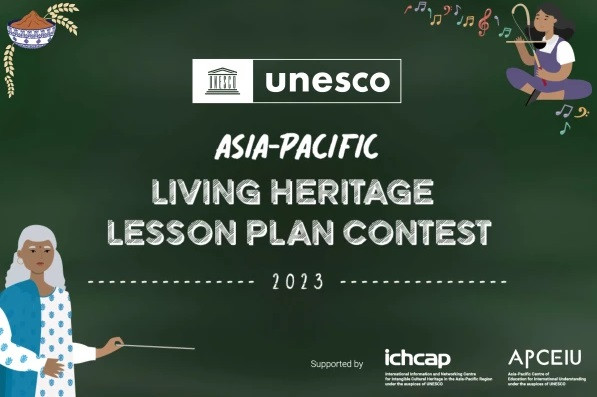 UNESCO invites schools to compete in Asia-Pacific Living Heritage Lesson Plan Contest 2023 12 September 2023 10 July 2023 The UNESCO Multisectoral Regional Office in Bangkok is delighted to announce the launch of the Asia-Pacific Living Heritage Lesson Plan Contest 2023. We invite educators from across the Asia-Pacific region to showcase their creativity and pedagogical expertise by submitting innovative lesson plans that integrate Living Heritage or Intangible Cultural Heritage (ICH) into the classroom. This exciting competition aims to foster a deeper understanding and appreciation of the rich cultural traditions and practices that shape our diverse communities. By bringing living heritage to life through engaging lesson plans, we hope to inspire a new generation of learners to connect with and preserve our shared heritage. This contest is supported by International Information and Networking Centre for Intangible Cultural Heritage in the Asia-Pacific Region (ICHCAP) and Asia-Pacific Centre of Education for International Understanding (APCEIU), Republic of Korea. Grants and CommendationsIn recognition of the outstanding efforts and contributions of educators, the contest will give 4 grants for the most exceptional lesson plans that UNESCO culture and education expert panel anonymously aspire to see put into action and set as regional good practices. The recipients of these prestigious grants will not only receive well-deserved certificates of recognition; in addition, they will be granted USD$1,000 each to pilot and record their lesson plan usage, and then send the recordings to UNESCO for public dissemination. Four (4) primary grants to support lesson plan using at the winning schools are for the following categories: The Living Heritage Advocate Grant emphasizes outstanding efforts in raising awareness, advocating for the importance of safeguarding living heritage, and actively engaging with communities to ensure their continuity. The Pedagogical Innovator Grant recognizes the remarkable ways in which educators have integrated living heritage into their teaching practices, resulting in enhanced creativity and effectiveness. Grantee lesson plans need to exemplify a range of innovative pedagogies, methods, and tools that effectively engage students and encourage active participation in their learning journeys. These approaches may include the utilization of information and communication technologies (ICT), flipped classroom, project-based learning (PBL), creative use of local resources, collaboration with multiple people, multiple intelligence, and so forth. The Sustainable Development Contributor Grant honors the exceptional dedication and contribution to sustainable development and recognizes outstanding efforts in designing and implementing lesson plans that effectively raise awareness about broader societal, economic, and environmental issues while inspiring and empowering youth to take meaningful action. The Special Grant goes to a lesson plan that performs exceptionally well in multiple criteria categories.The Living Heritage Advocate Grant emphasizes outstanding efforts in raising awareness, advocating for the importance of safeguarding living heritage, and actively engaging with communities to ensure their continuity.The Pedagogical Innovator Grant recognizes the remarkable ways in which educators have integrated living heritage into their teaching practices, resulting in enhanced creativity and effectiveness. Grantee lesson plans need to exemplify a range of innovative pedagogies, methods, and tools that effectively engage students and encourage active participation in their learning journeys. These approaches may include the utilization of information and communication technologies (ICT), flipped classroom, project-based learning (PBL), creative use of local resources, collaboration with multiple people, multiple intelligence, and so forth.The Sustainable Development Contributor Grant honors the exceptional dedication and contribution to sustainable development and recognizes outstanding efforts in designing and implementing lesson plans that effectively raise awareness about broader societal, economic, and environmental issues while inspiring and empowering youth to take meaningful action.The Special Grant goes to a lesson plan that performs exceptionally well in multiple criteria categories. https://www.unesco.org/en/articles/unesco-invites-schools-compete-asia-pacific-living-heritage-lesson-plan-contest-2023
 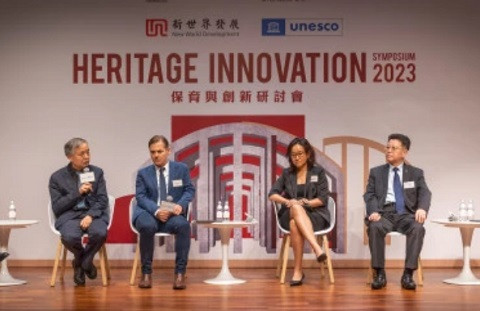 Development Company co-host International Symposium on Heritage Conservation 12 September 2023 11 July 2023 An international symposium on heritage conservation co-hosted by UNESCO and New World Development Company, Ltd., was successfully held on 15 June 2023 in Hong Kong. The event, thematically titled ‘Heritage Innovation Symposium 2023 – When Innovation Empowers Heritage Conservation’, brought together government officials, leading experts and scholars to share examples of heritage conservation.Convened at the University of Hong Kong, the symposium was attended by a combined total of more than 1,000 participants onsite and online, and hailing from various fields such as conservation, architecture, culture, and history. Officiating guests included Lu Xinning, Deputy Minister of the Liaison Office of the Central People’s Government in the HKSAR; Adrian Cheng, CEO, New World Development Company, Ltd.; Feng Jing, Chief of Culture Unit, UNESCO Bangkok Office; Bernadette Linn, Secretary for Development, Development Bureau of Hong Kong SAR; Kenneth Fok, Member of the Legislative Council (Sports, Performing Arts, Culture and Publication), Hong Kong SAR; Ivanhoe Chang, Commissioner for Heritage, Hong Kong SAR; and Douglas So, Chairman of Antiquities Advisory Board, Hong Kong SAR.International Speakers Shared Heritage Conservation ExamplesMr Cheng, of New World Development, opened the event by noting that it represented ‘a groundbreaking platform for everyone in Hong Kong and around the world to rethink and re-strategize the future of heritage.’ In his keynote speech, Mr Feng Jing remarked,"In recent decades, urban heritage has become increasingly under threat due to a variety of pressures. This not only affects the built fabric of historic cities, but also its intangible dimensions. Across the region, the winning projects from the UNESCO Asia-Pacific Awards for Cultural Heritage Conservation have been instrumental in changing the discourse about how cultural heritage contributes to the sustainable well-being of cities, societies and the environment…By actively engaging public, private and civic sectors the city, historic and contemporary, can be better preserved and celebrated."Injecting Innovative Elements to Enable Historic Buildings to Align with Contemporary Cultural TrendsMr Jeff Tung, Head of Special Projects, New World Development, took the occasion to provide an update on the conservation project of the State Theatre, a Grade I historic building in North Point. Noting the rarity of old theatres in Hong Kong, the State Theatre, a former hub for Chinese and Western cultures, is being transformed into a new cultural landmark, with the theatre itself being converted into a venue for artistic performances.Geoff Rich, Partner, FCB Studios, shared the conservation project of the East Court of Alexandra Palace in London. Its East Wing Restoration Project, involving the reopening of a historic theatre, was bestowed with a National Award at the prestigious Royal Institute of British Architects (RIBA) Awards, in 2019.Ms Tan Huey Jiun, Director in Conservation Planning of the Urban Redevelopment Authority, Singapore, introduced her country’s heritage preservation approach and shared how the Singapore Government preserved the 90-year-old Capitol Theatre using technological innovations. Ms Tan discussed how Singapore aims to strike a balance between development and conservation; embraces opportunities for public-private partnership; and believes that heritage buildings can remain culturally relevant while providing lasting value for the wider community. Professor Jie Zhang, of the School of Architecture, Tsinghua University, introduced participants of the symposium to the conservation project of the Jingdezhen Ceramic Industry Museum, at Jingdezhen, China. The project transformed the 1950s Cosmic Porcelain Factory into a museum and mixed-use facility showcasing Jingdezhen’s global renown as a ceramic production center, and creating innovative opportunities for the public to interact with the famous ceramic production facilities. The project has received an Award for ‘New Design in Heritage Contexts’ by the UNESCO Asia-Pacific Awards for Cultural Heritage Conservation, in 2017.The Symposium concluded with a panel discussion moderated by Ms Linda Shetabi, Lecturer in the MSc Conservation Programme at the University of Hong Kong, in which panelists shared their thoughts on what ‘sustainability’ meant to them and to their heritage practices. https://www.unesco.org/en/articles/unesco-and-new-world-development-company-co-host-international-symposium-heritage-conservation
 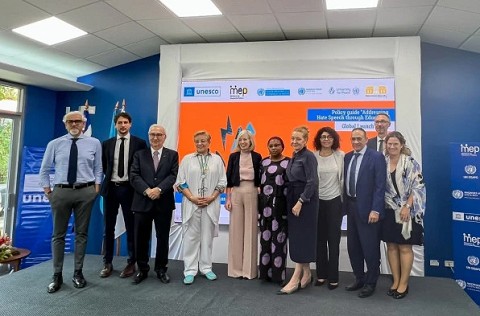 UNESCO and partners launch first education-focused guide on addressing hate speech 6 September 2023 27 March 2023How can education help address hate speech globally? This question was the focus of the Global launch of the new guide on addressing hate speech through education which was jointly produced by UNESCO and the United Nations Office on Genocide Prevention and the Responsibility to Protect (UNOSAPG).The event took place on 27 March 2023 at the University for Peace in San Jose, Costa Rica, with UN system representatives, ministers of education from six countries, government officials and world-renowned experts attending both online and in person. The new guide is the first entirely education-focused tool for policy-makers and key education stakeholders to ensure that hate speech, online and offline, is effectively addressed and countered in and out of the classroom. Why is it important?“We are aware of the harm caused by hate speech and recognize its danger. That is why UNESCO is committed to promoting understanding of hate speech by developing educational programs that address its root causes and counter its manifestations, both online and offline”, said Stefania Giannini, Assistant Director-General for Education of UNESCO.The prevalence of hate speech online and offline is a growing concern worldwide. It threatens the social cohesion and well-being of individuals and communities, fueling discrimination, intolerance, and even violence. In this context, education is crucial in raising awareness, promoting dialogue, and preventing the spread of hate speech. By equipping individuals with the knowledge, skills, and values to promote respect, tolerance, and understanding, education can help to create a more peaceful and inclusive society.“It is important to ensure that we learn ffom history, including in education curricula teaching about past atrocity crimes and the early warning signs such as hate speech that led to their commission”, said Alice Wairimu Nderitu, United Nations Special Adviser on Genocide Prevention, in her opening remarks. Leading by exampleCosta Rica, the host country of the event, shared their experience in adopting a policy framework and roadmap to deal with hate speech at all levels of education. Under the UN leadership and in cooperation with the private sector and academia, in previous years country initiated a massive study into the prevalence of hate speech in Costa Rican social media that revealed an alarming rise in hateful conversations mainly targeting foreigners, women and LGBTQI+ people. These findings informed the Plan of Costa Rica Against Hate Speech and Discrimination, launched in July 2021, which focuses on further research, awareness-raising campaigns and creating a first-of-its-kind National Observatory on Hate Speech managed by the UN system and the University of Costa Rica.At the event, Ministers of Education and government officials from Argentina, Ecuador, France, Morocco, Spain and Portugal also presented their policies and approaches to addressing hatred and discrimination through education. They expressed their unwavering political commitment to prioritize the fight against hate speech.The global launch was organized in partnership with the Ministry of Public Education of Costa Rica (MEP), the Ministry of Foreign Affairs of Costa Rica, the United Nations Office for the Prevention of Genocide (UNOSAPG), and the United Nations Resident Coordinator’s Office in Costa Rica. https://www.unesco.org/en/articles/unesco-and-partners-launch-first-education-focused-guide-addressing-hate-speech?hub=701
  Social Media 4 Peace project hosts a Twitter Space on countering hate speech 6 September 2023 12 June 2023On the occasion of the International Day for Countering Hate Speech, UNESCO hosts a Twitter Space in partnership with Article 19 to share local knowledge on the spread of hate speech and discuss solutions to counter this global phenomenon with members of the national multistakeholder coalitions on Content Moderation and Freedom of Expression formed within the UNESCO project Social Media 4 Peace funded by the European Union.The objective of the conversation is to raise awareness on the spread of hate speech on social media, compare this worrying phenomenon in different countries and discuss solutions to counter it. It will also give visibility to the launch of national multistakeholder coalitions on content moderation and freedom of expression in partnership with Article 19 and give voice to members of the coalitions.The conversation will be interactive: listeners will be able to share tweets with #SocialMedia4Peace and intervene at the end to share their experience of hate speech and suggest solutions to counter the spread. About Social Media 4 PeaceUNESCO's project “Social Media 4 Peace” is funded by the European Union and implemented by UNESCO in Bosnia and Herzegovina, Colombia, Indonesia, and Kenya since January 2021. It is aligned with UNESCO’s overall strategy to combat disinformation by fostering the information as a public good and strengthening the transparency of the internet ecosystem. The project will contribute to the achievement of Sustainable Development Goal 16, to promote just, peaceful and inclusive societies and to the UN Plan of Action on Hate Speech launched by UN Secretary General Antonio Gutierrez to combat the online disturbing groundswell of xenophobia, racism and intolerance. https://www.unesco.org/en/articles/social-media-4-peace-project-hosts-twitter-space-countering-hate-speech?hub=701
  UIL launches online course Skillsets in Transit: Recognition, validation and accreditation of prior learning for migrants and refugees. 6 September 2023 11 August 2023 On 19 June 2023, the UNESCO Institute for Lifelong Learning (UIL) launched a new capacity-building course, entitled Skillsets in Transit, on ensuring recognition, validation and accreditation (RVA) of prior learning for all, with a focus on migrants and refugees. The most recent Global Trends data published by the UNHCR show that global displacement continues to rise. At the end of 2022, 108.4 million persons were forcibly displaced worldwide as a result of persecution, conflict, violence, human rights violations or serious public order disturbances – 35.3 million of them refugees, 62.5 million of them internally displaced people. Establishing mechanisms to recognize the prior skills and competences of migrants, refugees and internally displaced persons (IDPs) is therefore key for securing a sustainable future for all. Opening the course, Borhene Chakroun, Director a.i. of the UNESCO Institute for Lifelong Learning, said: “Recognition, validation and accreditation (RVA) of prior learning for migrants and refugees plays a key role in today's world. It serves as a powerful tool for promoting lifelong learning and the pursuit of flexible learning pathways, as well as fostering social and professional inclusion. The development of robust and inclusive RVA systems will become increasingly important as countries respond to key global trends such as the climate crisis, changing labour-market needs, demographic shifts, and digitalization.” Through a blend of independent learning, engagement with expert speakers and interactive activities, the Skillsets in Transit course seeks to support key stakeholders across UNESCO Member States in building the knowledge and skills to develop and implement inclusive RVA through the lens of lifelong learning. Over the next three weeks, learners will cover a number of key success factors that can contribute to inclusive RVA. To complement self-study, live sessions will bring participants together to discuss and reflect on each week’s learning content. The course will culminate in learners submitting a final policy brief that will share their plans to advance RVA in their respective country contexts moving forward. To find out more about the course, and if you wish to register, please access the concept note here. About UIL’s Project on RVA and Flexible Learning Pathways, with a focus on migrants and refugees The project supports UNESCO Member States in building RVA systems, processes and mechanisms that are inclusive of all groups, including people on the move. Through the development of research and practical tools, it addresses obstacles that can prevent refugees and migrants from getting their prior learning recognized, ranging from a lack of formal documentation to cultural barriers. In short, the project aims to promote the use of RVA as a tool for inclusion, in economic, social and cultural arenas that may otherwise be closed off to members of such groups. URL:https://www.unesco.org/en/articles/uil-launches-online-course-skillsets-transit-recognition-validation-and-accreditation-prior-learning?hub=701
 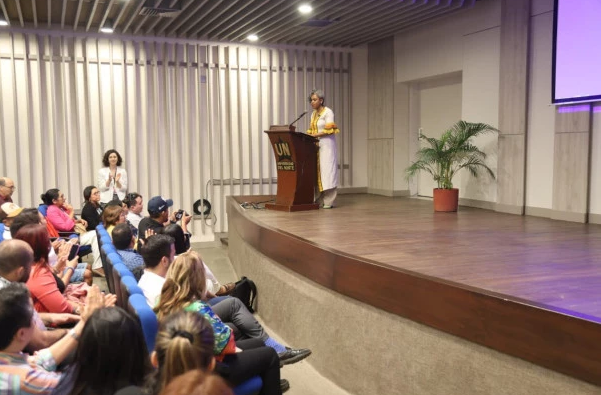 UNESCO and Colombia call on countries to continue the regional agenda to ensure the right to education for people in situations of human mobility 6 September 2023 8 June 2023 During the regional forum, Latin American and Caribbean countries presented the challenges and transformative practices to strengthen educational inclusion, eliminating all kinds of obstacles for the continuity of the educational paths of the displaced population. In the context of the regional forum "Education beyond borders" organized by the Regional Bureau for Education in Latin America and the Caribbean (OREALC/UNESCO Santiago), the Minister of Education, Aurora Vergara Figueroa, reaffirmed the commitment of the Colombian government to guarantee the right to education for people in situations of human mobility."Colombia is committed to the right to education for people in situations of human mobility, within the framework of a regional integration agenda that allows a response from an inclusion and development perspective," said Minister Aurora Vergara Figueroa.The speech was made during the closing of the regional event, organized by the Government of Colombia and UNESCO, in coordination with the Regional Education Group and with the support of Education Cannot Wait and the Government of Canada.According to UNESCO and its partners, as a result of emergencies and crises in Latin America and the Caribbean, about 3.7 million girls, boys and adolescents are in processes of migration and displacement with the hope of finding a better life opportunity and access to basic services."The guarantee of the right to education for the population in mobility situations has been a great challenge for our countries. Since the first version of the Regional Forum, progress in ensuring access for students to host education systems has been extraordinary. However, Latin America and the Caribbean must not spare efforts to ensure the elimination of all obstacles to ensure permanence and completion of studies. The message of the 16 participating countries is clear: the priority in the coming years will be the guarantee of the quality of teaching and learning, without any distinction," said Claudia Uribe, Director of the Regional Bureau for Education in Latin America and the Caribbean (OREALC/UNESCO Santiago).In this pursuit, those who migrate are forced to interrupt their studies, as well as face multiple barriers to access education, whether in transit or host countries.In that context, and after analyzing the problem with representatives of the ministries of education from Latin America and the Caribbean, international organizations and civil society, the Minister of Education of Colombia pointed out the importance of generating policies with a regional dimension to continue providing reception and integration to migrants and refugees in education systems."Our challenge now is to ensure effective responses for the provision of educational services to more than 600,000 boys and girls who have arrived in our country between 2016 and 2023. To do this, we are implementing emergency and protracted crisis education strategies," said Minister Aurora Vergara.Colombia is currently the Latin American and Caribbean country that hosts the largest number of people in mobility from Venezuela. As of December 2022, the country has recorded the entry of approximately 2.5 million citizens from that country.The response of the Colombian Government to migratory demands has been crucial to ensure the inclusion of students in mobility. National regulatory frameworks have been modified in order to eliminate access barriers to the education system and develop coordinated measures between different institutions of the Colombian State, as well as at different levels of the Government to ensure the conditions of access and permanence of this population in the education system.It is worth noting that one of the priorities in the lines of action of the National Development Plan 2022-2026 "Colombia, Power of Life" is to establish protection mechanisms for the migrant population in transit, refugees and with a desire to settle in the national territory, which will allow to continue with the protection policies for this population and contribute fundamental contributions to the integration processes of Latin America and the Caribbean.From the Ministry of National Education, different inter-institutional efforts are being coordinated, with international cooperation and civil society to strengthen the strategies of education in emergencies and protracted crises, from a territorial approach and with civic education, for reconciliation, socio-emotional, anti-racist and to face climate change."Our commitment is to ensure that education is a vehicle for inclusion, not stigmatization, empowerment and opportunities for all children, adolescents and young people living in the country, regardless of their place of origin," concluded Minister Vergara. https://www.unesco.org/en/articles/unesco-and-colombia-call-countries-continue-regional-agenda-ensure-right-education-people-situations?hub=701
 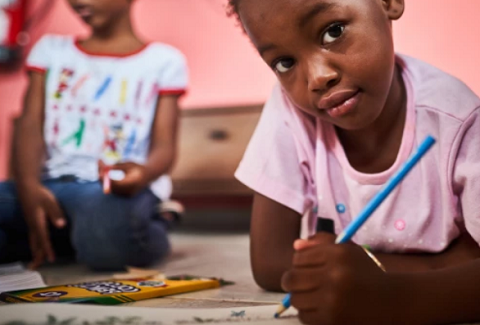 Barranquilla (Colombia) hosts UNESCO regional forum on the right to education for people in mobility situations 6 September 2023 • The meeting will analyze national and regional strategies and possibilities for cooperation to guarantee the right to education for people in these situations. Additionally, participants, representatives from Ministries of Education from 15 countries, will discuss existing evidence to support coordination among countries in Latin America and the Caribbean.• Join the plenary sessions of this forum through the YouTube channel of the Regional Bureau for Education in Latin America and the Caribbean (OREALC/UNESCO Santiago) at www.youtube.com/unescosantiago 6 June 2023 What progress and actions are countries and educational actors making to guarantee the right to education for migrants, displaced persons, and refugees? Which of these experiences can be adapted and implemented in other countries in the region? In its third edition, the regional forum "Education Beyond Borders, Regional Solidarity for the Guarantee of the Right to Education" seeks to recognize initiatives and policies undertaken to provide a coordinated educational response that benefits over 14.8 million people in mobility situations in the region. The event will take place in person from June 7 to 9, 2023, at the Universidad del Norte in Barranquilla (Colombia) with online streaming of the plenary sessions. This regional forum has been conceived as a platform for sharing experiences in solidarity, reflecting on lessons learned, and assessing their potential for adaptation and scalability in the region. During the event, participants will identify areas of cooperation regarding the educational inclusion of students in human mobility and provide significant information and evidence to strengthen coordination and cooperation mechanisms among countries in the region. Its objective is to support countries in addressing and guaranteeing the right to education for people in situations of human mobility in the region. Ministers of Education from the region, national educational authorities responsible for the educational response to the population in mobility, experts, and representatives from United Nations agencies from 15 countries will attend the event. Representatives from academia and civil society actors, particularly organizations working with refugees, migrants, youth, women, and those involved in the educational response in the region, will also be present. The host institution is Universidad del Norte, in the city of Barranquilla (Colombia). The forum is held within the framework of the Multi-Year Resilience Program (MYRP) of Education Cannot Wait and has the generous support of the Regional Education Group and the Government of Canada. The forum takes place thanks to cooperation with the Ministry of National Education of Colombia and the Education Secretariat of Barranquilla. URL:https://www.unesco.org/en/articles/barranquilla-colombia-hosts-unesco-regional-forum-right-education-people-mobility-situations?hub=701