
News
Follow the newest trends and news in GCED.
1,676 Results found
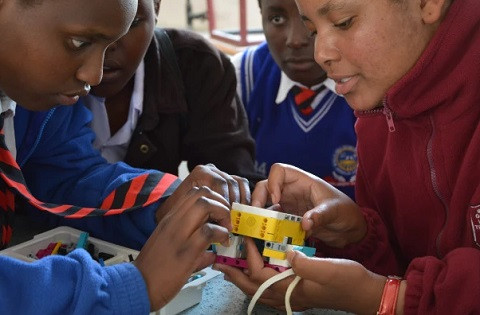 Keeping Girls in the picture: UNESCO joins hands with Prada to promote Girls’ ICT-STEM Education in Kenya 14 September 2023 5 September 2023 From 14-16 August 2023, over 200 girls from two counties in Kenya attended ICT-STEM bootcamps. With the aim of placing them on track to take up studies and careers in STEM, the students were mentored by female role models and introduced to artificial intelligence, coding, robotics, 3D printing, and other foundational 21st century digital skills. The bootcamps were part of the “Keeping Girls in the Picture” campaign, led by UNESCO in partnership with the Ministry of Education and funded by Prada. Over 40 teachers were also trained on Gender Transformative STEM and Digital Skills Education.Over three days, 220 girls from 20 secondary Schools in Kajiado and Kwale Counties of Kenya coded their own robots, developed their own mobile apps, and 3D-printed their own design projects. Guided by trainers from STEM Impact Centre Kenya, students worked in teams to build and present their ICT projects. For many, it was their first interaction with coding or engineering. The Bootcamps were hosted by Moi Isinya Girls High School in Kajiado County and Waa Girls Secondary School in Kwale County.The objectives of the Bootcamps were: To introduce learners to the fundamentals of artificial intelligence, creative coding and robotics, 3D printing and mobile app development. To increase exposure of learners to STEM careers opportunities for experiential learning and inspiration through mentorship and access to female role models. To promote the psychosocial outcomes and advocacy on gender responsiveness and self-efficacy in relation to the participation in STEM related subjects. Learners also enjoyed the opportunity to engage with women leaders in STEM and ICT on the last day of the bootcamp, as part of the programme’s objectives to foster STEM-ICT mentorship and access to female role models in a field that remains male-dominated. "We've learned a lot, especially how to develop our own mobile app. Personally, I've learned a lot even though I don't do [computing], but at least now, I won't be blank when I'm given a computer! ... I'm expecting to learn more, even after I go home. I will be able to teach other students what I learned after this programme."- StudentMoi Girls Isinya High School - As the girls cracked the code, teachers from Kajiado and Kwale also attended training sessions aimed at strengthening the capacity of the education system to provide gender-responsive/transformative STEM and digital education. Educators experimented with UNESCO’s Quality gender-responsive STEM education manual, discussed how to mitigate factors that would inhibit girls from pursuing STEM-ICT subjects in schools, and explored how ICT integration in classrooms could enhance STEM learning. “Keeping Girls in the Picture” is a campaign under the Gender Flagship of UNESCO’s Global Education Coalition, which aims to safeguard progress made on girls’ education, ensure girls’ learning continuity during school closures, and promote girls’ safe return to school. The Global Education Coalition—with over 200 members—was launched in 2020 as a platform for collaboration to address the impacts of the COVID-19 pandemic on the lives and education of 1.5 billion learners in more than 190 countries—especially girls. Since then, the “Keeping Girls in the Picture” campaign has produced a variety of advocacy tools, including toolkits, social media packs, guidelines, and films to promote public awareness and multi-stakeholder cooperation on research-based policies to prevent widening gender inequalities in education. As a continuation of these efforts, the bootcamps aim to encourage and empower girls to pursue studies and careers in science, technology, engineering, and mathematics (STEM) and Information and Communications Technology (ICT) fields. In attendance to open the programme in Kajiado were the Chief Guest, Ms. Elizabeth Otieno, Deputy Director, Directorate of Policy Partnership and East Africa Community Affairs, Ministry of Education; Ms. Cicilia Koyieyio, representing the County Director of Education-Kajiado, and Mr. Solomon Leseewa, the County Director, Teachers Service Commission. UNESCO was represented by Ms. Scheherazade Feddal, Education Programme Specialist, UNESCO Multi-sectoral Regional Office for Eastern Africa. "Science, Technology, Engineering, and Mathematics (STEM) are the driving forces behind innovation, progress, and the solutions to some of the world's most pressing challenges. It's imperative that we ensure that everyone, regardless of gender, has a seat at this transformative table."- Scheherazade FeddalEducation Programme Specialist, UNESCO Multi-sectoral Regional Office for Eastern Africa - Achieving the 2030 Agenda for Sustainable Development requires transformative thinking and action to leverage the potential for STEM and ICT to transform and improve people’s lives. There is a growing demand for professionals with STEM and ICT skills in Africa, where the so-called fourth industrial revolution is expected to create a wide range of new jobs in these fields. Against this backdrop, girls’ access to, and engagement in ICT and STEM is more crucial now than ever. However, despite being a field strongly associated with advancement, women and girls remain particularly under-represented in STEM and ICT careers. Globally, girls are still less likely than boys to have digital skills, according to the International Telecommunication Union Facts and Figures 2022. A report from the UNESCO Institute for Statistics (2019) found women comprised only 29.3 per cent of scientific researchers in the world. Female participation and leadership in ICT-STEM fields is critical to advance continental, regional and national development efforts. “Keeping girls in the picture” goes beyond keeping girls in school. It also means reducing the gender digital divide by empowering girls’ participation and achievement in STEM-ICT fields, so that they too may become active agents in a more equal, green, and tech-driven future. For more information about UNESCO-Prada’s #KeepingGirlsinthePicture campaign and the Global Education Coalition, visit: Keeping girls in the picture | UNESCO https://www.unesco.org/en/articles/keeping-girls-picture-unesco-joins-hands-prada-promote-girls-ict-stem-education-kenya?hub=701
 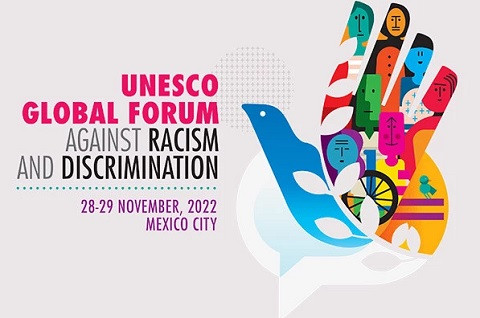 Global Forum against Racism and Discrimination: UNESCO paves way for Post-COVID Recovery 14 September 2023 21 November 2022 UNESCO will hold the second Global Forum against Racism and Discrimination, in Mexico City, Mexico, from 28 to 29 November 2022. Building on the first edition, this Forum will focus on the Post COVID world, and the cost-of-living crisis, to directly address the adverse impact that racism and discrimination have had on the most vulnerable populations, including migrants, women, adolescents and girls, people of African descent and of Asian origin, and others. Now is the moment to catalyze action on prioritizing the fight against racism on the international agenda. UNESCO is mobilizing key stakeholders to uphold commitments against racism and discrimination within an unusually challenging geopolitical and social context. Today, our societies are confronting multiple challenges. They have not yet recovered from the impact of the pandemic, and the war in Ukraine, the cost-of-living crisis, and the looming recession in many economies are putting additional pressures on vulnerable communities. Racial minorities and discriminated groups are frequently those that experience the worst effects of crises. At this global forum, participants will seek ways of combining the solutions to the current crises, while at the same time focusing on the need to uproot the systemic, structural, and institutional racism that continues to pervade societies across the world.UNESCO will use the forum to encourage its Member States to upgrade their legislative frameworks, institutional capacities and financial resources to the fight against racism. Prominent champions against racism will take the floor, best practices will be identified and partnerships among participants will be fostered.The Forum is led by high-level representatives of the Mexican Government and by Gabriela Ramos, UNESCO’s Assistant Director-General for Social and Human Sciences, who oversees this agenda for the Organization. She will be accompanied by well-known champions against racism: Xueli Abbing, UNESCO Goodwill Ambassador; Kailash Satyarthi, Nobel Peace Laureate 2014; Darren Walker, President of the Ford Foundation; Martin Luther King III; Elisabeth Moreno, former Minister Delegate for Gender Equality, Diversity and Equal Opportunities of France; Tenoch Huerta, Mexican actor; and writers from around the globe including Evelina Cabrera (Argentina), Tania de Montaigne (France), and rapper "Webster” (Canada). Activists from civil society will also present their ideas and initiatives, including those which support indigenous populations in Latin America.During the Forum, Canada, the United States of America, and Mexico will discuss the opportunity to build a North American Partnership for Racial Equity. UNESCO will work with these countries in advocating for multistakeholder partnerships, as part of its Roadmap against Racism and Discrimination. High-level representatives present at this occasion will be Ahmed Hussen, Minister of Housing and Diversity and Inclusion of Canada; Peter Flegel, Executive Director, Federal Anti-Racism Secretariat, Canadian Heritage; Desirée Cormier Smith, Special Representative for Racial Equity and Justice, U.S. Department of State; and Aureny Aguirre Sunza, Ambassador, Ministry of Foreign Affairs of Mexico.The new “Writers against Racism” initiative will also be launched, aiming to shine a light on the resurgence of racism, and to change mindsets, attitudes and behaviours and inspire action, both on an individual level and a global scale. In addition, the artwork against discrimination of painter Krytzia Dabdoub will be unveiled, and the “Tree of Peace” of Hedva Ser will be plantedThe Forum will also provide a platform for high-level representatives from governments, mayors from the International Coalition of Inclusive and Sustainable Cities – ICCAR, public policy experts, academia, scientists, civil society actors, NGOs, artists and creatives, the private sector and media to exchange on the way forward.The Forum will set the venue to release the latest research on racism and discrimination by UNESCO; the unveiling of a scanning exercise on good practices and a toolkit to counter this problem, and the launching of the work on “Changing MENtalities”, to engage boys and men in countering social norms and stereotypes that harm women, but that also produce toxic environment for men.An Outcome Document that will reflect the common vision of Forum participants and call for action will be adopted at the end of the Forum. The outcome of the Forum will inform UNESCO’s action against racism. https://www.unesco.org/en/articles/global-forum-against-racism-and-discrimination-unesco-paves-way-post-covid-recovery?hub=701
  Artificial Intelligence: UNESCO calls on all Governments to implement Global Ethical Framework without delay 14 September 2023 30 March 2023 Following calls by over 1000 tech workers this week for a pause in the training of the most powerful AI systems, including Chat GPT, UNESCO calls on countries to fully implement its Recommendation on the Ethics of Artificial Intelligence immediately. This global normative framework, adopted unanimously by the 193 Member States of the Organization, provides all the necessary safeguards."The world needs stronger ethical rules for artificial intelligence: this is the challenge of our time. UNESCO’s Recommendation on the ethics of AI sets the appropriate normative framework. Our Member States all endorsed this Recommendation in November 2021. It is high time to implement the strategies and regulations at national level. We have to walk the talk and ensure we deliver on the Recommendation’s objectives"- Audrey AzoulayUNESCO's Director-General - UNESCO’s Recommendation on the Ethics of Artificial Intelligence is the first global framework for the ethical use of artificial intelligence. It guides countries on how to maximize the benefits of AI and reduce the risks it entails. To this end, it contains values and principles, but also detailed policy recommendations in all relevant areas.UNESCO is concerned by many of the ethical issues raised by these innovations, in particular discrimination and stereotyping, including the issue of gender inequality, but also the fight against disinformation, the right to privacy, the protection of personal data, and human and environmental rights.Industry self-regulation is clearly not sufficient to avoid these ethical harms, which is why the Recommendation provides the tools to ensure that AI developments abide by the rule of law, avoiding harm, and ensuring that when harm is done, accountability and redressal mechanisms are at hand for those affected.UNESCO’s Recommendation places a Readiness Assessment tool at the core of its guidance to Member States. This tool enables countries to ascertain the competencies and skills required in the workforce to ensure robust regulation of the artificial intelligence sector. It also provides that the States report regularly on their progress and their practices in the field of artificial intelligence, in particular by submitting a periodic report every four years.To this date, more than 40 countries in all regions of the world are already working with UNESCO to develop AI checks and balances at the national level, building on the Recommendation. UNESCO calls on all countries to join the movement it is leading to build an ethical AI. A progress report will be presented at the UNESCO Global Forum on the Ethics of Artificial Intelligence in Slovenia in December 2023. https://www.unesco.org/en/articles/artificial-intelligence-unesco-calls-all-governments-implement-global-ethical-framework-without?hub=701
  UNESCO to support more than 50 countries in designing an Ethical AI Policy this year 14 September 2023 17 July 2023 This month, UNESCO published its AI Readiness Assessment Methodology, a diagnostic tool to support governments in ensuring Artificial Intelligence is developed and deployed ethically, in line with its Recommendation on the Ethics of Artificial Intelligence, adopted unanimously by its Member States in November 2021. UNESCO worked with a high-level group of AI experts from all regions of the world to develop the Readiness Assessment Methodology (RAM) in 2022. The tool is a comprehensive assessment that tests the adequacy and pertinence of existing national laws and policies to frame the technological development positively, and gauges the technical capacities of public servants and institutions. Pinpointing a precise plan of actionThe RAM provides an assessment of a country’s legal, social, cultural, scientific, educational, technical and infrastructural AI capacities. It also indicates whether a country’s AI systems align with the values, principles and policy areas set out in UNESCO’s Recommendation. It is conducted by national experts, hired by UNESCO, who have a strong understanding of the national context. The end product of the RAM will be a comprehensive report, enabling experts and policy makers to pinpoint what institutional and regulatory changes are needed to take advantage of these technologies while protecting against its shortfalls.These changes may involve costly capacity-building efforts, and UNESCO is committed to using its networks and expertise to support countries, particularly through its “AI Experts without Borders” network, launched in June 2023. This network will assist countries in developing policies, using international benchmarks as a reference. 50 countries implementing in 2023“Countries are at different stages of readiness to implement the UNESCO’s Ethics of AI Recommendation, and there is “no one size fits all” approach. They also have different societal preferences, risk thresholds and innovation landscapes. UNESCO's tool takes these specificities into account while bringing an international perspective, so we can learn together on how effectively we can address the AI challenges” said Gabriela Ramos, Assistant Director General for Social and Human Sciences at UNESCO.50 countries are engaged with UNESCO in the implementation of RAM this year, including Antigua & Barbuda, Barbados, Brazil, Botswana, Chad, Chile, Costa Rica, Cuba, Democratic Republic of Congo, the Dominican Republic, Gabon, India, Kenya, Malawi, the Maldives, Mauritius, Mexico, Morocco, Mozambique, Namibia, Rwanda, São Tomé and Príncipe Senegal, South Africa, Timor Leste, Uruguay, and Zimbabwe. National analyzes that will feed the international dialogueThe UNESCO’s RAM is implemented with the support of the European Commission, the Government of Japan, the Patrick McGovern Foundation, and the Development Bank in Latin America (La Corporación Andina de Fomento- CAF)Country reports, based on the RAM diagnostic assessment will be published on UNESCO’s AI Ethical Observatory to be unveiled in the coming weeks and launched with the Alan Turing Institute (UK). It will be an online transparency portal for the latest data and analysis on the ethical development and use of AI around the world, and a platform for best practice sharing.A report synthesizing the lessons learnt in the preparation of the RAM will be published in the upcoming weeks. Its results will deliver insights that will then inform the Global Forum on the Ethics of Artificial Intelligence, to take place in Slovenia in early 2024. https://www.unesco.org/en/articles/unesco-support-more-50-countries-designing-ethical-ai-policy-year?hub=701
  Artificial intelligence: Partnership between UNESCO and the EU to speed up the implementation of ethical rules 14 September 2023 27 June 2023UNESCO and the European Commission have just signed an agreement to accelerate global implementation of the UNESCO Recommendation on the ethics of artificial intelligence adopted in November 2021 by the 193 Member States of the Organization. A budget of €4 million will be dedicated to supporting the least developed countries in the establishment of their national legislation. At a moment where concerns over generative AI are growing, the partnership between UNESCO and the European Commission will help low-income countries to develop their strategies and regulations at the national level. The European Commission will provide funding of €4 million.Among the actions made possible by this Agreement, UNESCO will establish and operationalize a global facility of experts, “AI Ethics Experts without Borders” (AIEB), to provide on-demand support and tailored policy advice to enhance the capacity of Member States’ institutions to implement the Recommendation.UNESCO will deliver an annual “Global Forum on the Ethics of AI” as a platform for structured learning and sharing of global best practices among AI stakeholders worldwide. UNESCO will also develop a toolkit for judicial operators on AI. About the RecommendationThe UNESCO Recommendation is the first universal normative framework for the ethics of artificial intelligence. It was adopted unanimously by the 193 Member States of UNESCO in November 2021. It is based on the promotion and protection human rights, human dignity, and environmental sustainability. It advances principles such as accountability, and the rule of law, and includes concrete policy chapters that call for better data governance, inclusivity and gender equality. https://www.unesco.org/en/articles/artificial-intelligence-partnership-between-unesco-and-eu-speed-implementation-ethical-rules?hub=701
 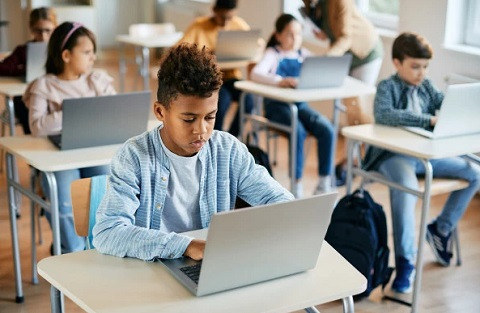 UNESCO: Governments must quickly regulate Generative AI in schools 14 September 2023 7 September 2023 As pupils in part of the world return to school after the summer break, UNESCO is calling on governments to implement appropriate regulations and teacher training, to ensure a human-centred approach to using Generative AI in education. To this end, UNESCO publishes the first-ever global Guidance on Generative AI in Education and Research, designed to address the disruptions caused by Generative AI technologies."Generative AI can be a tremendous opportunity for human development, but it can also cause harm and prejudice. It cannot be integrated into education without public engagement, and the necessary safeguards and regulations from governments. This UNESCO Guidance will help policymakers and teachers best navigate the potential of AI for the primary interest of learners."- Audrey Azoulay UNESCO Director-General -The first sections of the UNESCO Guidance explain what Generative AI is and how it works. The following sections elaborate on the controversies around Generative AI and their implications for education, in particular how it is worsening digital data divides. Indeed, current ChatGPT models are trained on data from online users which reflect the values and dominant social norms of the Global North. An age limit of 13The UNESCO Guidance then sets out seven key steps for governments should take to regulate Generative AI and establish policy frameworks for its ethical use in education and research, including through the adoption of global, regional or national data protection and privacy standards. It also sets an age limit of 13 for the use of AI tools in the classroom and calls for teacher training on this subject.Building on UNESCO’s 2021 Recommendation on the Ethics of Artificial Intelligence and the 2019 Beijing Consensus on Artificial Intelligence in Education, the guidance promotes human agency, inclusion, equity, gender equality and cultural and linguistic diversity. The Guidance also responds to the concerns expressed at the first global ministerial roundtable on generative AI convened by UNESCO in May 2023. Launch on 7 SeptemberThe guidance will be released at UNESCO headquarters during UNESCO’s Digital Learning Week which gathers over 1000 participants to discuss the themes of public digital learning platforms and generative AI in education, among others. Speakers include: Stuart Russel, Professor of Computer Science, University of California, Berkeley, USA Yoshua Bengio, Professor in the Department of Computer Science and Operations Research at the Université of Montreal and the Founder and Scientific Director of Mila – Québec Artificial Intelligence Institute, 2018 A.M. Turing Award laureate Yann LeCun, Vice President and Chief AI Scientist at Meta Daniel Andler, Mathematician and Philosopher, Member of the Académie des sciences morales et politiques and Professor Emeritus, Sorbonne Université, France Lack of governance of Gen AI in the classroomGenerative AI hit public awareness in November 2022 with the launch of ChatGPT, which became the fastest growing app in history. With the power to generate outputs such as text, images, videos, music and software codes, Generative AI tools have far-reaching implications for education and research. Yet the education sector is largely unprepared for the ethical and pedagogical integration of these rapidly evolving tools. A recent UNESCO global survey of over 450 schools and universities showed that less than 10% of them had institutional policies and/or formal guidance concerning the use of generative AI applications, largely due to the absence of national regulations. In June 2023, UNESCO warned that the use of Generative AI in schools was being rolled out at too a rapid pace, with a worrying lack of public scrutiny, checks, or regulations. The Organization released a paper revealing that publishing a new textbook requires more authorizations than the use of Generative AI tools in the classroom. https://www.unesco.org/en/articles/unesco-governments-must-quickly-regulate-generative-ai-schools?hub=701
 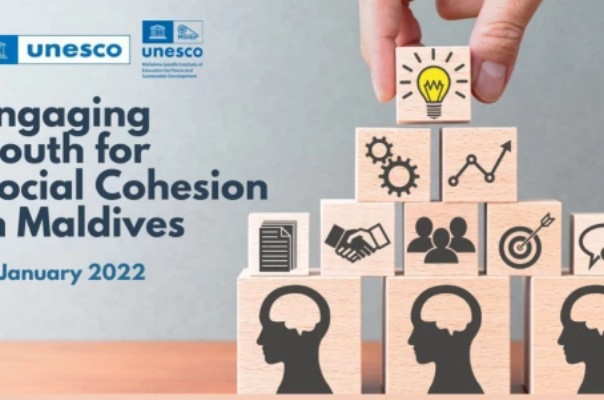 Strengthening social cohesion through socio-emotional learning in the Maldives 14 September 2023 3 February 2022 The first phase of the workshop focused on equipping the youth leaders to be future agents of change by teaching them how to facilitate various methodologies for supporting dialogue and social cohesion within communities, such as UNESCO’s Story Circles approach and a novel scenario-based peace education technique. Discussion on the concepts of conflict and challenges to social cohesion followed, helping the community leaders to explore the nuanced risk factors, root causes, and vulnerabilities which can drive conflict, and what is needed to strengthen social cohesion and dialogue as effective preventative strategies. Given the increase in global levels of social tension and divisive communication in current times, driven significantly by challenges related to the COVID-19 pandemic, there is a strong need within the region to build the capacities of youth leaders to champion social cohesion and promote intercultural dialogue as tools for socio-emotional resilience which can help sustain cohesion and peace. Following the Training of Trainers session, the youth leaders will be supported to utilize the approaches within their own communities and contexts. Benefitting from access to a platform for good practice sharing and a series of peer-support sessions, UNESCO will help the 50 youth leaders to engage over 1,000 community beneficiaries across the Maldives, strengthening socio-emotional resilience for cohesion and peace throughout the country. https://www.unesco.org/en/articles/strengthening-social-cohesion-through-socio-emotional-learning-maldives
 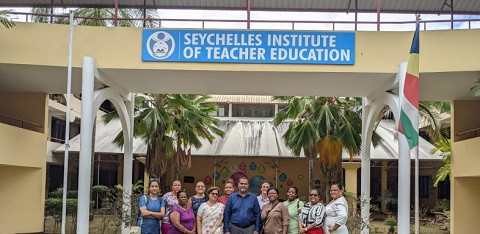 Enhancing Early Childhood Education in Seychelles through Social and Emotional Learning 14 September 2023 2023In an effort to enhance the quality of early childhood education in Seychelles, the Ministry of Education has embarked on a collaborative journey with UNESCO MGIEP to develop a science and evidence-based framework aimed at fostering Social and Emotional Learning (SEL) among young learners in Seychelles schools. This initiative aims to create a holistic learning environment that nurtures not only academic growth but also emotional intelligence. Development of an Evidence-Based SEL Framework:UNESCO MGIEP in collaboration with the ECCE technical team, Ministry of Education in Seychelles, is actively engaged in the development of a science and evidence-based framework to promote Social and Emotional Learning (SEL) among early childhood learners. This framework will serve as a comprehensive guide for educators, detailing strategies and approaches that contribute to the cultivation of essential social and emotional skills in young students. By incorporating the latest research and educational practices, this framework will ensure that Seychelles schools provide a nurturing environment for holistic development. Presentations on Neuroscience and SELTo support the implementation of the SEL framework, presentations were conducted across Seychelles to educate primary teachers, teacher assistants, and parents about the role of neuroscience in building SEL skills. These presentations highlighted the connection between brain development and emotional well-being, offering insights into how educators and parents can effectively support children's emotional growth. By utilizing the knowledge gleaned from neuroscience, Seychelles aims to lay a strong foundation for SEL in its early childhood education system. Workshops for ECCE Teachers:In order to facilitate the successful integration of the SEL framework, workshops will be organized for ECCE teachers in schools where the framework will be piloted. These workshops will provide educators with practical tools, teaching methodologies, and classroom strategies to effectively foster social and emotional skills in their students. The hands-on nature of these workshops will equip teachers with the skills necessary to create an inclusive and emotionally supportive learning environment. Collaboration with Ministry of Education (MOE) Officials:In addition to the educational initiatives, collaboration with Ministry of Education (MOE) officials will play a crucial role in leveraging UNESCO MGIEP expertise for teacher training and action research in Seychelles. Through dialogues and meetings, common areas of interest will be identified to further enhance teacher development and educational research in the country. This collaborative approach ensures that Seychelles remains aligned with international educational standards and best practices. Conclusion:The efforts of the Ministry of Education and the ECCE technical team in Seychelles to cultivate Social and Emotional Learning (SEL) at the early childhood level signify a commitment to holistic education. By developing a science and evidence-based framework, conducting informative presentations, facilitating workshops, and engaging in collaborative discussions, Seychelles aims to enhance the overall quality of education and emotional well-being of its young learners. This initiative not only adheres to UNESCO MGIEP but also underscores Seychelles' dedication to providing a nurturing and comprehensive educational experience for its future generations. https://mgiep.unesco.org/article/unesco-mgiep-to-collaborate-with-early-childhood-care-and-education-ecce-technical-team-at-the-ministry-of-education-seychelles
 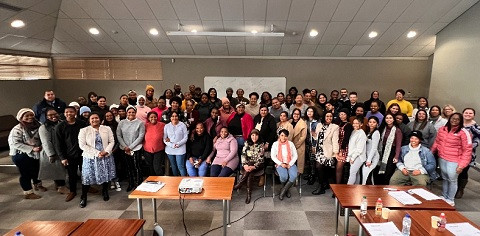 Empowering South Africa's Education Landscape: A Journey in Social and Emotional Learning 14 September 2023 26 - 30 June 2023 In the heart of South Africa's vibrant educational landscape, a pioneering initiative was set in motion between UNESCO MGIEP and the Western Cape Education Department in South Africa (WCED) from 26 to 30 June 2023. The partnership provided intensive training on Social and Emotional Learning (SEL) to just under 200 participants including Care and Support Assistants (CSAs) teachers, district officials, CSA coordinators, and other WCED staff members. An additional 200 teachers will receive virtual training later this year. Training for Care and Support Assistants (CSAs) and TeachersThe 18-34-year-old CSAs, dedicated to assisting students from vulnerable backgrounds, underwent a one-day training session focused on their own mental and emotional well-being. The training aimed to equip them with the tools to manage their emotions and enhance their resilience. Teachers received a 2-day intervention divided into two batches across four days. The aim was to infuse SEL into their learning toolbox and recognize their personal well-being as a crucial outcome. With this knowledge and skills, they could navigate complex challenges and aim to solve multidimensional problems at schools. The Reflective Journal - SEL ScribblesAs a complement to the workshop, participants received SEL Scribbles, a reflective journal compiled and created by UNESCO MGIEP. The journal provided a thinking and emotional space for participants to document their learnings and thoughts during the session, offering additional tools and practices to support their journey toward well-being, both in and outside the classroom. Positive Feedback and Sustained EffortsFeedback from teachers through pre-and-post surveys, indicated the workshops were successful, leaving them feeling well-equipped with SEL tools for their own well-being and that of their students. To sustain the momentum, the Inclusive and Specialized Education Unit at the WCED and the Institute will follow up with a 3-week online facilitated self-paced course titled "The SEL Educator - A Primer." UNESCO MGIEP will also train Western Cape facilitators as potential Master Trainers to support teacher training, including trainers from the Cape Teaching and Learning Institute (CTLI). Partnerships and ExpansionBuilding on the success with CSAs, the team explored a potential partnership and training plan with YearBeyond (YB), a youth service program housed in the Department of Cultural Affairs and Sports in the Western Cape. Additionally, UNESCO MGIEP engaged with multiple stakeholders at provincial and national levels to advocate for the mainstreaming of SEL and Digital Teacher programs across the country.Building SEL Skills at Different Levels of GovernmentAs an addition to South Africa’s National Curriculum Framework, UNESCO MGIEP engaged stakeholders at provincial and national levels to address poor teacher morale and conflicts among students and teachers. MGIEP advocated for mainstreaming Social and Emotional Learning and Digital Teacher programs nationwide. A meeting with the Department of Basic Education (DBE) concretized the implementation, empowering educators, students, and communities. Discussions explored potential research opportunities. The team also met with the South African Council for Educators (SACE) to explore teachers receiving credits for completing MGIEP courses, ensuring well-deserved recognition. SEL Empowered Decision-MakersIn nurturing strategic partnerships, UNESCO MGIEP held in-person meetings with the Tshwane Leadership and Management Academy and the National School of Government, resulting in both organizations becoming integral components of the design lab for the SEL for Decision Makers Course, which is currently being developed. Overall OutcomeThe impact of this collaboration initiative will reverberate through South Africa's educational landscape, empowering educators, students, and decision-makers with the skills to navigate life's complexities with resilience, empathy, compassion, and critical thinking. These partnerships will also deepen relations with UNESCO priority regions such as Africa. https://mgiep.unesco.org/article/empowering-south-africa-s-education-landscape-a-journey-in-social-and-emotional-learning
 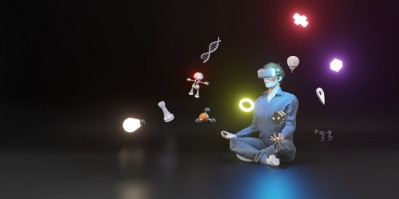 Cultivating social emotional learning in the metaverse 13 September 2023 19 November 2022Nandini Chatterjee Singh and Anantha Duraiappah “Can’t live this lifeless life anymore. Screens, lectures, messages, mails, marks, deadlines, expectations, this room, that laptop, religion, restrictions, health, family, feelings, theories, equations, numbers ... and me, reasons are many. Thanks and sorry for everything.”These were the last words of a young student from a premier institution in India before he took his life. He was a young man in his prime who should have been happy and enjoying life.Was this a one-off incident? The statistics emphatically say no. The World Health Organization(WHO) states in its 2021 report that about 700,000 people around the globe commit suicide every year, making it the fourth leading cause of death among 15- to 29-year-olds globally.A report on mental health published by WHO in 2017 found that, among children between the ages of 13 and 15 in India, 25% experienced feelings of depression and 8% experienced symptoms of loneliness.The COVID-19 pandemic has exacerbated the ‘pandemic’ of mental illness worldwide. An OECD study, published in May 2021, reported increased anxiety levels in the general population of numerous countries.For instance, the United Kingdom saw an increase from 19% to 39%; the US from 8.2% to 30.8%; Australia from 13% to 21%; and New Zealand from 6.1% to 15.6%. These figures illustrate the degree to which mental health issues intensified during the pandemic.We seem to have forgotten a simple universal law of humanity – we are social and emotional beings and relationships form the core fabric of our lives. Our social interactions and our unsaid reliance on each other’s actions can trigger emotional reactions.While the virus itself is a serious physical illness, its greatest impact has been on our mental well-being, causing loneliness to rise due to the loss of face-to-face contact. Adults and children could no longer share emotional experiences, losing out on the joyful exchange of emotions that occurs when we gather in groups.Social connections are vital to the human experience. For example, most students report that schools are social-emotional spaces first and learning spaces second.What we must learn from this experience is that our learning spaces need to be transformed. They must be about relationships first and knowledge second. Mental health management first and cognitive second.Mental health in the metaverseSo, what does this learning environment look like in the metaverse? The metaverse announced the arrival of a single, universal, connected, online and virtual world. To foster emotional resilience in this online world, we need to create social and emotional spaces. For human beings to learn effectively, adapt and flourish, they need to feel socially connected and emotionally safe.How do we enable this in the metaverse?1. Improve attention spansLife in the metaverse will bring with it an overload of information riddled with distraction and confusion. Unlike in the past, when students received most information from textbooks, which could become outdated very quickly, today’s information is continuously updated and available at the click of a button.Knowledge will only continue to travel faster as technology advances. However, the use of multiple modes of learning, including sounds, movements, flickers and colours, can serve as a distraction.This was showcased in recent research which stated that the availability of devices within ‘arm’s reach’ has led to increased absent-mindedness and a reduced ability to think, recall and regulate emotions. This has contributed to shorter attention spans in children and adults.To navigate this ‘busy’, ‘noisy’ and ‘distracting’ metaverse, learners need to learn and practise ‘attention regulation’. Attention regulation is the ability to focus or concentrate on the activity or task at hand. A balance of exploration, choices and meaningful interactions help cultivate the needed attention skills.There must be tasks in the metaverse that allow children to explore their environment and provide an opportunity to discover new objects and experiences. For instance, an activity that requires finding objects hidden in a digital picture can help build attention. Attention regulation as a learning competency in our education systems, starting from early childhood, will aid in the cultivation of attention spans by inhibiting distractors.2. Regulate emotionsInteractions and learning trigger feelings and emotions. There is a need to develop emotional awareness, to pause and notice the emotional signals of the body. The practice of pause – the conscious allotting of space and time to look inwards and notice physical sensations like a ‘racing pulse’, a ‘shaking leg’ or a ‘clammy hand’ is a must for well-being.When things seem to be falling apart, it is useful to breathe. Evidence suggests that, by counting our breaths and centring our breathing, we calm our minds. Whether dealing with difficult conversations with colleagues, family, friends, teachers or students, the ability to regulate emotion and attention is a well-being practice proven to mitigate accompanying anxiety, fear, anger or despair.For instance, teaching children to pause or break when they are experiencing anger or fear and to recognise physical feelings is important.Feeling a pit in one’s stomach or a thumping heart are physical symptoms that often accompany intense emotional responses. At such times, a friend; app; conscious trained practice like counting numbers, breaths or tiles on the floor; time-out or break; or walking can all be good ways to physically distract focus and allow some of the intensity of the emotion to diminish.3. Build empathyEmpathy stimulates emotion and is a powerful force connecting human beings. It can be evoked using stories and verbal exchanges. Stories stimulate brain networks that build emotional connections.Dialogue facilitates and intensifies the sharing of knowledge, ideas, words and emotions – whether discussing cultural diversity across physical spaces or learning in the classroom. Stories can be invoked through multiple modes easily provided in the digital world, including oral, written, video, comic-strips, virtual reality and even game play.This variety in story delivery has the ability to meet the needs of all learners.Recently, an online interactive digital game-based course was designed in the metaverse. It was developed around a text-based chat interface game called Bury Me, My Love and was used to introduce students to the global refugee crisis.The course leveraged pause points from the game and embedded explicit activities like discussions, reflections and podcasts to highlight points that required recognition of their own perspectives and those of migrants.This helped learners learn about and develop empathy towards the migrants and motivated them to take action towards positive change. We hope this learning experience will transfer to the real world in terms of behavioural change.The course also enabled teachers to facilitate classroom discussions, creating a blended or hybrid model of learning.4. Cultivate compassion and gratitudeActions of kindness activate joy and reward networks in the brain and release endorphins and oxytocin – brain chemicals that offer solace and safety and restore joy and hope. Learning, whether face-to-face or in the metaverse, must emphasise the cultivation of compassion and gratitude.Being compassionate in the metaverse is about proactively effecting change. It is about taking positive actions to alleviate pain and suffering and to help others – however small an action it might seem – because it is small actions multiplied a billion times over that will change the world.5. Promote communityThe greatest lesson from the COVID-19 pandemic was the importance of the world’s ‘connectedness’. The metaverse offers great opportunities to develop learners’ awareness of the connected world we live in. The online world is already perceived to be connected because it is a ‘web’, but the physical world is often perceived as one of silos, physically separated and distinct.Learning in the metaverse, which uses digital dialogue, multi-player gaming, etc, offers the opportunity to recognise the value of a connected world that must be protected and preserved by all, for all and the future. It offers the potential to build global citizenship because it affords a space for young learners to connect across geographical distances.The metaverse is here to stay and we cannot let learners disappear in it. Instead, we must embrace a mixed reality of the physical and virtual worlds. In this mixed reality, the challenges will be maintaining full awareness of when we are in the metaverse and when we are in the physical world and remembering the importance of striding through both worlds in an emotionally resilient manner.Living in this mixed reality would require building our attention regulation, supported by a suite of competencies in emotional regulation, empathy and compassion. By making social and emotional learning central in the metaverse, there is an opportunity to not only bridge the virtuality-reality divide (that loss of awareness of the invisible line between virtuality and reality) but to foster community and kinship that can drive behavioural change in the real world.Nandini Chatterjee Singh is senior project officer, UNESCO Mahatma Gandhi Institute of Education for Peace and Sustainable Development (MGIEP), and Anantha Duraiappah is director of UNESCO MGIEP, India. https://www.universityworldnews.com/post.php?story=2022111514411827