
News
Follow the newest trends and news in GCED.
1,676 Results found
 Wenhui Award 2022 Call for Applications and Nominations: “Educational Innovations for Learning Recovery” 31 October 2022 The Transforming Education Summit convened by the United Nations in September 2022 mobilized over 130 countries to explore all options and innovations in response to the major challenges in education, including the catastrophic learning losses caused by the COVID-19 pandemic and other crises. The coronavirus has disrupted education systems all over the world, with more than 1.6 billion learners affected by school closures. The Asia-Pacific is one of the most hit regions. Approximately 1.2 billion students across the region have in total lost about 1.1 trillion hours of in-person learning as a result of school closures during COVID-19 outbreaks. The pandemic has exacerbated inequalities in education, with the disadvantaged groups suffering more, including girls, children with disabilities, and students from low-income families, ethnic minorities and remote rural areas. COVID-19 has also deepened the pre-existing learning crisis. The learning poverty rate – the share of children who cannot read a simple text with comprehension by age 10 – has significantly risen in low- and middle-income countries, with South Asia seeing one of the highest increases. Such severe learning losses have devastating socio-economic implications. The productivity and lifetime earnings of affected students are projected to decrease, and the unemployment rate in many societies is estimated to increase, which will aggravate poverty and backslash the long-term economic growth. Besides, disproportional learning loss has further widened income inequalities between and within countries. Apart from COVID-19, other types of crises and emergencies – violence, armed conflict, diseases, refugee and internal displacement, natural hazards including climate-induced disasters, food shortage and poverty – also contribute to learning losses. Even prior to the coronavirus pandemic, the global number of crisis-impacted school-aged children requiring educational support had grown significantly. Learning recovery from different crises has been placed on the high agenda of the international community. It means not only bringing all learners back to school and achieving effective remedial learning, but also improving and sustaining the wellbeing and development of students and teachers, filling divides, and equipping youth with the competences and skills for life, work, and sustainable development. A powerful engine for learning recovery is education innovation, which is critical for inclusive, equitable, and quality education as well. In its broadened sense, educational innovation involves all dimensions of the education ecosystem, including but not limited to 1) innovations for inclusive, equitable, safe, and healthy schools; 2) teaching innovations to cultivate competences and skills for life, work, and sustainable development; 3) innovations in digital learning; 4) innovations for the development of the teaching profession; 5) innovations in education financing; and 6) innovations in education partnerships. Globally and in the Asia-Pacific region in particular, various innovative education policies and practices have emerged and accelerated learning recovery. However, despite the existing efforts and achievements, many societies are still suffering lingering learning losses. Concerted endeavours are needed to invigorate education innovations for effective learning recovery across the world. About Wenhui AwardAgainst the above background, this year’s Wenhui Award is themed “Educational Innovations for Learning Recovery”, with the objective to identify, acknowledge and encourage innovative policies and practices in various dimensions of the education system in the Asia-Pacific region. The Award shall be conferred on two individuals or institutions in the Asia-Pacific region for their outstanding efforts and achievements in educational innovation about this year’s theme. The two winners will each receive a Certificate of Excellence and a prize of USD20,000. Apart from the winners, Honourable Mentions will be granted to individuals or institutions that have demonstrated commendable innovative educational practices. The Wenhui (文晖) Award was jointly created by the UNESCO Asia-Pacific Programme of Educational Innovation for Development (APEID) and the National Commission of the People’s Republic of China for UNESCO in 2010, to recognize and reward individuals or institutions that have made outstanding contributions to educational innovation in the Asia-Pacific region. Since the inception of the Wenhui Award, there have been 22 Winners and 34 Honourable Mentions from 19 different countries. Eligibility and Assessment CriteriaEligibility of Applicants:• Be individuals or institutions from UNESCO Member States in the Asia-Pacific region ;• Have initiated, developed and implemented innovative practices that are in line with the latest developments in education in the 21st century and that help to improve access, equity and quality of education in the Asia-Pacific region;• Have proved that their innovations have exerted positive impacts on education opportunities and quality in the Asia-Pacific region;• Be persistently dedicated to popularization of education, enhancement of education quality, and promotion of lifelong learning. Assessment Criteria for the Innovations:All the educational innovations submitted for the Wenhui Award will be assessed equally against the following criteria:1. Relevance (to the latest developments in education in the 21st century; to Sustainable Development Goal 4 aiming to ensure inclusive and equitable quality education and promote lifelong learning opportunities for all; to the Asia-Pacific region; AND to the specific theme of the Award of the year);2. Timeliness (started within the recent 3 years, with the key part completed by the time of application);3. Effectiveness (in tackling specific challenges/issues in education); 4. Scale of benefits and impacts (evidenced by specific indicators, such as number of beneficiary countries in the Asia-Pacific region, number of beneficiary schools, number of beneficiary students, teachers, school leaders, and community members);5. Engagement of stakeholders and partners from different sectors (public and non-public), if applicable;6. Originality (how creative and unique the innovation is);7. Sustainability (of the good practices, benefits and positive impacts of the innovation), scalability (the capacity to expand in coverage and grow in impact without much extra resources), and replicability (to other educational institutions, stakeholder groups, and even possibly other countries and regions). Application Procedure and Required MaterialsApplications for Wenhui Award can be submitted in the following two alternative channels:Channel A. Direct ApplicationApplicants directly submit the required materials (listed below) to the Wenhui Award Secretariat at the email address Wenhui.Award(at)unesco.org by 27 January 2023, 23:59 Bangkok time (UTC+7). Channel B. Nominator-Initiated ApplicationThe National Commissions for UNESCO or UNESCO Field Offices in the Asia-Pacific Member States identify potentially qualified applicants and innovations, invite them to submit all the required materials to the nominator by a specific date, and then nominate them to the Wenhui Award Secretariat. Nominators shall send all the required materials (listed below) and the nomination letter (signed and stamped) by email to the Wenhui Award Secretariat by 24 February 2023, 23:59 Bangkok time (UTC+7). Information on National Commissions for UNESCO: https://en.unesco.org/countries/national-commissions.Information on UNESCO Field Offices: https://en.unesco.org/countries/field-offices.*Only UNESCO National Commissions and Field Offices can be nominators for the Wenhui Award, and applicants from Channel A need to indicate their preferred nominator in the application form.*Such nominations should be initiated by UNESCO National Commissions or Field Offices in the Asia-Pacific region. Applicants do not need to contact the potential nominators. Required Materials:1. A fully completed application form (https://bit.ly/Wenhui22AFA) or nomination form (https://bit.ly/Wenhui22NFB); 2. Detailed introduction of the innovation, using the given template (https://bit.ly/Wenhui22TDS);3. Supporting materials, including at least one of the following:a) brochure of the innovation (no more than 12 pages, in PDF format);b) link to photos (no more than 5, in JPG or PDF format) or a video (within 5 minutes) about the innovation;c) link to the website of the innovation;d) link(s) to the social media platform(s) of the innovation;e) media coverage on the innovation (either the web link or PDF version).*The above list is for both direct applications and nominator-initiated applications; for nominator-initiated applications, the nominators need to collect all the required materials from the nominees and then submit them to the Wenhui Award Secretariat.*All the links should be put on the application/nomination form, while the PDF documents need to be sent by email to the Wenhui Award Secretariat together with all the other application/nomination documents. Selection ProcessStep 1: Pre-Screening The Wenhui Award Secretariat will pre-screen all applications received by the deadline based on the eligibility and assessment criteria. Step 2: Selection by Nominators*This step is only for applications directly submitted to the Wenhui Award Secretariat (Channel A), and applicants do not need to initiate contact with any potential nominator.The Wenhui Award Secretariat will send the applications that have passed prescreening to the nominators chosen by the applicants themselves, either UNESCO National Commissions or Field Offices. The nominators will review and decide whether to nominate the applicants for further selection. The nominators shall directly send the nomination letters by email to the Wenhui Award Secretariat. The letter should comment on the applicant’s eligibility for the Award and provide additional information if deemed necessary by the nominator. Step 3: Shortlisting Upon receiving the nomination letters for direct applications (Channel A), the Wenhui Award Secretariat will further review and shortlist based on the eligibility and assessment criteria. For those nominations initiated directly by UNESCO National Commissions and Field Offices (Channel B), the Secretariat will also conduct prescreening and shortlisting based on the same criteria.Step 4: Final AssessmentThe final assessment of shortlisted applications is conducted by a Jury consisting of multiple members who are from different countries and organizations in the Asia-Pacific region and have extensive expertise and experience in education.Step 5: Result AnnouncementThe winners of the Award and the recipients of the Honourable Mentions will be notified by email shortly after the Jury has made its final decisions, and upon written confirmation of acceptance, the results will be officially announced online in due course. The winners will be invited to the Award Ceremony to be held virtually or in person in China. Inquiries & ContactFor inquiries about Wenhui Award application, nomination, and selection process, please check the above information and Frequently Asked Questions at https://bit.ly/Wenhui22FAQ. If you have any further inquiries, please contact the Wenhui Award Secretariat at Wenhui.Award(at)unesco.org. URL: https://bangkok.unesco.org/index.php/content/wenhui-award-2022-call-applications-nominations-educational-innovations-learning-recovery-unesco
  Asia-Pacific Teachers Embrace UNESCO Challenge to Bring Local Living Heritage into Their Classrooms 31 October 2022 28 October 2022 – Since 2019, UNESCO, with support from International Information and Networking Centre for Intangible Cultural Heritage in the Asia-Pacific Region (UNESCO-ICHCAP), Asia-Pacific Centre of Education for International Understanding (APCEIU), and Chengdu Culture and Tourism Development Group L.L.C., has run a project, Safeguarding intangible cultural heritage (ICH) in formal education in Asia and the Pacific. The project aims to develop and pilot innovative activities with teachers, students and heritage bearers in schools, encourage experience-sharing among teachers in different countries, and engage local education sectors in achieving quality education for all through the safeguarding of the living heritage of local communities. Recently commenting on the project’s success, to date, Mr Seng Song, a coordinator of culture and arts education of Cambodian Living Arts, a non-governmental educational organization in Phnom Penh, noted, ‘The school directors were really excited and showed us very positive responses, especially given the fact that since they started using ICH, or living heritage, in their local subjects, they observed changes in the way students learn. (The students] have become more active and creative.’ Mr Song added, ‘ICH Education, as [teachers] call it, has become a method to unleash the talents of their students, such as their teamwork ability, critical thinking and idea presentation. It creates an environment that makes students happy and curious; hence, the become more interactive with teachers.’ While many observers might think that living heritage can only possibly be integrated in arts and religion classes, many teachers have revealed that this approach is applicable to other subjects, from social studies to geography, and even to mathematics and the sciences. ‘The goals of my lessons in social studies are [for students] to achieve an awareness of the importance of human rights, and to internalize a positive attitude toward human rights protection. I want the students to realize that the process by which injustice is felt by ordinary people could come to a critical point to form public opinions across the society, [which signals] the progress of human rights’, said Mr Hojeong Kim, a teacher at Shingal Elemenary School, in Yongin, the Republic of Korea. ‘My favourite part is that I can provide educational experiences while keeping the students engaged. We did fun physical and expressive activities, learning about the philosophical ideas instilled in the choreography of the namsadang nori performing art, and applying these ideas to the student’s lives. We look at elements of social critique in Korean pop songs, then find such critique in the performance script of the troupes.’ Mr Kim also commented that intangible cultural heritage is ‘an accumulation of experiences, lifestyles and cultures of people in certain areas. It is a great example of human adaptation to the environment, and their efforts to sustain communities and solve problems; thus, it is closely related to education. We expand the student’s temporal horizons by getting them to learn about past culture through the intangible heritage of the present day and predicting cultural changes in the future.’ In 2021, the project produced several guiding and outreach materials with lesson plans on how to integrate intangible heritage in schools, so that more schools across the region might enjoy such positive learning experience. These materials were transformed into a self-learning course for teachers and educators on GCED Online Campus, and a resource kit available in several languages. The project also produced a cohort of interdisciplinary educators in six pilot countries, namely Cambodia, Kazakhstan, Kyrgyztan, Nepal, Republic of Korea and Thailand. ‘I have found that integrating living heritage into educational curricula is very useful for learners’, Mr Manit Ta-ai, Director of Ton Kaew Phadung Pitayalai School, in Chiang Mai, Thailand, commented on the subject of methodology. ‘The important thing is to provide our students with opportunities to think and analyze, so that it will reflect on their abilities to build their future upon various cultural assets they were born with, such as incorporating traditional knowledge to creative production of their own. Proving platforms and ways for students to learn directly from local masters can maximize the benefits of local cultural resources – both tangible and intangible heritage – to achieve inclusive and affordable education.’ This year, UNESCO is running quarterly challenges to teachers across Asia-Pacific, through UNESCO Associated Schools Network (ASPnet) and SEAMEO Schools’ Network. The three-step challenge calls for teachers to complete the GCED Online Campus course ‘Bringing Living Heritage to the Classroom in Asia-Pacific’, then to sign up for a regional webinar to wrap up their knowledge with the course developers, and finally to share with UNESCO their newly-developed lesson plans that integrate their local living heritage with the teaching of existing subjects. The first quarterly webinar, which took place on 30 September 2022, was attended by over 150 teachers across the region, with numerous lesson plans submitted by participants after its conclusion. The second quarterly webinar will take place on 1 December 2022, via Zoom conferencing. Teachers and educators interested in joining this growing community and taking up UNESCO’s challenge, thereby becoming eligible to earn up to three professional development certificates, can find further information at https://bangkok.unesco.org/content/teachers-living-heritage-online-course-engaging-class-culture The last step of the challenge – sharing your lesson plan with UNESCO – will end on 31 December 2022, after which UNESCO will respond directly to all submitters with comments for improving and actualizing their aspiring lesson plans.URL: https://bangkok.unesco.org/index.php/content/asia-pacific-teachers-embrace-unesco-challenge-bring-local-living-heritage-classrooms
 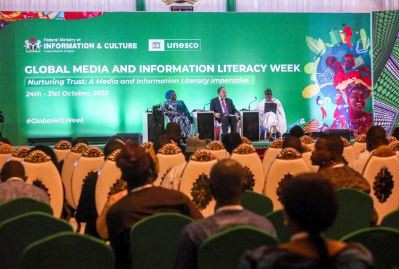 The World Stands Together for Global Media and Information Literacy Week 2022 30 October 2022 ⓒ UNESCO The world is sending a clear message: Media and Information literacy is an imperative to nurture trust, freedom, peace and solidarity. Two days have passed since the beginning of the 11th Global Media and Information Literacy Week, which lasts until 31st October 2022. Its Feature Conference and Youth Forum is hosted by Nigeria and taking place in Abuja. However, the Week for Global Media and Information Literacy (MIL) is also being commemorated around the world. UNESCO has mobilized its MIL partners and networks to observe the Week with own celebrations and as of today, we are able to link up over 900 small and large events around the world, sending a thundering message of the urgency of media and information literacy at all levels of society. From Africa, the Arab States, Asia and the Pacific, Europe and North America, Latin America and the Caribbean, numerous activities are being held to mark the occasion. Governments, private sector, digital platforms, civil society organizations, media actors and academics all have at heart to inform, train and reflect on the role of media and information literacy and its role in fostering trust, freedom, peace and solidarity. Africa In Rwanda, this edition of the Week is being used for masterclasses being held right now at the University of Kigali. Several small and medium-sized enterprises will learn how to take advantage of social media to ensure their business sustainability and growth. Arab States The Faculty of Mass Media at the Cairo University organizes a workshop to shed light on the role of Egyptian Women in promoting the Media and Information Literacy within the Egyptian community. Asia-Pacific In other parts of the world, young people from the digital literacy TikTok Korea have prepared online sessions, to combat the misuse of social media through training on strengthening the digital citizenship for adolescents. In Australia, some booksellers in the city of Blacktown organize a series of sessions to equip young people with techniques on how to evaluate the credibility of the information and the importance of obtaining information from several reliable sources. Europe The Secretary of State for Telecommunications and Digital Infrastructures in Spain has decided to mark the occasion with a day of debate on the impact that was recently approved by the General Law on Audiovisual Media and Media Literacy. In the Central Europe, at the Liceul Tehnologic Toma Socolescu in Ploiești, Romania, the students are exploring and learning about media and information literacy and its link with the right to education, and human rights. In Denmark, the MediaLitLab Foundation enters the scene with a hands-on workshop and role-playing on misinformation. The University of Copenhagen and the Copenhagen Business School organize a simulation exercise during which the students will experiment with the negative impacts of misinformation against the interests and values of society. Latin America In Santiago de Surco, Peru, where the celebrations take place in partnership with the University of Lima, a symposium on Media and Information Literacy, discusses the link between youth and media through the theme “Young people and the media, hurting trust?” Global Media and Information Literacy Week 2022: Do want to join the UNESCO’s celebrations? There is still time to participate! Watch virtual exhibition URL:https://www.unesco.org/en/articles/world-stands-together-global-media-and-information-literacy-week-2022
  Q&A: The Role of Teachers in Preventing and Addressing School Violence 29 October 2022 ⓒ myboys.me/Shutterstock.com What is school violence? School violence refers to all forms of violence, that takes place in and around schools and is experienced by students and perpetrated by other students, teachers and other school staff. This includes bullying and cyberbullying. Bullying is one of the most pervasive forms of school violence, affecting 1 in 3 young people. What forms may school violence take? Based on existing international surveys that collect data on violence in schools, UNESCO recognizes the following forms of school violence (recognising crossover between categories): Physical violence, which is any form of physical aggression with intention to hurt and includes: Physical violence perpetrated by peers, including physical fights (two students of about the same strength or power choosing to fight each other and physical attacks (one or more people hitting or striking a student with a weapon such as a stick, knife or gun). Physical violence perpetrated by teachers, which includes the intentional use of physical force with the potential to cause death, disability, injury or harm, regardless of whether it is used as a form or punishment (corporal punishment) or not. Psychological violence as verbal and emotional abuse, which includes any forms of isolating, rejecting, ignoring, insults, spreading rumors, making up lies, name-calling, ridicule, humiliation and threats, and psychological punishment. Sexual violence, which includes intimidation of a sexual nature, sexual harassment, unwanted touching, sexual coercion and rape, and it is perpetrated by a teacher, school staff or a schoolmate or classmate, and affects both girls and boys. Bullying as a pattern of behaviour rather than isolated incidents, which can be defined as intentional and aggressive behaviour occurring repeatedly against a victim where there is a real or perceived power imbalance and where the victims feel vulnerable and powerless to defend themselves. Bullying can take various forms: Physical bullying, including hitting, kicking and the destruction of property; Psychological bullying, such as teasing, insulting and threatening; or relational, through the spreading of rumours and exclusion from a group; and Sexual bullying, such as making fun of a victim with sexual jokes, comments or gestures, which may be defined as sexual ‘harassment’ in some countries. Cyberbullying is a form of psychological or sexual bullying that takes place online. Examples of cyberbullying include posting or sending electronic messages, including text, pictures or videos, aimed at harassing, threatening or targeting another person via a variety of media and social platforms such as online social networks, chat rooms, blogs, instant messaging and text messaging. Cyberbullying may also include spreading rumours, posting false information, hurtful messages, embarrassing comments or photos, or excluding someone from online networks or other communications. © UNESCO Who perpetrates school violence? School violence is perpetrated by students, teachers and other school staff. However, available evidence shows that violence perpetrated by peers is more common than by teachers and other school staff. What are the main reasons why children are bullied? All children can be bullied, yet evidence shows that children who are perceived to be “different” in any way are more at risk. Key factors include: Physical appearance; ethnic, linguistic or cultural differences including migrant and refugee status; gender, including not conforming to gender norms and stereotypes; social status including poverty; disability; and age. What are the consequences of school violence? Global comparable data are available only for the consequences of bullying, not for the consequences of other forms of school violence. Educational consequences – Being bullied undermines the sense of belonging at school and affects continued engagement in education. Children who are frequently bullied are more likely to feel like an outsider at school, and more likely to want to leave school after finishing secondary education. Children who are bullied have lower academic achievements than those who are not frequently bullied. Health consequences – Children’s mental health and well-being can be adversely impacted by bullying. Bullying is associated with higher rates of feeling lonely and suicidal, higher rates of smoking, alcohol and cannabis use and lower rates of self-reported life satisfaction and health. School violence can also cause physical injuries and harm. Why are teachers such an important part of the holistic approach to prevent and address school violence? Teachers are key to building a positive and supportive learning environment. They can: Provide quality education that develops students’ self-awareness, self-control, and interpersonal skills that are vital for healthy and respectful relationships; create psychologically and physically safe school and classroom environments; model caring and respectful relationships, and positive approaches to conflict management or discipline; guide students to take action themselves through student-led initiatives and peer approaches; recognize and respond to incidents of violence and connect students with referral services when needed; provide a link between school and community through their relationship with parents; and generate evidence and assessing what works at the school level. What support do teachers need to help create safe learning environments? A global online survey of teachers’ perceptions and practice in relation to school violence conducted by UNESCO in 2020 revealed that not all teachers are fully prepared to fulfill the role in preventing and addressing school violence: Almost half of the teachers surveyed say they received little or no training on school violence during their pre-service education, and more than two-thirds say that they have learned how to manage school violence through experience. Three in four teachers surveyed can identify physical and sexual violence yet are less likely to recognize some forms of psychological violence. Even if the teachers surveyed can identify school violence, and four in five say it is their responsibility to create a safe learning environment, they do not always intervene. Four in five help victims, but only half engage with students who witness violence. Teachers’ ability to positively influence school environments and to prevent or respond to violence, depends heavily on their preparation, in-service professional development, teaching standards, duties and workload. Other considerations include political leadership, legal and policy frameworks at national, local and school level, and support, resources and training. What are the linkages between school violence, school-related gender-based violence (SRGBV) and violence based on sexual orientation and gender identity or expression (SOGIE)? School violence may be perpetrated as a result of gender norms and stereotypes and enforced by unequal power dynamics – it is referred to as school-related gender-based violence. It includes, in particular, a specific type of gender-based violence, which is linked to the actual or perceived sexual orientation and gender identity or expression of victims, referred to as violence based on sexual orientation and gender identity or expression, including homophobic and transphobic bullying. School-related gender-based violence is a significant part of school violence that requires specific efforts to address. Does school-related gender-based violence refer to sexual violence against girls only? No. School-related gender-based violence refers to all forms of school violence that is based on or driven by gender norms and stereotypes, which also includes violence against and between boys. Is school violence always gender-based? There are many factors that drive school violence. Gender is one of the significant drivers of violence but not all school violence is based on gender. Moreover, international surveys do not systematically collect data on the gendered nature of school violence, nor on violence based on sexual orientation and gender identity or expression. Based on the analysis of global data, there are no major differences in the prevalence of bullying for boys and girls. However, there are some differences between boys and girls in terms of the types of bullying they experience. Boys are much more exposed to physical bullying, and to physical violence in general, than girls. Girls are slightly more exposed to psychological bullying, particularly through cyberbullying. According to the same data sexual bullying (sexual jokes, comments and gestures) affects the same proportion of boys and girls. Data coming from different countries, however, shows that girls are increasingly exposed to sexual bullying online. How does UNESCO help prevent and address school violence? The best available evidence shows that responses to school violence including bullying that are effective should be comprehensive or holistic, i.e. made of a combination of policies and interventions. Often this comprehensive response to school violence is referred to as a whole-school approach. Based on an extensive review of existing conceptual frameworks that describe that whole-school approach, UNESCO has identified the key components of a response that goes beyond schools and could be better described as a whole-education system or whole-education approach. These components are the following: Strong political leadership and robust legal and policy framework to address school violence; Training and support for teachers on school violence prevention and positive classroom management Curriculum, learning & teaching to promote, a caring (i.e. anti- school violence/anti-bullying) school climate and students’ social and emotional skills A safe psychological and physical school and classroom environment Reporting mechanisms for students affected by school violence, together with support and referral services Involvement of all stakeholders in the school community including parents Student empowerment and participation Collaboration and partnerships between the education sector and a wide range of partners (other government sectors, NGOs, academia) Evidence: monitoring of school violence including bullying and evaluation of responses - UNESCO’s work to prevent and address school violence and bullying URL:https://www.unesco.org/en/articles/qa-role-teachers-preventing-and-addressing-school-violence
 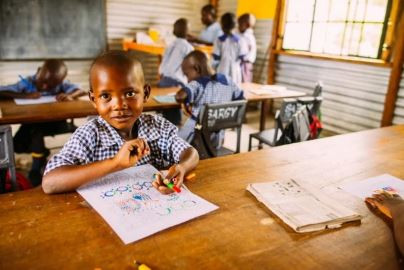 Review of the Strengthening Institutional Education Information System in Emergencies Initiative 28 October 2022 ⓒ JLwarehouse/Shutterstock.com With education systems worldwide under growing threats from conflict, natural disasters, and pandemics, it’s critical to understand the complex and changing needs of learners, teachers, educational institutions, and communities to respond to them effectively and in a sustainable manner. As the coordinating agency of the SDG4 and as part of the commitments made in the Framework for Action, UNESCO is invested in building the resilience of education systems and ensuring quality and safe education for all. One essential part of supporting system-wide capacities to be more responsive, is enhancing the way information is generated and used to drive decision-making within Ministries of Education (MoE) as well as in collaboration with humanitarian and development partners. As outlined during the 2019 Education in Emergencies Data Summit, the lack of data considered accurate, reliable, and timely by actors channeling education resources and efforts, poses a significant challenge. It also leads to the fragmentation of the data landscape and hinders collaboration that should leverage stakeholder’s complementarities.ⓒ JLwarehouse/Shutterstock.com In this context, since 2021, in partnership with NORCAP and supported by Education Cannot Wait (ECW) and the Swedish International Development Cooperation Agency (SIDA), UNESCO is implementing activities in Ethiopia, South Sudan and at the global level, with the aim of strengthening institutional information systems for education in emergencies and resilience to crises. What is UNESCO doing? UNESCO is engaged in supporting MoEs in contexts affected by emergencies and playing an active role throughout the Emergency Management Cycle, in close collaboration with their humanitarian and development partners. This includes supporting their contribution to the assessment of educational needs, monitoring impact and progress, to the practical definition and coordination of the implementation of service delivery. Based on the findings of six case studies developed in 2019 in Chad, Ethiopia, Palestine, South Sudan, the Syrian Arab Republic and Uganda) highlighting how MoE’s information systems were effectively driving EiE and resilience-building efforts, UNESCO developed a process to tackle the most prominent challenges observed across all six contexts. More specifically related to: Inadequate institutional environment (EiE/EIE Data Policies and Frameworks) Fragmented, incomplete, untimely and unreliable data production Limited data dissemination and use Weak coordination for EiE assessment and planning. With the technical collaboration of the UNESCO International Institute for Education Planning (IIEP), and in direct collaboration with the UNESCO offices in Juba and Addis Ababa, as well as its in-country humanitarian partners, UNESCO has played a key role in achieving the following results: Increased awareness of the current challenges and opportunities for crisis-sensitive and harmonized information systems for more resilient education systems UNESCO raised awareness of the Ministries of Education and their partners in Ethiopia and South Sudan around the crisis and risk-related data landscape at country level through in-depth reviews of education data tools and of monitoring and evaluation frameworks. This review specifically demonstrated the current coverage, gaps, and discrepancies of EiE Data and recommended corrective actions whilst building on the complementarity of different stakeholders. Strengthened institutional commitment to education in emergencies and data In addition to supporting direct institutional engagement and leadership throughout all phases of the project, UNESCO conducted targeted institutional capacity-building activities in direct collaboration with EiE stakeholders. In Ethiopia and South Sudan, this included: Raising the awareness of Ministry officials – working at national and subnational levels- around the key concepts of Education in Emergencies and Protracted Crisis, crisis and risk sensitive planning, as well as the implications of data on effective and coordinated assessment, planning and monitoring. Supporting the MoEs in identifying and integrating EiE-relevant data in institutional information systems, including the Annual School Census and Abstract. Advocating for increased resources and capacities – at all levels – for MoE engagement and leadership throughout all phases of the emergency management cycle. Promoting the development of institutional policies and frameworks on Education in Emergencies and specifically on EiE Data. Strengthened coordination towards harmonized data, collection, sharing and use Although not a traditional player in the field of EiE, UNESCO builds on its long-standing collaboration with MoEs , which remain the ultimate duty bearers and key stakeholder for any localized, context-specific, and sustainable process. Nonetheless, UNESCO acknowledges that EiE must be addressed in a collaborative and coordinated manner with all humanitarian and development partners. More specifically, in South Sudan and Ethiopia, UNESCO supported the MoEs to increase their collaboration with all relevant EiE stakeholders leading to: The MoE’s engagement in the revision of the Education Cluster strategies and the mainstreaming of the importance of data alignment and system strengthening for more coordinated EiE. The establishment of Data related Working Groups - the Knowledge, Evidence, Learning, and Research group (KERL) in South Sudan and the EIE Data Technical working group – under the leadership of the MoE and composed of humanitarian and development partners. The increased participation of MoEs in EiE assessment and planning processes, including in the review of the education cluster monitoring tools, the definition of the Humanitarian Needs Overview (HNO)/Humanitarian Response Plan (HRP), the Joint Education Needs Assessments (JENA) and the development of ECW’s MYRP for South Sudan. Alignment with ongoing government-led education sector assessment and planning processes, including the renewal of ECW’s Multi Year Response Plan, to support the scale up of results and sustainability of engagement by the MoE and its partners. Enhanced strategic and technical commitment across levels, sectors, and partners At the global level, UNESCO is collaborating closely with a wide range of partners to build strategic and technical commitment towards strengthening and use of institutional education data sets in crisis settings. Through its active participation in global coordination mechanisms (i.e., Geneva Global Hub for Education in Emergencies, INEE Data Working Group and Global Alliance for Disaster Risk Reduction and resilience in the Education Sector), UNESCO leverages the groups’ wide outreach to influence global processes while learning from the EIE community worldwide, committed to ensuring inclusive and equitable quality education and promoting lifelong learning opportunities for all. In fact, in addition to documenting its own process, the project team is documenting those carried out by partners from around the world dedicated to building system capacities in Education in Emergencies Data. The objective of this effort is to develop knowledge and guidance tools that can be applied by a wide range of stakeholders and in different contexts. More specifically, and in direct collaboration with the INEE, this has resulted in the development of a repository on evidence & learning on crisis and risk-related data which is currently going though it’s second call for proposals. What can we look forward to? In Ethiopia and South Sudan: Capacity building of the Ministry of Education staff at national and sub-national level EiE data collection, analysis, dissemination, and use. Lead efforts to reach collective agreement among the MoE and its partners on key standardized indicators and harmonized data collection tools for monitoring EiE. Support institutional leadership in the established EiE Data coordination mechanisms for enhanced data sharing and alignment among partners. Scale up of the project achievements in alignment with the in-country priorities and opportunities At Global Level: The completion of the second round of collection on evidence and learning on crisis and risk-related data and the publication of the case studies on the INEE repository for Evidence & Learning on crisis and risk-related data. The development of the Conceptual Framework for EiEPC Data and guidance tools to support their integration in institutional information systems. More information Dedicated web page Contact: f.pinna@unesco.org URL:https://www.unesco.org/en/articles/review-strengthening-institutional-education-information-system-emergencies-initiative
  A baseline report to monitor the G7 Global Objectives on girls’ education 27 October 2022 In 2021, with less than 10 years until the Sustainable Development Goal 4 target deadline of 2030, the G7 heads of state set and endorsed a pair of global objectives on girls’ education to be achieved by 2026 in low- and lower-middle-income countries: 40 million more girls in school; and 20 million more girls reading by age 10 or the end of primary school. The emphasis was on the most marginalized and vulnerable girls, as a result of poverty, disability, conflict, displacement and natural disasters, who are being left furthest behind. These were intended to be stepping stones to the 2030 targets of universal primary and secondary completion and minimum learning proficiency for all. A baseline report, released today by the GEM Report, the UNESCO Institute for Statistics (UIS), the United Nations Girl’ Education Initiative (UNGEI) and the UK Foreign, Commonwealth and Development Office (FCDO), presents evidence from national and global actors on low- and lower-middle-income countries’ starting points relative to the two global objectives just before the pandemic struck, and the prospects of achieving them. The report accompanies the efforts of the G7 Accountability Working Group to monitor those objectives. Objective 1: Ensuring that 40 million more girls are in school in the next five years is hard but achievable In order to achieve the first objective, the number of out-of-school 6- to 17-year-old girls would have to fall from 101 million to 61 million girls or by 40%. The global objective is equivalent to a decline in the out-of-school rate from 22% to 13%. This is more ambitious than the national SDG 4 targets countries have set: if they achieve these targets, the out-of-school rate would fall to 15% or by 30 million. Out of 77 low- and lower-middle-income countries with data, few counties achieve such a pace of progress in five years. Between 2015 and 2020, the number of out-of-school girls fell by at least 40% in just 7 countries Bhutan, Egypt, Indonesia, Kiribati, Myanmar, Tunisia and Viet Nam. However, no low-income country achieved such progress. Proportional change in the number of out-of-school girls, low- and lower-middle-income countries, 2015–20 Source: GEM Report and UIS estimates As of 2020, six low-income countries with the highest number of out-of-school girls accounted for 56% of the total. Ethiopia’s 6.2 million girls out of school account for 19%, followed by Afghanistan, Niger, Sudan, Uganda and the Democratic Republic of the Congo. The short-term prospects are challenging for three of them, with Afghanistan the most extreme case following the ban on girls attending secondary school announced in March 2022, the consequences of the civil war in Ethiopia, and major concerns about COVID-19’s aftermath in Uganda, the low-income country with the most prolonged school closures. Six lower-middle-income countries with the highest number of out-of-school girls accounted for 72% of the total. Nigeria’s 12.2 million girls out of school account for 21% of the total, followed by Pakistan, India, Bangladesh, Indonesia and the United Republic of Tanzania. The G7 outlined how they would specifically help achieve this objective in the Declaration on girls’ education: recovering from COVID-19 and unlocking Agenda 2030. Share of countries with largest number of out-of-school girls, by country income group, 2020 Source: GEM Report and UIS estimates Girls’ exclusion remains high in countries such as Benin, Cameroon, Chad, Côte d’Ivoire, Guinea, Mali and Togo in sub-Saharan Africa and, especially, Afghanistan and Pakistan in South Asia. They should be a focus of global efforts to achieve gender parity. Young women of upper secondary school age are more likely to be out of school in most lower-middle- and in practically all low-income countries. In some countries, including Angola, the Democratic Republic of the Congo, Mozambique and Sudan, rural and poor girls are at a particular disadvantage. Objective 2: Ensuring that 20 million more girls will be able to read with understanding in the next five years will be harder It is more difficult to assess the likelihood of achieving this objective because data on learning levels are only available for 29 of 82 low- and lower-middle-income countries. Data on trends are even more scarce. Using the best available estimates, 31%, or 61 million girls, achieved the minimum proficiency level in reading at the end of primary school in 2020. If the number of girls achieving that level increases to 81 million within a period of five years, the percentage of girls would need to increase to 37%. This is equivalent to an annual increase of 1.2 percentage points. This is ambitious in the sense that more than double the rate currently observed. But it is less ambitious than what countries have set as national SDG 4 benchmarks. In 27 out of 29 countries for which there is data on learning, girls are a few percentage points ahead of boys in being able to read a simple text by the end of primary school. But the most urgent takeaway is that only a minority of in-school children meet this criterion. As national and global experts point out in the report, this does not take into account the children who never enrolled, never attended or dropped out of school. They note, additionally, that the COVID-19 pandemic both increased this number and harmed the learning levels of those in-school. The two global objectives are but a part of the struggle for gender equality in and through education These two global objectives are only part of the wider effort to achieve gender equality. Even in countries where there are more out-of-school boys than there are out-of-school girls, girls and women still have lower access to formal paid work, fewer assets, less access to credit, higher risks of gender-based violence and discrimination, and are more vulnerable to losing their rights. The Global Education Monitoring Team, the UN Girls’ Education Initiative and the Foreign and Commonwealth Development Office are committed to strengthening the arena of data collection, discussion, and analysis so that they most accurately reflect the situation of children on the ground, especially the most vulnerable children. This includes bringing in those actors who work directly on the ground to hear how they use global data and evidence and what they want from it. It also means bringing together different frameworks that are being developed to measure gender equality in and through education to inform investors in and champions of girls’ education and empowerment. We welcome the ideas, viewpoints and perspectives of readers of this report who would like to join us in charting this way forward. Above all, the data and evidence in this report make clear that the most marginalized child, especially when she is a girl, needs concerted action from all of us. URL:https://www.ungei.org/blog-post/baseline-report-monitor-g7-global-objectives-girls-education
  Survivor and her family stand strong against Holocaust denial and distortion 25 October 2022 Last family photo of Lily Ebert and her siblings before their deportation to Auschwitz-Birkenau.© Lily Ebert When he was 16, Dov Forman came across a German banknote in the back of his great grandmother’s living room cabinet. On the day that Lily Ebert had been liberated from a death march (forced evacuation) in 1945, an unknown American soldier had inscribed a message of hope onto the only paper available, a banknote, and gave it to her – the first act of kindness anyone had shown since her deportation to Auschwitz-Birkenau in July 1944. "The start to a new life - good luck and happiness!" -- Note written on Lily's banknote Dov immediately launched a social media campaign on Twitter, joking with his great-grandmother that he would be able to find the liberator within 24 hours. Eight hours later, they had learned his name: Private Hyman Schulman from Brooklyn, New York. That was the moment that I realized that as a young person I have a voice and through social media I can harness that voice and actually make change in the world", Dov said. Following its increased popularity during the COVID-19 pandemic, Dov and Lily, now 98, set up a TikTok account to share Lily’s testimony about her experiences during the Holocaust and educate people about Jewish life and culture. Their videos have been viewed 400 million times since opening the account, giving them a chance to ask questions directly of a Holocaust survivor. Holocaust denial and distortion on social media The irreplaceable testimony of survivors and the undeniable historical record are under threat by Holocaust denial and distortion that is virulent on social media. New research has found that 16 per cent of Holocaust-related content on Facebook, Instagram, Telegram, TikTok and Twitter concludes denies or distorts the facts of the past. The study, published by UNESCO and the United Nations together with the World Jewish Congress, finds alarming levels of Holocaust denial and distortion present and easily accessible on online platforms in English, French, Spanish and German. It sheds new light on contemporary forms of antisemitism that take advantage of new technologies to infect online spaces. “When I read this report, I saw statistics such as 49 per cent of all Telegram posts related to the Holocaust are distorting or denying the Holocaust,” Dov said. “It’s all very upsetting, especially as the great grandson of a Holocaust survivor. To see people distorting and denying this history makes me worry about what happens in the future and we don’t have Holocaust survivors or eyewitnesses still alive.” Lily's mother Nina, younger brother Bela and younger sister Berta were murdered in the gas chambers of Auschwitz-Birkenau, while Lily and her two other sisters worked as slave labourers until their liberation in 1945. The events leading up to the murder of 6 million Jews by the Nazi German regime and its aftermath are among the most well-documented and researched episodes in history – there simply is no doubt about the historical record. Mocking the Holocaust threatens us all Memes, so-called ‘jokes’, coded references and deliberate disinformation continue to deny and distort the reality of the genocide of the Jewish people during the Second World War, proliferating on social media and normalizing antisemitic narratives and the dehumanization associated with so much hate speech. The recent report identified posts mocking the Holocaust through videos and memes that make light of the immense suffering of Jewish children, women and men during the Nazi genocide. By framing content as humour, these trends can spread faster across online platforms, being viewed, shared and sometimes copied among more “mainstream” internet communities. “My great-grandmother and I receive harmful, abusive comments almost every day. But I try and not take this to heart, Dov said. “One of the best ways and the only vaccine to counter antisemitism and to counter denial and distortion is to educate and to use social media for good.” © UNESCO/Studio Hortenzia Holocaust denial and distortion is not only offensive to the victims – it attempts to rehabilitate the violent and antisemitic ideology of the Nazi regime. At the most extreme, these posts amount to incitement to violence and genocide, which left unchecked pose a threat to the safety of Jewish communities, and the security and well-being of societies as a whole. Memes have provided a new library of codes and symbols, documented by organizations such as the U.S.-based ADL, that covertly signal and spread violent extremist ideologies. This shared language provides a sense of group identity, which has been used as a tool for far-right recruitment and radicalization. “The visual power and transmissibility of antisemitic memes runs the risk of such ideas being normalized online without effective counter-messaging”, said lead-researcher of the report Jonathan Bright. As violent hate crimes clearly demonstrate, such as the Pittsburgh synagogue shooting in 2018 which killed eleven people and wounded six, understanding this online ecosystem of disinformation and hate speech is critical to countering evolving forms of extremism and the harms caused to Jewish people and communities. “The report reveals that there are still social networks where Holocaust denial and distortion spread without moderation, and that this content is used to fuel hatred. We can fight against these phenomena by taking action on content and educating users,” said Audrey Azoulay, Director-General of UNESCO The power of education As the UNESCO and United Nations report clearly warns, the rapidly evolving online ecosystem requires new approaches based on education, media information and literacy, and addressing hate speech on social media that counter hate speech and better protect groups targeted. This is at the heart of UNESCO’s and the World Jewish Congress’s shared global commitment to counter antisemitism. Since 2021, people searching for information about the Holocaust on Facebook are being redirected to UNESCO and the World Jewish Congress’s website AboutHolocaust.Org, which provides accurate information in 19 languages in response to regularly asked questions about the Holocaust. Since January 2022, the partnership has been extended to TikTok as well, attracting about 15,000 daily users. Total users number more than 1 million. “I think it's so important that we teach young people that social media is incredibly dangerous, but I think it's also equally important that we teach young people how you can make a positive impact,” Dov said. Learn more about UNESCO’s programme to educate about the Holocaust and genocide and read the full report. URL:https://www.unesco.org/en/articles/survivor-and-her-family-stand-strong-against-holocaust-denial-and-distortion
  L'UNESCO lance le réseau mondial de l'EDD pour 2030 24 October 2022 ⓒ Rawpixel.com/Shuttersock.com ESD for 2030 Global Network (ESD-Net 2030). With the support of the Government of Japan, UNESCO’s new network aims to facilitate the implementation of the ESD for 2030 framework and its Roadmap by enhancing knowledge sharing, collaboration, mutual learning, advocacy, monitoring, and evaluation, among a wide range of education stakeholders. The launch webinar introduced the objective and planned activities of the Network and featured interventions from several Member States as well as an interactive session highlighting the relationship between culture and sustainability. "What we need to do is make continuous efforts to make the concepts of ESD always fresh and updated, and I hope this network will provide the opportunities at which we can keep ourselves updated and learn with each other." -- Mr Shun Shirai, Deputy Secretary-General, Japanese National Commission for UNESCO The webinar provided an overview of the ESD for 2030 Country Initiatives – country plans that map, mobilize and create synergies among ongoing and new ESD activities that Member States are currently developing and implementing as part of the ESD for 2030 Roadmap. It is now time to systematically embed ESD in all aspects of education systems, and that this can only be possible when all stakeholders talk to each other, break down silos, and connect the dots. Emphasis on collaboration and networking Panelists from Saint Kitts and Nevis, Oman, Zambia, Germany and Lao PDR shared experiences and lessons learned on how they have prepared or are preparing their own ESD for 2030 country initiative including challenges and triumphs within their specific contexts. For example, Bianca Bilgram, Head Task Force Education for Sustainable Development at the German Commission for UNESCO shared the development process for their country initiative. To achieve the goal of empowering all learners by 2030 to act sustainably, Germany established a National Platform (NP) for ESD with over 300 national stakeholders from various sectors and industry, including government, science, civil society, youth, and academia to implement the national action plan on ESD. © UNESCO Further, the speakers shared how they have embraced the opportunity for collaboration and cooperation. Khalid Al Mawali, Head of Higher Education and Scientific Research Section of the National Commission for Education of Oman, described the country’s efforts to diversify their financial resources through collaboration with private sector partners in implementing ESD activities. Professor Overson Shumba, Director Centre for Academic Development of Copperbelt University in Zambia, explained that one of the challenges was that National Working Group members were coming from different sectors and had never worked in collaboration before. The perception was that education is the exclusive role of the Minister of Education. "There's a lot of work happening within our country, but sometimes there's a need for more coherence and a greater need for people to understand how their activities and their work connect to this overarching concept, which is education for sustainable development." -- Ms Tricia Esdaille, Senior Assistant Secretary, Ministry of Education, St. Kitts and Nevis The ESD country initiatives, and ESD-Net 2030, provide an opportunity to overcome some of these challenges, by fostering collaboration and cooperation across a variety of stakeholders. Culture, art and sustainability An example of this intersectoral collaboration was highlighted in the second half of the webinar, as part of ESD-Net 2030’s series of global interactive learning workshops on ESD pedagogy, highlighting the unique role of art and culture in mainstreaming ESD. © UNESCO Organized by Ki Culture, an international nonprofit organization working to unite culture and sustainability, the workshop invited participants as the leaders on ESD, to think about culture and about the opportunities that the cultural sector offers. For example, the facilitators highlighted the importance of museums and cultural institutions, with more than 95,000 museums in the world just waiting to educate and engage people with topics of sustainability. They provide informal learning spaces for all types of audiences from young children to elderly people, from all different backgrounds and really from everywhere on the on the planet. They provide opportunities for us to educate people about the holistic approach to sustainability through not just the lens of climate change, but also social justice, for example. The workshop was then divided into 4 breakout rooms to dive deeper into innovative opportunities for ESD: Utilizing cultural centers as informal learning platforms for education for sustainable development How to use art to as an expressive tool for connecting people with sustainability Practicing effective communication to empower us to become leaders for ESD in our daily conversations Taking action in our workplace and daily lives to engage in sustainability. Participants were then encouraged to try out some of these practices and prepare a short video or photo essay of their experiences. "Art and culture can connect with people on an emotional and personal level not only through experiences and engagement, but also through creative expression." -- Caitlin Southwick, Founder and Executive Director of Ki Culture and Sustainability in Conservation This call to action not only sets a precedent for potential collaboration on ESD, and also mobilizes key stakeholders to accelerate initiatives centered on promoting and implementing ESD and efforts aimed at overcoming common local, national, and regional challenges. More on UNESCO’s work in education for sustainable development URL:https://www.unesco.org/en/articles/unesco-launches-esd-2030-global-network
  Afghanistan: UNESCO and the European Union join forces to support media resilience 24 October 2022 © UN Photo/Richard Wolf UNESCO and the European Union are joining forces to support Afghan media outlets and journalists, through a new 18-month initiative, which will enhance Afghan media resilience and foster their role in providing access to information for Afghan citizens. "UNESCO is proud to announce this new partnership with the generous funding of the European Union. By supporting independent Afghan media outlets and specialized civil society organizations, the project will be an important contribution in ensuring access to lifesaving, humanitarian and conflict-sensitive information for millions of Afghan citizen." -- Tawfik JelassiAssistant Director General for Communication and Information, UNESCO UNESCO will provide support to Afghan media outlets in the production of conflict-sensitive, humanitarian, health and educational public interest content. The project will benefit at least 6 million Afghan citizens, with a specific focus on reporting addressed at women, girls and youth. UNESCO will also be partnering with civil society organizations and local journalists’ unions to train an estimated six hundred journalists on conflict-sensitive reporting, digital and physical safety, and train journalism students and community volunteers on journalism best practices and community reporting. The project will be fully aligned with the United Nations Transitional Engagement Framework (UN TEF) and funded by the European Union Neighborhood Development and International Cooperation Instrument – Global Europe (NDICI-GE) under the crisis response window of the rapid response pillar. In his most recent report on the situation in Afghanistan and its implications for peace and security, (A/77/340-S/2022/692), the Secretary General of the United Nations has documented repeated human rights violations against journalists and media outlets, curtailing freedom of the media and the safety of journalists in the country. The report details the rising humanitarian needs of around 24.4 million people (59 percent of the Afghan population), which have been further exacerbated by the sharp economic decline and economic crisis, protracted vulnerability and recent earthquakes and natural hazards affecting the country. "Freedom of expression, media freedom and women's rights are at the heart of our engagement in Afghanistan. The partnership between the European Union and UNESCO reflects our commitment to protecting these human rights. Together, we are taking concrete steps to support the survival of Afghan media, promote access to verified information, and mitigate the impact of disinformation." -- Raffaella IodiceChargée d’Affaires a.i. and Deputy Head of the European Union Delegation to Afghanistan In an appeal entitled “Afghan journalism is threatened with extinction”, published by Reporters Without Borders in response to the events of August 2021, more than hundred Afghan journalists still working in the country appealed to the international community to provide immediate support to the Afghan media sector having also to cope with a financial crisis. A report published by the International Federation for Journalists (IFJ) in February 2022, which is based on a survey conducted by its local affiliate the Afghanistan National Journalists Union (ANJU), found that across 33 provinces, 318 media outlets closed since August 2021. Out of the 623 outlets previously operating in the country, only 305 remained open in February 2022. Women journalists have been especially hard-hit. According to a recent survey by ANJU, which was supported by UNESCO, 80% of women journalists have lost their job in the radio sector alone. In total, 98 radio stations have ceased operations since August 2021, with 91% of those surveyed stating they were in need of financial support. URL:https://www.unesco.org/en/articles/afghanistan-unesco-and-european-union-join-forces-support-media-resilience
  To Transform Education We Need a Copernican Revolution on How We Work Together 23 October 2022 The United Nations General Assembly 2022 was a historic moment for the global education community: this was the first ever UN-convened Heads of State summit focused on the sector. New York’s midtown was full of education policymakers, activists, implementers, researchers and funders, whose calls to recognise a global education crisis exacerbated by the COVID-19 pandemic felt heard. Yet, when categories of education stakeholders are listed out, philanthropy is not often made distinct and is usually bucketed under ‘funders’, or ‘private sector’, or – more broadly, since the 2021 UNESCO Global Education Monitoring Report – ‘non-state actors’. Philanthropy’s presence at global summits or in country-level system change is not often prominent, for various reasons. The education philanthropy community is diverse, in terms of what it funds, how it funds and who it funds. This year, at the Transforming Education Summit, the global education philanthropy community spoke with one voice for the first time. More than fifty five philanthropic organisations signed a Statement, facilitated by the OECD’s network of Foundations working on Development (netFWD) and the International Education Funders’ Group (private philanthropy may still sign this through to 30th October). Sixty-seven actors then came together at a high-level event in New York during the TES to reiterate the perspective and intent of the text. The community expressed that they are: Concerned, about the global education crisis, which underpins so many of the world’s other crises too. Philanthropy applauds the TES as an effort to spotlight this. Committed to respond and to harness the diversity of the philanthropy community around the world to take action, and to support their partners through whom they are seeing real change. There is a strong case for investing in education and the philanthropy community urges others to join this work. Convinced that collaboration is a way to drive the greatest possible impact. This was not an explicit call to action to other groups of actors, but to themselves. These foundations committed to listen and learn better, to align with national priorities, to further enable an evidence-driven approach, and to fund and engage in partnership in support of SDG4. Beyond these commitments, what emerged was the need and desire across this community for a collective rethink of the ‘how’. The wider education community (and beyond) would do well to reflect upon the conclusions of the philanthropy community on what it will take to ‘transform’ education: Education goals will not be met by amplifying current siloes and channelling more money into broken pipes. Denis Mizne of the Lemann Foundation warned about ‘status quoism’ as a powerful force in education. We cannot go back to how things have always been, as it would institutionalise learning losses. Working within education across debates, and working outside of education across sectors will be necessary to achieve education – and other – goals. While we see some success, we should not get complacent. As Denis Minze reminded the audience, ‘the future is already here, but it’s not evenly distributed’ (William Golding). We know enough about ‘what works’; now we need to focus – together – on the challenges of bringing these to scale. We must harness our diversity in working together and think collectively. To quote Simon Sommer of the Jacobs Foundation: ‘transforming education is not about 1000 pilots’. Denis Mizne urged ‘let’s be problem, not project, driven’. This community committed to bring foundations from the global South more systematically into the debate, to partner with local actors, and to work to drive up learning outcomes for the most vulnerable children. These three challenges echoed in our ears as we navigated the rest of UNGA week: we heard too little in wider debate about the need to work across siloes, to collaborate more effectively towards bigger picture goals, and to act with urgency. However, the momentum within the philanthropy community will be quick to pass if we do not walk that talk. As HE Hang Chuan Naron, Minister of Education in Cambodia, put it to the philanthropy community: ‘it is a long way from policy to school’. If we do not want to look back a year from now and lament missing a turning point, we have to roll up our sleeves and take practical action. How many of us emerged from the TES knowing how we are going to work differently, what we are going to do? OECD’s netFWD and the IEFG will be working with the education philanthropy community to translate these commitments into action. We will help to broker dialogue, codify knowledge and build bridges to policymakers to ensure that philanthropy delivers on its promises: not only those of the Statement but those that we make to ourselves to leave this world a better place for future generations. URL: https://world-education-blog.org/2022/10/07/to-transform-education-we-need-a-copernican-revolution-on-how-we-work-together/