
Resources
Explore a wide range of valuable resources on GCED to deepen your understanding and enhance your research, advocacy, teaching, and learning.
8,363 Results found
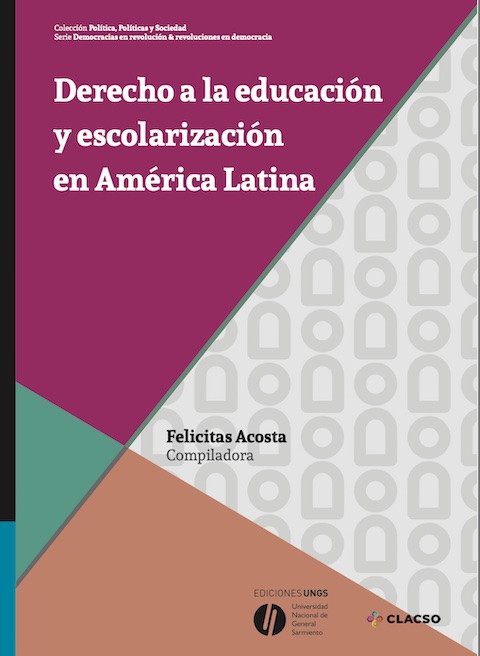 Right to Education and Schooling in Latin America Year of publication: 2020 Author: Mariela Alejandra Acevedo | Felicitas Acosta | Myriam Feldfeber | Pablo Imen | María Mercedes Palumbo | Fernanda Saforcada | Soledad Vercellino Corporate author: Universidad Nacional de General Sarmiento | Consejo Latinoamericano de Ciencias Sociales (CLACSO) The extension of the right to education in Latin America is part of the contemporary debate about schooling. The educational reforms of the latter part of the 20th century and the beginning of the 21st century in the region accompanied this debate: enactment of new laws, changes in the structure of educational systems, curricular reforms, revision of classroom teaching, modification of the teacher training are some of the ways these reforms take. Changes in education systems are also affected by the emergence of new actors, topics and forms of intervention: from standardized international tests and the participation of civil society and non-governmental organizations, to the introduction of content related to issues of gender and sexuality. This book brings together works that attempt to account for the set of changes mentioned, from different perspectives: historical, political, philosophical and pedagogical. It also brings together the award-winning articles from the CLACSO-UNGS essay contest on the right to education within the framework of the Education Axis of the Democracies in Revolution / Revolutions in Democracy program.
 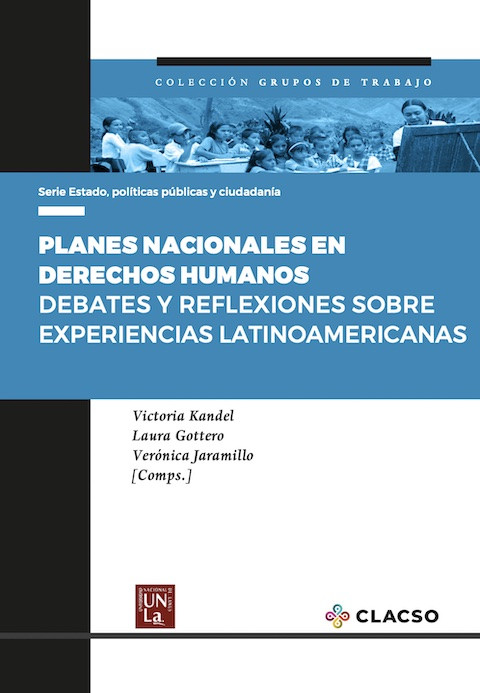 National Plans on Human Rights: Debates and Reflections on Latin American Experiences Year of publication: 2021 Author: Laura Pautassi | Mariela Alejandra Acevedo | Felicitas Acosta | Myriam Feldfeber | Pablo Imen | María Mercedes Palumbo | Fernanda Saforcada | Soledad Vercellino Corporate author: Consejo Latinoamericano de Ciencias Sociales (CLACSO) The texts gathered in this book reflect the tensions and challenges involved in creating inclusive human rights public policies that respond to effective and impactful citizen participation. They also highlight the tension—once again—between the short and long term: the temporalities of governments and states. Furthermore, these writings incorporate an analysis of contexts and policies from a human rights perspective, revealing that, very often, plans of this nature—as tools provided by international protection bodies—are not fully implemented at the national or subnational level. Instead, they are frequently constructed as ways to appease international agendas rather than as means of engaging and engaging communities in collective initiatives for transformation. Therefore, we try to build interpretive proposals that allow us to critically analyze—and also strengthen—human rights plans in these ambiguous paths of formulation, implementation, and evaluation, because we believe that these comprehensive and cross-cutting policies are, or can be, instruments for building more just and inclusive societies, but they require long-term work and commitment.
 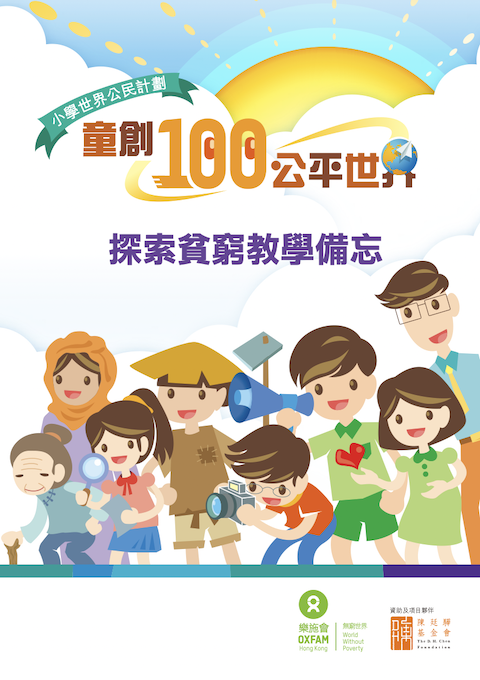 Achieving 100 for a Fair Wolrd: Exploring the Teaching Notes on Poverty Year of publication: 2019 Corporate author: Oxfam Hong Kong This material provides some poverty concepts and related activities for teachers to refer to and continue to explore new and improved methods of creating a fair world.
 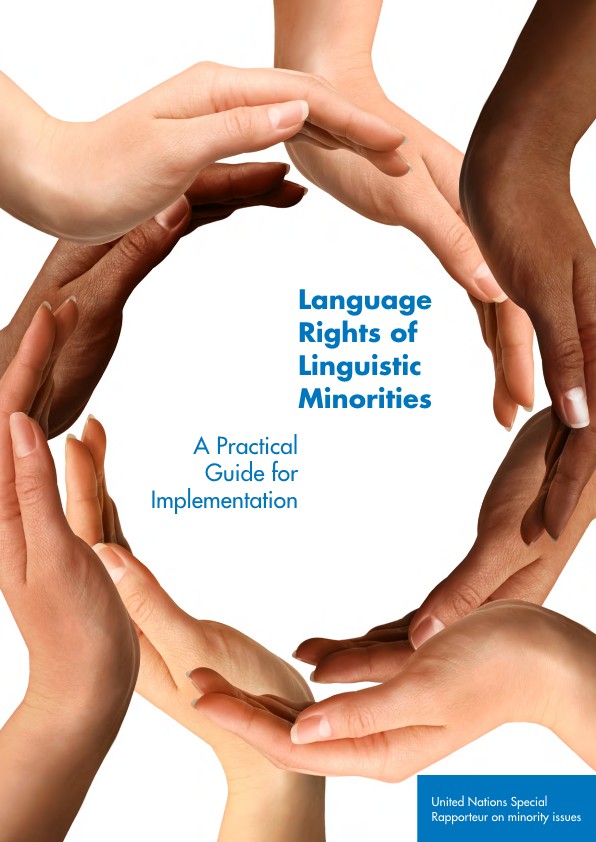 Language Rights of Linguistic Minorities: A Practical Guide for Implementation Year of publication: 2017 Corporate author: UN. Office of the United Nations High Commissioner for Human Rights (UN. OHCHR) The purpose of this Guide is to further assist policy makers and rights holders in understanding and implementing the linguistic human rights of linguistic minorities. This touches upon the necessary balance between a state’s official language (or languages) and its obligations to use or respect the language preferences of linguistic minorities. These language rights can also contribute towards preserving the world’s linguistic diversity. The Guide aims to:● clarify what are the various human rights of linguistic minorities relevant to language use and preferences;● clarify the obligations of state authorities towards linguistic minorities;● support the development and continuous improvement of effective and cost-efficient approaches and practices for these linguistic human rights; and● promote consistent approaches to the participation and inclusion of minorities and implementation of their language rights.
 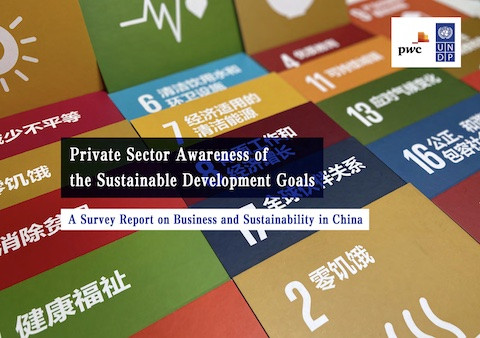 Private Sector Awareness of the Sustainable Development Goals: A Survey Report on Business and Sustainability in China Year of publication: 2020 Corporate author: UNDP China This report serves as a baseline analysis of business awareness of the Sustainable Development Goals (SDGs). As a first of its kind in China, the report aims to provide business leaders a glimpse of how companies are engaging with the SDGs in China, which areas matter the most, the future trends and how – beyond normal business practices – companies can help societies to recover from shocks and crises, such as COVID-19.As a joint effort with PwC China and the China Chamber of International Commerce (CCOIC), the Report, entitled “Private Sector Awareness of the SDGs” utilized online questionnaires for self-reporting and in-depth interviews for case studies, drawing a comprehensive analysis on the current understanding and activities of sustainable development in selected enterprises including foreign-owned companies operating in China across different industries. Its findings provide insight on how best to gear businesses towards the SDGs and the challenges that must be overcome to do so.
  The Digital Skills Toolkit 2018 Year of publication: 2018 Author: Chris Coward Corporate author: International Telecommunication Union (ITU) This toolkit provides stakeholders with guidance on developing a digital skills strategy. It is intended for policymakers, along with partners in the private sector, non-governmental organizations, and academia. Its overarching aim is to facilitate the development of a comprehensive digital skills strategy at country level. It is also possible to use this guide to focus on selected priorities that require a fresh approach.
  Strengthening Democracy Is the Key to Preventing Far-Right Extremism Year of publication: 2021 Author: Cynthia Miller-Idriss This article emphasizes that disinformation, misinformation and propaganda undermine democratic practices in ways that should be fought not only by trying to shrink or contain the extremist fringe, but also by strengthening democratic values and practices within the mainstream. It also highlights that it is critical to engage proactively and consistently in order to prevent further escalations in far-right extremism and interrupt violent radicalisation at early stages.
 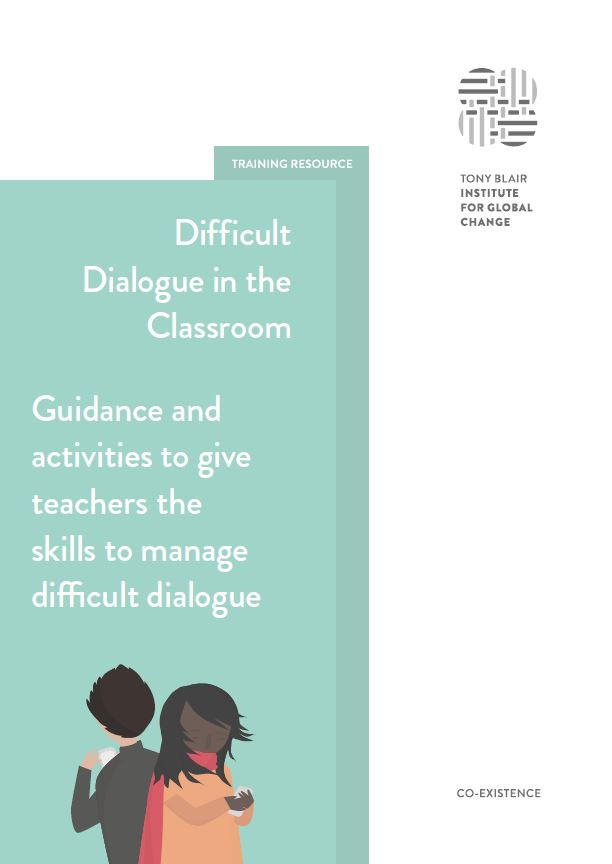 Difficult Dialogue in the Classroom: Guidance and Activities to Give Teachers the Skills to Manage Difficult Dialogue Year of publication: 2017 Corporate author: Generation Global Difficult Dialogue is a teaching resource with theory and activities that help educators support students in engaging with challenging topics in dialogue.This resource builds on the Essentials of Dialogue, assisting educators in navigating and facilitating conversations around contentious and sensitive issues. Through this resource learning communities can achieve a greater understanding of each other in a complex and diverse world.By engaging young people in meaningful dialogue, teachers can help them develop the skills necessary to engage effectively in difficult conversations.
 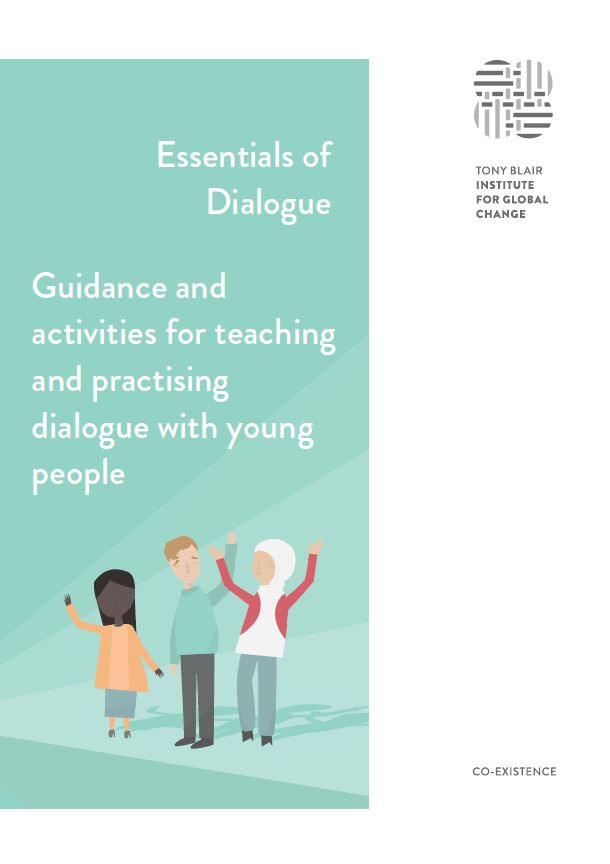 Essentials of Dialogue: Guidance and Activities for Teaching and Practising Dialogue with Young People Year of publication: 2017 Corporate author: Generation Global Essentials of Dialogue is a teaching resource filled with activities for use in learning communities to build the core skills of dialogue and is foundational for any curriculum or programme centred around global citizenship and intercultural communication.Each chapter includes both theory and practical activities to help explore, develop, and practise dialogue. The resource is free to use all over the world.
  The Ultimate Dialogue Adventure: An Online Global Citizenship Game for Students Ages 13-17 Corporate author: Generation Global An interactive online platform that leads young people ages 13-17, through a game to learn the skills of intercultural dialogue and participate in forums focused on a variety of global topics and issues. The Ultimate Dialogue Adventure can be used as a self-directed learning journey for young people, or as an in-class companion for teachers, to support rigorous dialogue about a global topic or provide a place of practice when using our offline materials.