
Resources
Explore a wide range of valuable resources on GCED to deepen your understanding and enhance your research, advocacy, teaching, and learning.
8,363 Results found
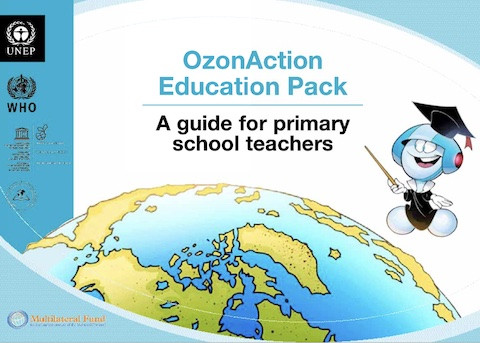 OzonAction Education Pack: A Guide for Primary School Teachers Year of publication: 2006 Author: Fabienne Pierre Corporate author: United Nations Environment Programme (UNEP) This education pack contains an entire teaching and learning programme, based on basic knowledge, practical skills and participation, for students to learn about concrete and simple solutions to protect the ozone layer and safely enjoy the sun.
  Education Kit on Combating Desertification: Learning to Combat Desertification; A Teacher’s Guide Year of publication: 2003 Corporate author: UNESCO The educational guide contained in this kit is addressed to teachers around the world living in areas affected by or under threat from desertification. For this reason, the guide should be seen as a general presentation to be adapted to the specific realities and preoccupations of each region or country. The guide begins with the different problems of desertification, which the teachers could integrate into lessons (fauna, flora, crop varieties or rearing, methods of land exploitation, socio-economic problems etc.). It presents the major objectives of the Convention and proposes several solutions to combat desertification.
  Ministerial Forum: Global Dialogue on ICT and Education Innovation – Towards Sustainable Development Goal for Education (SDG 4); Proceedings Year of publication: 2019 Corporate author: UNESCO Institute for Information Technologies in Education (IITE) The present publication contains articles based on the outcomes of the Ministerial Forum “Global Dialogue on ICT and Education Innovation – Towards Sustainable Development Goal for Education (SDG 4)”, organized by UNESCO IITE in cooperation with the Ministry of Education and Science of the Russian Federation in Moscow (Russia) on 18-19 March, within the Moscow International Education Fair 2018 (MIEF 2018).The publication covers the flagship topics such as ICT potential for future teachers and future schools, digital pedagogy and OER, collaboration between public and private sectors in the use of ICT in education, digital technologies for quality and equity in education.
 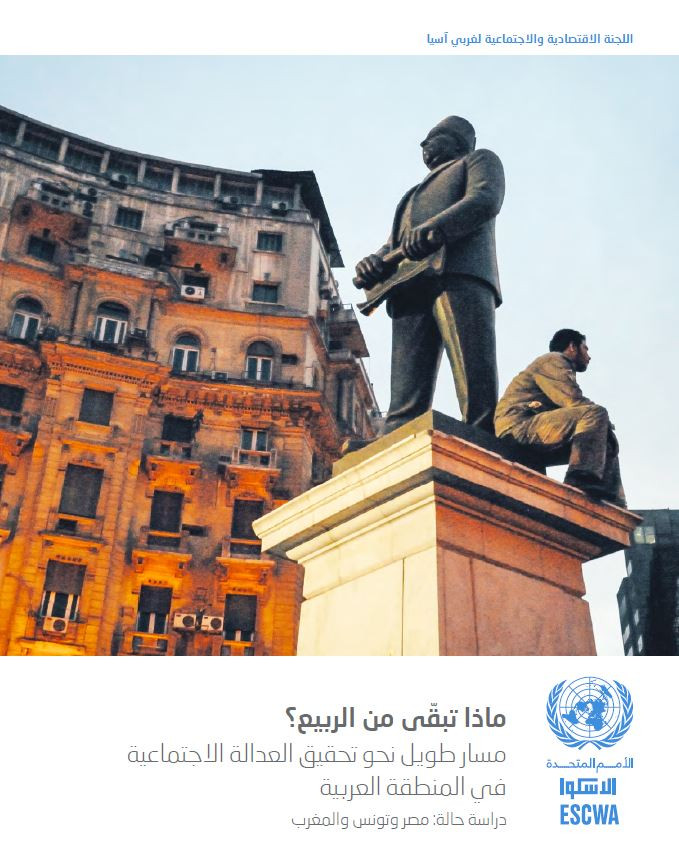 What's Left of Spring? A Long Path towards Social Justice In the Arab Region: Case Study; Egypt, Tunisia, and Morocco Year of publication: 2015 Corporate author: United Nations Economic and Social Commission for Western Asia (ESCWA) “What is left of the spring? A long path towards achieving social justice in the Arab region” is the first in a series of social development reports that ESCWA intends to publish. It comes two years after the publication of “Spring Promises: Citizenship and Civic Participation in the Paths of Democratic Transition,” the study that reviewed the general context surrounding the so-called Arab Spring and addressed the challenges facing achieving social justice, consensus and maintaining social cohesion during political transitions. This report is also issued the day after the international community adopts a new global path for development, which is the 2030 Agenda for Sustainable Development, of which social justice is the main pillar.
 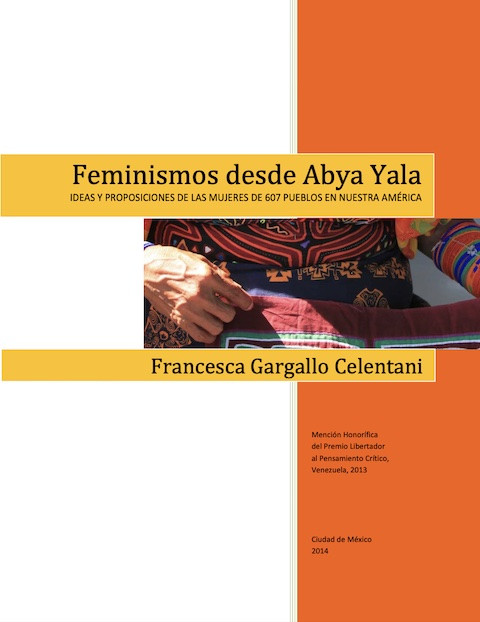 Feminisms of Abya Yala Ideas and Proposals of the Women of 607 Peoples in Our America Year of publication: 2014 Author: Francesca Gargallo Calentani Compilation of dialogues between women from various Guatemalan native peoples. Exposes here the strength of indigenous women who have suffered physical and emotional violence who speak of repression and genocide. Stories that allow us to process the ancestral pains of the Ixiles of the Mayan peoples of Guatemala. It refers us to whitewashed feminism and the difficulties it represents to listen to these women because of their vision drawn by the culture, which does not listen to their demands and does not know their history of struggle and the validity of their ideas. It evidences the importance of getting off the place of power conferred by the university, the institutionalized power and the political norms of the nation in order to establish a genuine dialogue.
 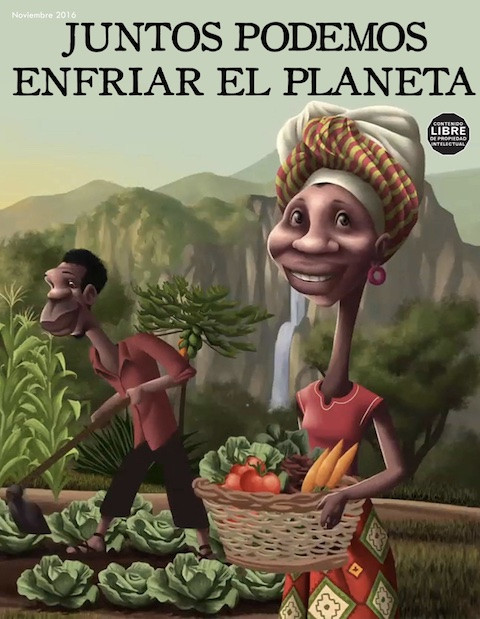 Together We Can Cool the Planet Year of publication: 2016 Corporate author: GRAIN | La Via Campesina Based on the video Together we can cool the planet! co-produced by La Vía Campesina and GRAIN in 2015, we have created a comic book to support training activities of social movements and civil society organisations around climate change. This comic book looks at how the industrial food system impacts our climate and also explains what we can do to change course and start cooling the planet.La Via Campesina and GRAIN have pointed out that the industrial food system is responsible for half of all greenhouse gas emissions. In the Americas, Asia, Europe and Africa, we have been denouncing the false solutions to climate change such as GMOs, the “green economy” and "climate-smart agriculture".We say loud and clear: it is peasants and small farmers, along with consumers who choose agroecological products from local markets, who hold the solution to the climate crisis.We must all rise to the challenge!Click here to download the comic book in pdf format.And share the video, available from: https://www.grain.org/e/5310More information is available from:http://tv.viacampesina.org http://viacampesina.orghttp://www.grain.orgVisit GRAIN’s page on food and climate at:https://www.grain.org/article/categories/526-food-and-climate
  Mindfulness in the Context of Education Year of publication: 2021 Corporate author: Campus Virtual MIMI This podcast deals with the concept of mindfulness, understood as an Eastern tradition that in recent years has been adapting to Western culture from different contexts to work on its own well-being. It is also defined by the author Jon Kabat-Zinn, who has brought to the West is practical, as the possibility of paying attention in a determined way to the present moment, without judgments. It has 3 components: attention, the intention to be present and attitudes individuals. It shows to be an inherent quality of the human being, as well as a capacity and ability that is trained, a practice that helps the brain in terms of its predispositions and has scientific bases that strongly relate it to mental health, due to its intervention in the nervous system , which generate a balance in the activation of this system. Therefore, the objective of mindfulness is to generate a possibility to balance emotions and learn to regulate them. It allows thoughts to connect with the body, which impacts on affective symptoms by strengthening the immune system. The video shows the ways to use it in everyday life in the academic context.
 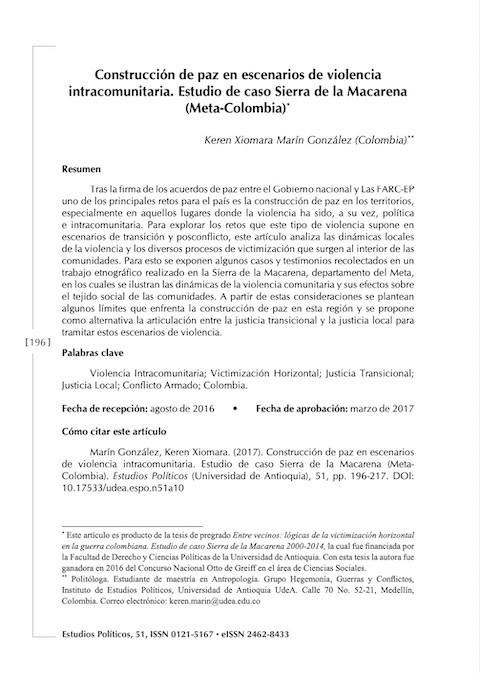 Peacebuilding In Scenes of Violence Intracommunity: Sierra de la Macarena Case Study (Meta-Colombia) (Political Studies; No. 51) Year of publication: 2017 Author: Keren Xiomara Marín Gonzales Corporate author: Universidad de Antioquia After the signing of the peace accords between the national government and the FARC-EP one of the main challenges for the country is the construction of peace in the territories, especially in those places where violence has been political and intracommunitarian To explore the challenges that this type of violence poses in transition and post-conflict scenarios, this article analyzes local dynamics violence and the various victimization processes that arise within the communities. For this, some cases and testimonies collected in a ethnographic work carried out in the Sierra de la Macarena, department of Meta, Colombia, in which the dynamics of community violence and its effects on the social fabric of the communities. Based on these considerations, some limits that peacebuilding faces in this region and it is proposed as an alternative, the articulation between transitional justice and local justice to deal with these scenarios of violence.
 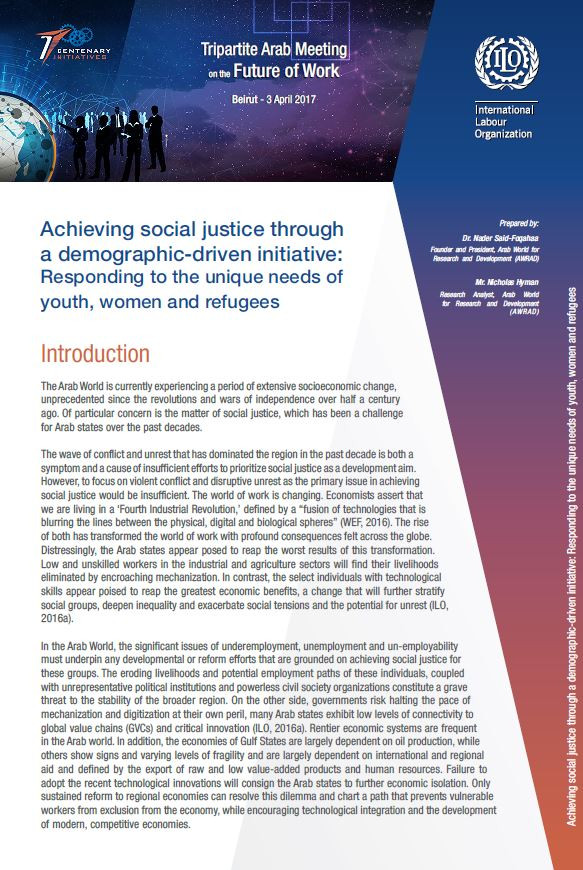 Achieving Social Justice Through a Demographic-driven Initiative: Responding to the Unique Needs of Youth, Women and Refugees Year of publication: 2017 Author: Nader Said-Foqahaa | Nicholas Hyman Corporate author: International Labour Organization (ILO) The Arab world is currently going through a period of great socio-economic change, unprecedented since the revolutions and wars of independence more than half a century ago. The issue of social justice, which has been a challenge to Arab states over the past decades, is a matter of particular concern. The authors attempt to establish a conceptual background of social justice, and to discuss its linkage with youth, children, women, and refugees. The paper concludes with recommendations on social justice in the Arab world.
 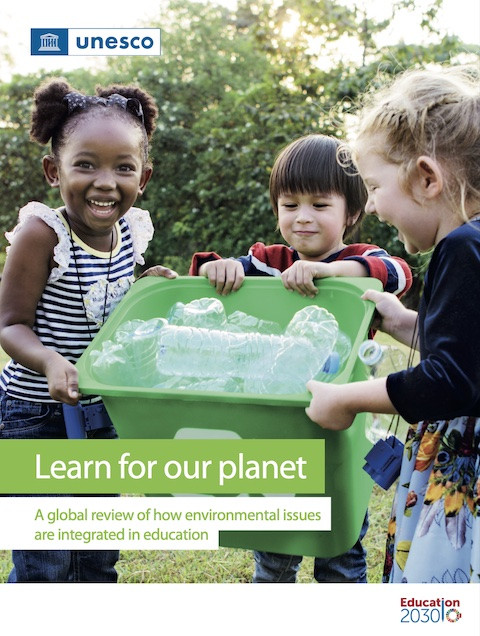 Learn for Our Planet: A Global Review of How Environmental Issues Are Integrated in Education Year of publication: 2021 Corporate author: UNESCO 2020 was the equal hottest year on record. One million species are at risk of extinction. We use more resources than the planet can generate each year - if we continue to live the way we do today, we will need three earths by 2050. The way we currently live is not sustainable. Urgent change is needed, but lasting change is impossible without education.This publication presents the extent to which environmental issues are integrated in primary and secondary education policies and curricula across 46 UNESCO Member States. Over half of education policies and curricula studied made no mention of climate change. Only 19 per cent made reference to biodiversity. Countries have made progress: 83 per cent of education policies and curricula studied addressed the environment at least once, and 69 per cent mentioned sustainability - but it is clear that more needs to be done to prepare learners with the knowledge, skills, values and attitudes to act for our planet. Governments, education policy-makers, academics, and education and environmental stakeholders need to further commit to Education for Sustainable Development.