
Resources
Explore a wide range of valuable resources on GCED to deepen your understanding and enhance your research, advocacy, teaching, and learning.
8,363 Results found
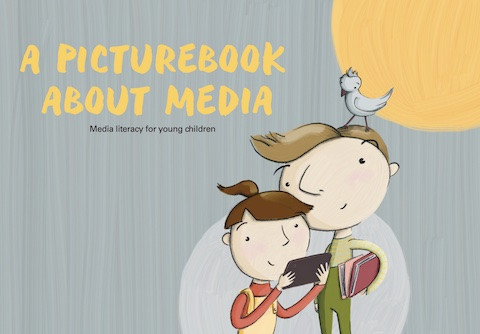 A Picture Book About Media: Media Literacy For Young Children Year of publication: 2018 Author: Alma Čakmazović Corporate author: United Nations Children's Fund (UNICEF) Media literacy helps to form the habit of appraising media contents and to develop the skills of expression necessary for critical thinking. Today, it represents education for life, human values, active citizenship and responsible media practices.This picturebook is devoted to children, parents, foster parents and educators. Its purpose is to give the youngest children the chance to understand media through one of the first lessons in media literacy, one about the difference between the media world and the real world.
  Political Leadership for Sustainable Development: Why Do the Global Goals Matter to Local Councillors, and Why Do Local Councillors Matter for the Global Goals?; Training Manual Year of publication: 2021 Author: Maeve Bateman | Jihyun Kim Corporate author: Irish Development Education Association (IDEA) | Bridge 47 Our Bridge 47 Consortium Member, IDEA, partnered with Women for Election, a not-for-profit, non-partisan organisation which trains and supports women in Ireland to run for politics.In 2019 and 2020 this partnership developed and delivered training programmes for women Councillors on ‘Political Leadership for Sustainable Development: Why Do the Global Goals Matter to Local Councillors, and Why Do Local Councillors Matter for the Global Goals?’This training manual is to provide guidelines for any civil society organisations that would like to engage with local politicians on how to inspire, support and equip them as leaders for sustainable development who are ready to participate in and implement the localisation of the Sustainable Development Goals.
 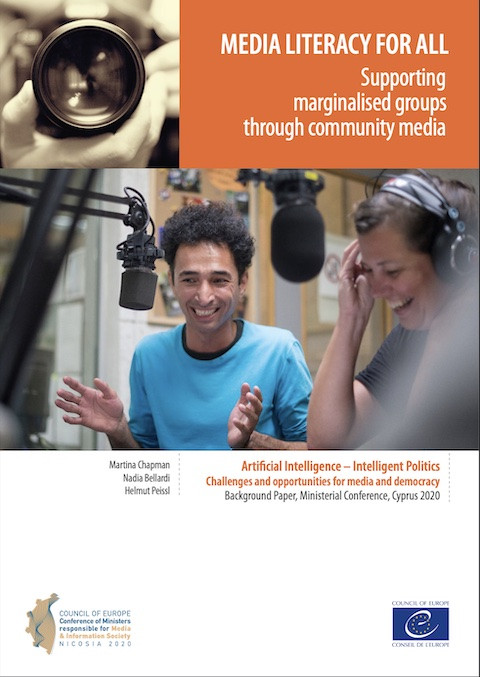 Media Literacy for All: Supporting Marginalised Groups Through Community Media Year of publication: 2020 Author: Martina Chapman | Nadia Bellardi | Helmut Peiss Corporate author: Council of Europe Being media literate means being able to critically understand and evaluate media content and to responsibly and safely use digital media services. Media literacy helps us engage with others in the public sphere, using the creative and participatory potential that new technologies and services can offer. Nowadays, it also includes understanding how data is used and how algorithms and AI can influence media production and choices.The importance of community media in supporting the formation of an ‘informed citizenry’ is well recognised by the Council of Europe. Community media have the ability to empower community groups with the neces- sary access and skills to create their own communica- tion channels and to foster their participation in the public sphere in a structured and professional man- ner. However, in many European countries community media still lack formal, legal recognition, fair access to distribution platforms and sustainable funding.This background paper explores how the community media sector promotes media literacy and how this work can strengthen marginalised communities’ partic- ipation in the media environment and public discourse. Comparing five models of community media from Cyprus, Ireland, Luxembourg, Spain and the United Kingdom, it seeks to inform and inspire practitioners and policy-makers, highlighting a number of findings and policy responses that can help member States fully realise the potential of community media.
 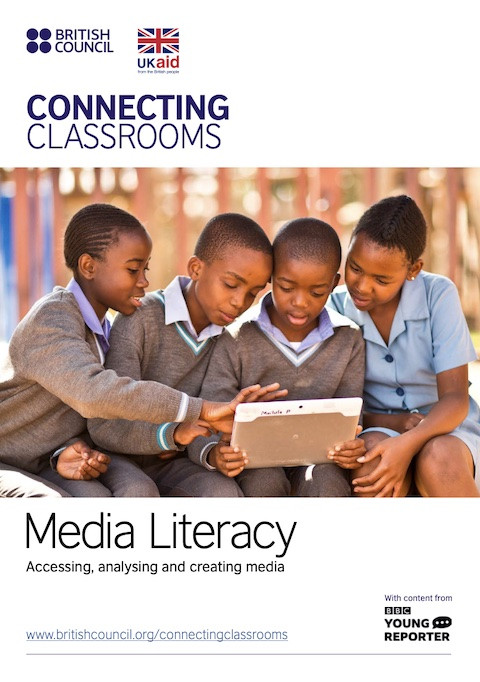 Connecting Classrooms: Media Literacy; Accessing, Analysing and Creating Media Year of publication: 2019 Corporate author: British Council | UK aid This resource aims to help young people develop and use a number of skills and approaches to analyse and critically examine information received through a range of channels and sources, such as the internet, social media, newspapers and TV.
  Catch-up Programmes: 10 Principles for Helping Learners Catch Up and Return to Learning Year of publication: 2021 Author: Kayla Boisvert Corporate author: Accelerated Education Working Group (AEWG) Due to the COVID-19 pandemic, in which approximately 1.5 billion children and youth (nearly 85% of the world’s learners) were affected by school closures,1 the AEWG anticipates that catch-up programmes will be deployed extensively to meet the needs of learners who missed out on several months to approximately one year of education due to the disruption. Therefore, building on the AEWG’s programme definitions and our expertise in AE and other non-formal or alternative education options that accelerate the acquisition of knowledge and skills, the AEWG developed this set of principles and action points for catch-up programmes.
 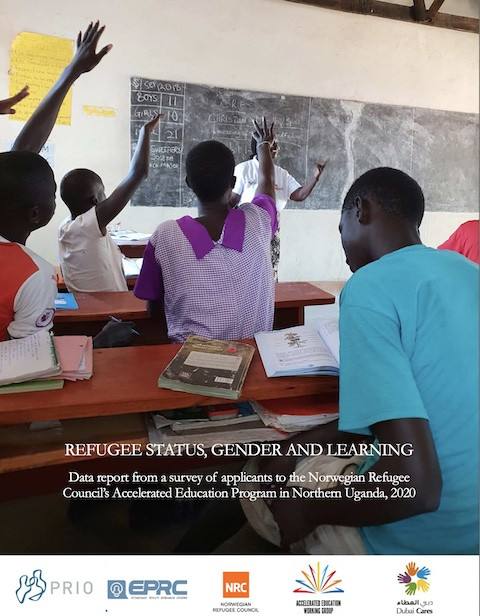 Refugee Status, Gender and Learning: Data Report From a Survey of Applicants to the Norwegian Refugee Council’s Accelerated Education Program in Northern Uganda, 2020 Year of publication: 2020 Author: Kendra Dupuy | Martin Flatø | Haakon Gjerløw | Andreas Kotsadam | Mette Løvgren | Francis Mwesigye | Siri Aas Rustad | Gudrun Østby Corporate author: Economic Policy Research Center (EPRC) | Peace Research Institute Oslo (PRIO) This data report provides details from a survey of applicants to the Norwegian Refugee Council’s Accelerated Education Program in Northern Uganda, 2020. The surveys covered a range of topics, such as demographic and socioeconomic background, school attendance, academic skills, social control, feelings and perceptions on various topics, and future aspirations.
  The Role of Media Literacy in the Promotion Of Common Values and Social Inclusion: Position Paper Year of publication: 2017 Corporate author: All Digital While we live in an increasingly digital society, a significant number of European citizens continue to lack basic digital skills. Media practices have changed, and now we are not only receiving information passively. Anyone can be active in content creation and (re-)produce (dis)information. For example, mobile technology and ubiquitous Internet access allow citizens to produce real time information, including content for mass media (newspapers, TV channels).The production of information and news thus no longer remains in the capacity of journalists, but something within everyone’s capacity. Without the necessary skills, however, the creation of information and news is not always done in a responsible or professional manner. This is only one example of many, highlighting why media literacy is more important than ever.This position paper talks about:the role for media literacy in promoting common values and social inclusion in several ways: resilience, content creation, dissemination, social inclusionthe role of non-formal education in teaching media literacy andgives examples of media literacy programmes and projects across Europeprovides policy recommendations in terms of funding, recognition and promotion.
 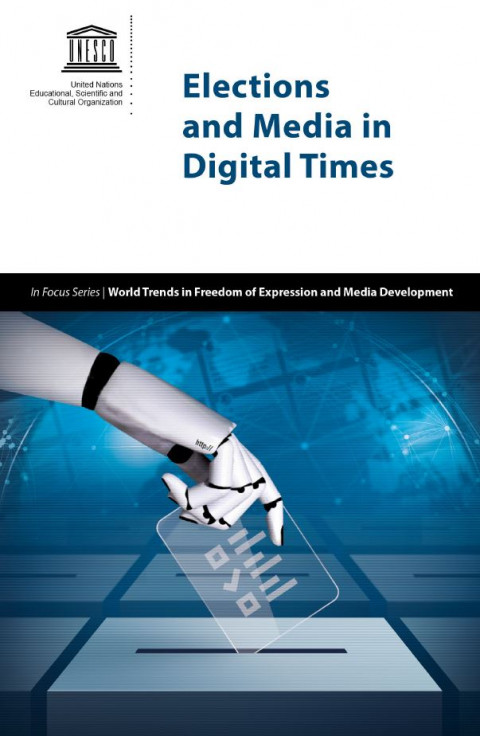 Elections and Media in Digital Times (In Focus Series: Global Trends in Freedom of Expression and Media Development, 2019) Year of publication: 2019 Author: Tarlach McGonagle | Maciek Bednarski | Mariana Francese Coutinho | Arthur Zimin Corporate author: UNESCO Digital companies are enabling politicians, political parties and voters to communicate in unprecedented ways, and expanding opportunities for seeking, receiving and imparting political information and ideas. Alongside positive developments, there also growing concerns about emerging and increasing threats to the integrity and credibility of elections, as well as the media's contribution to free, fair, transparent and peaceful electoral processes.This report highlights three converging trends in media and elections in digital times: the rise of disinformation, intensifying attacks on journalists, and disruptions linked to the use of information and communication technology in electoral arrangements. Offering possible responses to the challenges at hand, this study is a tool for governments, election practitioners, media organizations, journalists, civil society, the private sector, academia and individuals.
  Making the Case For Inclusive Quality Physical Education Policy Development: A Policy Brief Year of publication: 2021 Author: Nancy McLennan Corporate author: UNESCO This evidence-based policy brief presents the benefits of investing in inclusive quality physical education (QPE) policy development. Content draws directly on findings from in-country interventions which demonstrate the value of inter-sectoral partnerships in QPE policy development and the delivery of low cost/high impact QPE programming which stands to accelerate post-COVID recovery efforts. A series of practical recommendations are included for public and private stakeholders in the sport-education ecosystem, alongside resources to support the implementation of recommendations.
  Learning & Behaviour Support: Enabling Inclusive Learning; Edukans Manual for Facilitators Year of publication: 2021 Author: Hendrien Maat | Judith Pietersma | Aniek Santema Corporate author: Edukans This Edukans training manual is intended as a guide to train people in how to respond to the needs of students with learning and behavioural problems, such as dyslexia, dyscalculia, lack of motivation, aggression and anxiety. Troubled behaviour is often a child's way of communicationg distress and, in these cases, the right kind of response can make all the difference. Behavioural and learning difficulites are well-recognized problems all over the world, and inclusive learning is on top of the educational agenda. When a person has more knowledge about learning & behavioural difficulties, he or she can understand the situation that the child is facing and offer suitable suport.This manual aims to help programme managers and trainers to give training to their staff in: understanding the diverse needs of vulnerable students, the origins of learning and behavioural problems, their implications, and a variety of effective support strategies and interventions. The manual is meant to be used by master trainers who can further train teachers, social workers, NGO staff, mentors, relief workers, government officials, mental health workers, and counselors.