
Resources
Explore a wide range of valuable resources on GCED to deepen your understanding and enhance your research, advocacy, teaching, and learning.
8,364 Results found
 Moral Education and the Cultivation of Positive Citizen: Insights from Isaiah Berlin’s Conceptualization of Two Types of Freedom Year of publication: 2019 Author: Ye Fei Corporate author: 苏州大学 On the basis of a binary model of freedom, Isaiah Berlin distinguished two types of citizenship: “negative citizen” and “active citizen”. “Negative citizens” tend to place individual freedom and rights above the community, and to defend the individual freedom as the top priority, which readily leads to the division and alienation between the individual and the community. “Active citizens”, on the other hand, tend to place a greater emphasis on the close relationship between freedom and responsibility and the integration of individual and the society, advocating that individuals shall have the courage to assume public responsibility while defending their individual rights. In the ongoing social transformation, moral education shall guide the cultivation of “active citizens” and promote the development of moral responsibility and public spirit, which is valid practice with relation to individual personality improvement, school moral education reform, and social development. To this end, moral education should be devoted to constructing a public living space in the classroom, developing the concept of democratic co-governance in schools, and meanwhile establishing an effective connection between schools and communities. Thus, students can be expected to become responsible and positive citizens who treasure such public virtues as equality, cooperation, respect, and tolerance, and who shall contribute to the progress of public life in building a respectable character.
  From Maker to Creative Citizens: Maker Citizens and Its Cultivation from the Perspective of Smart Education Year of publication: 2019 Author: Wang Youmei | Wan Ping | Zhao Wenzhu | Yang Gang Corporate author: Digital Education Studies The goal of smart education is to cultivate talents with good value orientation, high thinking quality and strong decisive ability, which provides a brand new target framework and value pursuit for maker education. Firstly, this paper starts from the connotation of makers, clarifies the logical relationship between the concepts of maker citizens and creative citizens, and builds the capability dimension and literacy structure of maker citizens. Secondly, based on the International MakEY creator citizen project, this paper analyzes the paths and strategies of the UK and Iceland to cultivate students’ creativity through maker space in detail, and illustrates the role of maker space in cultivating the digital literacy and creativity of children and adolescents. Finally, this paper, on the basis of case analysis and the development of smart education in China, proposes the realization path and some strategies to cultivate maker citizens in China, and establishes the concept and system of citizenship education for “Lifelong, All People, Whole Process, All Space, and Whole Society”, which provides theoretical basis and case references for the cultivation of Chinese makers’ citizens, and promotes the integral development of maker education and smart education.
  What Makes Me a Global Citizen? Year of publication: 2020 Corporate author: Stride This material aims to develop a personal sense of what it means to be a global citizen and to begin to realize a personal potential to change things. Learners will think about what makes them a global citizen and create a poster using pictures and words to illustrate this.
 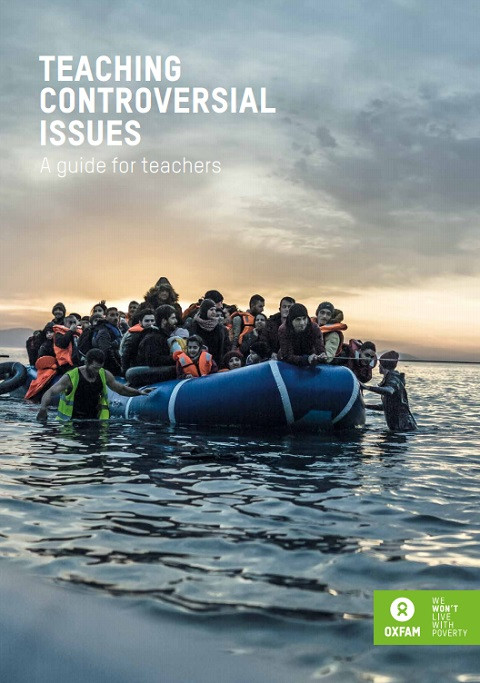 Teaching Controversial Issues: A Guide for Teachers Year of publication: 2018 Corporate author: Oxfam GB This revised and updated version of Oxfam’s popular guide recognises the changes in social and political contexts in recent years and seeks to support educators in their discussions with young people in this complex environment. In increasingly divisive and polarised times, the need for young people to feel confident in tackling controversial issues is more pressing than ever. Advances in technology and the rise of social media mean that it is more important than ever for young people to think critically to become effective global citizens.This guide explores:• What controversial issues are.• Reasons for teaching controversial issues.• The value of a global citizenship education approach.• Guidance and classroom strategies for handling and exploring controversial issues.• Some practical activities for teaching controversial issues.
 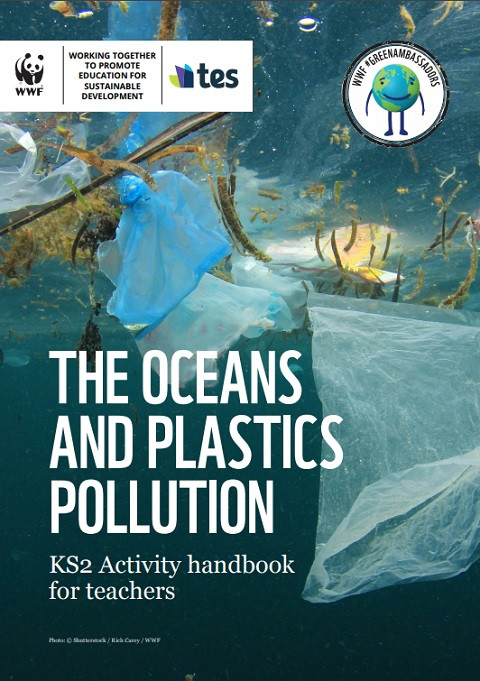 The Oceans and Plastics Pollution: KS2 Activity Handbook for Teachers Year of publication: 2019 Corporate author: World Wide Fund for Nature (WWF) | Tes This resource enables pupils to explore the role of the oceans in our lives and why healthy oceans are so vital to our future. By looking at the impact of plastics pollution on the oceans, pupils will also consider what steps we can all take to safeguard these precious waters for generations to come. It contains a range of activities aimed at teachers of 7-11 year-olds. It is intended that this resource will be used in cross-curricular work and all activities can be linked to the National Curricula of England, Northern Ireland, Scotland and Wales. Teachers will find that the material can be adapted for use with different ages and abilities.The six activities engage pupils in active learning methods, encouraging them to work together to solve problems, to think creatively, and to see themselves as active participants in their communities and the wider world. With a growing awareness of the part that they can play in creating a better future for our oceans, pupils will take a step on the journey to becoming global citizens and sustainability champions of the future.
  Report on the Social Monitoring of the Legislation and Law Enforcement Practices of the Local Police Service in the Area of Preventing Domestic Violence in the Republic of Kazakhstan Year of publication: 2017 Author: S.V. Korneytchuk | N.S. Gladyr Corporate author: OSCE. Programme Office in Astana This monitoring focuses on evaluating and forecasting the legislation by means of identifying contradictions in the legislation, obsolete, corruption-generating and ineffectively implemented statutes, as well as the drafting of proposals on improving the legislation and mechanisms of its implementation by units of the local police service. This edition was published with the financial support of the OSCE Programme Office in Nur-Sultan as part of the project entitled “Social Monitoring of the Legislation and Law Enforcement Practices of the Local Police Service in the Area of Preventing Domestic Violence in the Republic of Kazakhstan”.
  Five States and / or One Region? : National and Regional Dualism in Central Asia Year of publication: 2015 Author: Farkhod Tolipov | Abdugani Mamatazimov | Elmira Nogoibaeva | Sanat Kushkumbaev | Tamerlan Ibraimov | Galiya Ibragimova | Azina Kushkumbaeva Corporate author: Central Asian Studies The aim of the group of scientists and researchers of the Almaty Club, created with the support of the Friedrich Ebert Foundation, was to analyze and search for common solutions to intra-regional problems.This publication is the result of the work of researchers from 5 countries of the Central Asian region. It discusses issues of regional integration and cooperation, creating a platform for scientific research, overcoming geopolitical tensions and strategic uncertainty, as the main factors that impede regional evolutionary processes.
 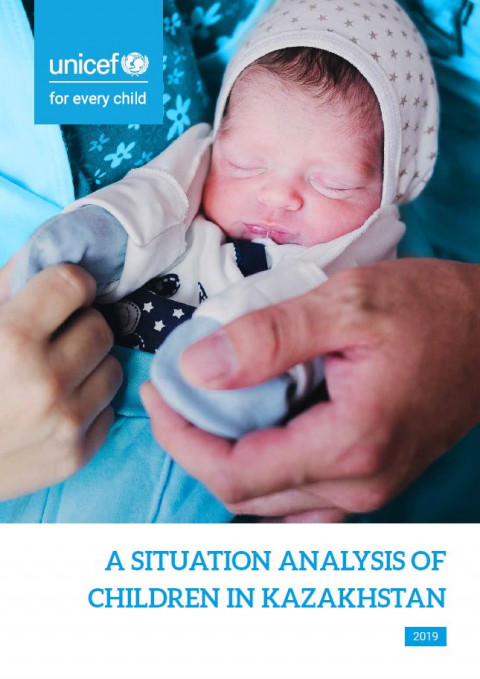 A Situation Analysis of Children in Kazakhstan Year of publication: 2019 Corporate author: UNICEF Kazakhstan Kazakhstan has set the overarching objective of becoming one of the 30 most developed countries in the world by 2050. Children and adolescents in Kazakhstan, who constitute 31.4 per cent of the total population, should be the beneficiaries and active contributors to achieving these goals. This Situation Analysis provides analysis and recommendations to ensure that children remain at the centre of the country’s development priorities. It confirms measurable progress made in advancing the rights of children and identifies outstanding challenges.
  Values of Kazakhstan Society in the Sociological Dimension Year of publication: 2020 Author: Gulnara Ismukhanova | Dina Sharipova | Botagoz Turekhanova | Botagoz Rakisheva | Gulnar Nasimova | Saltanat Ermakhanova | Shugla Kylybayeva | Tolganai Umbetalieva | Leonid Gurevich Corporate author: Friedrich-Ebert-Stiftung Kazakhstan Office The book provides a structured analysis of the values of modern Kazakhstani society, based both on well-known classical models and on original author’s approaches. The book is based on a sociological study conducted on a national representative sample and which allowed us to describe the value portrait of Kazakhstanis taking into account the specifics of social groups and regions. The key vectors of transformation of values in Kazakhstan are identified against the backdrop of global trends and in the context of the national strategy of spiritual modernization.The book is addressed to scientists, politicians, government and public figures, representatives of the business community, journalists, teachers and university students and is of interest to anyone who seeks to understand the complex structure of social and cultural processes in modern Kazakhstan.
 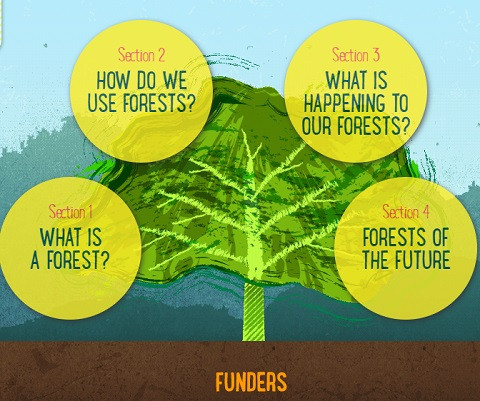 Our Forest, Our Future Corporate author: Scotdec This material helps teachers and pupils to explore the interdependence of people and forests and the vital role forests play in sustaining our environment – in the past, the present and hopefully the future. The Scots Pine forests in Scotland and the Congo Basin rainforest in Africa provide case studies through which pupils will begin to understand why our forests are under threat and the implications for our planet.In making connections between consumerism, people and the environment, pupils will be encouraged to see how they and their actions have an impact on the lives of others globally. It encourages reflection on the possible futures of the world's forests and ways of taking positive actions for a future where people and forests co-exist in a sustainable way. The resource is structured around a global citizenship framework devised by Oxfam.