
Resources
Explore a wide range of valuable resources on GCED to deepen your understanding and enhance your research, advocacy, teaching, and learning.
8,364 Results found
 International Youth White Paper on Global Citizenship Year of publication: 2017 Corporate author: Centre for Global Citizenship Education and Research (CGCER) | Centre for Global Education (CGE) The paper aims to mobilize, connect and amplify the voices and actions of youth from across the globe on GCED. The Centre provided feedback on the draft of the initial framework and activities for the project in November, 2016 and provided funds to help support the travel and participation of several students at UNESCO Education Week. Ten of these youth presented the International Global Citizenship White Paper, discussing both the content and the process.The paper identifies three pillars that these youth feel define global citizenship and make it accessible to everyone: deep listening to others, self-reflexivity and engaged actions within a global community. These double as important features of educating for pluralism. The paper focuses on three themes: 1) interconnection and complexity; 2) diversity and difference; 3) community, relationality and compassion.
 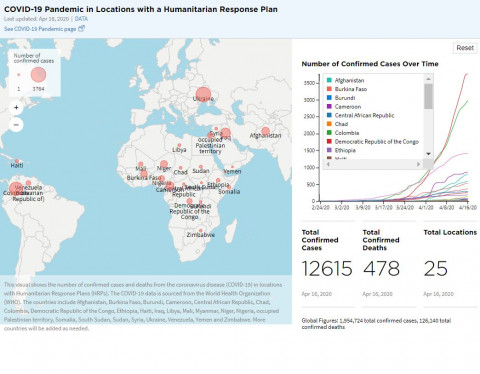 COVID-19 Pandemic in Locations with a Humanitarian Response Plans Year of publication: 2020 Corporate author: United Nations Office for the Coordination of Humanitarian Affairs (OCHA) This visual shows the number of confirmed cases and deaths from the coronavirus disease (COVID-19) in locations with Humanitarian Response Plans (HRPs). The COVID-19 data is sourced from the World Health Organization (WHO). The countries include Afghanistan, Burkina Faso, Burundi, Cameroon, Сentral African Republic, Chad, Colombia, Democratic Republic of the Congo, Ethiopia, Haiti, Iraq, Libya, Mali, Myanmar, Niger, Nigeria, occupied Palestinian territory, Somalia, South Sudan, Sudan, Syria, Ukraine, Venezuela, Yemen and Zimbabwe. More countries will be added as needed.
  Understanding the Return on Investment from TVET: A Practical Guide Year of publication: 2020 Author: Jane Schueler | Phil Loveder Corporate author: UNESCO International Centre for Technical and Vocational Education and Training (UNEVOC) | National Centre for Vocational Education Research(NCVER) This guide presents an analytic framework that summarizes some of the main elements and issues that need to be considered in measuring ROI. This includes establishing the scope, context and purpose for measuring ROI, adopting guiding principles, identifying costs, benefits and factors that impact on ROI, and approaches to data collection and analysis. The Guide then introduces a framework that looks at the ROI equation from a range of perspectives – including economic and social dimensions – and for different stakeholders, including individuals, businesses and societies. The Guide presents relevant ROI indicators and measures drawn from the existing international research. Finally, it provides guidelines to planning and collecting ROI data, along with a set of practical pro forma resources and case studies to assist the reader.
  Teaching for Sustainable Development through Ethical Global Issues Pedagogy: A Resource for Secondary Teachers Year of publication: 2019 Author: Karen Pashby | Louise Sund | Matthew Williams | Jennifer Maguire | Heidi Meltovuo | David Few | Nicole Sandler | Ruth Till | Ilona Taimela Corporate author: Manchester Metropolitan University This resource aims to support teacher in their current practice rather than a direct ‘how-to’ guide. The activities offer some suggestions for practice before, during, and after students learn about a particular global issue. It offers some suggested global issues topics, but intend for teachers to adapt this resource to the different issues they explore with their students.
 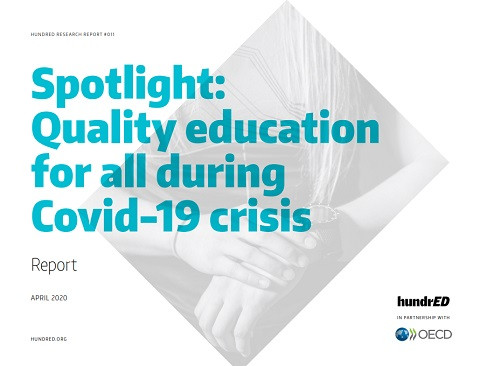 Spotlight: Quality Education for All during COVID-19 Crisis Year of publication: 2020 Author: Chris Petrie | Katija Aladin | Pukhraj Ranjan | Romayne Javangwe | Danny Gilliland | Saku Tuominen | Leponiemi Lasse Corporate author: HundrED | Organisation for Economic Co-operation and Development (OECD) | Supercell This report aims to offer effective solutions that help parents, teachers and children navigate through challenges facing education during the pandemic. It has plentiful insights and high- quality resources from the opportunity for teacher to form much stronger connections with parents, students to challenges of untrained teacher and lack of access to digital learning resources.
 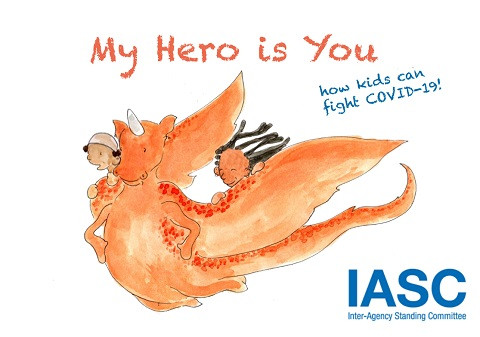 My Hero Is You: How Kids Can Fight COVID-19 Year of publication: 2020 Author: Helen Patuck Corporate author: Inter-Agency Standing Committee (IASC) A new story book that aims to help children understand and come to terms with COVID-19 has been produced by a collaboration of more than 50 organizations working in the humanitarian sector. With the help of a fantasy creature, Ario explains how children can protect themselves, their families and friends from coronavirus and how to manage difficult emotions when confronted with a new and rapidly changing reality.
  COVID-19: How to Include Marginalized and Vulnerable People in Risk Communication and Community Engagement Year of publication: 2020 Corporate author: United Nations Entity for Gender Equality and the Empowerment of Women (UN Women) | Regional Risk Communication and Community Engagement (RCCE) Women, the elderly, adolescents, youth, and children, persons with disabilities, indigenous populations, refugees, migrants, and minorities experience the highest degree of socio-economic marginalization. Marginalized people become even more vulnerable in emergencies. This is due to factors such as their lack of access to effective surveillance and early-warning systems, and health services. The COVID-19 outbreak is predicted to have significant impacts on various sectors. The development of this guide was led by UN Women and Translators without Borders on behalf of the Risk Communication and Community Engagement Working Group on COVID-19 Preparedness and Response in Asia and the Pacific, co-chaired by WHO, IFRC and OCHA.
  Shared Responsibility, Global Solidarity: Responding to the Socio-Economic Impacts of COVID-19 Year of publication: 2020 Corporate author: United Nations (UN) We are facing a global health crisis unlike any in the 75-year history of the United Nations — one that is killing people, spreading human suffering, and upending people’s lives. But this is much more than a health crisis. It is a human crisis. The coronavirus disease (COVID-19) is attacking societies at their core. The IMF has just reassessed the prospect for growth for 2020 and 2021, declaring that we have entered a recession – as bad as or worse than in 2009. The IMF projects recovery in 2021 only if the world succeeds in containing the virus and take the necessary economic measures.In the face of such an unprecedented situation in recent history, the creativity of the response must match the unique nature of the crisis – and the magnitude of the response must match its scale. No country will be able to exit this crisis alone.This report is a call to action, for the immediate health response required to suppress transmission of the virus to end the pandemic; and to tackle the many social and economic dimensions of this crisis. It is, above all, a call to focus on people – women, youth, low-wage workers, small and medium enterprises, the informal sector and on vulnerable groups who are already at risk.
  Psychosocial Support through Education in Emergencies Year of publication: 2019 Corporate author: Inter-agency Network for Education in Emergencies (INEE) This module outlines 3 hours (180 minutes) of training activities and materials related to psychosocial support (PSS) and social and emotional learning (SEL) in emergency contexts. It includes supplementary activities to further understanding of PSS-SEL concepts, for an extended duration of 5 hours (270 minutes). This Facilitator Guide provides the materials, facilitator notes (including main ideas and activity instructions), and a suggested script for the accompanying presentation. Facilitators are encouraged to first review the Instructions prior to training, which provides guidance for contextualization of the training resources.
  Teacher’s Guide for Culture and Arts Activities in Schools Year of publication: 2019 Author: Beatrice Polato | Xavier Verhoest Corporate author: Comitato Internazionale per lo Sviluppo dei Popoli (CISP) | European Union (EU) | UNESCO | UK aid This guide was designed as a curriculum to be used by teachers and mentors who facilitate modules and sessions aiming at involving school children in the study of cultural heritage, peace, inclusion and gender equity through artistic expressions. It has been tested and used by teachers in 24 schools in Somalia between 2018 and 2019, involving a total of 48 teachers and about 700 children. It contains text in Somali for activities.