
Resources
Explore a wide range of valuable resources on GCED to deepen your understanding and enhance your research, advocacy, teaching, and learning.
8,364 Results found
 Handbook on Measuring Equity in Education Year of publication: 2018 Corporate author: UNESCO Institute for Statistics (UIS) This handbook is aimed at professionals involved in the measurement and monitoring of equity in education, which includes not only those working on the SDGs but also any stakeholders in the field of education: technical staff in ministries of education and national statistical offices, education practitioners,members of nongovernmental organizations (NGOs) active in the field of education and researchers. This material provides a conceptual framework for measuring equality in learning; offers methodological guidance on how to calculate and interpret indicators; and investigates the extent to which measuring equity in learning has been integrated into country policies, national planning and data collection and analysis.
  A Contemporary Exploration of the Thought of Ye Shengtao upon the Foundation of Developing Virtues for Planting Humans Year of publication: 2020 Author: Ren Sumin Corporate author: Chinese Educational Science Against the background of the new times of “developing virtues for planting humans”as the fundamental mission of educational development for establishing Socialism with Chinese characteristics, this article attempts to analyze the thoughts of Ye Sheng from the perspective of their implications for this new times. Ye’s thoughts on moral education are grounded upon the notion of “Learning to be”, thus with lots of insights for practice, and this demonstrates the meaning and aims of moral education in modern China, and constructs the contents and core of moral education in modern China. Grounded upon “Learning to be” as the principle, this thoughts concludes the principle and method of moral education for modern China. This thought on moral education is also founded on educational practice in modern China, which carries the wonderful tradition of Chinese educational thoughts, and there wisdom for moral education practice for modern China. They also demonstrate the nature and principle for today’s moral education with Chinese characteristics, and consolidate the thought of “developing virtues for planting humans” as a fundamental mission in preparing the next generation as leaders for the socialist society.
  Social Media to P/CVE: Toolkit for Practitioners Year of publication: 2017 Corporate author: Search for Common Ground This Toolkit has been created on the basis of the key findings obtained in the framework of the Search for Common Ground (Search) “Social Media for De-Radicalization in Kyrgyzstan: A Model for Central Asia’s” pilot project funded by the Bureau of Counterterrorism, US Department of State. The project is based on two parts: a participatory approach, focused on UN Resolution 2250, and a professional approach aimed at creating and conducting social media campaigns in Kyrgyzstan.Extremist and terrorist groups use the Internet to radicalize and recruit young people through social media and instant messaging applications. Therefore, it is important to create new methods to combat online extremist propaganda, focusing not only on measures such as blocking and filtering content, or counter-narratives which are very popular and come naturally in response to radicalization and violent extremism, but also offering a positive alternative to extremist propaganda, while challenging their ideology and messages.
  Youth Engagement to Counter Violent Extremism and Radicalization that Lead to Terrorism: Report on Findings and Recommendations from an OSCE Secretariat - OSCE ODIHR Expert Roundtable Year of publication: 2013 Corporate author: Организация по безопасности и сотрудничеству в Европе (ОБСЕ) This report is based on the results of a joint meeting of experts in a round-table format of the OSCE Secretariat and the OSCE Office for Democratic Institutions and Human Rights on October 23-24, 2012 in Vienna, Austria.This report should not be considered official OSCE recommendations on the basis of an agreed decision or the official position of the OSCE Secretariat, the OSCE Office for Democratic Institutions and Human Rights, or any OSCE participating State. It presents opinions individually expressed by the participants in the expert meeting in a round-table format.
  The Mass Education Movement and the Modern National Education in the 1920s: Centering on the Textbook of One Thousand Chinese Characters for Civilian Year of publication: 2020 Author: Guo Shuanglin Corporate author: Historiographic Studies The Mass Education Movement was essentially a kind of national education movement in modern China. After the rise of the Civic Education Movement in the 1920s, James Yen and others had been devoted to the development of this movement. But no matter from the perspective of their ideological understanding or from the angle of their social practices, their civic education movement was undoubtedly within the scope of national education. The main contribution of the Mass Education Movement on shaping the modern nationals was to disseminate the concept of modern state and national consciousness to the lower level of the society, which could be seen from the compilation of the textbook of One Thousand Chinese Characters for Civilians at that time. Even today, the Mass Education Movement’s act of disseminating the concept of modern state and national consciousness to the lower level of the society through the textbook is One Thousand Chinese Character of Civilians still has important reference value for us to achieve the great rejuvenation of the Chinese nation.
  Cultivating Civic Consciousness: The Path Choice and Promotion Strategy of Honesty Education for College Students Year of publication: 2020 Author: Xiong Da Corporate author: Hunan University of Science and Technology To solve the problem of college students’ lack of honesty,we need to find the root cause first. The lack of systematic civic education is an important reason for college students’ lack of honesty. We should promote the cultivation of college students’ good faith habit with the education of rule consciousness, promote the awakening of college students’ good faith morality with the education of honor consciousness, and guide college students’ noble good faith with the education of dedication consciousness. We should promote college students to understand the importance of honesty, constantly make self-reflections, improve their behavior to meet the requirements of honesty. On this basis, we should encourage college students to maintain the right of honesty by right awareness education, promote college students to be honest actively by participation awareness education, enhance college students’ responsibility of honesty by responsibility awareness education, change the idea from “I am wanted to be honest” to “I want to be honest by myself” and “I want the whole society to be honest”, so as to transform from heteronomy to self-discipline and even to be disciplined with honesty, and promote the whole society to make great progress in honesty.
  Young Children’s Citizenship Education in Canada: Background, Content and Values; Based on the Analysis of Early Learning Guidelines in Alberta, British Columbia and Nova Scotia Year of publication: 2019 Author: Xu Peng Corporate author: Primary and Secondary Education in Foreign Countries Citizenship education for young children has been growingly emphasized by western countries. With the influence of global policy discourses, curriculum reform in early childhood education and studies of young children’s citizenship, citizenship education has become a key aspect in Canadian early childhood curriculum. Based on recent studies, this research forms a theoretical framework for citizenship education, which covers four dimensions of citizenship (political education, social education, subjectivity education and civic practice education). The early learning frameworks in Alberta, British Columbia and Nova Scotia are analyzed through thematic analysis. In general, citizenship education for young children in these three provinces reveal the following features: emphasizing young children’s rights and responsibilities, and advocating young children’s subject positions as citizens; the traditional citizenship is being changed and young children’s participation is highlighted as the root of democracy; young children’s citizenship lies in multiple discursive fields with indigenous perspective emerging.
  Action Civics: A New Mode of Civic Education in American Schools Year of publication: 2020 Author: Li Xiaojun Corporate author: International and Comparative Education In recent years, a new experimental civic education, action civics, was advocated by both researchers and practitioners. It derives educational philosophies from positive youth development, social and emotional Learning, and service learning. Based on the Theory of Change, it focuses on youth voice, youth expertise, collective action and reflection, so as to promote a new mode of civic education featuring student-centered, project-based and high-quality. In practice, it is gradually becoming the mainstream mode of civic education in current schools in the US by being introduced into state standards of curriculum and action civics projects.
 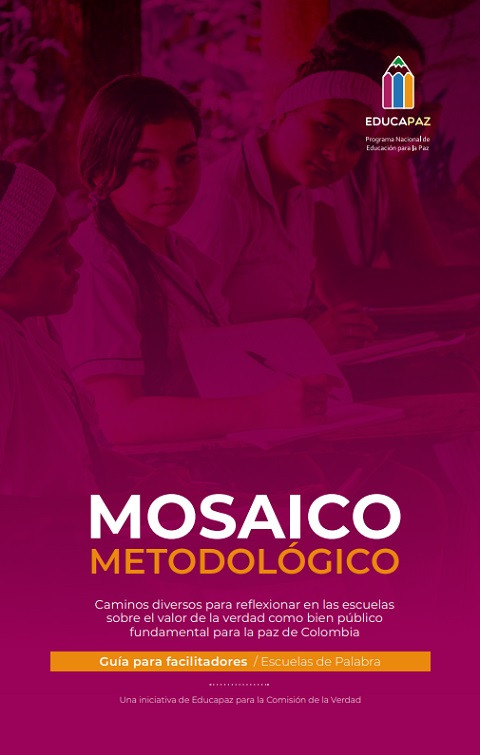 Methodological Mosaic: Diverse Paths to Reflect in Schools on the Value of Truth as a Fundamental Public Good for Peace in Colombia Year of publication: 2018 Author: Juana Yuniz Corporate author: EDUCAPAZ This publication reflects the work carried out by the National Program of Education for Peace EDUCAPAZ and the Truth Commission in Colombia, for education in schools that want to reflect on the value of truth in the reconstruction of memory, forgiveness and reconciliation. It presents the five proposed paths to achieve it.
 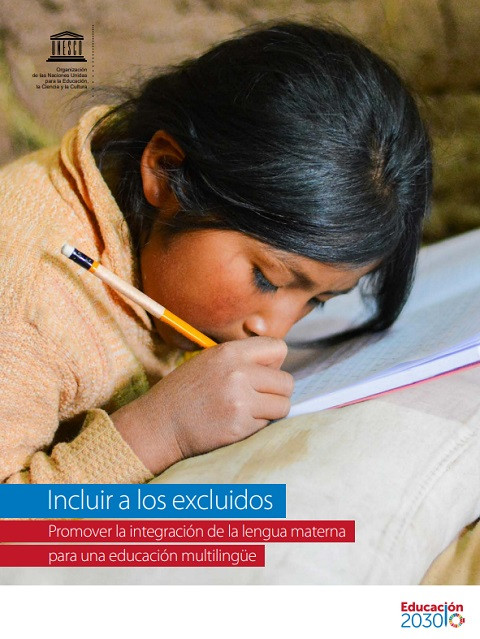 Including the Excluded: Promoting the Integration of the Mother Tongue for a Multilingual Education Year of publication: 2020 Corporate author: UNESCO This publication presents the advantages of including the mother tongue and promoting multilingual education, as well as guidelines for achieving it.